CAPACITY
FEED SIZE
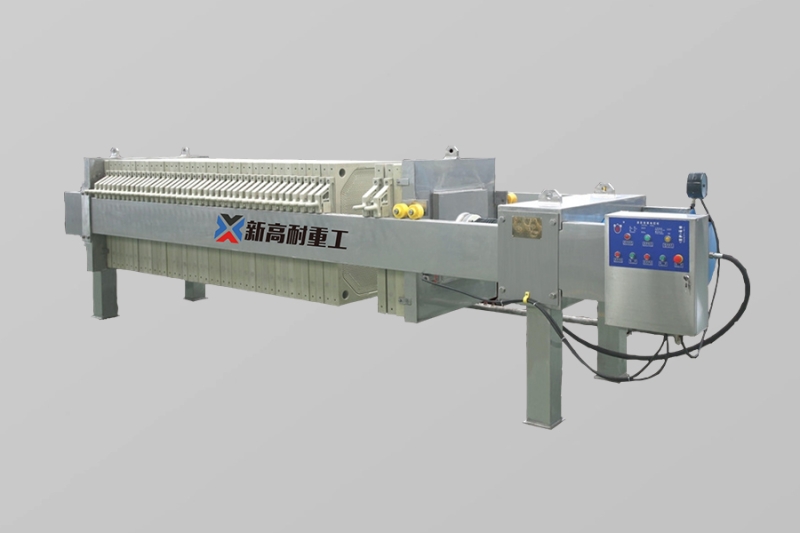
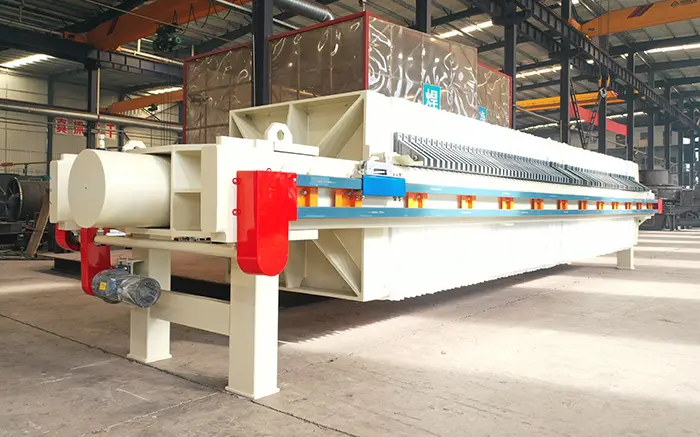
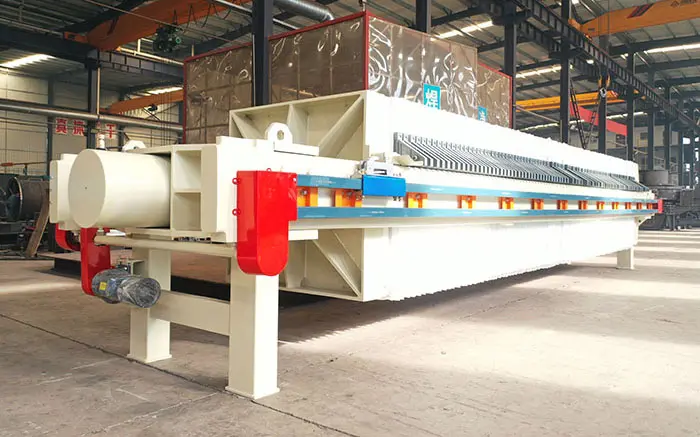
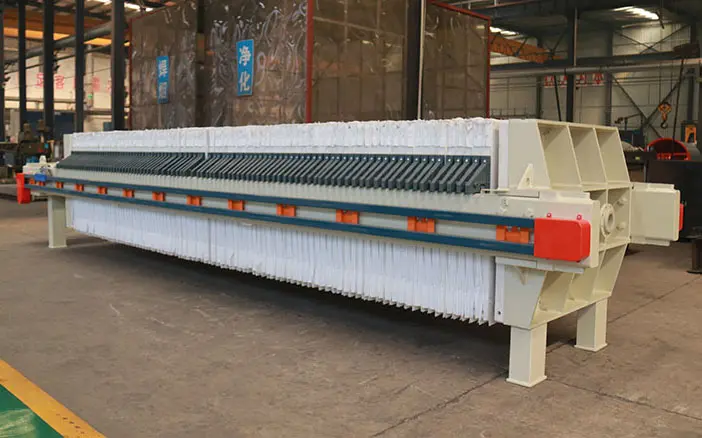
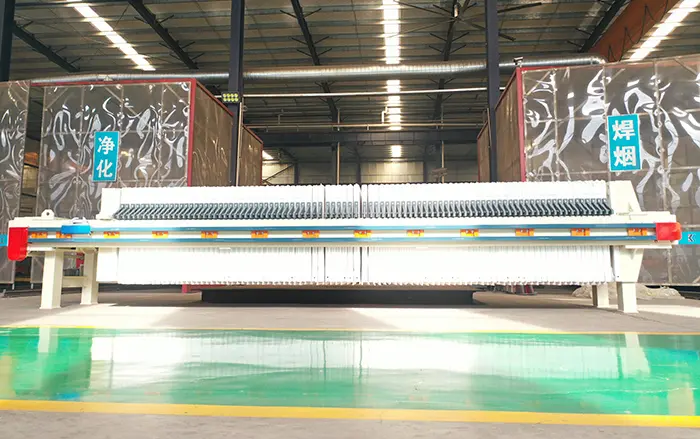
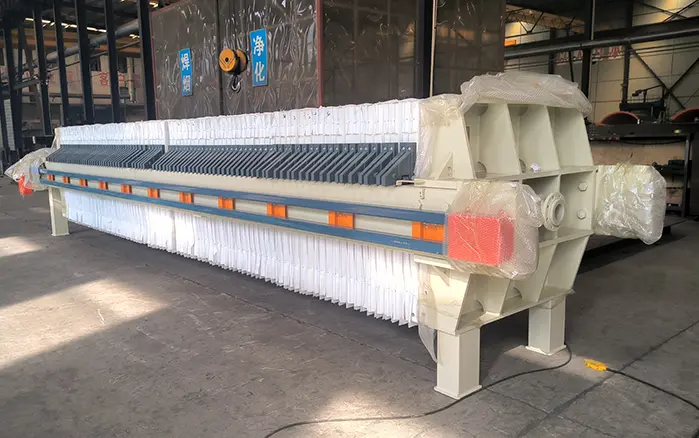
The Plate and Frame Filter Press is a batch-cycle, high-pressure solid-liquid separation machine that forces slurry through filter cloth under hydraulic pressure, retaining solid particles as a filter cake between the filter plates while discharging clarified filtrate through the filter cloth and drainage channels. As one of the most widely used dewatering and filtration machines in heavy industry, it is the standard solid-liquid separation solution for mineral concentrate dewatering, chemical process filtration, pharmaceutical product recovery, ceramic slurry dewatering, and industrial and municipal sludge treatment worldwide.
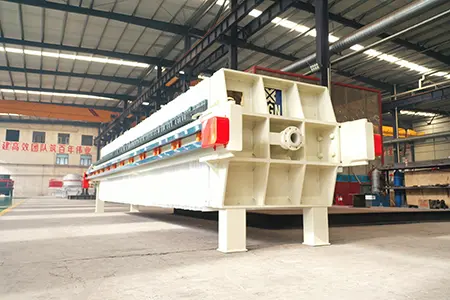
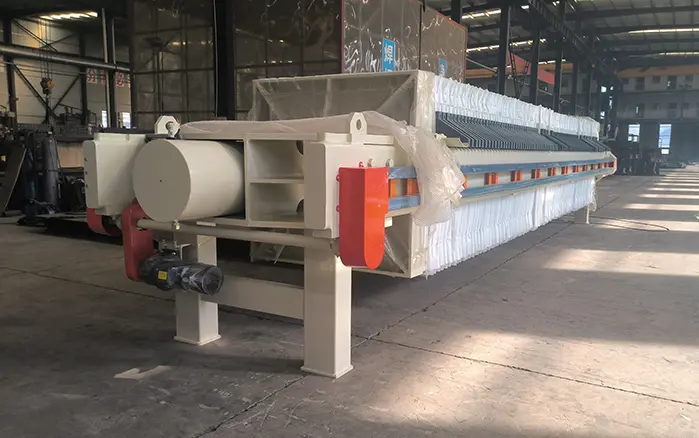
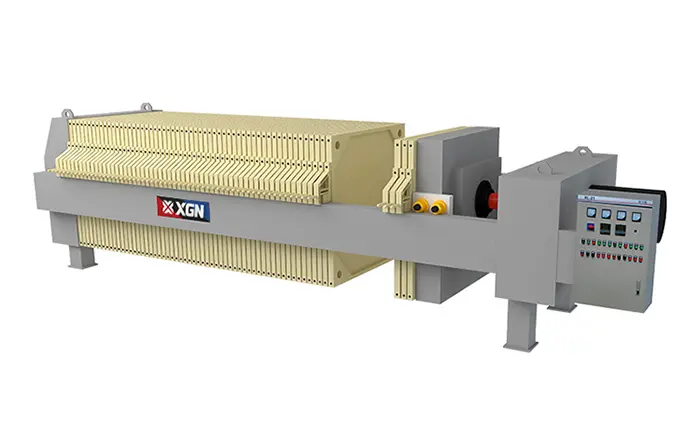
XINGAONAI Plate and Frame Filter Presses are available in manual, semi-automatic, and fully automatic configurations with filter plate counts from 10 to 200 plates and filtration areas from 10 m² to 1,000 m² per unit, covering processing capacities from small-scale laboratory and pilot applications to large-scale continuous industrial dewatering operations. The filter press frame is fabricated from heavy-gauge carbon steel or stainless steel with a robust hydraulic clamping system that applies closing forces from 5 to 32 MPa, ensuring leak-free sealing between all filter plates throughout the full filtration cycle.
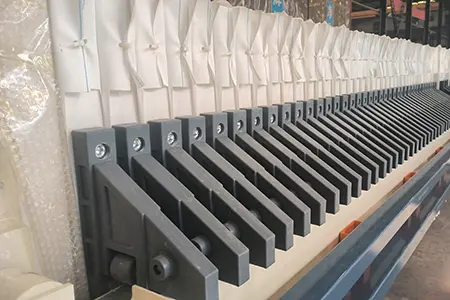
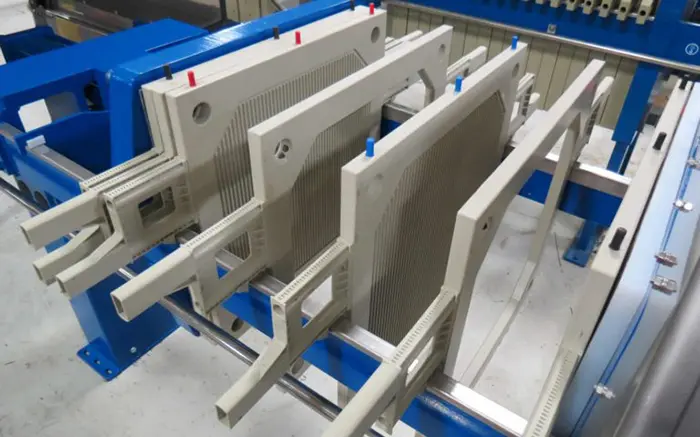
Filter plates are available in polypropylene, cast iron, and stainless steel, in recessed chamber, plate-and-frame, and membrane squeeze configurations. Recessed chamber plates are standard for most mineral processing and chemical applications. Membrane squeeze plates — which incorporate an inflatable rubber or polypropylene membrane on one or both sides of the plate cavity — deliver additional mechanical squeezing of the filter cake after the initial filtration cycle, reducing final cake moisture content by a further 3–8 percentage points compared to recessed chamber plates alone. Filter cloths are available in polypropylene, polyester, nylon, and PTFE weaves to suit different chemical environments, temperature ranges, and particle size distributions.
High Filtration Pressure for Low Cake Moisture
The hydraulic clamping system applies filtration pressures of 0.6–1.6 MPa across the full filter plate area, forcing water through the filter cake and cloth far more effectively than gravity or vacuum filtration methods. This high-pressure filtration consistently achieves filter cake moisture contents of 15–25% for most mineral concentrates and chemical slurries — significantly lower than thickener underflow or vacuum filter discharge — reducing downstream drying costs, improving product handling characteristics, and meeting strict moisture specifications for concentrate transport and smelting feed requirements.
Membrane Squeeze for Ultra-Low Cake Moisture
The optional membrane squeeze configuration applies additional mechanical pressure of up to 1.6 MPa directly to the filter cake surface after the initial filtration phase, physically squeezing residual pore water out of the cake structure without requiring additional filter cloth area or filtration time. This membrane squeeze step reduces final cake moisture by a further 3–8 percentage points below the standard recessed plate result, achieving cake moisture contents as low as 10–15% for fine concentrate slurries — critical for concentrate export specifications and energy-efficient downstream drying.
Fully Automatic Operation with Minimal Labor
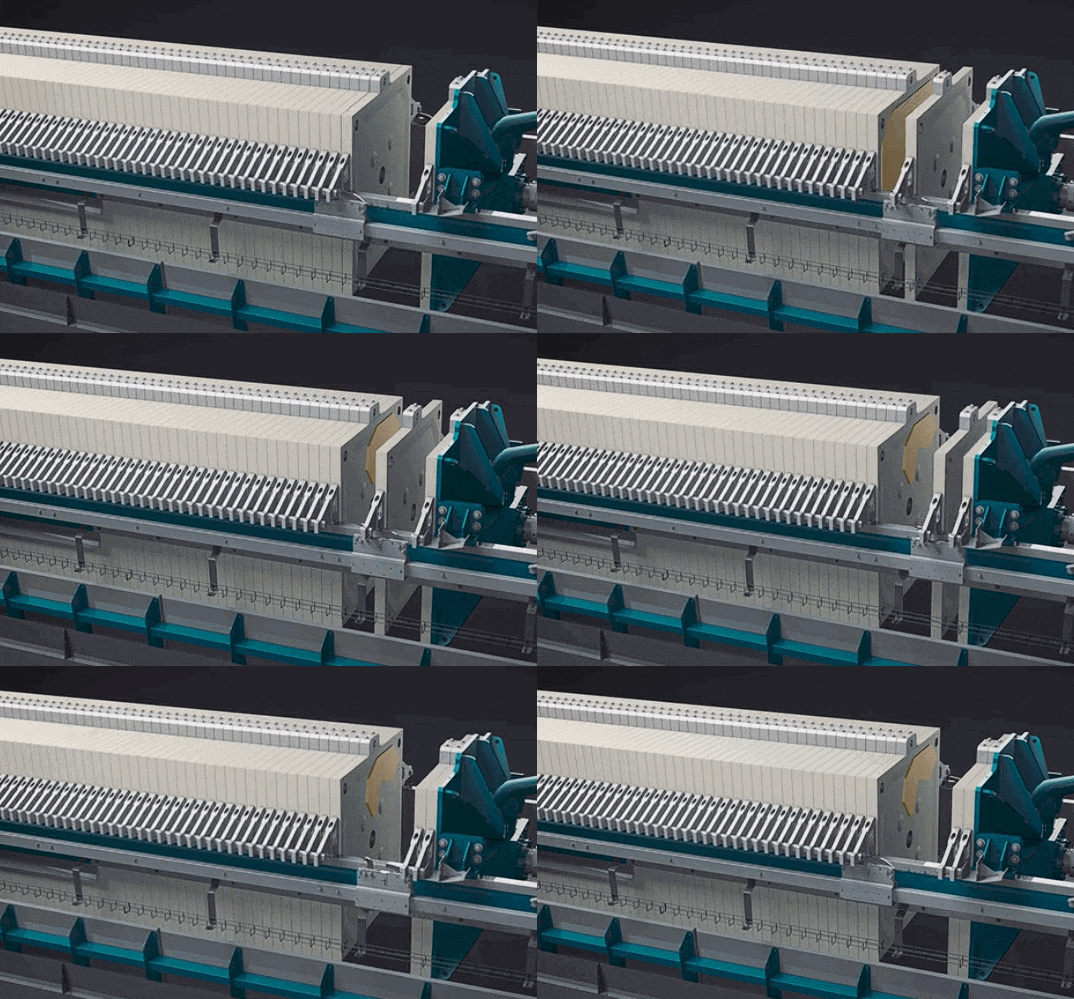
The fully automatic configuration integrates automatic hydraulic plate clamping, automatic feed pump control, automatic membrane squeeze sequencing, automatic plate shifting for cake discharge, automatic filter cloth washing, and automatic re-clamping for the next filtration cycle — all controlled by a PLC with a touch-screen operator interface. This full automation eliminates the manual labor of opening plates and discharging cake that is required in manual filter press operation, reducing operating labor to a single shift supervisor role and enabling continuous 24-hour production with minimal personnel.
Wide Chemical & Temperature Compatibility
Polypropylene filter plates and polypropylene or PTFE filter cloths provide excellent resistance to acids, alkalis, and most organic solvents across the pH range 1–14 and operating temperatures up to 90°C, covering the full range of mineral processing, chemical, and pharmaceutical filtration environments without special corrosion protection measures. Stainless steel plate options extend compatibility to high-temperature applications up to 120°C and highly oxidizing chemical environments where polypropylene plates are not suitable.
High Filtrate Clarity, Minimum Solid Loss
The tightly woven filter cloth retains fine solid particles down to 1–5 μm depending on cloth weave specification, producing a clarified filtrate with suspended solids content typically below 100 mg/L — suitable for direct discharge to tailings pond, return to process water circuits, or further treatment for discharge to environment. The closed plate cavity design prevents solid bypass around the filter cloth edges, minimizing solid loss in the filtrate and maximizing filter cake yield per filtration cycle.
Modular Design, Easy Capacity Expansion
Additional filter plates can be added to the existing press frame up to the maximum design plate count without replacing the hydraulic clamping system, feed manifold, or press frame structure, increasing filtration area and capacity in proportion to the number of plates added. This modular capacity expansion capability allows plant filtration capacity to be increased incrementally as ore throughput grows, protecting the initial capital investment and avoiding the large lump-sum capital expenditure associated with replacing the entire filter press unit with a larger machine.
| Model | Filter area (㎡) | Filter plate specification (mm) | Number of filter plates | Filter pressure (mpa) | Power (kw) | Pull-plate motor power (kw) |
|---|---|---|---|---|---|---|
| XMZ250/1250 | 250 | 1250*1250*65 | 91 | 1.0 | 5.5 | 0.75 |
| XMZ500/1500 | 500 | 1500*1500*75 | 123 | 1.0 | 11 | 1.5 |
| XMZ800/2000 | 800 | 2000*2000*85 | 107 | 1.0 | 15 | 1.5 |
Learn about plate and frame filter press construction, including its main parts, how they work together, and the materials used.
Application of plate and frame filter press in mining, chemical, food and environmental industries, with practical benefits and operational tips.
Compare leading plate and frame filter press manufacturers, pricing, and key selection factors. Learn how to choose the right supplier for industrial filtration systems.
A step-by-step guide to plate and frame filter press operation, including operational tips, troubleshooting and solid-liquid separation best practices.
Learn to interpret a plate and frame filter press diagram, including key components, layout & applications for industrial solid-liquid separation.
Plate and frame filter press troubleshooting: Quick fixes for common issues like leakage, slow filtration and hydraulic failure.
Plate and frame filter press working principle: Pressure-driven solid-liquid separation for mining, chemical & industrial use.
Advantages and disadvantages of plate and frame filter press: Batch filtration pros/cons for mining, chemical & wastewater treatment.