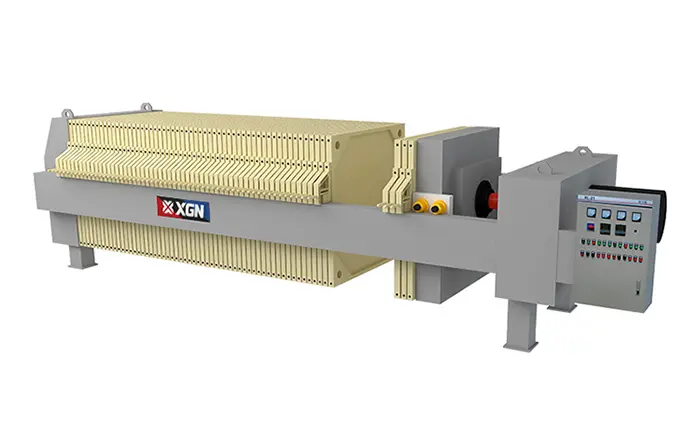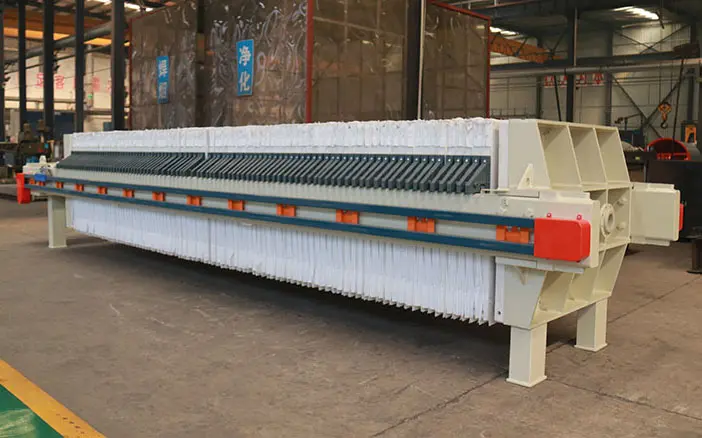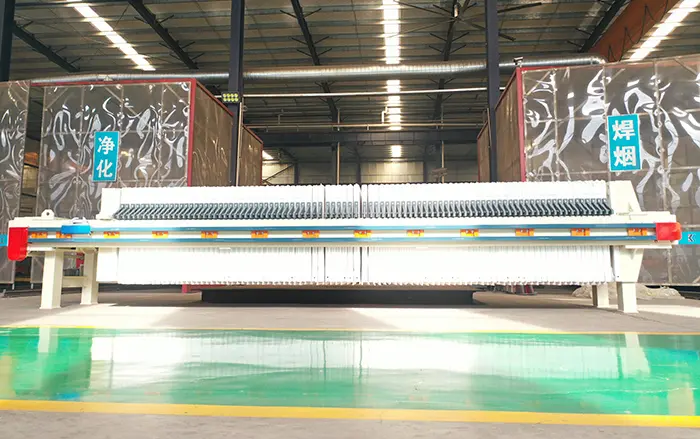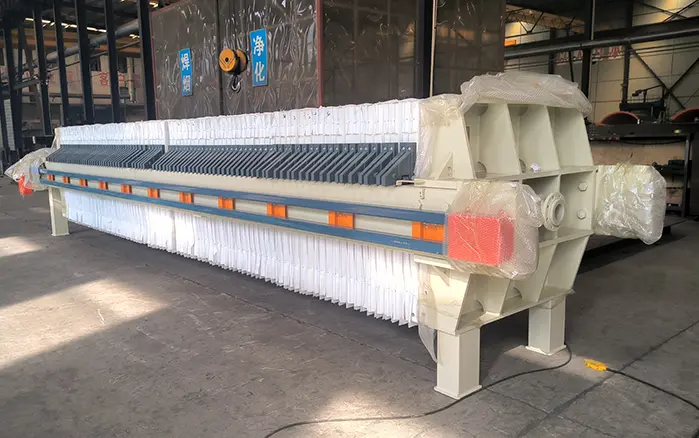
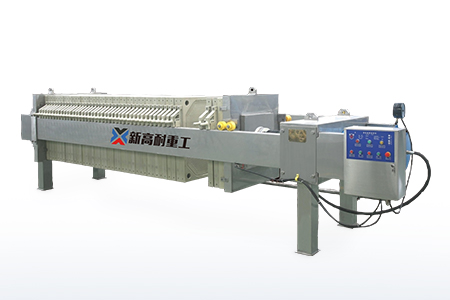
A plate and frame filter press is a machine used to separate solids from liquids. Many industries use it, like chemical plants, mining operations, food processing, and wastewater treatment. To understand how this machine works, you first need to know its construction. The plate and frame filter press construction is not very complex, but each part has an important job. This article explains the main components in simple words. You will learn what each part does and how they fit together.
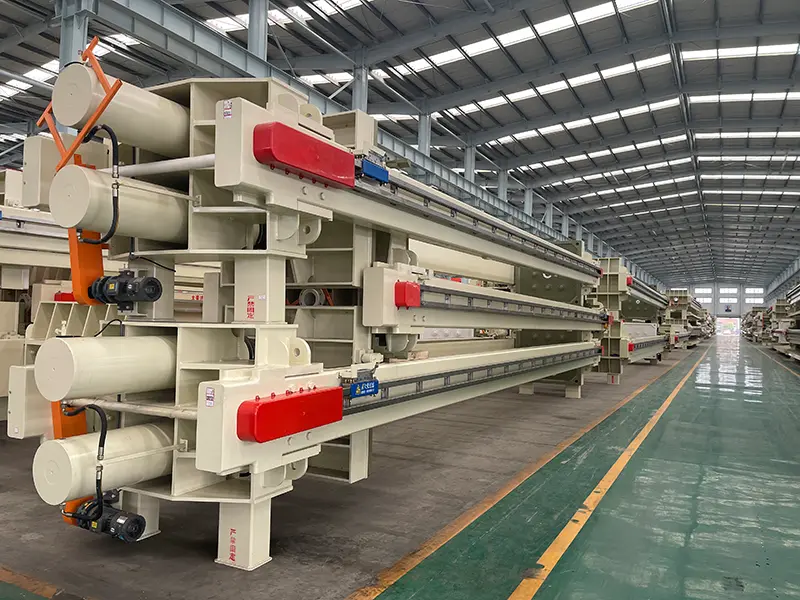
What Is a Plate and Frame Filter Press?
Before we talk about the plate and frame filter press construction, let us quickly explain what the machine does. It uses pressure to push a liquid mixture (slurry) through a filter cloth. The solids stay on the cloth, and the clean liquid passes through. Over time, the solids build up into a cake. When the cake is thick enough, the machine stops, and the cake is removed.
The machine gets its name from its two main parts: plates and frames. They are arranged one after another to form a set of chambers.
Main Parts of a Plate and Frame Filter Press
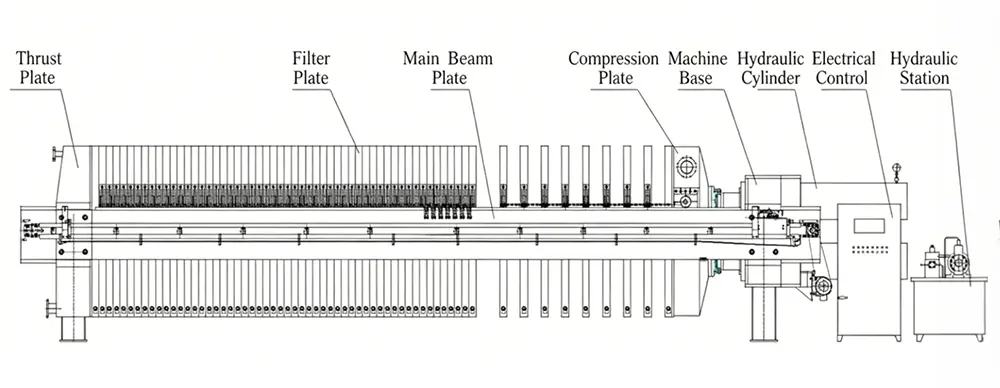
Now let us look at the plate and frame filter press construction part by part. There are seven main components.
1. The Frame
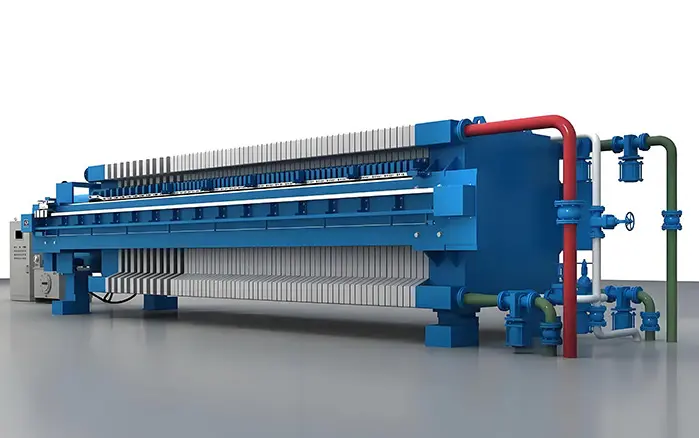
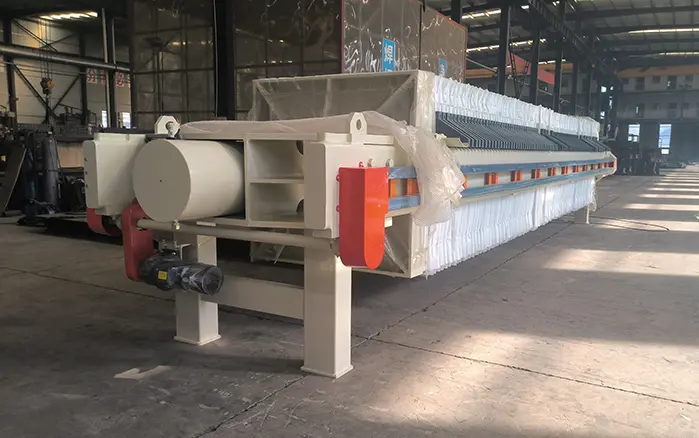
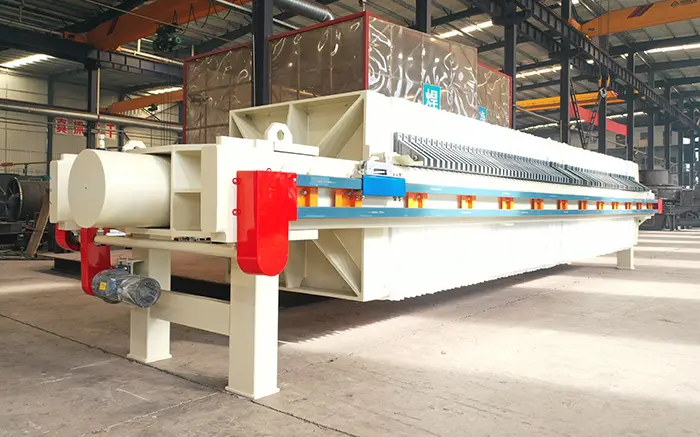
The frame is the backbone of the machine. It holds everything together. It is made of strong steel because it must resist high pressure. The frame has two main parts: a fixed end (called the head) and a movable end (called the follower). Between them, the plates and frames are stacked. A set of side bars or beams connects the fixed and movable ends. The whole frame stands on legs or a base.
2. Plates and Frames
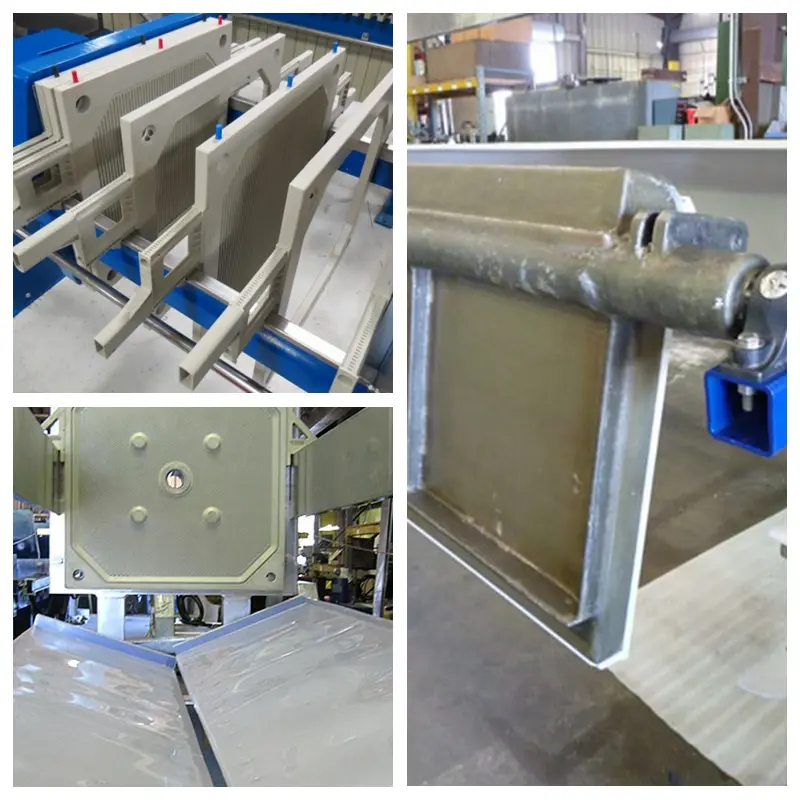
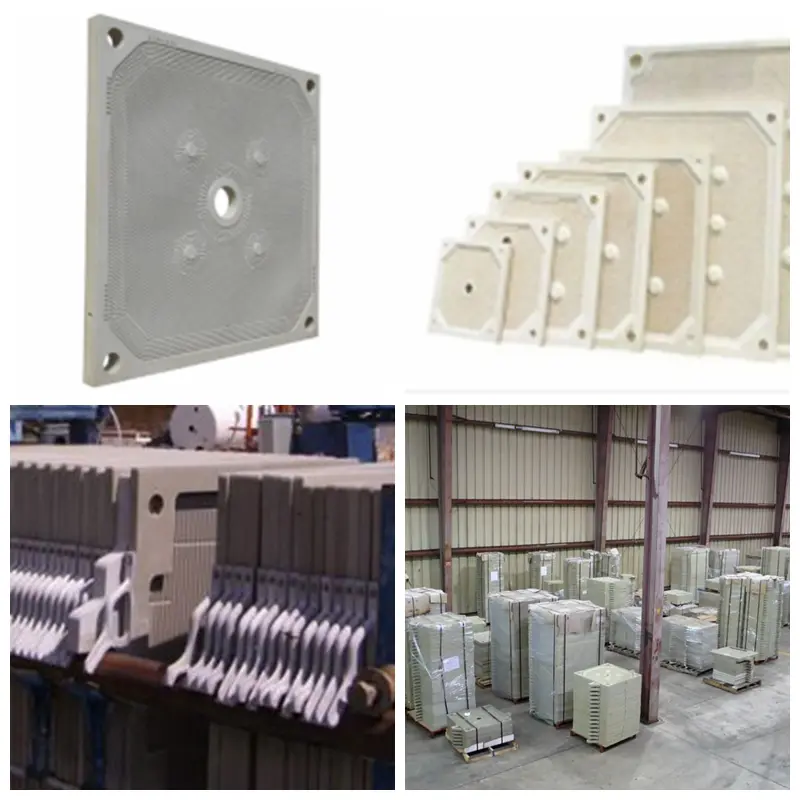
This is the heart of the machine. The plates and frames are arranged alternately. Each frame is hollow in the middle. When you put a frame between two plates, you get a chamber. Slurry flows into the frame, and solids collect inside the chamber. The plates have a solid surface with drainage channels. They support the filter cloth and let the liquid drain away.
There are two common types of plates:
Recessed plates: These have a concave shape on both sides. When you press them together, they form chambers without needing separate frames.
Plate and frame (with frames): This is the traditional design. The frame holds the slurry, and the plates provide drainage.
In terms of plate and frame filter press construction, the number of plates and frames can vary. A small press may have 10 to 20 chambers. A large one can have over 100.
3. Filter Cloth
The filter cloth is the actual filter. It is a fabric that lets liquid pass but holds back solids. The cloth is draped over each plate. When the press closes, the cloth covers both sides of each chamber. The cloth material depends on the application. Common materials include polypropylene, polyester, and cotton. The cloth must be strong enough to handle pressure and resistant to chemicals in the slurry.
4. Hydraulic System
The hydraulic system closes and holds the plates together. Without enough pressure, the plates would leak. The system includes a hydraulic pump, a cylinder, and a piston. When the pump runs, it pushes the piston. The piston pushes the follower (the movable end) against the stack of plates and frames. This creates a tight seal. The hydraulic system can generate pressures from 100 to 300 bar, depending on the press size.
5. Feed Pump and Manifold
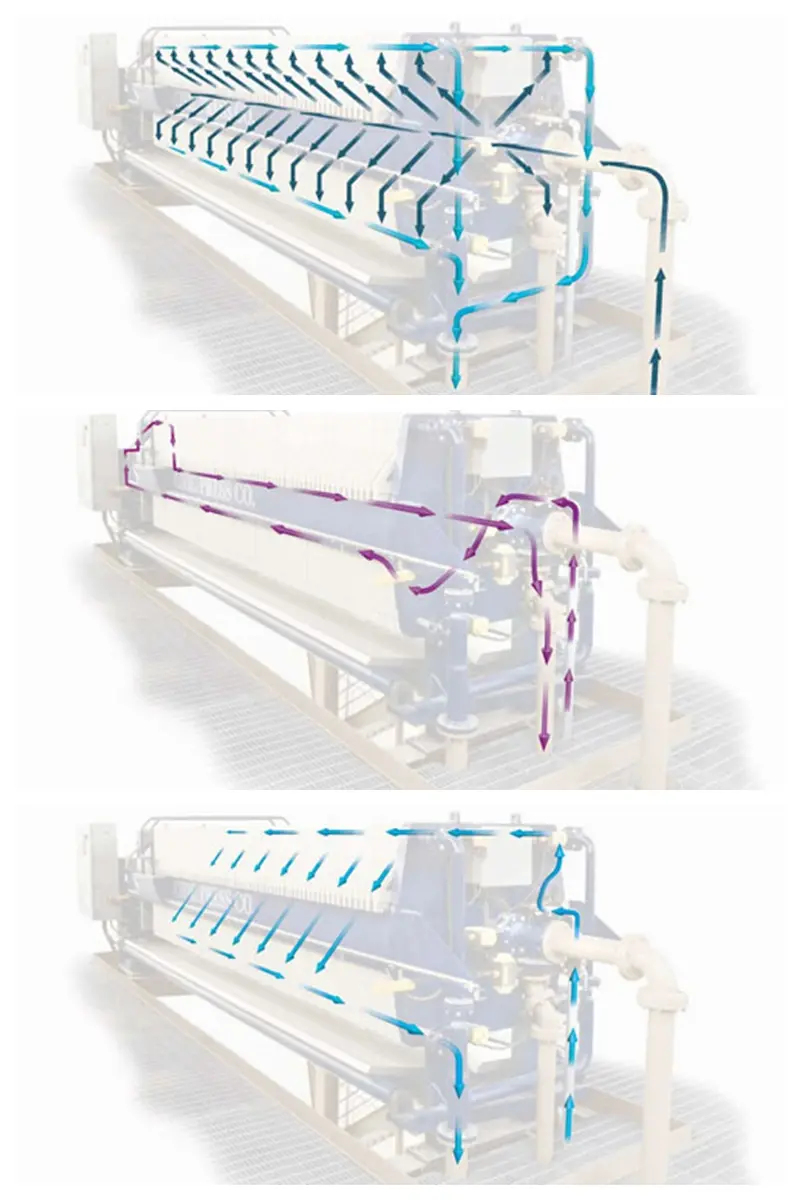
The feed pump sends slurry into the press. The slurry goes through a pipe called the feed manifold. The manifold connects to each frame through feed holes. The feed pump must provide enough pressure to push the slurry into all chambers evenly. Common pump types are diaphragm pumps and progressive cavity pumps.
6. Drainage System
As the liquid passes through the filter cloth, it flows into the plates. Each plate has drainage ports or channels. The liquid collects and then flows out through a discharge manifold. Some presses have separate outlets for each plate, so you can see which plate is leaking or clogged.
7. Plate Shifter (for automatic presses)
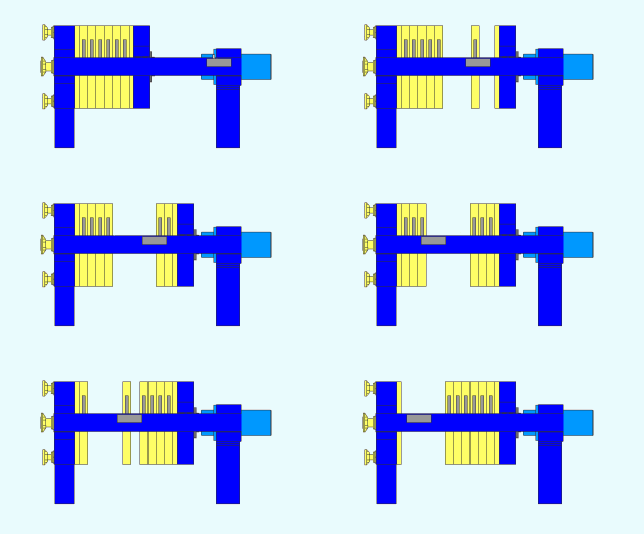
In manual presses, workers remove each plate by hand. In automatic presses, a plate shifter does the job. It is a mechanical arm that moves along the side bars. After the press opens, the plate shifter pulls each plate away one by one. The filter cake falls out as the plates separate. This part is common in modern plate and frame filter press construction for large operations.
How the Parts Work Together
Now that you know the parts, let us see how the plate and frame filter press construction works in operation.
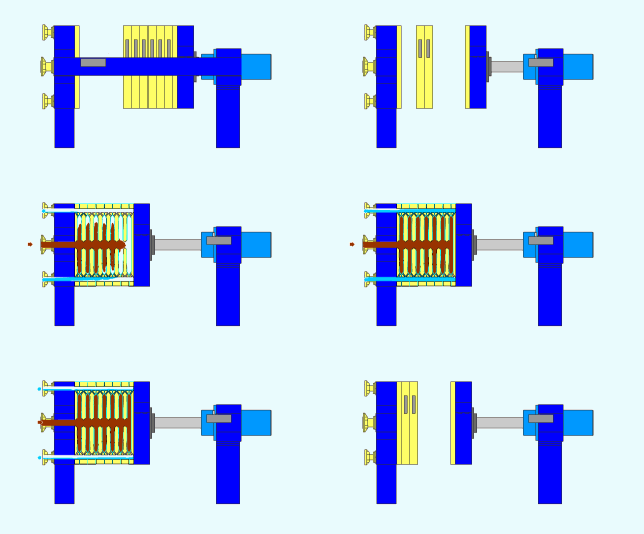
Closing: The hydraulic system pushes the follower against the stack of plates and frames. The filter cloth is already in place between each plate and frame.
Filling: The feed pump starts. Slurry enters the feed manifold and flows into each frame.
Filtration: The slurry fills the frame. Pressure forces liquid through the filter cloth and into the plates. The liquid drains out. Solids stay in the frame and start to build up as a cake.
Cake formation: When the frame is full of cake, pressure rises. The operator stops the feed pump.
Opening: The hydraulic system pulls back the follower. The plates and frames separate.
Cake discharge: The filter cake falls out of the frames by gravity. In automatic presses, the plate shifter helps pull the plates apart.
Cleaning: Workers or a spray system clean the filter cloth. Then the cycle repeats.
Materials used for plate and frame filter press
Different parts use different materials. Here are the most common ones:
Frame and plates: Cast iron, carbon steel, stainless steel, or polypropylene.
Filter cloth: Polypropylene (most common), polyester, nylon, cotton.
Hydraulic system parts: Steel and rubber seals.
Pipes and manifolds: Stainless steel or PVC.
The choice depends on the slurry. For acidic slurries, you need stainless steel or plastic parts. For high-temperature slurries, you need metal parts.
Types of Plate and Frame Filter Press Designs
There are two main designs based on the plate and frame filter press construction.
Side bar design: The plates hang on two side bars. The follower moves along the bars. This design is common for small and medium presses.
Overhead beam design: The plates hang from an overhead beam. The follower rides on wheels along the beam. This design is used for large presses because it handles more weight.
Also, presses can be manual (hand-operated), semi-automatic, or fully automatic.
Advantages of This Construction
The plate and frame filter press construction has several benefits:
Simple design with few moving parts.
Can handle a wide range of slurries.
Produces a dry filter cake (as low as 10-20% moisture).
Easy to replace filter cloth or damaged plates.
Scalable: add more plates and frames to increase capacity.
Limitations
There are also some limits:
Batch operation, not continuous.
Requires labor to clean and change cloths in manual presses.
Plates can crack if over-pressurized.
Not good for very sticky or fibrous solids.
The Value of Understanding Plate and Frame Filter Press Construction
The plate and frame filter press is an exquisitely designed and tested engineering design, with a history of over 150 years of application. It cleverly combines simple components such as filter plates, filter frames, and filter cloth with a sturdy steel frame and hydraulic system. Each component plays a crucial role in achieving solid-liquid separation. By gaining a deeper understanding of how these components work together, you will be able to better operate and maintain the equipment, or select the most suitable filter press for your specific job.