Auxiliary Equipment

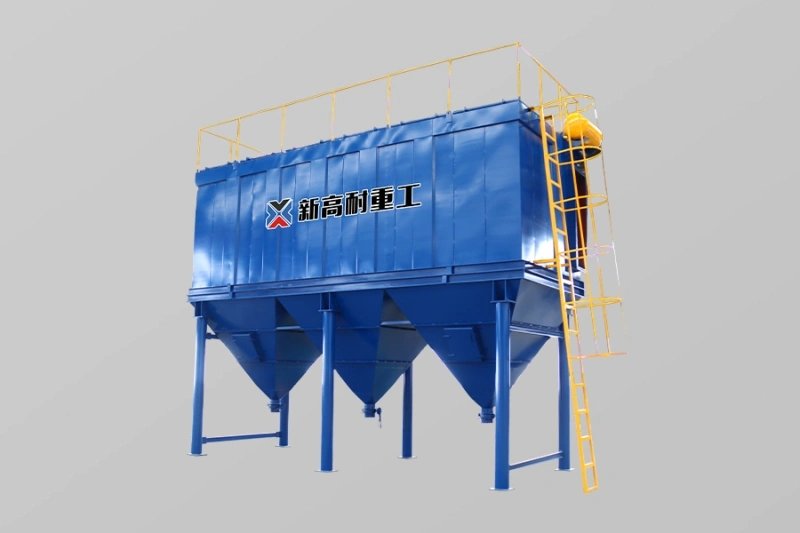
Pulse Jet Bag Filter

CAPACITY

0-336400m³/h

FEED SIZE

---
Application areas:The Pulse Jet Bag Filter is not only suitable for dust collection and emission control in cement plants, mineral processing facilities, mining operations, and thermal power stations, but also widely used in metallurgical plants, chemical factories, fertil
Applicable materials:Cement dust, limestone dust, coal dust, fly ash, iron ore dust, copper ore dust, silica dust, gypsum powder, fertilizer dust, grain dust, carbon black, alumina, talc, and other dry fine particulate matter generated in industrial crushing, grinding, convey

Product Overview

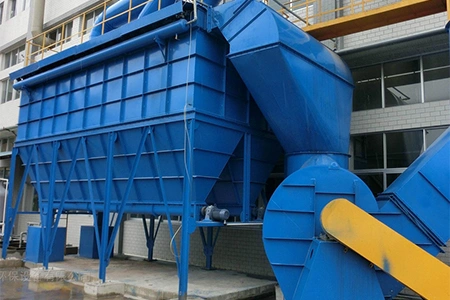
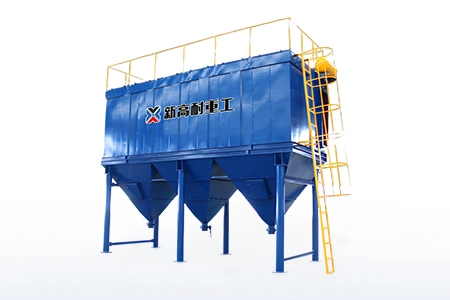
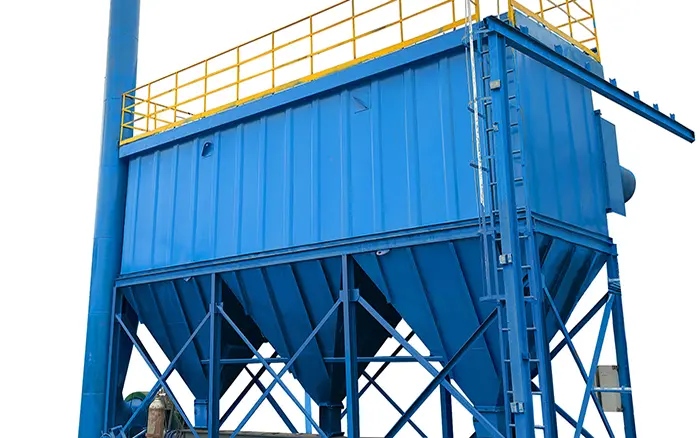
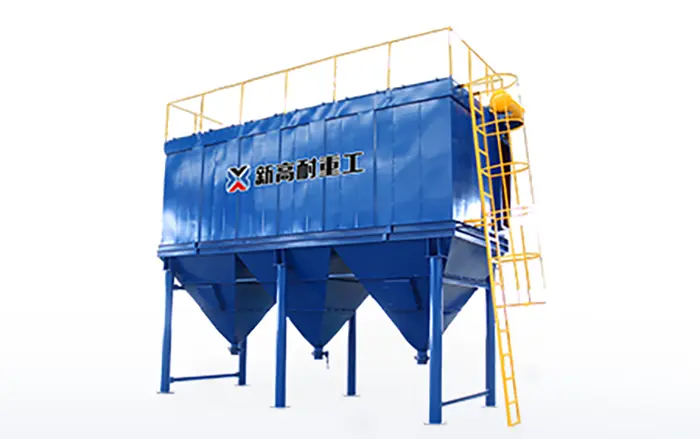
The Pulse Jet Bag Filter is a continuous-duty, high-efficiency dry dust collection system that captures airborne fine particulate matter by passing dust-laden gas through woven or needle-felt filter bags, then periodically restores filter bag permeability through automated high-pressure pulse-jet cleaning without interrupting the filtration process. As the most widely adopted industrial dust collector in heavy industry worldwide, it is the standard emission control solution for crushing and grinding circuits, cement production lines, thermal power plant ash handling systems, metallurgical furnace off-gas treatment, and chemical processing exhaust streams.


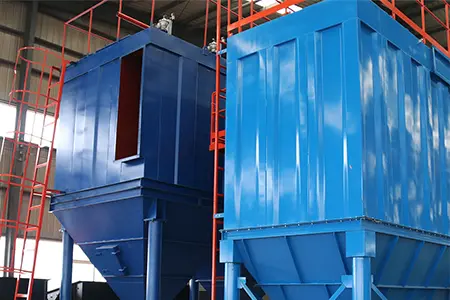
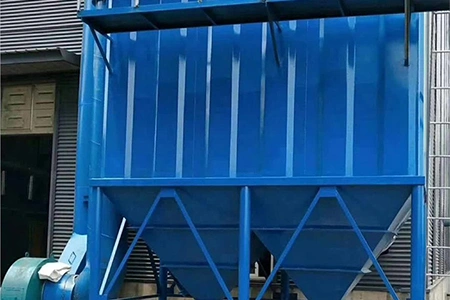
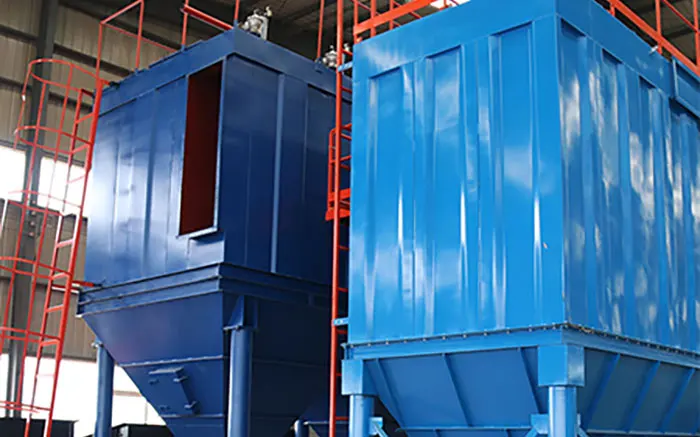
XINGAONAI Pulse Jet Bag Filters are engineered with a modular compartmentalized housing fabricated from heavy-gauge carbon steel or stainless steel, internally divided into the dirty-gas inlet chamber, filter bag chamber, and clean-gas outlet plenum. Filter bags are suspended from a tubesheet and supported by internal wire cages, available in polyester needle-felt, fiberglass, PTFE membrane, and high-temperature aramid fabrics to cover operating temperatures from ambient to 280°C and handle corrosive, high-humidity, or ultra-fine dust conditions.


The pulse-jet cleaning system consists of a compressed air manifold, solenoid pulse valves, and a programmable PLC controller. Each row of filter bags is sequentially cleaned by a high-pressure compressed air pulse (5–7 bar, 0.1–0.2 seconds duration) that instantaneously reverses airflow through the bag, dislodging the accumulated dust cake from the outer bag surface into the hopper below. Filtration efficiency exceeds 99.9% with outlet dust concentrations consistently below 10 mg/Nm³, meeting the most stringent international emission standards including EU IED and China GB 18599.

Key Advantages

Ultra-High Filtration Efficiency, Consistently Below 10 mg/Nm³

The combination of high-quality needle-felt or PTFE membrane filter bags and the stable dust cake layer that builds up on the bag surface during operation creates a two-stage filtration mechanism — mechanical interception plus surface filtration — achieving outlet dust concentrations of less than 10 mg/Nm³ under all normal operating conditions, fully complying with the most stringent international particulate emission standards.

Online Pulse-Jet Cleaning, Uninterrupted Production

The row-by-row sequential pulse-jet cleaning system cleans filter bags one row at a time while all other rows remain in active filtration service. This online cleaning design eliminates the need to shut down or isolate compartments for cleaning, maintaining stable filter pressure drop and consistent airflow volume throughout continuous 24-hour production without any interruption to the main process.

Wide Operating Temperature Range

By selecting the appropriate filter bag fabric — polyester felt (≤130°C), fiberglass (≤260°C), aramid (≤200°C), or PTFE membrane (≤280°C) — a single housing design accommodates the full range of industrial exhaust gas temperatures. This eliminates the need for upstream gas cooling in many applications and ensures reliable bag life even in fluctuating temperature conditions typical of cement kilns, dryers, and smelting furnaces.

Modular Design for Easy Capacity Expansion

The compartmentalized modular housing allows additional filter bag chambers to be bolted onto the existing unit to increase filtration area and capacity as production volumes grow, without replacing the existing structure. This future-proof design protects the initial capital investment and allows phased capacity expansion aligned with plant production ramp-up schedules.

Intelligent PLC Control & Remote Monitoring

The standard PLC controller manages pulse cleaning sequences, cleaning interval timing, solenoid valve diagnostics, differential pressure monitoring, and hopper discharge valve operation automatically. Optional connectivity to plant DCS or SCADA systems via Modbus or Profibus enables remote monitoring of filter performance, bag failure detection, and predictive maintenance scheduling — reducing on-site inspection requirements and improving operational reliability.

Low Total Operating Cost

Long filter bag service life (typically 3–5 years in normal conditions), low compressed air consumption per cleaning cycle (optimized pulse timing and pressure), minimal structural maintenance requirements, and standardized replacement bags available from global stock translate into low total cost of ownership. The hopper discharge system — screw conveyor or rotary valve — continuously removes collected dust for direct recycling into the process stream, eliminating secondary waste handling costs.

Working Principle

Working Principle of Pulse Jet Bag Filter
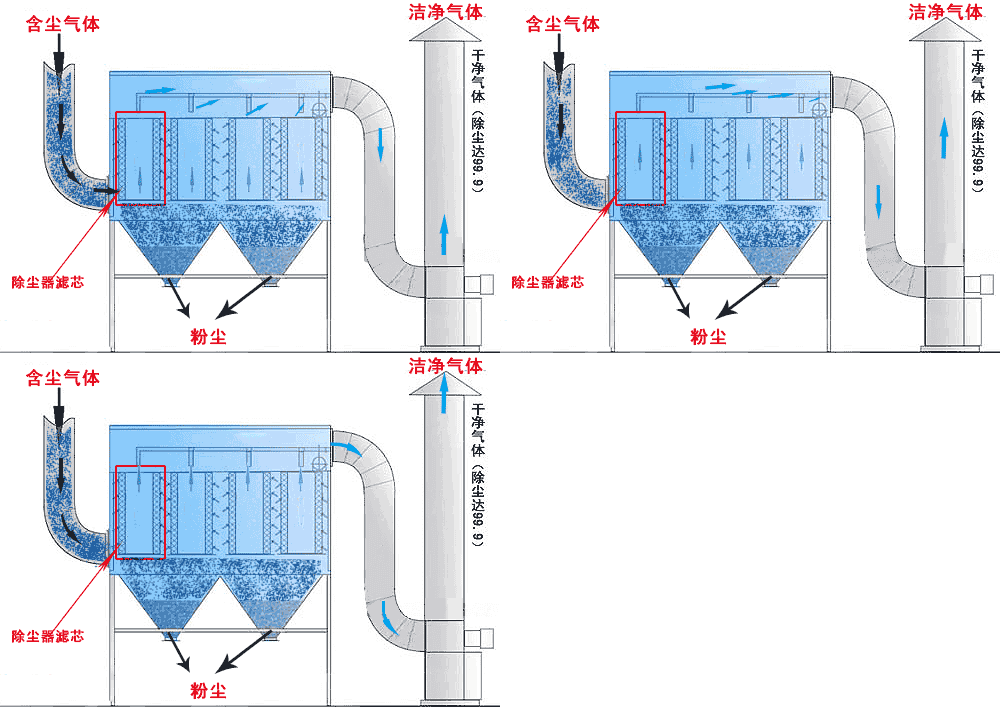
Dust-laden gas enters the dirty-gas inlet chamber of the Pulse Jet Bag Filter and is directed upward through the filter bags suspended from the tubesheet, where particulate matter is captured on the outer surface of the bag fabric while clean gas passes through the bag wall into the clean-gas plenum and exits via the outlet duct to atmosphere or downstream fan; as filtration continues, an accumulated dust cake builds up on the bag outer surface, progressively increasing the filter pressure drop until the PLC controller triggers the sequential pulse-jet cleaning cycle — a high-pressure compressed air pulse (5–7 bar, 0.1–0.2 seconds) is fired through the blow pipe into each row of bags in sequence, instantaneously inflating the bags and reversing airflow to dislodge the dust cake, which falls by gravity into the collection hopper below and is continuously discharged by the screw conveyor or rotary airlock valve for recycling or disposal, while the cleaned bags immediately return to active filtration service without any process interruption.

Technical Parameters

Model

Handling air volume

(m³/h)

Entrance concentration

(g/Nm³)

Emission concentration

(mg/Nm³)

Pressure loss

(Pa)

Shell pressure

(Pa)

Number of roomsNumber of filter bags

Filter area

(㎡)

Weight

(kg)

LDMC64-836800<1200≤101470-1770-5000851251214980
LDMC96-427600<1200≤101470-1770-500043843849622
LDMC96-534500<1200≤101470-1770-5000548048012833
LDMC96-641400<1200≤101470-1770-5000657657614223
LDMC96-748300<1200≤101470-1770-5000767267215042
LDMC96-855200<1200≤101470-1770-5000876876816524
LDMC96-962100<1200≤101470-1770-5000986486417905
LDMC96-2*569000<1200≤101470-1770-50001096096023439
LDMC96-2*682800<1200≤101470-1770-500012115296025200
LDMC96-2*796600<1200≤101470-1770-500014134496029400
LDMC96-2*8110400<1200≤101470-1770-500016153696033600
LDMC96-2*9124200<1200≤101470-1770-500018172896037800
LDMC96-2*10138000<1200≤101470-1770-500020192096042000


Model

Handling air volume

(m³/h)

Entrance concentration

(g/Nm³)

Emission concentration

(mg/Nm³)

Pressure loss

(Pa)

Shell pressure

(Pa)

Number of roomsNumber of filter bags

Filter area

(㎡)

Weight

(kg)

LDMC128-667300<1300≤101470-1770-6800676893620224
LDMC128-9100900<1300≤101470-1770-680091152140626400
LDMC128-10112100<1300≤101470-1770-6800101280156131732
LDMC128-2*6134560<1300≤101470-1770-6800121536187436000
LDMC128-2*7157000<1300≤101470-1770-6800141792218643900
LDMC128-2*8179400<1300≤101470-1770-6800162048249850000
LDMC128-2*9201900<1300≤101470-1770-6800182304281055400
LDMC128-2*10224300<1300≤101470-1770-6800202560312360000
LDMC128-2*11247600<1300≤101470-1770-6800222816343565400
LDMC128-2*12269100<1300≤101470-1770-6800243072374872000
LDMC128-2*13291600<1300≤101470-1770-6800263328406078000
LDMC128-2*14314000<1300≤101470-1770-6800283584437284000
LDMC128-2*15336400<1300≤101470-1770-6800303840468590000


We are here waiting for you
Our professional team can tailor the solution to suit your needs and answer your questions
Contact Engineer

Frequently Asked Questions

A pulse jet bag filter cleans filter bags online using short, high-pressure compressed air pulses (5–7 bar, 0.1–0.2 seconds) row by row without interrupting filtration, making it suitable for continuous 24-hour operation with stable pressure drop. A reverse air bag filter cleans by gently reversing low-pressure airflow through isolated compartments, requiring sequential compartment shutdown during cleaning, which results in larger housing footprint and lower cleaning intensity. Pulse jet designs are generally preferred for new installations due to higher cleaning efficiency, smaller footprint, and lower maintenance complexity.

Under normal operating conditions with correctly selected filter bag media, the XINGAONAI Pulse Jet Bag Filter consistently achieves outlet dust concentrations below 10 mg/Nm³, and below 5 mg/Nm³ with PTFE membrane filter bags. Both values comply with the most stringent international emission standards including EU Industrial Emissions Directive (IED) and China GB 18599-2014.

Filter bag material selection depends primarily on exhaust gas temperature, chemical composition, moisture content, and dust particle characteristics. As a general guide: polyester needle-felt is suitable for dry, non-corrosive dust at temperatures up to 130°C; fiberglass bags handle temperatures up to 260°C for cement kiln and dryer applications; aramid bags are preferred for moderate temperatures up to 200°C with mechanical stress; PTFE membrane bags are recommended for ultra-fine dust, high-humidity, sticky, or chemically aggressive conditions up to 280°C. Our engineering team provides a free application review and bag specification recommendation for every project.

Under normal operating conditions — stable gas temperature, no condensation, no acid dew point corrosion, and correct pulse cleaning parameters — filter bag service life is typically 3 to 5 years. Premature bag failure is most commonly caused by operating above the rated temperature, condensation inside the housing due to gas cooling below the dew point, incorrect pulse pressure or frequency causing mechanical fatigue, or chemical attack from acidic or alkaline gas components. Regular monitoring of differential pressure trends is the most reliable indicator of bag condition.

The pulse jet cleaning system requires a clean, dry compressed air supply at 5–7 bar (72–100 psi). A compressed air dryer and oil-water separator upstream of the filter are strongly recommended to prevent moisture and oil contamination of the filter bags, which significantly shortens bag life. Compressed air consumption depends on the number of filter bags and cleaning frequency, and is calculated individually for each unit — typical consumption ranges from 0.2 to 1.5 Nm³/min depending on filter size.

Yes, with appropriate design precautions. The housing and hoppers can be supplied with electric trace heating and thermal insulation to maintain the gas temperature above the dew point throughout the unit, preventing condensation on bag surfaces and in hoppers. PTFE membrane filter bags are recommended for high-humidity applications as their smooth surface resists moisture-induced blinding and facilitates dust cake release during pulse cleaning. Inlet gas conditioning — such as adding dry dilution air — may also be recommended where moisture levels are very high.

Explore Our Projects

Related Blog

Send message

Please enter your name
Please enter your email
Please enter your message