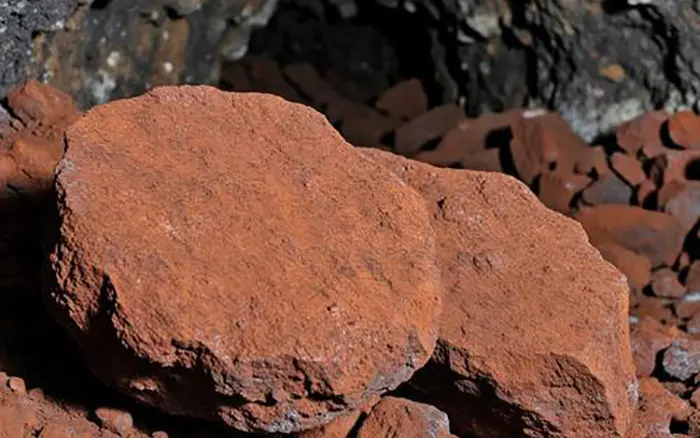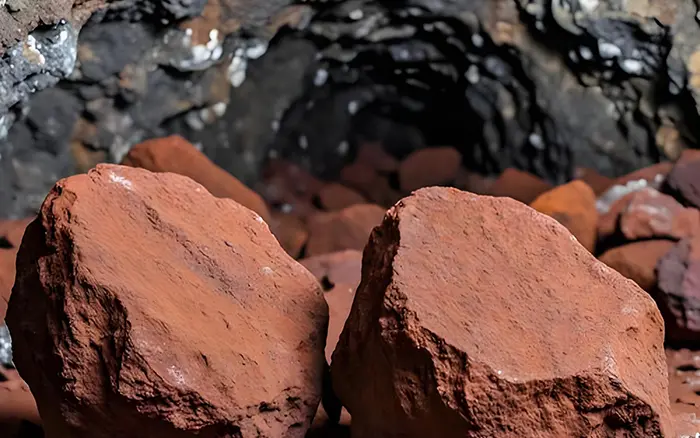
Hematite tailings are the waste materials left over after extracting iron from hematite ore. These tailings are stored in large dams or ponds. They contain significant amounts of unrecovered iron, typically 25 to 40 percent Fe in many deposits. With high-grade iron ore reserves declining worldwide, reprocessing these tailings has become an attractive option. This article explains how hematite tailings reprocessing works, what equipment is used, and why it makes economic sense.
What Are Hematite Tailings?
Hematite tailings are the finely ground waste materials produced during iron ore beneficiation. The tailings are usually stored as wet slurry in large tailings storage facilities. In some mines, the accumulated tailings can reach over 92 million tons with iron grades between 25 and 40 percent. These tailings still contain valuable iron minerals that were not recovered due to limitations in the original processing circuit.
Why Reprocess Hematite Tailings?
There are three main reasons to reprocess hematite tailings.
Environmental benefits. Large-scale stockpiling and improper disposal of iron tailings have become key issues restricting the sustainable development of the global mining industry. Tailings can cause heavy metal migration through seepage and wind erosion, leading to water pollution, soil degradation, and biodiversity loss. Reprocessing reduces the volume of tailings stored in dams and lowers the risk of dam failures.
Economic benefits. Reprocessing tailings costs much less than developing a new mine. A large iron ore mine typically requires multi-billion-dollar investments, while a tailings reprocessing project may need only around US$77.3 million in initial capital. The operating costs are also lower, often less than US$1 per ton of material processed. These projects can deliver strong financial returns, with internal rates of return of nearly 30 percent.
Resource efficiency. As high-grade iron ore resources deplete worldwide, recovering iron from tailings helps meet the growing demand for steel. Some advanced reprocessing projects can achieve iron recovery rates of over 88 percent while producing concentrate with 68 percent iron or higher.
Main Technologies for Hematite Tailings Reprocessing
Several technologies can be used to recover iron from hematite tailings. The choice depends on the tailings' mineral composition, particle size, and economic factors.
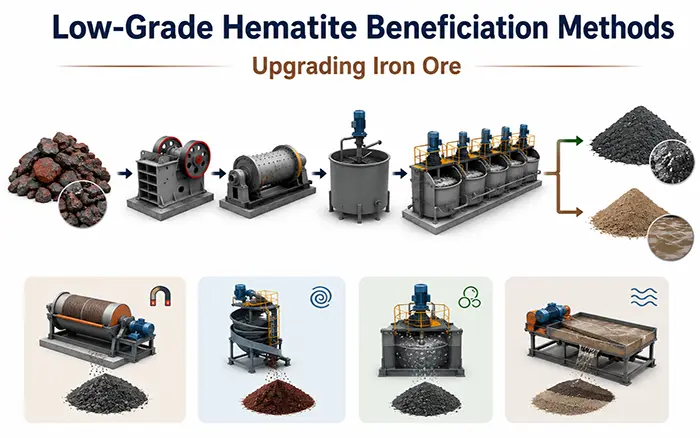
Gravity Separation
Gravity separation uses the difference in density between hematite (about 5.3) and gangue minerals (about 2.6 to 2.8). Common equipment includes spiral concentrators, jigs, and shaking tables. Gravity separation is cost-effective and uses no chemicals. It works best for coarse hematite particles. For finer fractions, other methods are needed.
Magnetic Separation
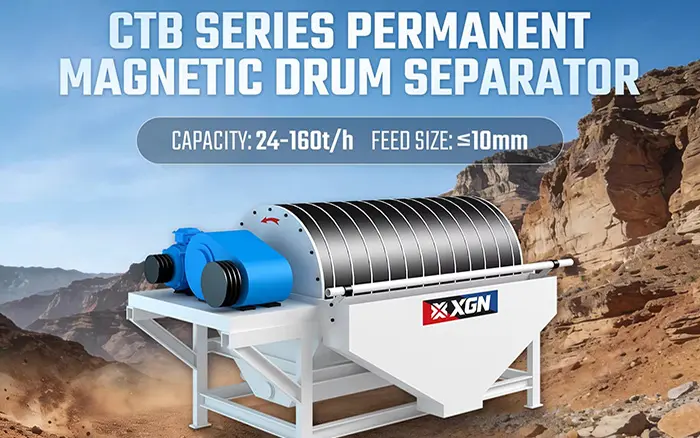
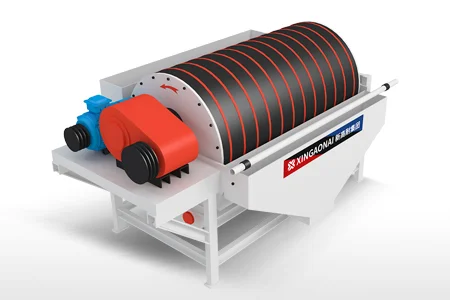
Hematite is weakly magnetic, so standard low-intensity magnetic separators are not effective. Wet High-Intensity Magnetic Separators (WHIMS) are used instead. WHIMS can achieve over 85 percent recovery of iron-bearing minerals. They handle feed material down to 1.2 mm. For the finest particles, high-gradient magnetic separators (HGMS) can be used.
Flotation
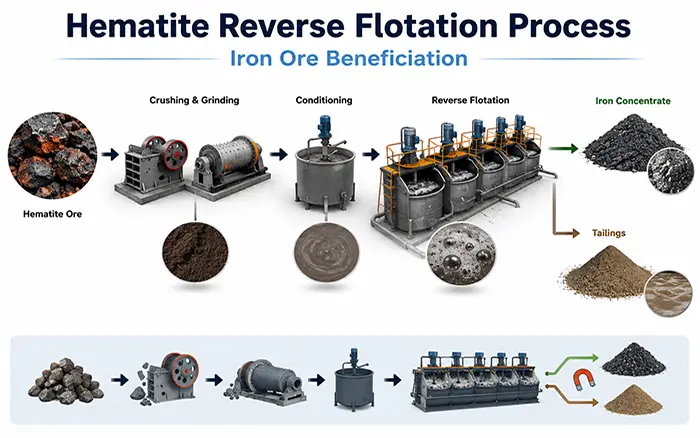
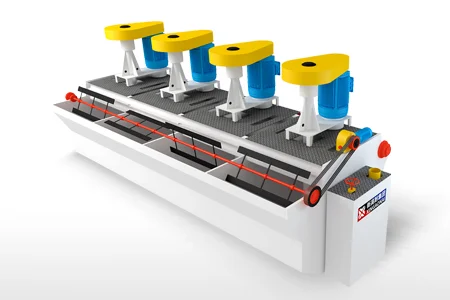
Flotation is highly effective for fine hematite particles. It uses reagents to make hematite particles attach to air bubbles while gangue remains in the slurry. Reverse flotation, which floats away silica gangue, is commonly used. Collectors such as fatty acids, hydroxamates, or ether amines are added, along with depressants like starch to improve selectivity. Flotation can produce high-grade concentrates even from low-grade tailings.
Combined Processes
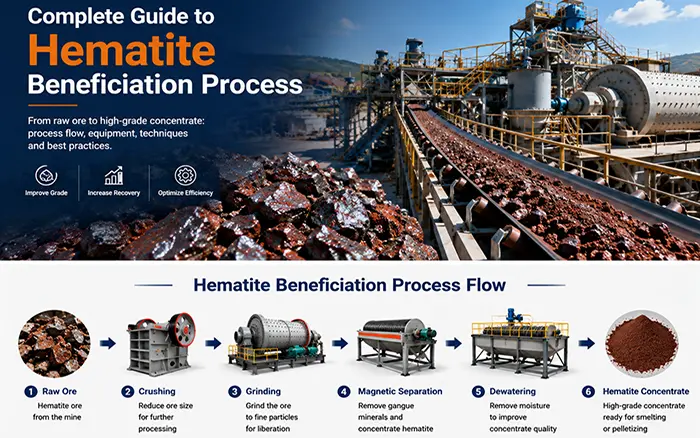
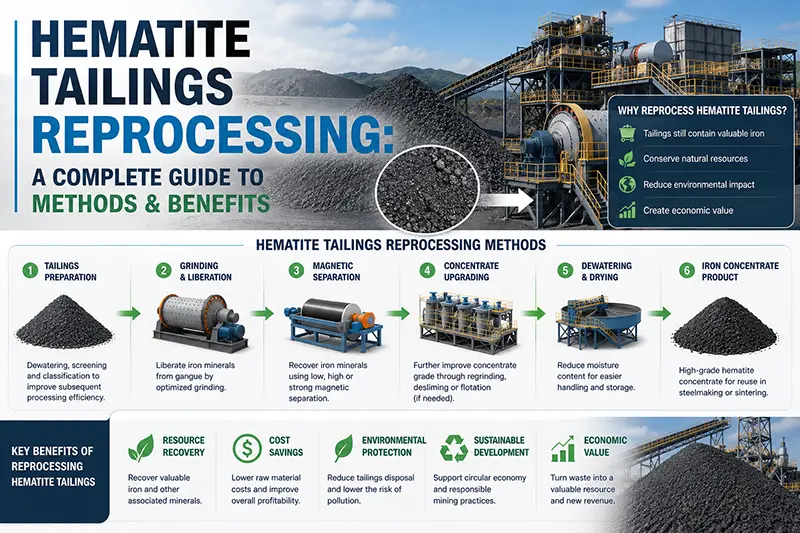
Most successful reprocessing plants use a combination of methods. A typical combined process includes: magnetic pre-enrichment using WHIMS to remove coarse gangue, regrinding of the magnetic concentrate to liberate fine hematite, further magnetic separation, and reverse flotation to remove remaining silica and other impurities.
Advanced Technologies: Hydrogen-Based Mineral Phase Transformation (HMPT)
HMPT is an emerging technology that transforms weakly magnetic hematite into strongly magnetic magnetite using hydrogen gas as a reducing agent. This process requires temperatures around 550°C and uses hydrogen, not carbon, so it produces no CO₂ emissions. After HMPT, the material can be processed with standard low-intensity magnetic separators. Pilot-scale tests have produced iron concentrates with over 64 percent iron and 75 percent recovery. Larger projects have achieved 68 percent iron with 88 percent recovery. HMPT also creates microcracks in the ore particles, which helps downstream grinding and separation.
Bioleaching
Bioleaching uses microorganisms to dissolve iron from tailings. This method is environmentally sustainable and uses minimal chemicals. Goethite-rich tailings dissolve faster, but hematite-rich tailings can also achieve meaningful iron dissolution with longer leaching times.
Equipment for Hematite Tailings Reprocessing
A complete reprocessing plant includes the following equipment:
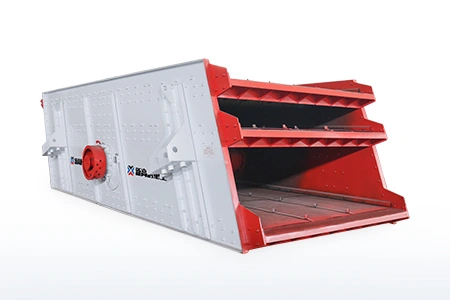
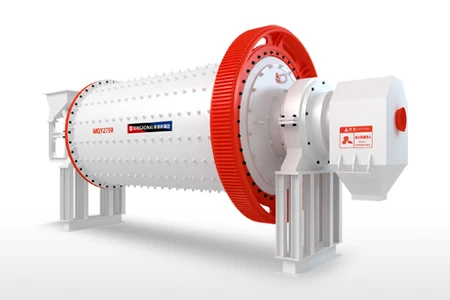
Pre-processing:Crushers, screens, belt feeders, ball mills, and classifiers to prepare tailings for separation.
Separation: WHIMS, high-gradient magnetic separators, flotation cells (SF, JJF, BF, KYF, and XCF models), spiral concentrators, jigs, and shaking tables.
Dewatering: Thickeners, ceramic filters, and drying equipment to produce dry concentrate.
Chadormalu Tailing Recovery Plant
The Chadormalu mine in Iran operates one of the oldest tailings reprocessing plants. The plant uses three steps of re-pulping with spiral classifiers, followed by two stages of magnetic separation to produce a 64 percent Fe magnetite concentrate. Tailings from the magnetic drums go to a hematite recovery section with two stages of vertical ring high-gradient magnetic separators, producing a 60 percent Fe hematite concentrate. The plant has operated for over ten years, producing 250,000 tons of iron concentrate annually.
Economic Viability of Tailings Reprocessing
The economics of tailings reprocessing are very attractive compared to greenfield mining. A recent project in Canada requires only US$77.3 million in capital expenditure, a fraction of the multi-billion-dollar investments typical for new iron ore mines. The operating expense is only US$0.65 per ton of material mined. This low-cost model delivers a 29.6 percent internal rate of return and a net present value of US$92 million.
Brazilian mining giant Vale already produces over 26 million tons of iron ore annually from waste rock and tailings, with about 80 percent from Minas Gerais state. The company expects 10 percent of its total iron ore output to come from reused materials by 2030.
Challenges and Considerations
Variable tailings composition. Tailings quality can change over time as new material enters the dam. Processing plants must handle feed variations.
Fine particle recovery. Very fine particles below 20 microns are hard to recover with standard methods. Advanced gravity concentrators or flotation columns may be needed.
Permitting and regulations. Many countries now have specific standards for iron tailings used in mine backfill and ecological restoration. Compliance with these regulations is essential.
Conclusion
Hematite tailings reprocessing offers a cost-effective way to recover valuable iron from waste material. With high-grade ore reserves declining, tailings are becoming an increasingly important secondary resource. Technologies such as WHIMS, flotation, and hydrogen-based mineral phase transformation make high recovery rates possible. The economic returns are strong, and the environmental benefits are significant. As mining companies face pressure to reduce their environmental footprint and improve resource efficiency, tailings reprocessing will likely become a standard practice in the iron ore industry.