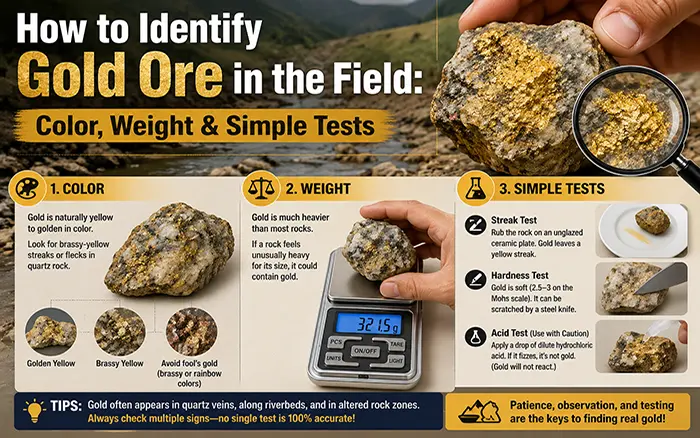
Gold cyanidation is the most widely used method for extracting gold from its ores. Since its introduction in the late 19th century, it has enabled the recovery of gold from low-grade ores that were previously considered uneconomical. The process relies on the ability of cyanide to dissolve gold, forming a stable complex that can then be collected and processed to recover pure gold. However, the use of cyanide raises serious environmental concerns. This article explains how the gold cyanidation process works, the key reagents involved, and the environmental considerations that every mining operation must address.
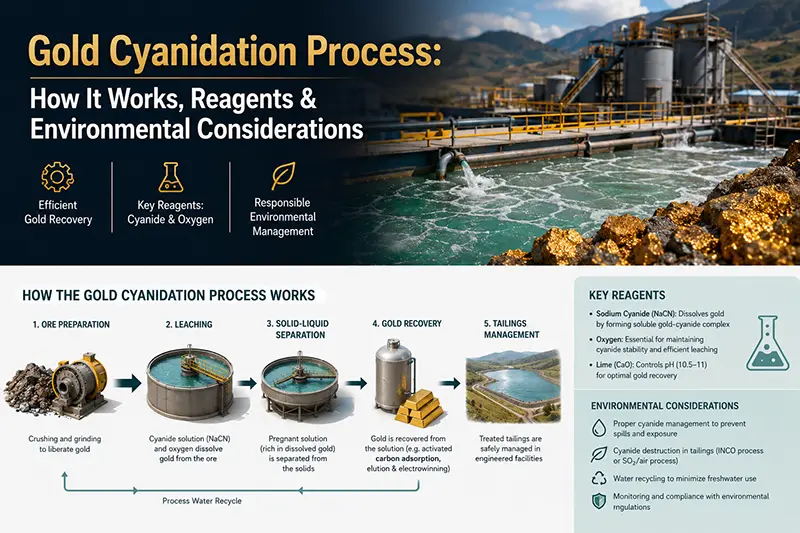
How the Gold Cyanidation Process Works
The gold cyanidation process consists of several stages: leaching, solid-liquid separation, gold recovery, and cyanide destruction or recycling.
Leaching (Dissolution of Gold)
The core of the process is the dissolution of gold particles in a dilute cyanide solution. The ore is finely ground and mixed with water to form a slurry. Sodium cyanide (NaCN) is added to achieve a concentration of typically 0.02% to 0.05% (200–500 ppm). Oxygen is also required. The chemical reaction that occurs is known as the Elsner equation:
4Au + 8NaCN + O₂ + 2H₂O → 4Na[Au(CN)₂] + 4NaOH
In simple terms, gold reacts with cyanide and oxygen in water to form a soluble gold-cyanide complex (sodium aurocyanide) and sodium hydroxide. The reaction proceeds slowly and may take 12 to 48 hours, depending on factors such as particle size, cyanide concentration, oxygen availability, and temperature.
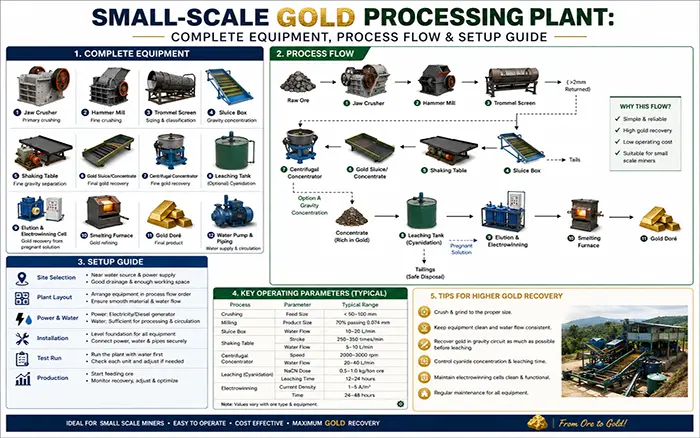
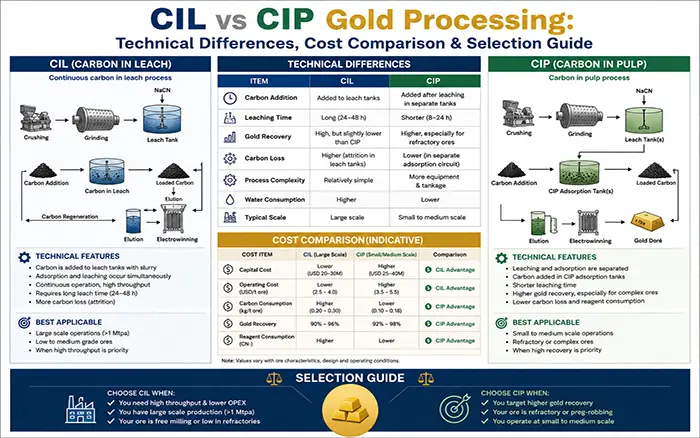
The leaching is typically carried out in large agitated tanks (CIP or CIL circuits) or on heap leach pads for low-grade ores.
Solid-Liquid Separation
After leaching, the pregnant solution (containing dissolved gold) must be separated from the solid tailings. This is done using counter-current decantation (CCD) thickeners or filters. The clear solution is sent to gold recovery, while the solids are disposed of after cyanide destruction.
Gold Recovery from the Solution
The most common method for recovering gold from the pregnant cyanide solution is carbon-in-pulp (CIP) or carbon-in-leach (CIL). Activated carbon is added to the leaching tanks (CIL) or to separate adsorption tanks (CIP). Gold preferentially adsorbs onto the carbon surface. The carbon is then screened out and treated with a hot, strong cyanide solution to strip the gold (elution). Gold is then recovered from the eluate by electrowinning (depositing onto steel wool cathodes) or by precipitation with zinc dust (Merrill-Crowe process). The final product is smelted into gold doré bars.
Alternatively, for some operations, the Merrill-Crowe process uses zinc dust to precipitate gold directly from clarified solution.
Reagents Used in Gold Cyanidation
Several reagents are essential for the gold cyanidation process.
Sodium Cyanide (NaCN)
This is the primary leaching agent. It is highly toxic and requires careful handling. Consumption ranges from 0.2 to 1.5 kg per ton of ore, depending on the ore type. Calcium cyanide (Ca(CN)₂) is also used occasionally.
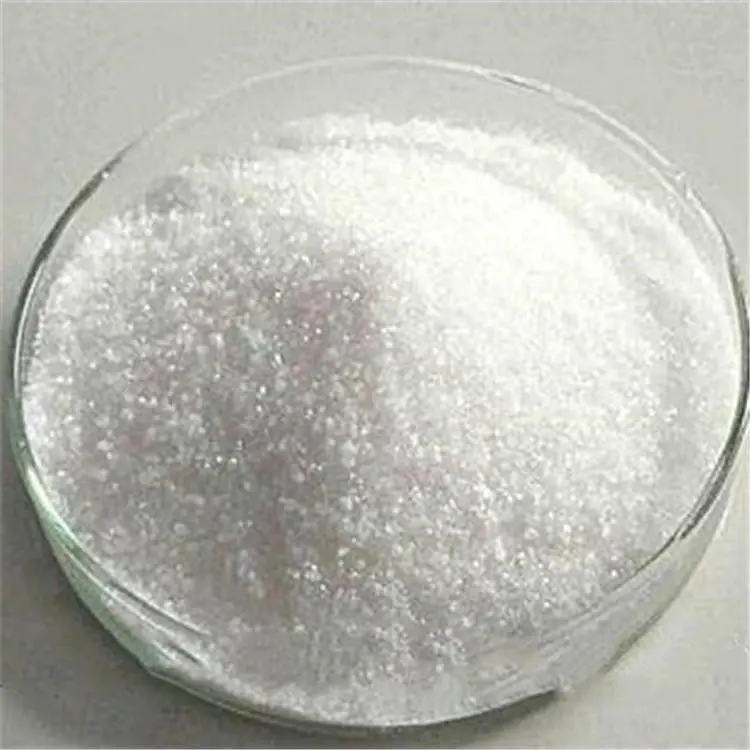
Lime (Calcium Hydroxide, Ca(OH)₂)
Lime is added to maintain the pH of the slurry at 10.5–11. This is critical because at lower pH, cyanide can form highly toxic hydrogen cyanide gas (HCN). Lime also neutralizes acidic components in the ore and improves settling characteristics.
Oxygen
Oxygen is a key reactant. Air is bubbled into the tanks, or pure oxygen is injected to accelerate the reaction. Oxygen enrichment can significantly reduce leaching time.
Activated Carbon
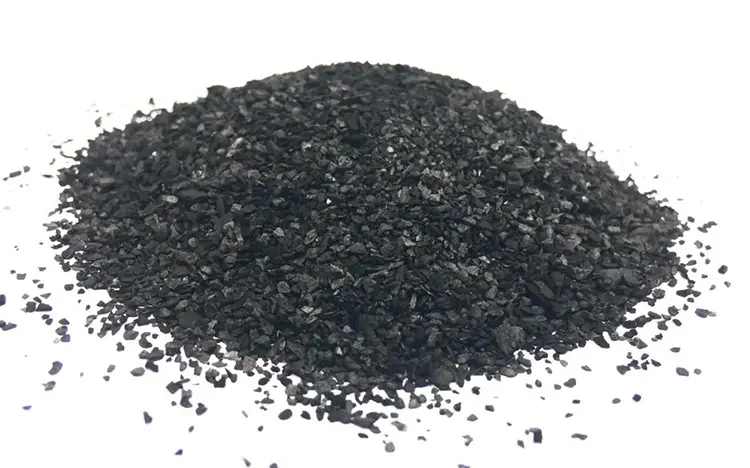
In CIP/CIL circuits, activated carbon is used to adsorb the gold complex. It is produced from coconut shells, coal, or wood. The carbon is regenerated after elution and reused.
Flocculants
These are polymers added to thickeners to aid solid-liquid separation.
Zinc Dust (Merrill-Crowe)
For processes that use precipitation, zinc dust is added to the clarified solution to displace gold: 2Na[Au(CN)₂] + Zn → Na₂[Zn(CN)₄] + 2Au.
Environmental Considerations
The use of cyanide in gold mining is heavily regulated due to its extreme toxicity to humans, fish, and wildlife. Even small concentrations can be lethal. Therefore, environmental management is a critical part of the gold cyanidation process.
Cyanide Management and Destruction
Modern operations are required to destroy residual cyanide in tailings before disposal. Common destruction methods include:
Alkaline chlorination: Oxidizes cyanide to cyanate and then to carbon dioxide and nitrogen. Effective but requires handling chlorine gas.
Sulfur dioxide (SO₂)/air process (INCO process): Uses SO₂ and air with lime to oxidize cyanide to cyanate. Safer than chlorination.
Hydrogen peroxide (H₂O₂): Oxidizes cyanide to cyanate. Simple but relatively expensive.
Natural degradation: Prolonged exposure to sunlight and air can break down cyanide, but this is slow and not acceptable for direct discharge.
Tailings must be stored in lined tailings storage facilities (TSFs) to prevent seepage into groundwater.
Water Management
Cyanide solutions are recycled within the plant to minimize fresh water use and reduce the volume of contaminated effluent. Some water is lost to tailings. Evaporation ponds or zero-discharge systems are used in arid regions.
Emergency Preparedness
Mines must have comprehensive spill response plans, trained personnel, and equipment to contain and neutralize cyanide spills. Buffer zones and detection systems near water bodies are often required.
Alternatives and Future Trends
Due to environmental concerns, there is ongoing research into alternatives to cyanide, such as thiosulfate, thiourea, glycine, and halide (bromine/iodine) leaching. However, none have yet matched the efficiency and cost-effectiveness of cyanidation for most ores.
The International Cyanide Management Code (ICMC) is a voluntary certification program that sets best practices for cyanide transport, storage, use, and disposal. Many major mining companies have adopted it to demonstrate responsible management.
Conclusion
The gold cyanidation process is highly effective for recovering gold from low-grade ores. It works by dissolving gold in dilute cyanide solution, with oxygen and lime as critical auxiliaries. Gold is then adsorbed onto activated carbon or precipitated with zinc. However, the toxicity of cyanide demands rigorous environmental safeguards: pH control, cyanide destruction, tailings management, and emergency response. While alternatives are being explored, cyanidation remains the dominant method worldwide. Responsible mining operations must adhere to strict safety and environmental standards to protect human health and ecosystems.