Beneficiation Equipment

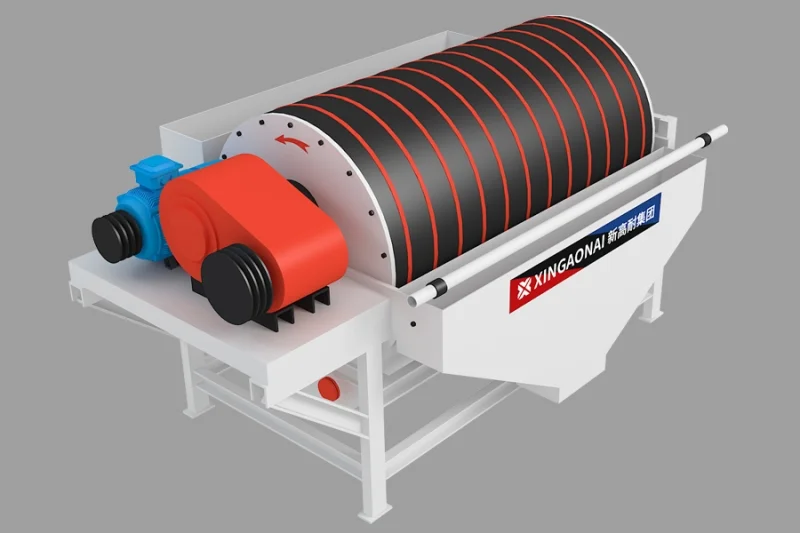
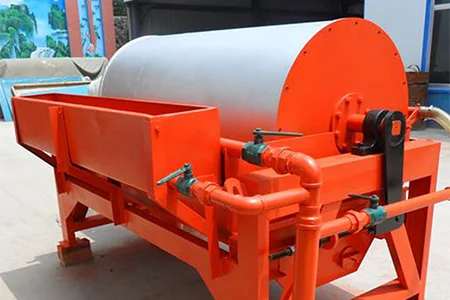
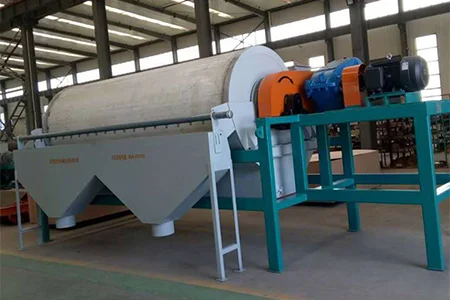
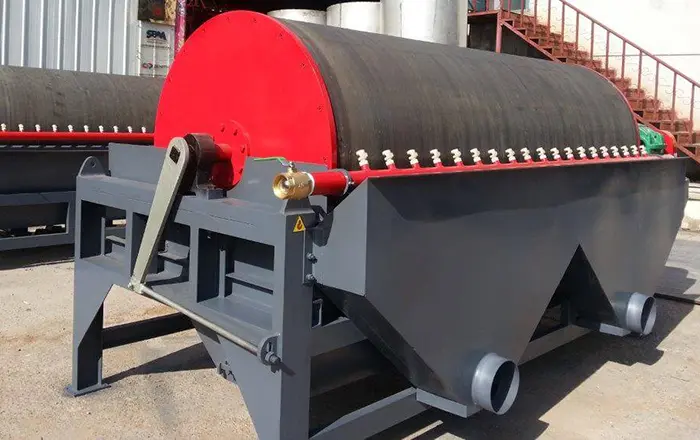
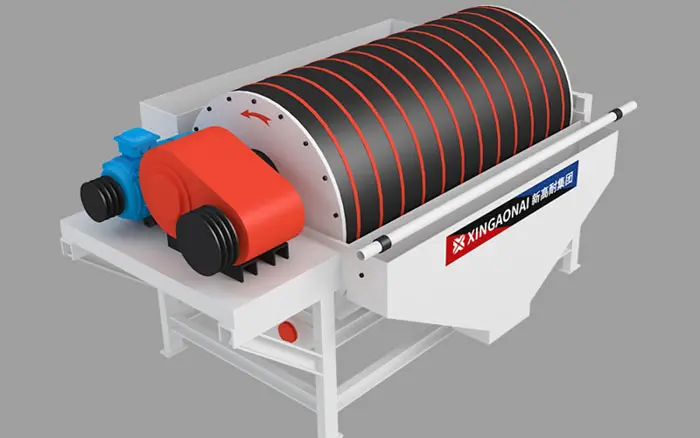
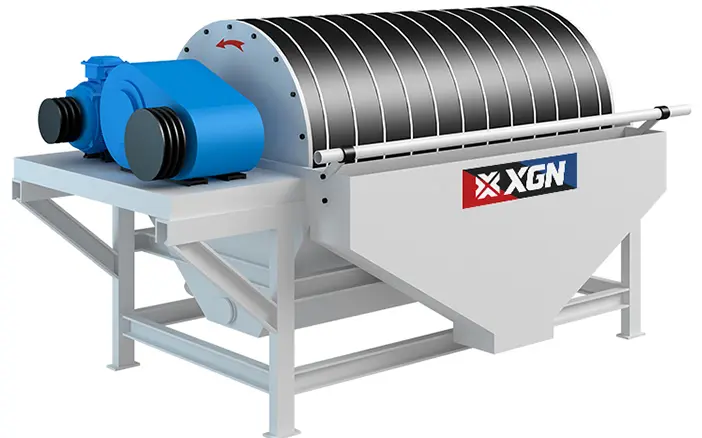
Permanent Magnetic Drum Separator

CAPACITY

24-160t/h

FEED SIZE

≤10mm
Application areas:Permanent Magnetic Drum Separator is widely used in the separation of strong magnetic minerals in metallurgy, mining, building materials, mineral processing and other fields.
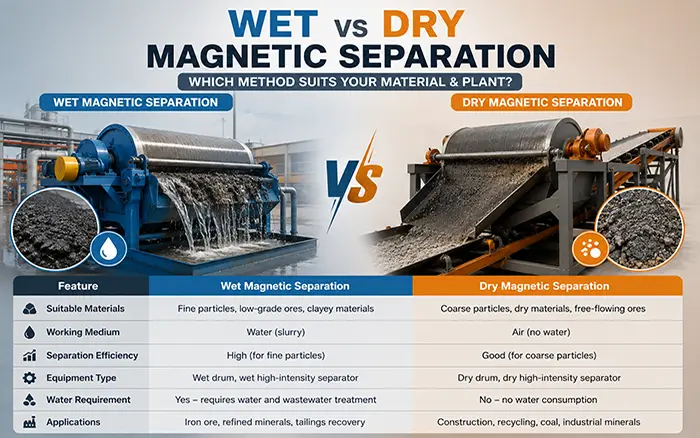
Applicable materials:Permanent Magnetic Drum Separator is suitable for wet magnetic separation of ferrimagnetic materials such as magnetite, roasted ore, ilmenite, or iron removal of non-metallic ores.

Product Overview

The  Permanent Magnetic Drum Separator is suitable for wet magnetic separation of metal ores with a particle size below 3mm. The magnetic substances in the mixture are separated by mechanical force, the screening effect is remarkable, and the operation is reliable. It is very popular in the wet beneficiation industry.

Key Advantages

Strong magnetic field

The magnet is made of high-quality ferrite material and rare earth magnet steel, which has high strength and strong anti-demagnetization ability.

Wear resistant material

The surface of the barrel is made of non-magnetic stainless steel and covered with wear-resistant rubber.

Adaptable

The duckbill type flushing pipe has strong adaptability to water quality and can withstand large fluctuations.

Good filtering effect

Realize efficient separation of magnetic minerals and non-magnetic minerals.

Working Principle

Working Principle of Permanent Magnetic Drum Separator
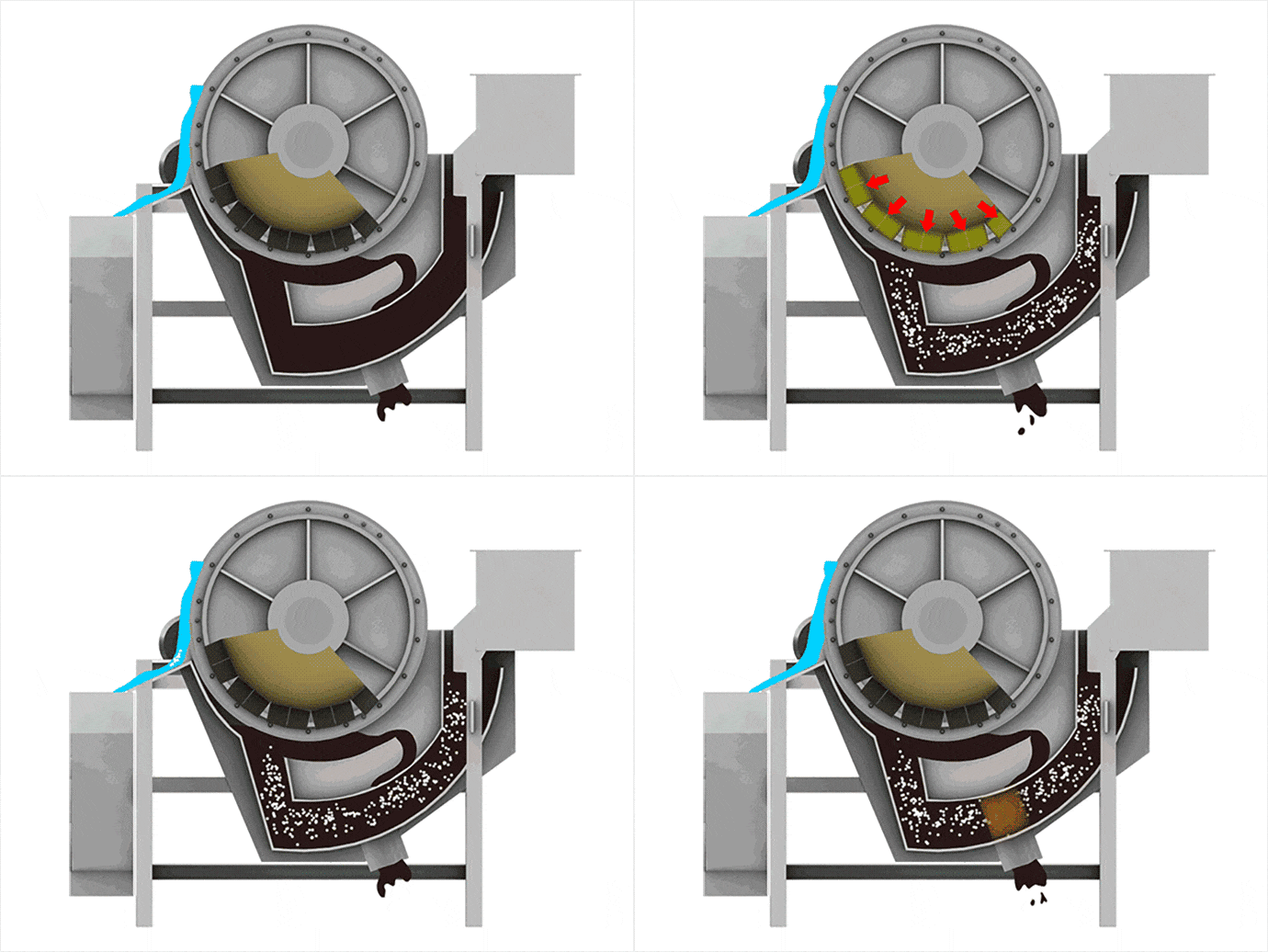
The Permanent Magnetic Drum Separator operates through a semi-reverse-flow magnetic field mechanism optimized for wet separation of strong magnetic minerals (e.g., magnetite, iron ore). Its core design features a rotating drum with embedded permanent magnets, generating a high-intensity magnetic field (120-190mT) to attract ferromagnetic particles. As slurry enters the magnetic zone, strong magnetic minerals adhere to the drum surface, while non-magnetic particles are discharged. The drum’s rotation transports adhered material past the magnetic field, where flush water dislodges them into a concentrate tank, achieving continuous separation.

Technical Parameters

Model

Cylinder diameter

(mm)

Cylinder length

(mm)

Cylinder

field strength

(mT)

Cylinder

Rotating speed

(r/min)

Dry ore capacity

(t/h)

Feed size

(mm)

Pulp concentration

(%)

Motor power

(kw)

Total weight

(t)

length*width*height

(mm)

CTBY101810001800350-5502342-650-1020-505.55.23160*2250*1750
CTBY102410002400350-5502353-860-1020-507.56.43790*2250*1750
CTBY103010003000350-5502382-1240-1020-507.57.14460*2250*1750
CTBY121812001800350-5502058-970-1020-507.56.73380*2460*2000
CTBY122412002400350-5502071-1200-1020-50117.24190*2460*2000
CTBY123012003000350-55020103-1580-1020-50118.94770*2460*2000


We are here waiting for you
Our professional team can tailor the solution to suit your needs and answer your questions
Contact Engineer

Frequently Asked Questions

A magnetic separator is a piece of beneficiation equipment that uses magnetic force to separate magnetic minerals from non-magnetic gangue materials in a mixed ore feed. When slurry or dry material passes through the magnetic field generated by permanent magnets or electromagnetic coils, magnetically susceptible particles are attracted to and held against the drum or matrix surface, while non-magnetic particles continue their natural flow path and are discharged separately. The captured magnetic fraction is then carried out of the magnetic field zone by the rotating drum or conveyor and discharged as magnetic concentrate. The strength of the magnetic field, measured in Gauss or Tesla, determines which minerals can be effectively recovered — weakly magnetic minerals require high-intensity fields while strongly magnetic minerals such as magnetite respond to relatively low-intensity fields.

Several critical factors influence magnetic separation efficiency, including magnetic field strength and gradient, feed particle size and slurry concentration, differences in mineral magnetic susceptibility, and material distribution uniformity.Properly controlling these parameters is essential for achieving optimal recovery rates. Improper parameter settings may lead to low equipment utilization, making it crucial to optimize each step according to your specific material.

Wet drum magnetic separators are most effective for processing slurry with particle sizes ranging from 0.074mm (200 mesh) to 3mm, making them ideally suited for receiving ground ore discharge from ball mills or rod mills in wet grinding circuits. Feed particles coarser than 3mm are better handled by dry magnetic separators or pre-concentration drum separators. For very fine particles below 0.038mm (400 mesh), high-gradient magnetic separators with a matrix medium are more effective, as conventional drum separators lose efficiency on ultrafine particles due to reduced magnetic force relative to hydrodynamic drag forces in the slurry. Feed slurry density for wet drum separators is typically maintained at 25–40% solids by weight for optimal separation efficiency and magnetic concentrate grade.

Several common faults can occur during operation:Overheating of the reducer: This may be caused by insufficient or poor-quality oil, excessive gear or worm wear, or poorly lubricated bearings. Solutions include checking and refilling oil or replacing worn components.Abnormal noise: This may indicate objects stuck in the cylinder, loose magnetic blocks, or other mechanical issues. The machine should be stopped immediately for inspection and maintenance.Motor overheating or abnormal sound: This can result from insufficient bearing lubrication, poor electrical connections, or low voltage. Check and address the specific cause accordingly.Weak separation performance: This may be due to a worn drive belt or damaged capacitors. Regular inspection and timely replacement of worn parts are necessary.

Selection should revolve around three core factors: material magnetism, material state, and production requirements.Material magnetism: For strongly magnetic minerals (like magnetite), permanent magnet separators are preferred. For weakly magnetic minerals (like hematite, limonite), high-gradient magnetic separators are more suitable.Material state: Dry operations are suitable for permanent magnet separators, while slurry-like materials are better for wet separators.Particle size: Dry separators handle coarse particles below 3mm, while wet separators are designed for fine-grained materials below 0.2mm.Production requirements: For large-scale separation, vertical ring high-gradient magnetic separators are suitable; for fine purification, high extraction magnetic filters are preferred.Proper selection can significantly improve separation efficiency and product quality.

Regular maintenance is crucial for keeping magnetic separators operating efficiently and extending their service life.Key practices include:Regular cleaning: Clean the magnetic surface frequently to remove accumulated ferromagnetic particles that can reduce magnetic efficiency. Cleaning frequency depends on the application—it could be daily, weekly, or monthly.Check magnetic strength: Over time, magnets may lose strength due to heat, vibration, or physical damage. Regularly test magnets with a gauss meter and replace them if strength falls below the required level.At room temperature, magnetic demagnetization generally does not exceed 5%.Inspect for wear and tear: Regularly inspect the separator for signs of wear, such as cracks, dents, or damage to the housing and seals, and address any issues promptly.Establish an inspection schedule: Implement pre-shift inspections and weekly maintenance to detect problems early and prevent costly downtime.

Explore Our Projects

Related Blog

Send message

Please enter your name
Please enter your email
Please enter your message