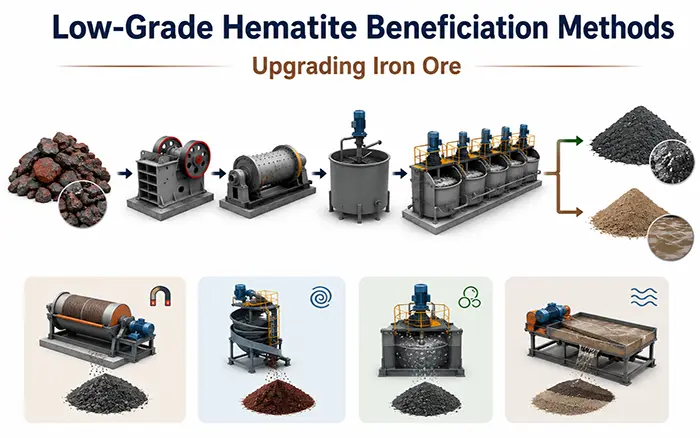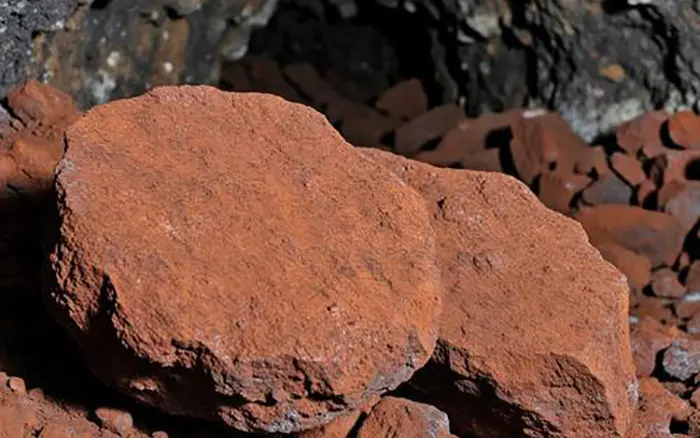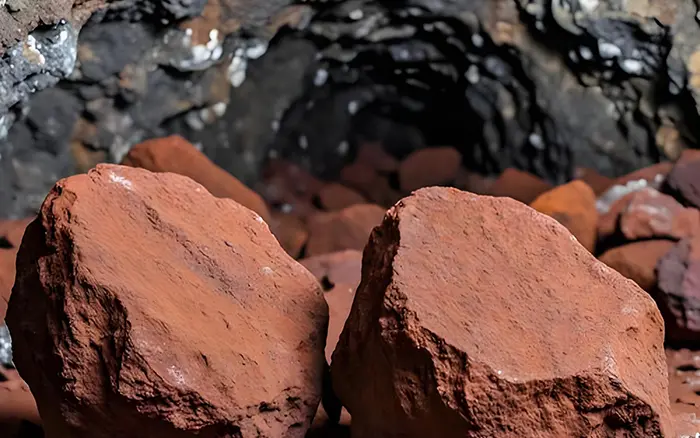
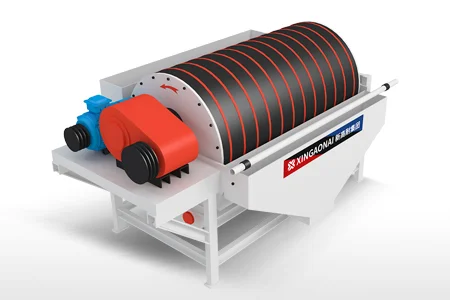
Hematite is one of the most important iron ore minerals used in steel production worldwide. However, unlike magnetite, hematite is a weakly magnetic mineral, making its separation more challenging. To effectively recover and upgrade hematite ore, many mineral processing plants rely on a high intensity magnetic separator for hematite.
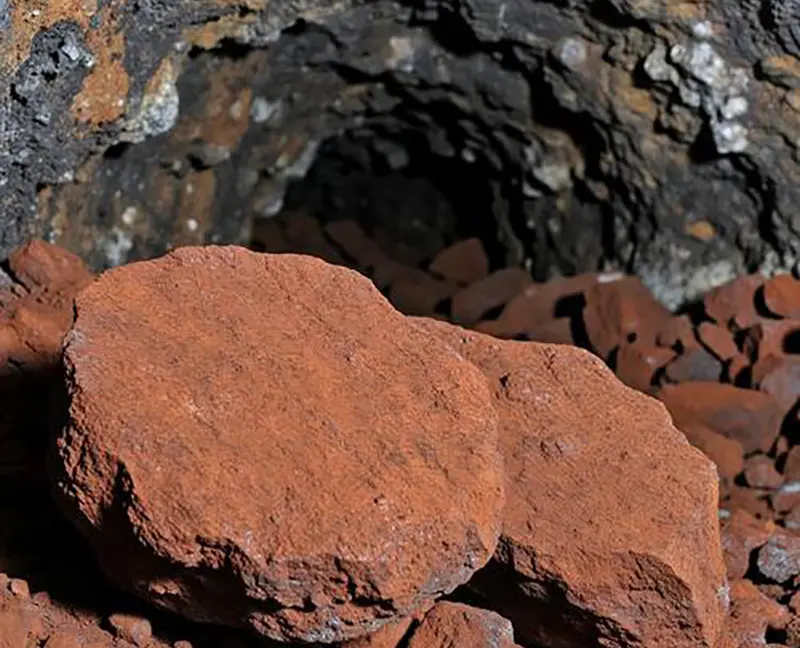
High-intensity magnetic separation has become a key technology in modern hematite beneficiation because it can efficiently recover weakly magnetic iron minerals while removing non-magnetic gangue materials. This process helps increase concentrate grade, improve recovery rates, and reduce overall processing costs.
Why Is High-Intensity Magnetic Separation Needed for Hematite?
Hematite (Fe₂O₃) possesses weak magnetic properties compared with strongly magnetic minerals such as magnetite.
As a result, conventional low-intensity magnetic separators often fail to achieve satisfactory separation results.
High-intensity magnetic separators generate significantly stronger magnetic fields, allowing them to:
Recover weakly magnetic hematite particles
Increase iron concentrate grade
Improve iron recovery
Reduce valuable mineral losses
Process low-grade hematite resources economically
These advantages make high-intensity magnetic separation one of the most widely used methods in hematite processing plants.
What Is a High Intensity Magnetic Separator?
A high intensity magnetic separator is a beneficiation machine designed to separate weakly magnetic minerals from non-magnetic materials using strong magnetic fields.
Depending on the application, the equipment may operate with magnetic field strengths ranging from:
5,000 Gauss
10,000 Gauss
15,000 Gauss
More than 20,000 Gauss
The separator creates a magnetic field strong enough to attract hematite particles while allowing gangue minerals to pass through.
Working Principle of a High Intensity Magnetic Separator for Hematite
The separation process is based on the magnetic susceptibility differences between hematite and gangue minerals.
Step 1: Ore Preparation
The hematite ore is crushed and ground to achieve sufficient mineral liberation.
Proper liberation is critical for maximizing separation efficiency.
Step 2: Slurry Feeding
For wet magnetic separation systems, the ground ore is mixed with water to form a slurry.
The slurry is then fed into the separator.
Step 3: Magnetic Separation
As the material passes through the magnetic field:
Hematite particles are attracted to the magnetic matrix.
Non-magnetic minerals remain unaffected and are discharged as tailings.
Step 4: Concentrate Collection
The magnetic minerals are collected and discharged as concentrate after leaving the magnetic zone.
The final product contains a significantly higher iron content than the original ore.
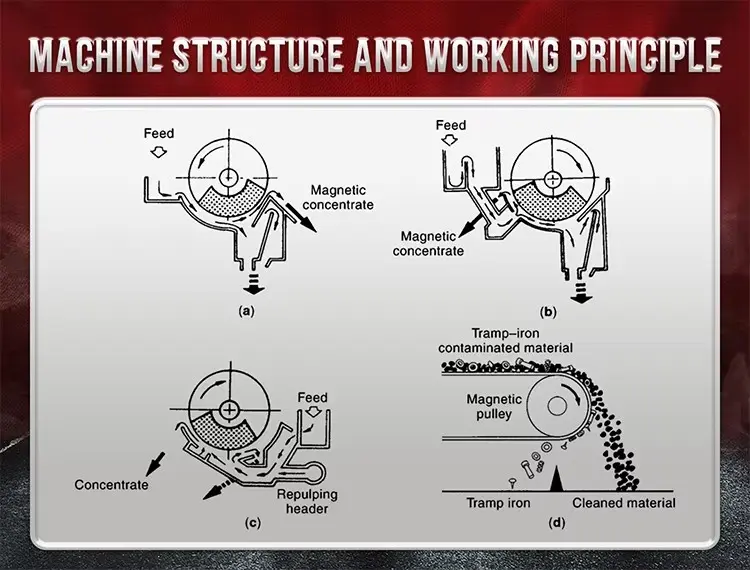
Types of High Intensity Magnetic Separators Used for Hematite
Wet High Intensity Magnetic Separator (WHIMS)
The Wet High Intensity Magnetic Separator (WHIMS) is the most common equipment used in hematite beneficiation.
Advantages include:
High recovery efficiency
Excellent performance for fine particles
Stable operation
Suitable for large-scale processing plants
WHIMS is particularly effective for recovering fine-grained hematite ores.
Dry High Intensity Magnetic Separator
Dry separators are commonly used when water availability is limited.
Advantages include:
No water consumption
Lower operating complexity
Suitable for coarse ore processing
However, dry separation generally achieves lower recovery rates than wet systems.
Vertical Ring High Gradient Magnetic Separator
This advanced equipment combines high magnetic field intensity with high-gradient separation technology.
Benefits include:
Improved selectivity
Reduced mechanical blockage
Better fine-particle recovery
Higher concentrate grades
Many modern hematite beneficiation plants use vertical ring high-gradient magnetic separators to maximize performance.
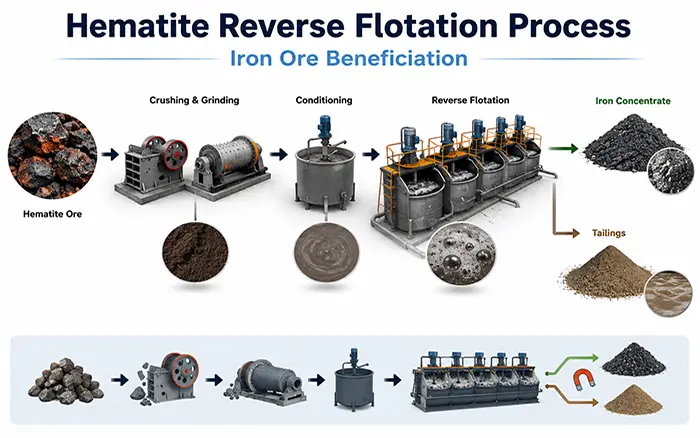
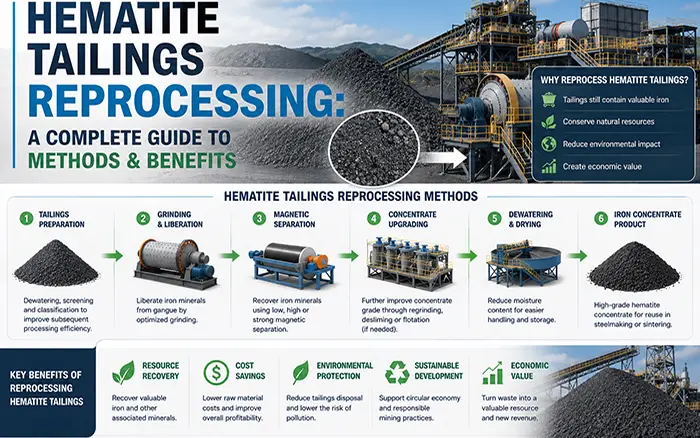
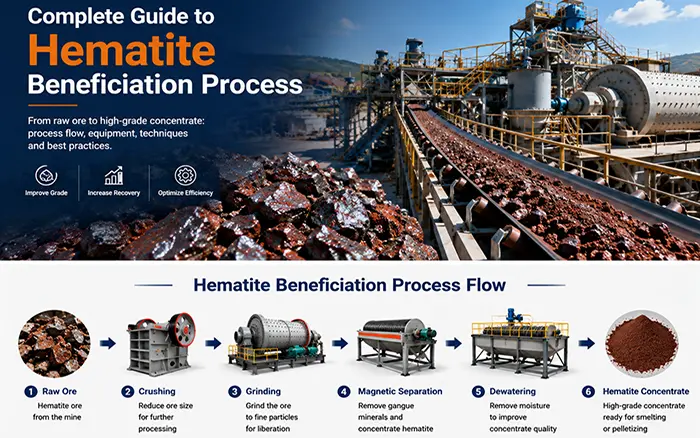
Typical Hematite Magnetic Separation Process Flow
A standard hematite beneficiation plant may include:
Crushing
Grinding
Classification
High-intensity magnetic separation
Regrinding (if required)
Secondary magnetic separation
Thickening
Filtration
For complex ores, magnetic separation is often combined with flotation or gravity separation.
Factors Affecting Separation Performance
Several factors influence the efficiency of a high intensity magnetic separator for hematite.
Magnetic Field Strength
Higher magnetic intensity generally improves hematite recovery.
However, excessively strong magnetic fields may reduce selectivity.
Particle Size
Proper particle liberation is essential.
Overly coarse particles may contain locked gangue, while excessive fines can reduce separation efficiency.
Feed Concentration
Slurry density affects particle movement and magnetic capture efficiency.
Optimizing pulp concentration improves overall performance.
Ore Mineralogy
Different hematite deposits have varying:
Iron content
Gangue composition
Particle size distribution
Degree of liberation
These factors directly affect separation results.
Equipment Design
Separator design, magnetic matrix configuration, and flow distribution all influence recovery and concentrate grade.
Advantages of High Intensity Magnetic Separation for Hematite
High Iron Recovery
Strong magnetic fields enable efficient recovery of weakly magnetic hematite.
Increased Concentrate Grade
The process effectively removes silica and other non-magnetic impurities.
Lower Operating Costs
Compared with some flotation circuits, magnetic separation often requires fewer chemical reagents.
Environmentally Friendly Operation
Magnetic separation generates minimal chemical waste and reduces reagent consumption.
Flexible Process Integration
The technology can be combined with:
Gravity separation
Screening
Dewatering systems
This flexibility makes it suitable for various ore types.
High Intensity Magnetic Separation vs Flotation for Hematite
| Factor | High Intensity Magnetic Separation | Flotation |
|---|---|---|
| Reagent Consumption | Very Low | High |
| Operating Cost | Lower | Higher |
| Fine Particle Recovery | Good | Excellent |
| Environmental Impact | Lower | Higher |
| Process Complexity | Moderate | High |
| Selectivity | Good | Excellent |
Many beneficiation plants use magnetic separation before flotation to improve overall process efficiency.
Industrial Applications
High intensity magnetic separators for hematite are widely used in:
Hematite beneficiation plants
Iron ore upgrading projects
Low-grade iron ore recovery
Pellet feed production
As high-grade iron ore resources decline, these separators play an increasingly important role in maximizing resource utilization.
Why High Intensity Magnetic Separators Are Essential for Hematite Processing
Because hematite exhibits weak magnetic properties, conventional magnetic separation methods often cannot achieve satisfactory recovery rates. A high intensity magnetic separator for hematite provides the strong magnetic force needed to efficiently recover valuable iron minerals while rejecting non-magnetic impurities.
When properly integrated into a beneficiation plant, high-intensity magnetic separation can significantly increase concentrate grade, improve iron recovery, reduce operating costs, and support the efficient utilization of low-grade hematite resources.