Beneficiation Equipment

Flotation Machine

CAPACITY

0.2-12(m³/min)

FEED SIZE

300-850mm
Application areas:Flotation machines are widely used in roughing or sweeping processes in flotation operations in mining, metallurgy, chemical industry and other fields.
Applicable materials:Flotation machines are suitable for the separation of various non-ferrous metals and non-metallic minerals such as lithium ore, gold ore, iron ore, coal fluorspar, etc.

Product Overview

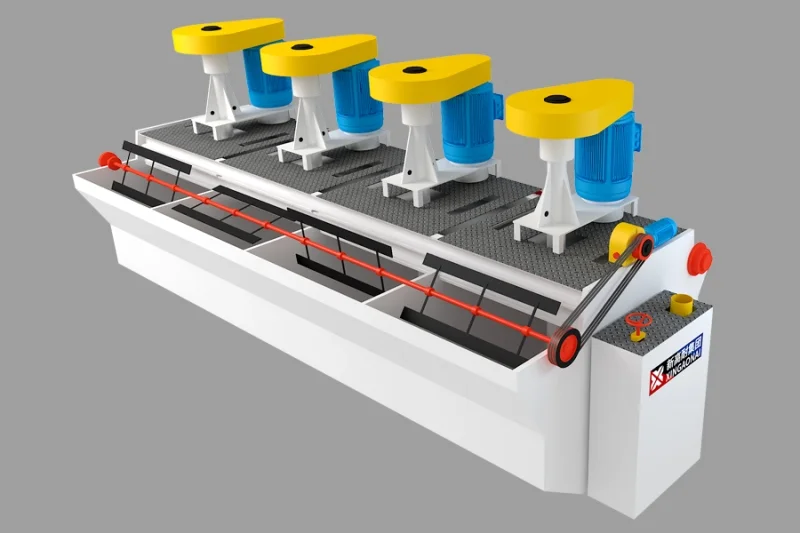
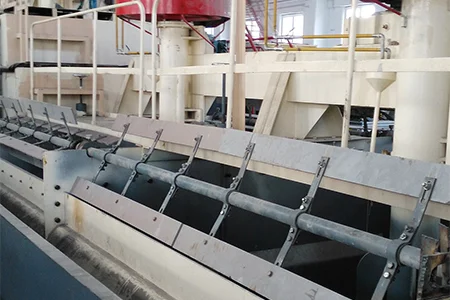
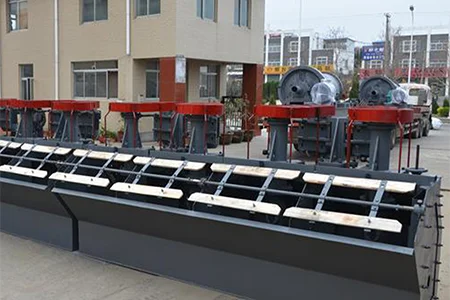
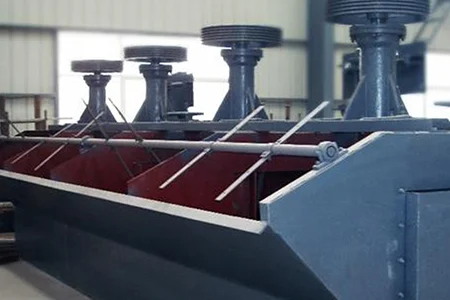
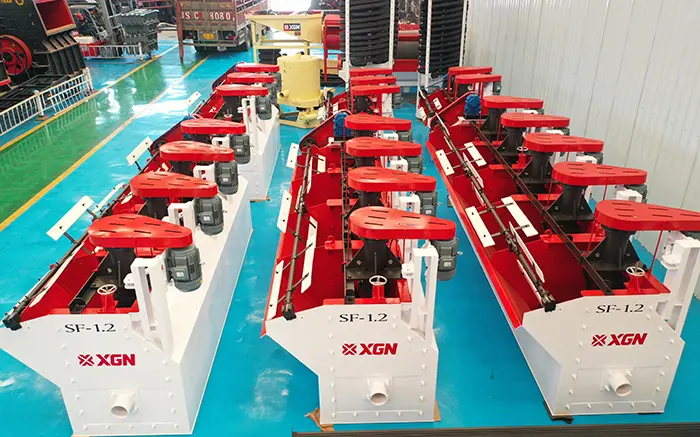
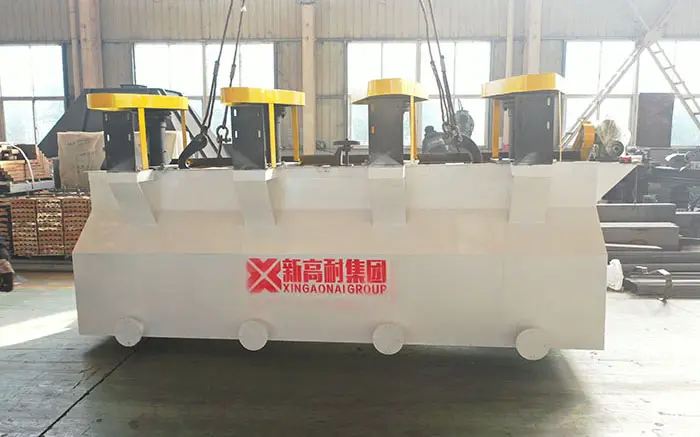
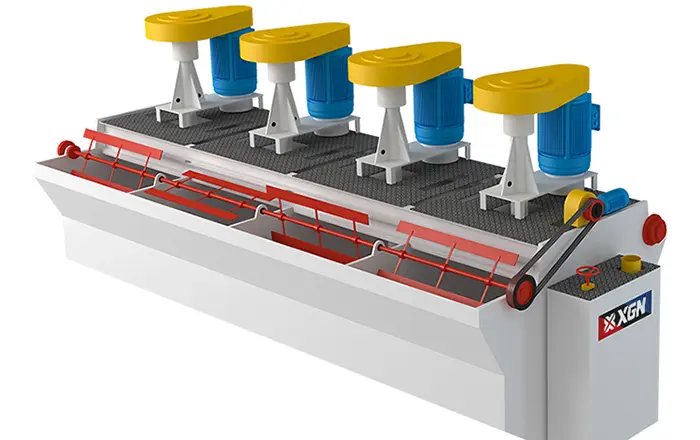
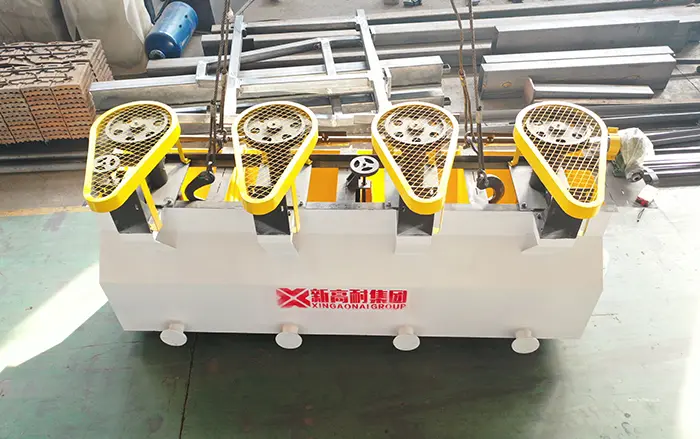
Flotation Machine is a high-efficiency mechanical flotation equipment widely applied in ore beneficiation. It excels at separating non-ferrous metals (copper, lead, zinc, nickel), precious metals, and non-metallic minerals (coal, fluorite, talc) through roughing, cleaning, and reverse flotation operations. Driven by a motor, its impeller rotates to generate negative pressure, mixing ore slurry, air, and reagents thoroughly to form mineralized bubbles—useful minerals adhere to bubbles and are scraped out, achieving effective mineral separation. With reliable structure, stable performance, and broad material adaptability, it is a core device for mining and mineral processing plants seeking optimized separation efficiency.

Key Advantages

Multiple functions

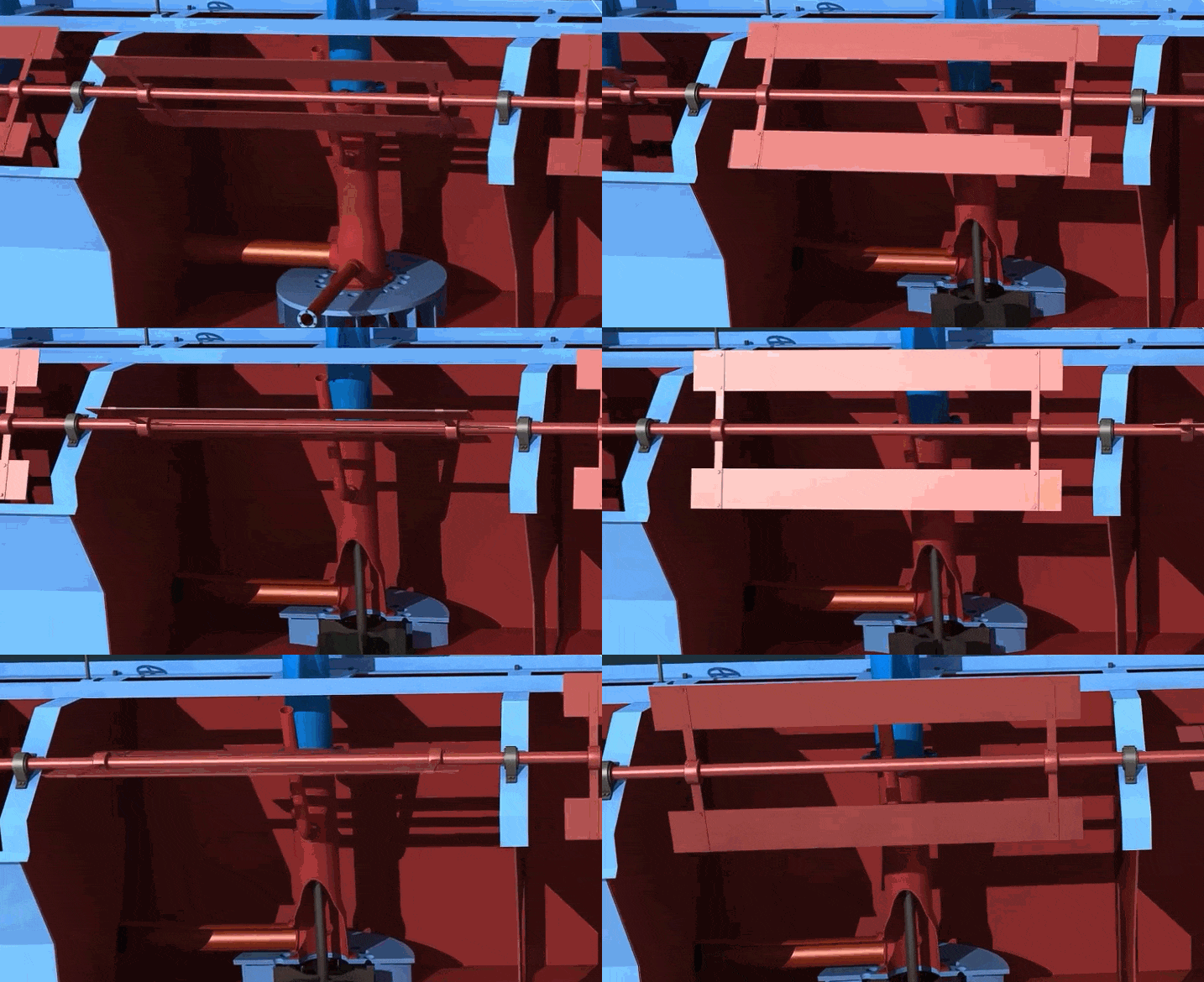
It has three functions of air suction, slurry suction and flotation. Adjust the height of the ram to control the height of the liquid. The forward-inclined tank body has a small dead angle.

Good suspension effect

The double-sided blades of the backward-inclined impeller ensure reasonable slurry circulation, reduce coarse-grained sedimentation, and facilitate the suspension of coarse-grained minerals.

Durable components

The gap between the impeller and the cover plate is reasonable. When the impeller rotates, the internal pulp circulation increases the centrifugal force and increases the suction capacity.

Easy to operate

Ore slurry surface automatic control device, mechanical stirring, easy to adjust.

Working Principle

Working Principle of Flotation Machine
The Flotation Machine utilizes a mechanical agitation system combined with air-induction technology to achieve efficient mineral separation. Its core mechanism involves a rotor-stator assembly that generates turbulent flow and micro-bubbles within the flotation cell. Mineral particles are suspended in a slurry, and hydrophobic minerals attach to air bubbles due to surface chemistry differences. The rotating impeller creates negative pressure to draw air through a hollow shaft, forming a dense foam layer that carries attached minerals to the surface for collection. Adjustable parameters include agitator speed, airflow rate, and pulp density to optimize separation efficiency.

Technical Parameters

Model

Effective volume

(m³)

Capacity

(m³/min)

Diameter of impeller

(mm)

Impeller revolutions

(r/min)

Stir motor power

(kw)

Scraper motor power

(kw)

Single slot weight

(kg)

SF-0.370.370.2-0.4300352-4421.50.55468
SF-0.70.70.3-1.0350336-38431.1629
SF-1.21.20.6-1.64503125.51.11373
SF-221.5-3550280111.51879
SF-2.82.81.5-3.5550280111.51902
SF-442.0-4650235151.52582
SF-663-6760191302.23540
SF-884.0-8760191302.24129
SF-16165.0-16850169-193451.57415
SF-202010-12850169-193451.59828


We are here waiting for you
Our professional team can tailor the solution to suit your needs and answer your questions
Contact Engineer

Frequently Asked Questions

A flotation machine is a mineral beneficiation device that separates valuable minerals from gangue by exploiting differences in the surface hydrophobicity of mineral particles. Ore slurry conditioned with chemical reagents is fed into the flotation cell, where a high-speed rotating impeller simultaneously agitates the pulp and induces air into the slurry, dispersing it into fine bubbles throughout the cell. Hydrophobic mineral particles — those that have been rendered water-repellent by the adsorption of collector reagents — attach to the rising air bubbles and are carried to the pulp surface, forming a stable mineral-laden froth layer that overflows into a launder and is collected as concentrate. Hydrophilic gangue particles remain wetted and sink to the bottom of the cell, where they are discharged as tailings. The entire process depends on precise control of reagent chemistry, bubble size, pulp density, and airflow rate to achieve the target mineral grade and recovery.

Flotation is one of the most widely applicable mineral separation technologies and is used commercially for an extensive range of sulfide and oxide minerals. Sulfide minerals routinely processed by flotation include chalcopyrite (copper), galena (lead), sphalerite (zinc), molybdenite (molybdenum), pentlandite (nickel), arsenopyrite and pyrite (gold-bearing sulfides), and chalcocite. Oxide and non-sulfide minerals processed by flotation with appropriate reagent systems include malachite and azurite (copper oxides), smithsonite (zinc oxide), cassiterite (tin), scheelite (tungsten), fluorite, phosphate rock, feldspar, quartz, and spodumene (lithium). Coal flotation is also widely practiced to recover fine coal particles from slurry. The key requirement for successful flotation of any mineral is the availability of selective collector reagents that can preferentially adsorb onto the target mineral surface and render it hydrophobic while leaving gangue minerals hydrophilic — this reagent se

Several factors can significantly impact the performance of a flotation circuit:Slurry Concentration (Solid Content): Optimal concentration ensures effective bubble-particle collision without excessive slurry viscosity. Concentration levels typically range from 20% to 50% solids.Particle Size (Liberation): Effective flotation relies on adequate mineral liberation. Coarse particles may be too heavy to float, while excessively fine particles may exhibit poor bubble attachment. For fine particles ( -200 mesh >60%), equipment with higher aeration rates is preferred.Reagent Scheme: The type and dosage of collectors, frothers, and modifiers are critical for creating the necessary surface chemistry for mineral selectivity.Aeration and Agitation: These are key operational variables that are equipment-specific.Pulp Temperature and pH: Can significantly influence chemical reactions between reagents and mineral surfaces.

The impeller-stator clearance directly influences the flotation machine‘s aeration rate, slurry circulation, and bubble dispersion quality, which are critical for achieving optimal separation performance. When replacing worn impellers and stators, ensure the clearance is adjusted to the manufacturer‘s recommended setting using shims—typically 5–10 mm depending on the machine model. This ensures high aeration capacity and fine bubble distribution, improving the collision and attachment efficiency between bubbles and hydrophobic mineral particles to maximize mineral recovery.

Common issues include cover plate or stator screws loosening, tank bottom wear or corrosion, impeller or cover plate damage, and scraper mechanism failure or bearing temperature rising too high. Solutions: Regular inspection and tightening of all bolts are essential. Repairs or replacement of worn tank bottoms is necessary for damaged tanks. Adjust the aeration valve to correct pressure during start-up and replace worn impellers or stators promptly, using adjustment gaskets to ensure proper clearance. Before installation, check the scraper shaft for bending or deformation, verify that all bearings are intact, and check oil levels. Additionally, ensure the scraper shaft rotates flexibly.

Explore Our Projects

Related Blog

Send message

Please enter your name
Please enter your email
Please enter your message