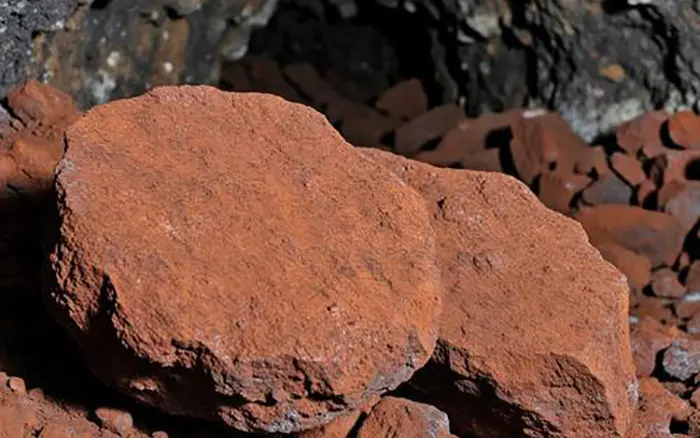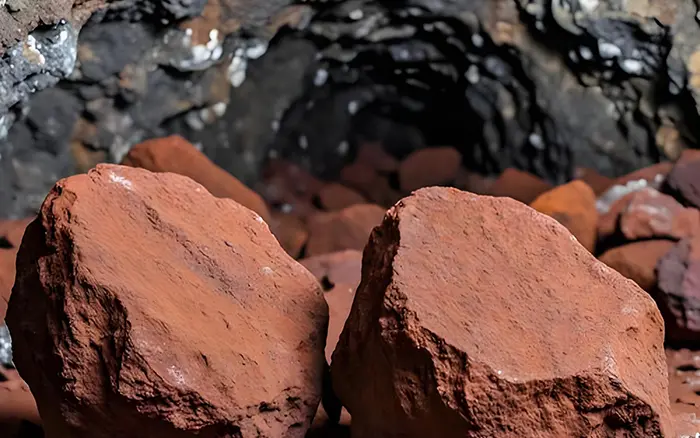
As high-grade iron ore resources continue to decline worldwide, mining companies are increasingly turning to low-grade hematite beneficiation methods to maximize resource utilization. Low-grade hematite deposits typically contain significant amounts of silica, clay, quartz, and other gangue minerals, making direct use in steel production impractical.
Modern beneficiation technologies enable operators to upgrade low-grade hematite into high-quality iron concentrates with improved recovery rates and economic returns. Selecting the appropriate beneficiation method depends on ore characteristics, liberation size, and production requirements.
This guide explains the most common low-grade hematite beneficiation methods, their working principles, advantages, limitations, and typical process flows.
What Is Low-Grade Hematite?
Low-grade hematite is an iron ore that contains relatively low iron content and high levels of impurities. Compared with high-grade hematite, it requires additional processing before it can be used as blast furnace feed or pellet feed.
Typical characteristics include:
Low iron grade
High silica content
Fine mineral dissemination
Complex mineral composition
Weak magnetic properties
These characteristics make beneficiation essential for improving ore quality and recovery.
Why Is Beneficiation Necessary for Low-Grade Hematite?
Without beneficiation, low-grade hematite often fails to meet industrial specifications for iron concentrate.
An effective beneficiation process can:
Increase iron concentrate grade
Improve iron recovery
Remove silica and alumina
Reduce transportation costs
Improve smelting efficiency
Maximize the utilization of mineral resources
As ore quality declines globally, beneficiation has become an indispensable step in iron ore processing.
Common Low-Grade Hematite Beneficiation Methods
Different beneficiation methods are suitable for different ore types. In many plants, multiple techniques are combined to achieve the best separation results.
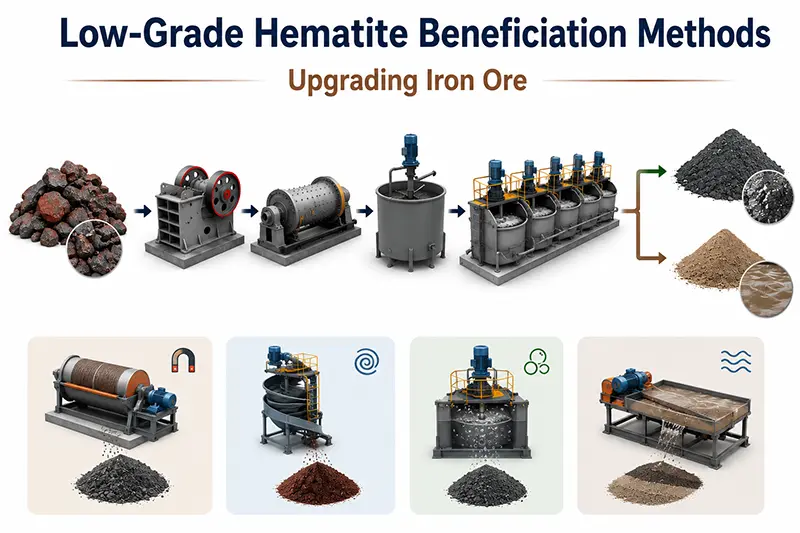
1. High-Intensity Magnetic Separation
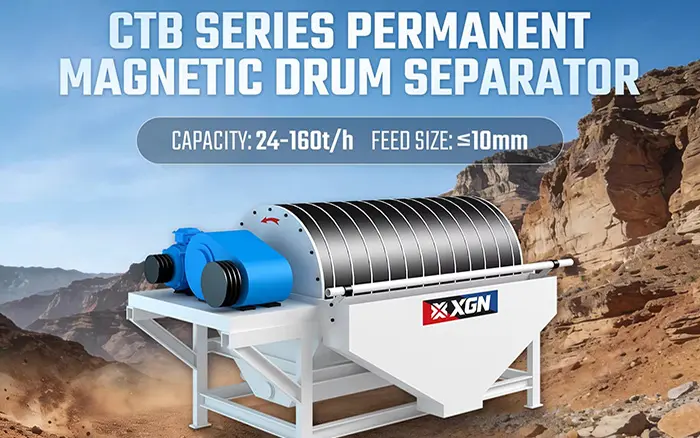
Because hematite is a weakly magnetic mineral, high-intensity magnetic separation is one of the most widely used beneficiation methods.
Working Principle
A strong magnetic field attracts hematite particles while allowing non-magnetic gangue minerals to pass through.
Advantages
High recovery efficiency
Low reagent consumption
Stable operation
Environmentally friendly
Suitable for fine particles
Applications
High-intensity magnetic separators are commonly used in:
Low-grade hematite
Fine-grained hematite
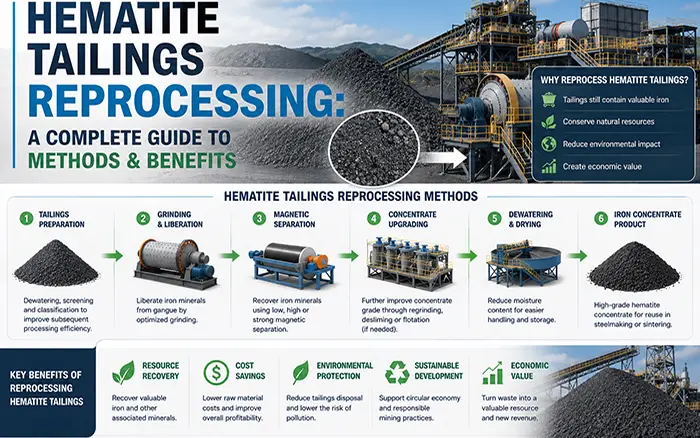
Tailings recovery
Pre-concentration circuits
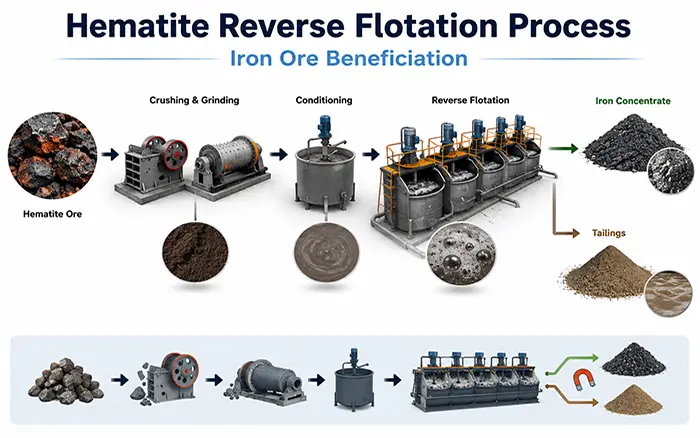
2. Reverse Flotation
Reverse flotation is another important method for upgrading hematite concentrates.
Instead of floating hematite, the process removes silica and other gangue minerals through flotation.
Advantages
Excellent silica removal
High concentrate grade
Effective for finely disseminated ores
Typical Reagents
Amine collectors
Starch depressants
Frothers
pH regulators
Reverse flotation is often used after magnetic separation to produce premium-grade concentrates.
3. Gravity Separation
Gravity separation utilizes differences in mineral density.
Common equipment includes:
Spiral chutes
Shaking tables
Jig concentrators
Advantages
Simple process
Low operating cost
No chemical reagents
Low energy consumption
However, gravity separation is generally more effective for coarse particles than ultrafine hematite.
4. Combined Magnetic Separation and Flotation
Many beneficiation plants use a combined process rather than relying on a single separation method.
A typical flow sheet includes:
Crushing
Grinding
Classification
High-intensity magnetic separation
Reverse flotation
Thickening
Filtration
This combination improves both iron recovery and concentrate grade.
5. Magnetic Separation Combined with Gravity Separation
For ores containing coarse liberated hematite, gravity separation can be applied before magnetic separation.
Benefits include:
Reduced grinding load
Lower energy consumption
Higher processing capacity
Improved overall recovery
Typical Process Flow for Low-Grade Hematite Beneficiation
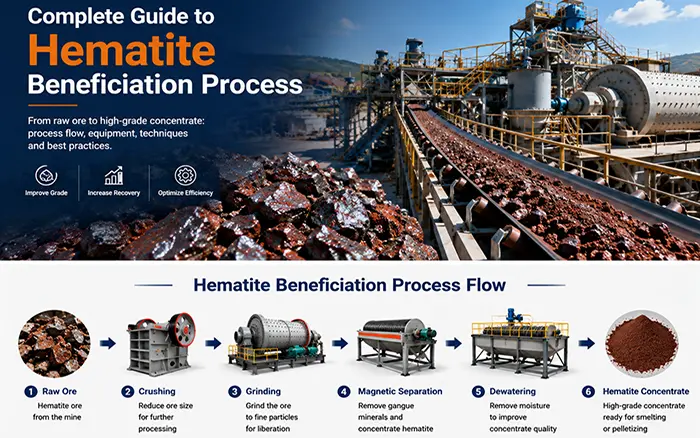
A modern beneficiation plant usually follows this process:
Primary Crushing
Large ore is reduced to a manageable size.
↓
Secondary Crushing
Further size reduction prepares the material for grinding.
↓
Grinding
Liberates hematite from gangue minerals.
↓
Classification
Separates particles according to size.
↓
High-Intensity Magnetic Separation
Recovers weakly magnetic hematite.
↓
Reverse Flotation
Removes remaining silica impurities.
↓
Concentrate Thickening
Reduces water content.
↓
Filtration
Produces a transportable iron concentrate.
Key Equipment Used in Low-Grade Hematite Beneficiation
A complete beneficiation plant may include:
Jaw crusher
Cone crusher
Hydrocyclone
Thickener
Slurry pump
Belt conveyor
The equipment configuration should be customized according to ore characteristics and production capacity.
Factors Affecting Beneficiation Efficiency
Several variables influence the performance of low-grade hematite beneficiation.
Ore Mineralogy
Different deposits have different liberation characteristics and gangue compositions.
Grinding Fineness
Adequate liberation improves separation efficiency, while excessive grinding generates slimes that may reduce recovery.
Magnetic Field Strength
Proper magnetic intensity is essential for recovering weakly magnetic hematite.
Reagent Selection
Collector and depressant dosage directly affect flotation performance.
Process Water Quality
Water chemistry influences reagent effectiveness and flotation selectivity.
Equipment Configuration
Proper equipment selection improves productivity and reduces operating costs.
Benefits of Modern Low-Grade Hematite Beneficiation
Compared with traditional processing methods, modern beneficiation technologies offer several advantages.
Higher Iron Recovery
Advanced separation technologies recover more valuable iron minerals.
Better Concentrate Quality
Combined processes effectively remove silica and alumina impurities.
Lower Production Costs
Optimized circuits reduce energy consumption and reagent usage.
Improved Resource Utilization
Low-grade deposits that were once considered uneconomical can now be processed profitably.
Greater Environmental Sustainability
Modern equipment improves water recycling and reduces waste generation.
Choosing the Right Beneficiation Method
The most suitable beneficiation process depends on several factors:
Iron grade
Mineral composition
Liberation size
Production capacity
Water availability
Investment budget
Concentrate quality requirements
Comprehensive laboratory testing and pilot-scale experiments are recommended before selecting a process flow.
Why Combined Beneficiation Processes Deliver the Best Results
There is no universal solution for every hematite deposit. While magnetic separation, flotation, and gravity separation each have distinct advantages, combining these technologies often provides the highest concentrate grade and iron recovery.
With proper process design, equipment selection, and operating optimization, low-grade hematite beneficiation methods can significantly improve resource utilization, reduce production costs, and support sustainable iron ore mining operations.