Auxiliary Equipment

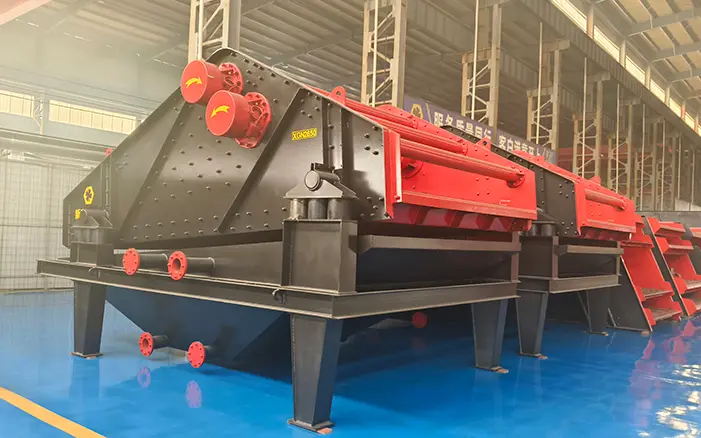
Dewatering Screen

CAPACITY

10-80t/h

FEED SIZE

---
Application areas:It is not only suitable for dewatering sand and tailings in sand washing plants and mines, but also suitable for coal slurry recovery in coal preparation plants, sludge dewatering in wastewater treatment, and material classification in mineral processing.
Applicable materials:Tailings (gold, iron, copper, manganese), sand and gravel aggregates, crushed stone, coal slime, mineral concentrates, construction waste, glass recycling, etc.
Product Overview

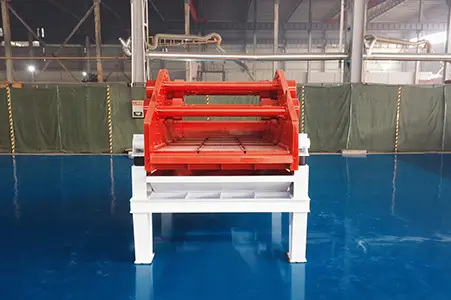
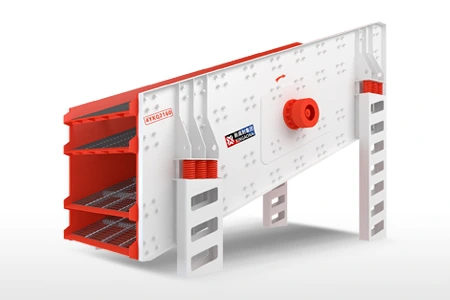
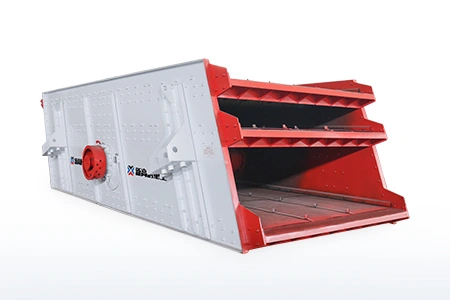
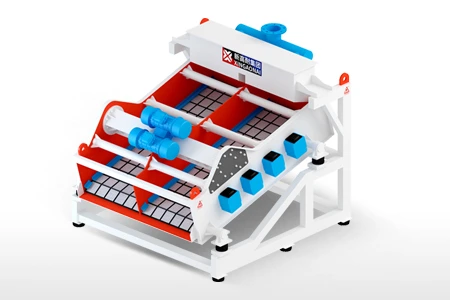
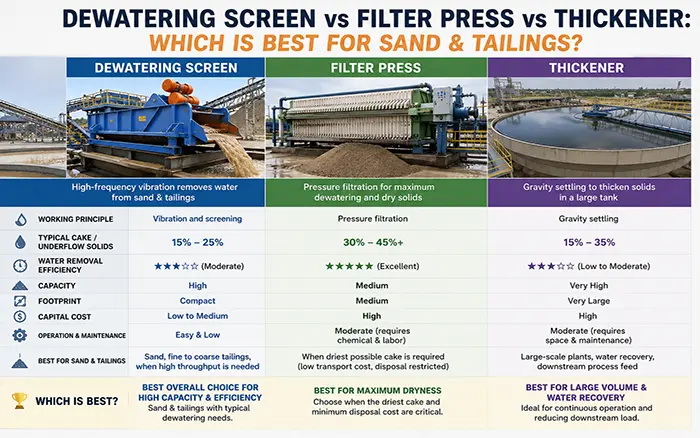
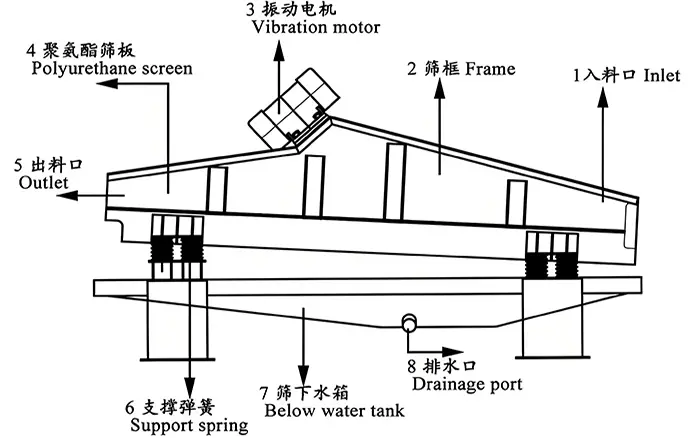
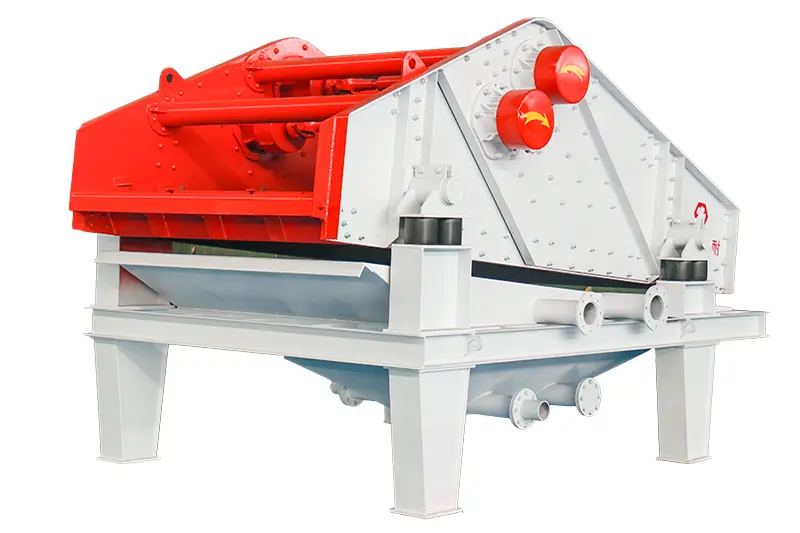
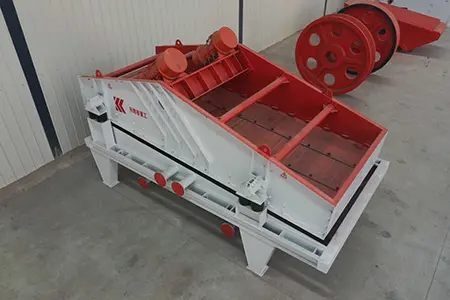
The Dewatering Screen is a linear vibrating screening machine specifically engineered to separate moisture from fine-grained materials. Equipped with dual unbalanced vibration motors as the excitation source, it generates a linear vibrating force that drives the material to move forward along the screen surface while water drains rapidly through the screen apertures. The result is a discharged product with a surface moisture content typically below 15%, meeting the requirements for belt conveying, stockpiling, and downstream processing.

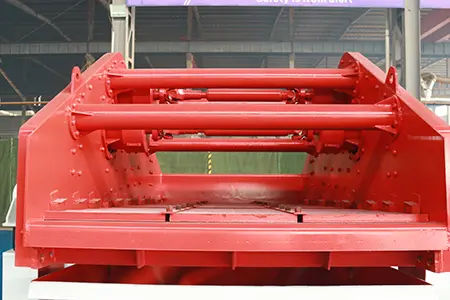
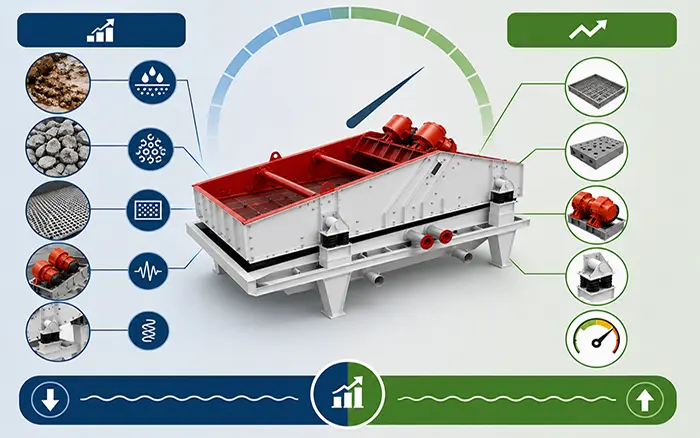
The screen deck is fabricated from high-strength carbon steel or stainless steel, fitted with polyurethane or wedge-wire screen panels that combine low aperture-blinding tendency with extended service life. The entire unit is supported on heavy-duty spring isolators to minimize dynamic load transmission to the supporting structure. With a processing capacity ranging from 10 to 80 TPH depending on model and material, XINGAONAI Dewatering Screens are engineered for continuous 24-hour operation in harsh, wet environments across mining, aggregate, and coal preparation industries.

Key Advantages

Superior Dewatering Performance

The upward-inclined screen surface (typically 5°) combined with high-frequency linear vibration effectively retains material on the deck long enough for thorough drainage. Final moisture content is reliably controlled below 12–15%, significantly reducing downstream drying costs and improving product quality for sale or further processing.

Anti-Blinding Polyurethane Screen Panels

Screen panels are manufactured from premium polyurethane or stainless steel wedge wire, offering self-cleaning properties that minimize aperture blinding even with high clay or fine-particle content materials. Panel sections are modular and bolt-on for fast, low-cost replacement without special tooling.

Dual-Motor Synchronous Excitation

Two vibration motors are mounted symmetrically and rotate in opposite directions to generate a stable, controlled linear vibration trajectory. This ensures uniform material distribution across the full deck width, consistent dewatering performance, and balanced dynamic loads — extending bearing and structural life.Heavy-Duty Structural Design

Heavy-Duty Structural Design

The screen box is welded from high-strength steel plate and reinforced at critical stress points. Finite element analysis is applied during the design phase to ensure fatigue resistance under continuous vibration. The unit handles continuous feed without structural degradation, suitable for 24/7 mining and aggregate operations.

Working Principle

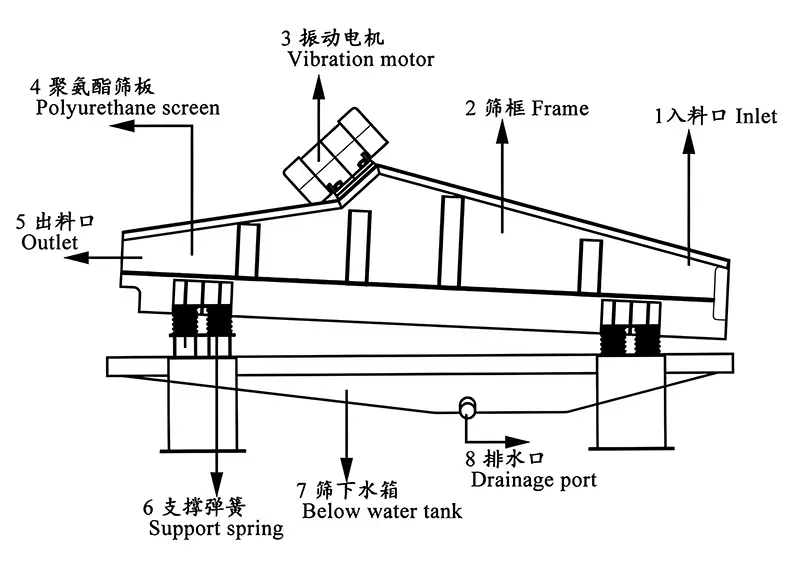
Working Principle of Dewatering Screen
Material (sand slurry, tailings, or coal slime) is fed evenly onto the steeply inclined feed end of the dewatering screen deck.Two counter-rotating vibration motors generate a linear motion directed upward and forward at a 45° angle relative to the screen surface.This motion accelerates the solids upward along the upward‑sloping deck while water rapidly drains through the polyurethane screen panels.A deep bed of material forms at the feed end, acting as a filter medium to retain fine particles that would otherwise pass through the screen openings.As material moves forward along the deck, water continues to drain, and the dewatered solids are discharged over the weir at the discharge end in a consistent, drip-free stream.

Technical Parameters

Model

Vibration frequency

(r/min)

Screen Mesh Size

(mm)

Capacity

(t/h)

Power

(kW)

Overall 

dimension

Weight

(t)

GT103014500.1-210-302×1.53440×1680×23102.4
GT123014500.1-215-452×1.53440×1880×23102.6
GT153014500.1-220-602×2.253440×2180×24003
GT183614550.1-230-802×3.74140×2480×25304


We are here waiting for you
Our professional team can tailor the solution to suit your needs and answer your questions
Contact Engineer

Frequently Asked Questions

A conventional vibrating screen is designed primarily for dry or semi-dry classification by particle size. A dewatering screen is optimized specifically for moisture removal: it operates at a higher vibration frequency, uses a finer and more open screen panel (polyurethane or wedge wire), and is installed at a slight upward incline to retain a material bed on the deck long enough for thorough drainage. The two machines serve different process functions and are generally not interchangeable.

For highly abrasive materials, polyurethane screen panels are the standard recommendation. Polyurethane offers significantly better abrasion resistance than woven wire mesh, with a typical service life of 6,000–10,000 operating hours under normal sand washing conditions. For fine coal or materials with high clay content prone to blinding, wedge-wire stainless steel panels may be selected for their superior self-cleaning geometry and precise aperture control.

Yes, but performance will vary. High clay content increases the viscosity of the slurry and makes drainage more difficult, which may result in higher residual moisture in the discharged product. In such cases, we recommend adding a washing spray bar above the feed end to dilute and disperse clay particles, selecting a smaller screen aperture to retain fines while allowing clay-laden water to drain, or pre-treating the feed in a log washer or scrubber before the dewatering screen. Our engineers can evaluate your specific feed characteristics and recommend the appropriate configuration.

Vibration frequency is determined by the motor speed, which is fixed at the rated RPM under standard supply frequency (50 Hz or 60 Hz). Amplitude is adjusted by changing the eccentric weight configuration on the vibration motor shafts — adding or removing weight blocks alters the centrifugal force and thus the amplitude. This adjustment is carried out during installation or commissioning and does not require special equipment. For applications requiring variable amplitude during operation, a frequency inverter (VFD) can be supplied as an option to allow real-time adjustment from the control panel.

Routine maintenance is straightforward and low-cost. Daily checks include inspecting the vibration motor mounting bolts for tightness and verifying that the spring isolators show no cracking or permanent set. Weekly checks include inspecting screen panel condition for wear or blinding and checking motor bearing temperature. The vibration motor sealed bearings are factory-lubricated and require no in-service greasing for the first 10,000 hours under normal operating temperatures. Screen panels are the primary wear item and can be replaced section by section without removing the screen box from its installation — a full panel replacement can typically be completed within 2–4 hours by two operators.

Explore Our Projects

Send message

Please enter your name
Please enter your email
Please enter your message