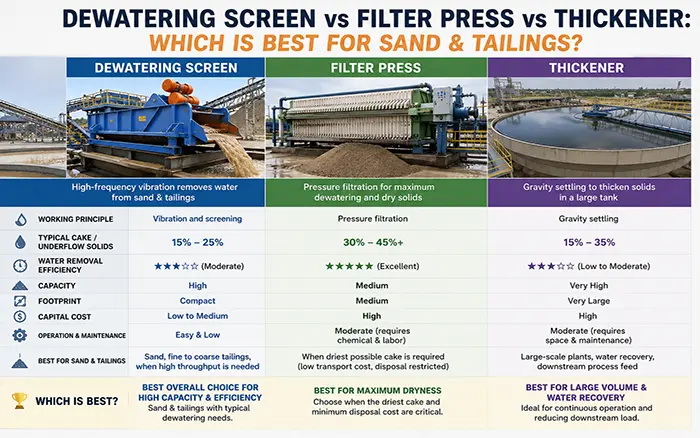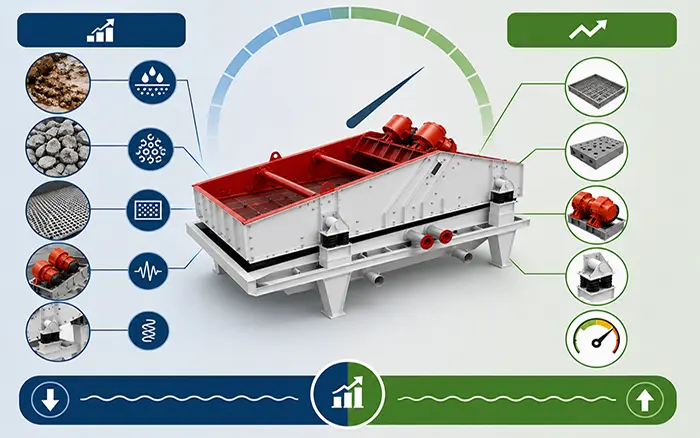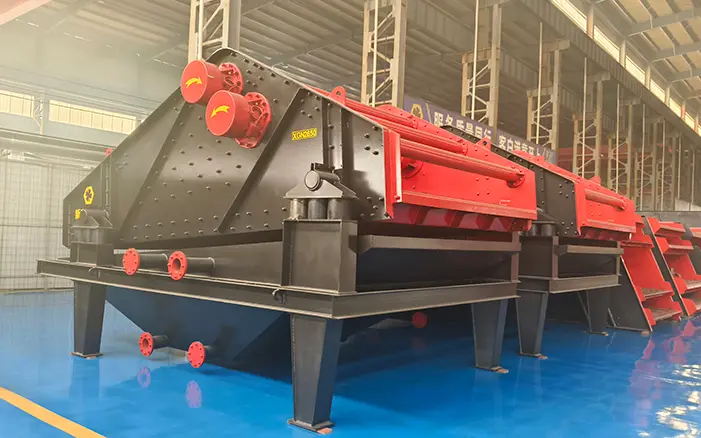
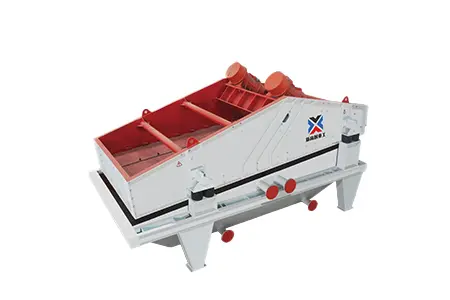
In many industries—mining, sand washing, coal processing, and wastewater treatment—separating water from solid materials is a critical step. One of the most efficient machines for this job is the dewatering screen. Unlike regular vibrating screens that only classify particles by size, a dewatering screen is specifically designed to remove surface moisture from solids, producing a dry cake and clean water. Understanding the dewatering screen working principle helps operators select the right equipment and optimize performance. This article explains how dewatering screens work, their key components, and the factors that affect dewatering efficiency.
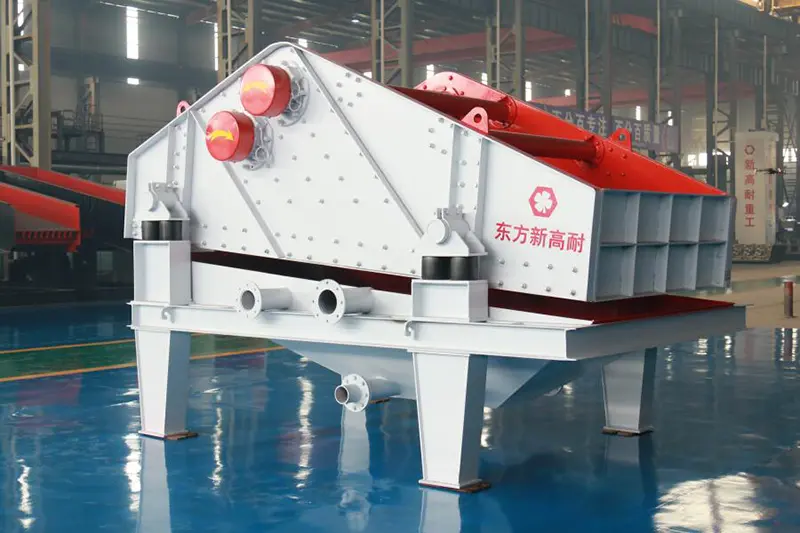
What Is a Dewatering Screen?
A dewatering screen is a vibrating screen that uses linear motion and a steep discharge angle to separate water from solid particles. It is commonly used after a washing cyclone or a sand screw to reduce the moisture content of sand, coal, ore, or tailings. The final product typically has a moisture content between 10% and 20%, making it suitable for transport or further processing.
Dewatering Screen Working Principle
The dewatering screen working principle is based on three main elements: linear vibration, a sloping screen deck, and a fine mesh or polyurethane screen panel. Here is how it works step by step.
1. Linear Vibration Generation
The screen is driven by two vibrating motors mounted on the screen body. These motors rotate in opposite directions. Their forces combine to create a straight‑line (linear) vibration. The vibration direction is usually set at an angle between 30° and 45° relative to the screen surface. This angled thrust pushes the material forward while shaking off water.
2. Feed Entry
The wet slurry (a mixture of solids and water) enters the screen from the feed end, either directly from a cyclone underflow or a dewatering screw. The feed is evenly distributed across the width of the screen deck.
3. Drainage and Dewatering
As the material moves along the screen deck under linear vibration, several processes occur:
Gravity drainage: Free water immediately drains through the screen openings by gravity in the first section of the deck.
Vibration‑assisted dewatering: The linear vibration causes the solids to bounce slightly, which helps trapped water rise to the surface and escape through the screen.
Fines retention: The screen mesh or polyurethane panel has very fine openings (often 0.1–1 mm) that allow water to pass but hold back most solids. Some ultrafine particles may pass with the water, but a properly designed screen minimizes this loss.
4. Steep Discharge End
At the discharge end, the screen deck rises steeply (often at a 10°–15° upward angle). This upward slope is a key feature of the dewatering screen working principle. As the material climbs this slope, the vibration shakes off additional water. The result is a relatively dry solid cake that falls off the discharge lip. The water, now clear or with only fine solids, collects in a launder below the screen and is either recycled or discharged.
5. Collection of Dewatered Product
The dewatered solids exit the screen at the discharge end and are conveyed away. Meanwhile, the filtrate water flows through the screen into a sump or tank.
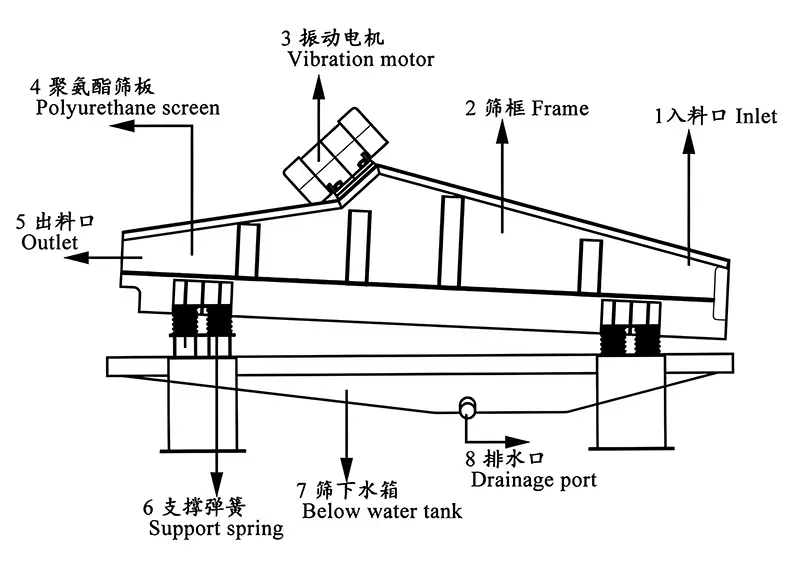
Key Components of a Dewatering Screen
To fully understand the dewatering screen working principle, it helps to know the main parts.
Screen box: A rigid steel frame that holds the screen deck and vibrates as a unit.
Screen deck: Typically made of polyurethane panels or stainless steel wedge wire. Polyurethane is common for its wear resistance and fine slot openings (0.2–1 mm).
Vibrating motors (exciters): Two motors mounted on the screen box, rotating opposite to each other to produce linear vibration.
Springs (isolation mounts): Support the screen box and isolate vibration from the supporting structure.
Feed box: Distributes the slurry evenly onto the screen.
Discharge lip: The point where dewatered solids exit.
Water collection launder: Catches the water passing through the screen.
Types of Dewatering Screens
While the basic dewatering screen working principle is the same, there are two main designs.
1. Linear motion dewatering screen: The most common type. It uses two unbalanced motors to generate linear vibration. It works well for sand, coal, and fine ores.
2. High‑frequency dewatering screen: Uses a single motor with a high vibration frequency (up to 3,600 RPM). It is more effective for very fine particles (below 0.3 mm) and produces a drier cake.
Factors Affecting Dewatering Efficiency
Even with the correct dewatering screen working principle, several parameters influence the final moisture content.
Feed solids concentration: Higher solids content (40–60% solids) gives better dewatering. Very dilute feed (below 20% solids) requires a thicker feed or a pre‑thickening step.
Particle size distribution: Fine particles (below 0.1 mm) are harder to dewater because they create a low‑permeability cake. Adding coarse particles or using a flocculant helps.
Screen opening size: Smaller openings retain more fines but reduce water flow. A compromise is needed.
Vibration amplitude and frequency: Higher amplitude moves material faster, reducing retention time. Lower amplitude with higher frequency often improves dewatering.
Slope of the deck: A steeper discharge slope increases dewatering but may reduce capacity.
Feed rate: Too high a feed rate overloads the screen and results in wet cake. Too low a rate underutilizes the equipment.
Common Applications of Dewatering Screens
The dewatering screen working principle is applied across many industries:
Sand and aggregate production: Dewatering washed sand after a sand screw or hydrocyclone.
Coal preparation: Removing water from fine coal (slimes) before loading.
Iron ore and mineral processing: Dewatering ore concentrates and tailings.
Industrial minerals: Dewatering silica sand, feldspar, and kaolin.
Wastewater treatment: Thickening sludge and dewatering biosolids.
Recycling: Dewatering crushed glass, plastic, and other recycled materials.
Advantages of Using a Dewatering Screen
Produces a dry, stackable product (moisture as low as 10–15%).
Low operating cost compared to thermal drying.
Continuous operation with minimal labor.
Compact design, small footprint.
No chemicals required for many applications.
Maintenance Tips for Dewatering Screens
To keep the dewatering screen working principle effective, follow these maintenance practices.
Inspect screen panels daily for wear or tears. Replace worn panels immediately.
Check vibration motors for unusual noise or heat. Lubricate bearings as recommended.
Ensure springs are not broken or sagging. Replace damaged springs.
Clean the screen deck regularly to prevent blinding (clogging of openings).
Monitor the feed distribution to avoid uneven loading across the screen width.
Troubleshooting Common Issues
| Problem | Possible cause | Solution |
|---|---|---|
| Wet cake | Feed too dilute, low amplitude, worn screen panels | Increase feed solids, adjust vibration settings, replace panels |
| Low throughput | Screen openings too small, low vibration force | Use larger openings, increase motor power |
| Excessive solids in water | Torn screen panel, incorrect opening size | Replace panel, use finer openings |
| Screen box cracking | Over‑tightened springs, overload | Check spring tension, reduce feed rate |
Conclusion
The dewatering screen working principle uses linear vibration, a sloped deck, and fine screen openings to remove surface moisture from solid particles. By understanding how vibration angle, stroke, and screen slope affect dewatering, you can select the right machine and optimize its performance. Proper maintenance of the screen panels, motors, and springs ensures long service life and consistent product dryness.