Auxiliary Equipment

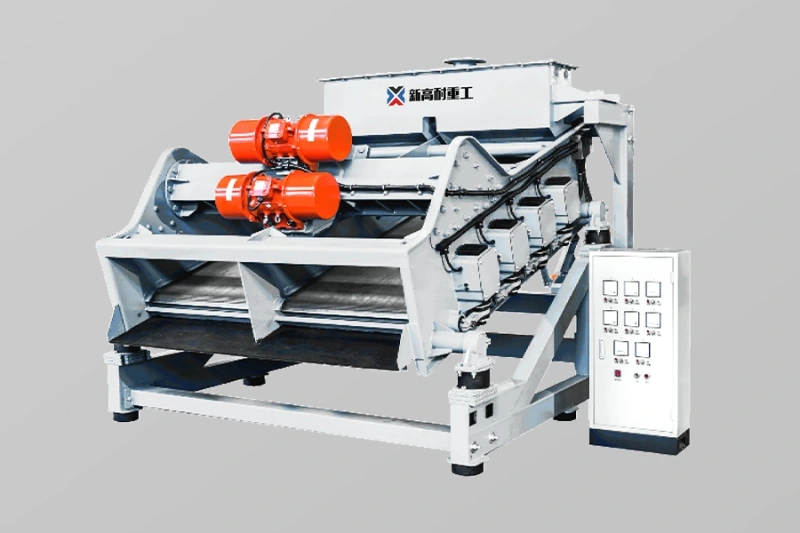
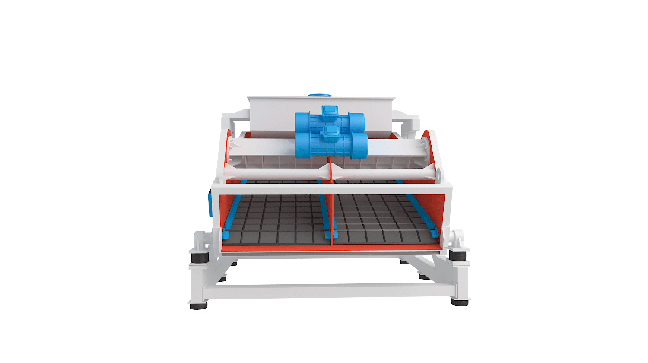
High Frequency Electromagnetic Vibrating Screen

CAPACITY

10-20t/h

FEED SIZE

---
Application areas:The High Frequency Electromagnetic Vibrating Screen is not only suitable for fine and ultra-fine dry or wet classification in sand and gravel production, mineral processing, and coal preparation plants, but also widely used in fixed processing facilities
Applicable materials:Manufactured sand, natural sand, iron ore concentrate, copper ore concentrate, coal slime, quartz sand, feldspar, calcium carbonate, ceramic powder, abrasive material, glass sand, zircon sand, graphite, talc, and other fine or ultra-fine granular material

Product Overview

The High Frequency Electromagnetic Vibrating Screen is a precision fine-classification machine that uses high-frequency electromagnetic excitation — typically 1,200–3,600 cycles per minute — to vibrate multiple polyurethane or stainless steel screen decks at small amplitude and high frequency, delivering superior screening efficiency for fine and ultra-fine particles that conventional circular or linear vibrating screens cannot effectively classify. The high vibration frequency rapidly stratifies fine particles and prevents blinding of the screen apertures by near-size particles, achieving screening efficiencies of 90–97% for materials in the 0.074–3 mm size range.


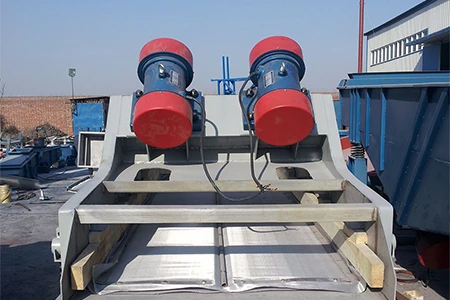
XINGAONAI High Frequency Electromagnetic Vibrating Screens are available in single, double, and triple-deck configurations with screen surface widths from 0.6 m to 2.4 m and lengths from 1.2 m to 3.6 m, covering processing capacities from 5 TPH to 200 TPH depending on material type and target cut size. The electromagnetic exciter — mounted directly on the screen frame — generates a linear or elliptical vibration trajectory at frequencies of 20–60 Hz, adjustable via the electromagnetic controller to optimize screening performance for each specific material and aperture size without mechanical drive changes.


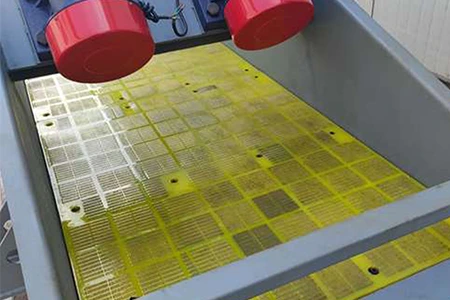
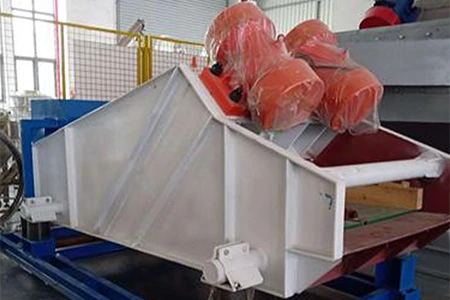
The screen panels are fabricated from high-precision polyurethane, stainless steel woven wire, or punched plate depending on the aperture size and material abrasiveness, all mounted in quick-release tensioning frames for fast on-site replacement without tools. The screen box is supported on rubber isolators to absorb dynamic loads, and the entire unit is designed for installation in existing plant screening stations as a direct replacement for conventional vibrating screens or as a new fine-classification stage downstream of primary screening.

Key Advantages

Superior Fine Screening Efficiency, Down to 0.074 mm

The high-frequency electromagnetic excitation — operating at 20–60 Hz compared to 12–17 Hz for conventional circular vibrating screens — dramatically increases the number of particle-aperture contact events per unit time, giving fine particles far more opportunities to pass through the screen apertures on each pass. This delivers screening efficiencies of 90–97% for particles in the 0.074–3 mm range, significantly outperforming conventional screens that typically achieve 50–70% efficiency at these fine cut sizes.

Electromagnetic Anti-Blinding Technology

The rapid high-frequency micro-vibration of the screen panel surface continuously agitates near-size particles that would otherwise lodge in and block the screen apertures, effectively preventing blinding without the need for ball trays, rubber bounce balls, or ultrasonic cleaning systems. This makes the High Frequency Electromagnetic Vibrating Screen the preferred solution for screening wet, sticky, or near-size materials that chronically blind conventional wire mesh or polyurethane panels at coarser vibration frequencies.

Adjustable Frequency & Amplitude for Process Flexibility

The electromagnetic excitation frequency and vibration amplitude are independently adjustable via the electronic controller panel without stopping the machine or changing any mechanical components. This allows operators to optimize screening performance in real time as feed material characteristics change — increasing frequency to improve efficiency for finer cut sizes, or reducing frequency to extend screen panel life for coarser, more abrasive feeds — providing exceptional process flexibility from a single machine.

Low Energy Consumption

The electromagnetic drive system consumes significantly less energy than equivalent motor-eccentric or motor-unbalance drive systems because it drives only the lightweight screen panels and frame rather than a heavy eccentric shaft and flywheel assembly. Typical power consumption is 0.5–7.5 kW per unit depending on screen size, delivering the lowest energy cost per tonne of screened material in the fine classification size range compared to any alternative screening technology.

Modular Screen Panel System for Rapid Maintenance

Screen panels are mounted in individually removable, quick-release tensioning frames that allow a single worn or damaged panel to be replaced in minutes without tools, without removing adjacent panels, and without stopping adjacent equipment. The modular panel system accommodates mixed aperture sizes on the same deck — coarser apertures at the feed end and finer apertures at the discharge end — to optimize throughput and efficiency simultaneously across the full deck length.

Compact Footprint, Easy Retrofit

The compact, lightweight design — significantly smaller and lighter than conventional vibrating screens of equivalent screening area — allows the High Frequency Electromagnetic Vibrating Screen to be installed in existing plant structures with limited headroom and floor space, or directly above existing conveyors and sumps without structural reinforcement. This makes it the ideal solution for upgrading existing screening circuits to achieve finer cut sizes or higher screening efficiency without plant expansion or significant civil work.

Working Principle

Working Principle of High Frequency Electromagnetic Vibrating Screen
Feed material is evenly distributed across the full width of the top screen deck via a feed box or distribution chute, while the electromagnetic exciter — energized by alternating current at the set frequency of 20–60 Hz — generates a rapidly alternating magnetic force that drives the screen frame and panels in a linear or elliptical vibration trajectory at small amplitude (0.5–3 mm) and high frequency; this high-frequency micro-vibration stratifies the material bed so that fine particles rapidly migrate downward to the screen surface and pass through the apertures, while oversize particles remain on top of the bed and advance toward the discharge end under the combined effect of the screen inclination and vibration; the rapid panel vibration continuously agitates near-size particles lodged in the apertures, preventing blinding and maintaining open screening area throughout continuous operation; in multi-deck configurations, undersize from the upper deck falls onto the lower deck for further size separation, producing multiple classified fractions simultaneously; all product fractions discharge from the respective deck ends into separate collection chutes or sumps for downstream processing, while the electromagnetic controller continuously maintains the set excitation frequency and amplitude to deliver stable, consistent screening performance throughout 24-hour operation.

Technical Parameters

ModelScreen box layersPassage

Sieve surface area

(㎡)

Power

(kw)

Capacity

(tph)

XZFS20201
Dual passage47.5210-20


We are here waiting for you
Our professional team can tailor the solution to suit your needs and answer your questions
Contact Engineer

Frequently Asked Questions

A high frequency electromagnetic vibrating screen uses an electromagnetic vibrator to generate high-frequency, low-amplitude vibrations — typically 1,500–3,000 RPM or higher. The rapid vibration causes fine particles to stratify quickly and pass through the screen mesh efficiently. Unlike mechanical eccentric screens, the vibration frequency is driven by alternating current through an electromagnet, allowing precise frequency control without rotating mechanical parts.

The key difference lies in frequency and amplitude. High frequency electromagnetic screens operate at much higher frequencies (up to 50 Hz and above) with very low amplitude (1–3mm), which is ideal for fine and ultrafine screening (0.074–3mm). Standard circular or linear screens run at lower frequencies with higher amplitude and are better suited for coarser material classification (above 3mm). The electromagnetic screen also has no rotating parts, meaning lower mechanical wear and quieter operation.

Vibration frequency is adjusted by controlling the AC power input to the electromagnetic exciter — typically via a frequency converter (inverter). Amplitude is adjusted by changing the air gap between the electromagnet core and the vibrating armature. Both parameters can be tuned on-site to optimize screening efficiency for different materials without stopping the machine for mechanical adjustments.

Because there are no rotating mechanical parts in the excitation system, maintenance requirements are low. Key tasks include: regular inspection of the screen mesh for wear or blinding, checking the electromagnetic coil and insulation for overheating, verifying the spring suspension system for fatigue or damage, and cleaning the feed box to prevent buildup. A monthly maintenance check is typically sufficient for continuous operation.

Electromagnetic drive ensures stable vibration frequency, low noise, energy saving and long service life without mechanical transmission parts.

Explore Our Projects

Send message

Please enter your name
Please enter your email
Please enter your message