Dewatering screens are essential for removing water from sand, coal, minerals, and tailings. One of the most common questions when buying or operating a dewatering screen is: “What is its capacity?” Understanding dewatering screen capacity helps you select the right equipment, plan production, and avoid bottlenecks. This article explains what capacity means, which factors affect it, how to estimate it, and practical ways to increase throughput.
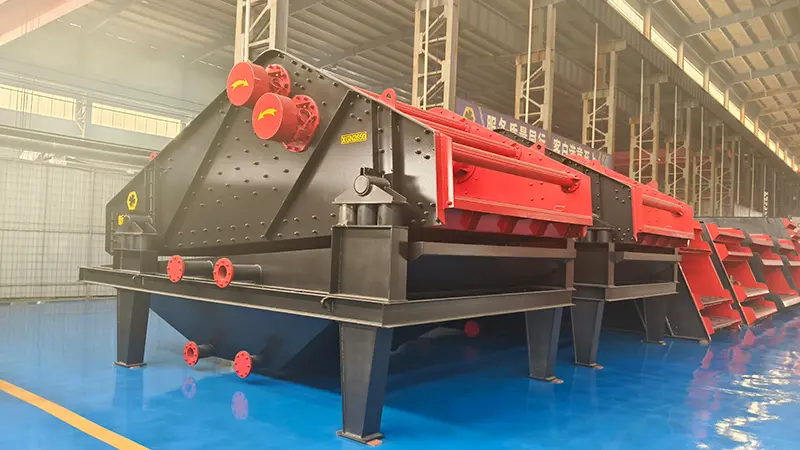
What Is Dewatering Screen Capacity?
Dewatering screen capacity is the amount of material (usually in tons per hour, t/h) that the screen can process while achieving the required moisture level. Capacity is not just about how much solids you feed; it also includes how much water passes through the screen. For a given application, capacity is closely linked to final cake dryness. A screen that processes 100 t/h of sand at 12% moisture is performing very differently from one that processes 100 t/h at 25% moisture.
Factors That Affect Dewatering Screen Capacity
Several key factors determine how much material a dewatering screen can handle.
1. Feed Solids Concentration (Percent Solids)
The percentage of solids in the feed slurry is the most important factor. Dewatering screens work best with feed solids above 40% (by weight). If your feed is very dilute (e.g., 10–20% solids), the screen will have to process a large volume of water, which limits solids throughput. Pre‑thickening using a hydrocyclone or a settling tank can dramatically increase capacity.
2. Particle Size Distribution
Coarse particles dewater faster and allow higher capacity. Fine particles (below 0.1 mm) create a low‑permeability cake that slows water drainage. For example, a dewatering screen can handle 100 t/h of coarse sand (0.5–5 mm) but only 30–50 t/h of fine tailings (below 0.3 mm). Adding a small amount of coarse material (called “sizing”) can improve capacity for fine feeds.
3. Screen Deck Openings (Aperture Size)
The size of the slots or holes in the screen panel affects both capacity and fines loss. Larger openings allow water to flow faster, increasing capacity, but they also let more fines pass into the water. Typical slot sizes for dewatering screens range from 0.2 mm to 1.0 mm. Choose the largest opening that still meets your product specifications.
4. Screen Slope (Deck Angle)
The discharge end of a dewatering screen is usually sloped upward (10°–15°). A steeper slope retains the material longer, which improves dewatering but reduces capacity. A shallower slope increases capacity but may leave the cake wetter. Operators can adjust the slope within a limited range to balance capacity and moisture.
5. Vibration Amplitude and Frequency
Higher amplitude moves the material faster, increasing capacity but reducing retention time (which may raise moisture). Higher frequency improves dewatering for fine particles but can reduce throughput if it shakes the material too vigorously. Most dewatering screens have adjustable eccentric weights to tune vibration intensity.
6. Screen Length and Width
Larger screen dimensions directly increase capacity. Width determines how much material can be spread across the deck. Length provides more time for water to drain. As a rule, doubling the screen area roughly doubles capacity, assuming all other factors are constant.
7. Feed Distribution Uniformity
If the feed is not spread evenly across the full width of the screen, some areas become overloaded while others are underused. Uneven loading reduces effective capacity and can cause the cake to be wet in overloaded zones. A good feed box or distributor is essential.
8. Screen Panel Material and Condition
Polyurethane panels are common because they are wear‑resistant and have high open area. Worn or blinded panels (clogged openings) drastically reduce capacity. Regular replacement is critical.
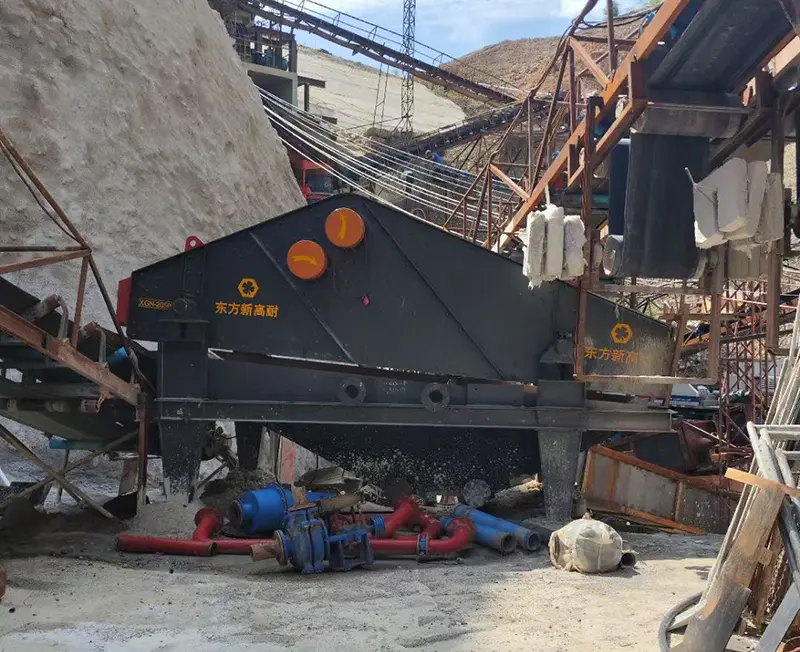
How to Estimate Dewatering Screen Capacity
There is no single formula that works for all materials. However, manufacturers provide capacity charts based on:
Feed solids concentration
Particle size distribution (d50 or d80)
Desired final moisture
Screen dimensions
A rough rule of thumb for sand (0.5–5 mm) with 40–50% solids feed is 10–20 t/h per square meter of screen area. For fine tailings (below 0.3 mm), capacity may be only 3–8 t/h per square meter.
Always request a test from the manufacturer using your actual material. They will run a laboratory or pilot‑scale dewatering screen to determine the achievable capacity and moisture.
How to Increase Dewatering Screen Capacity
If your existing dewatering screen is struggling to keep up, try these measures.
Increase feed solids concentration: Add a hydrocyclone or a thickener before the screen.
Optimize screen panel openings: Use the largest slot size that still meets your product quality.
Adjust vibration settings: Increase amplitude slightly to move material faster while monitoring cake moisture.
Improve feed distribution: Install a properly designed feed box or splitter.
Add a pre‑screen: Remove coarse particles before the dewatering screen to prevent them from blocking the fine openings.
Clean the screen deck: Use water sprays or a brush system to prevent blinding.
Reduce the discharge weir height: This allows the cake to exit faster, increasing capacity but may increase moisture.
Capacity vs. Moisture: The Trade‑off
There is always a trade‑off between capacity and final cake moisture. Running a dewatering screen at maximum capacity often produces a wetter cake. Conversely, reducing feed rate will give a drier cake. Therefore, when specifying capacity, you must also state the target moisture content. A typical specification might be: “100 t/h at 15% moisture” or “150 t/h at 20% moisture.”
Common Capacity Mistakes
Assuming the same capacity for different materials: A screen that processes 100 t/h of sand may only handle 30 t/h of fine slime.
Ignoring feed solids concentration: Feeding dilute slurry will flood the screen and produce a wet cake.
Overloading the screen: Too much material causes the cake to be too thick, and water cannot drain through. The capacity of a dewatering screen is limited by the ability of water to escape, not just the solids feed rate.
Not cleaning the screen deck: Blinded panels can cut capacity by 50% or more.
Conclusion
Dewatering screen capacity is influenced by feed solids concentration, particle size distribution, screen panel openings, slope, vibration, and screen size. For a given application, capacity is directly linked to the final cake moisture. By understanding these factors, you can select the right screen size and operating parameters to meet your production targets. Always test your material and consult the manufacturer’s capacity charts.