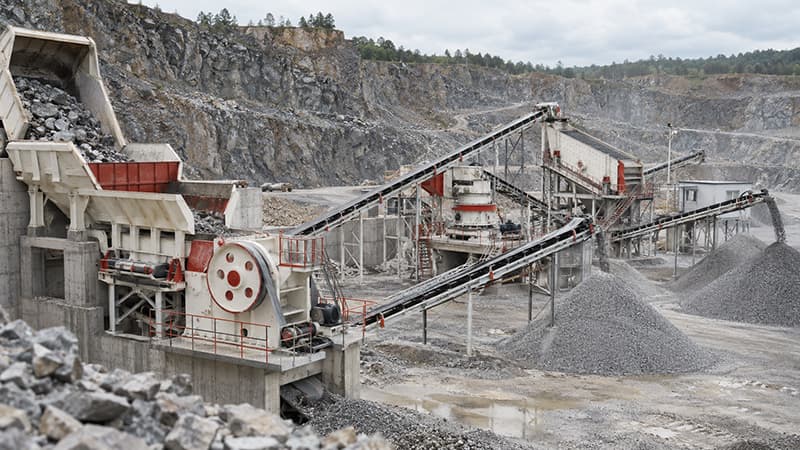
Aggregate production involves more than simply breaking large rocks into smaller pieces. A complete aggregate production process must coordinate feeding, size reduction, screening, oversize recirculation, and final product handling.
The objective is to produce aggregates that meet the required specifications for particle size, shape, cleanliness, and consistency.
Although raw materials and product requirements vary between projects, most production lines follow a similar material flow:
Raw Material
→ Feeding and Pre-screening
→ Primary Crushing
→ Secondary or Tertiary Crushing
→ Screening
→ Oversize Recirculation
→ Finished Aggregate
This article focuses on how these processing stages work together. Detailed crusher selection, plant cost, maintenance, and mobile crusher vs stationary crusher comparisons should be addressed separately because they involve different search intentions and project considerations.
1. Define the Required Aggregate Specifications
The process should begin with the finished product requirements rather than with the selection of a particular crusher.
Before designing the material flow, the following information should be confirmed:
Raw material type
Maximum feed size
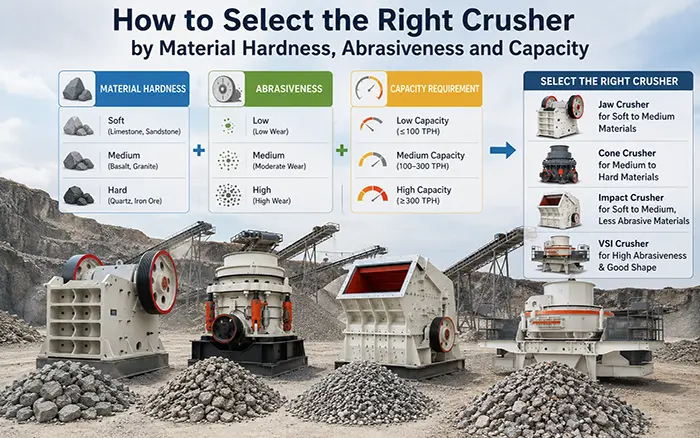
Material hardness and abrasiveness
Required processing capacity
Required finished product sizes
Number of aggregate sizes to be produced
Particle shape requirements
Acceptable fines and clay content
Whether aggregate washing is required
These conditions determine how many crushing stages are needed, how the screening system should be arranged, and whether the process requires shaping or washing.
For example, a plant producing relatively coarse construction aggregate may complete the process after secondary crushing and screening. A project requiring fine, consistently shaped aggregate may need an additional fine-crushing or shaping stage.
Specific machine models should only be selected after the raw material properties and production requirements have been evaluated.
2. Feeding and Pre-screening
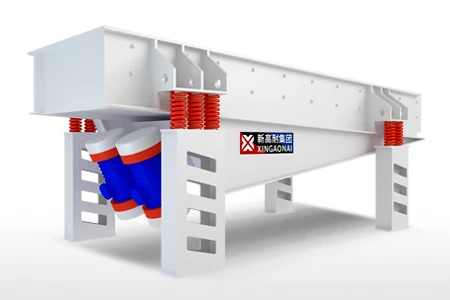
Raw rock from a quarry or stockpile first enters a feed hopper. It is then delivered to the primary crushing stage at a controlled rate by a vibrating feeder.
Consistent feeding is important because large fluctuations in material flow can affect crusher loading, screening efficiency, and overall plant output. Sudden surges may overload downstream equipment, while insufficient feeding prevents the production line from operating at its intended capacity.
Pre-screening can be installed before primary crushing when the raw material contains a significant proportion of natural fines, soil, or particles that are already smaller than the target primary crusher feed size.
Pre-screening can:
Remove material that does not require primary crushing
Reduce unnecessary crusher loading
Limit the amount of soil and fines entering the crushing circuit
Improve the stability of downstream material flow
However, pre-screening is not required in every plant. Its use should depend on the quantity of fines and clay in the feed material.
3. Primary Crushing Reduces the Maximum Feed Size
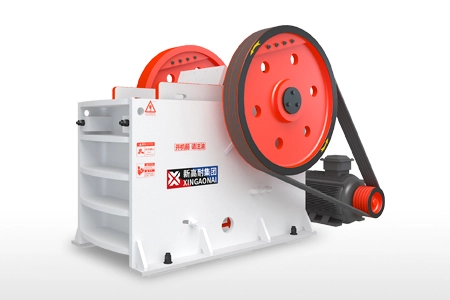
Primary crushing receives the largest rocks in the production line and reduces them to a size that downstream equipment can handle. A PE jaw crusher is one option for this stage when its feed opening and capacity suit the project.
The main functions of this stage are to:
Process the maximum feed size
Establish a manageable size range for downstream crushing
Prevent oversized rocks from entering the secondary crusher
Maintain continuous material flow through the plant
Primary crushing does not normally produce the final particle shape. Its discharge size should be coordinated with the feed opening and processing capacity of the next crushing stage.
If the primary crusher produces material that is too coarse, the secondary crusher may become overloaded. If the discharge setting is unnecessarily small, primary-stage capacity may decrease while wear and energy consumption increase.
The primary stage should therefore be evaluated as part of the complete stone crushing line rather than as an independent crushing operation.
4. Secondary and Tertiary Crushing Develop the Required Size Range
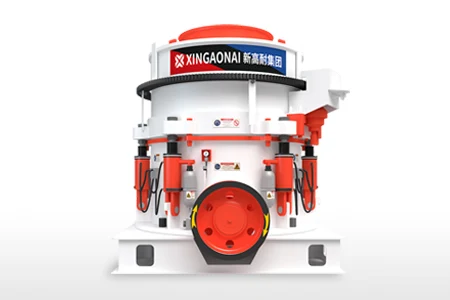
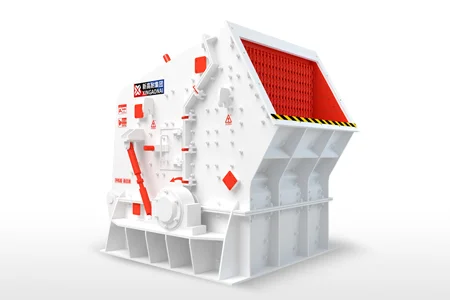
Material discharged from the primary crusher is often still too large to be used as a finished product. It normally enters the secondary crushing stage for further size reduction.
Secondary crushing helps:
Reduce the size of the primary crusher discharge
Create a more suitable particle-size distribution for screening
Increase the proportion of material that meets the finished product specifications
Whether a tertiary crushing stage is necessary depends on the required product.
An additional fine-crushing or shaping stage may be appropriate when the project requires:
Smaller finished product sizes
More consistent particle shape
Lower percentages of oversized material
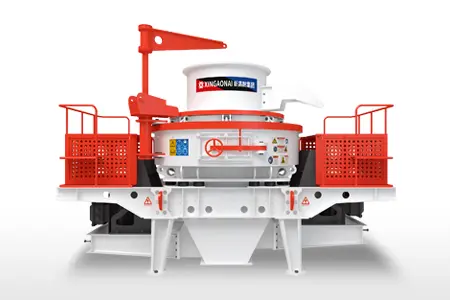
Manufactured sand or fine aggregate
If secondary crushing already produces acceptable coarse aggregate, adding another crushing stage may provide little practical benefit.
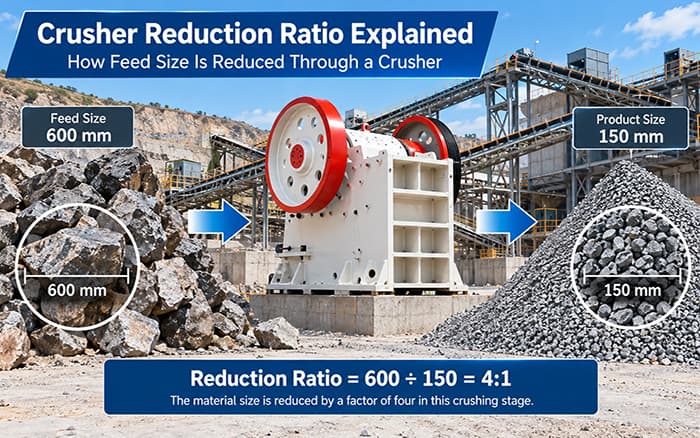
An efficient process does not automatically require three crushing stages. It uses only the stages needed to achieve the required product specifications while controlling energy consumption and circulating load. The crusher reduction ratio should be considered across the full circuit rather than for one machine alone.
5. Screening Directs Material to the Correct Destination
Screening is the main separation point in the aggregate crushing and screening process.
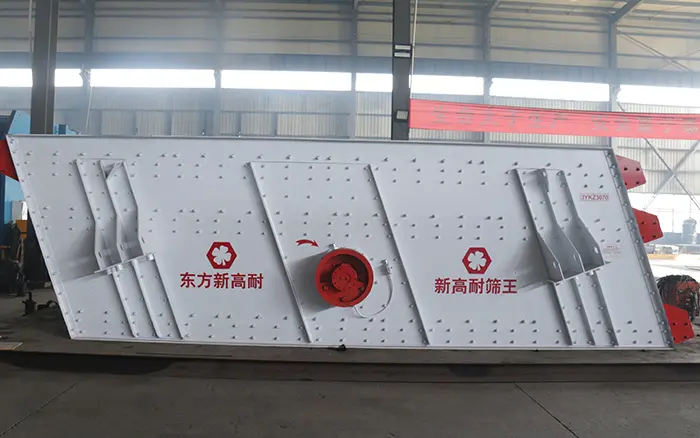
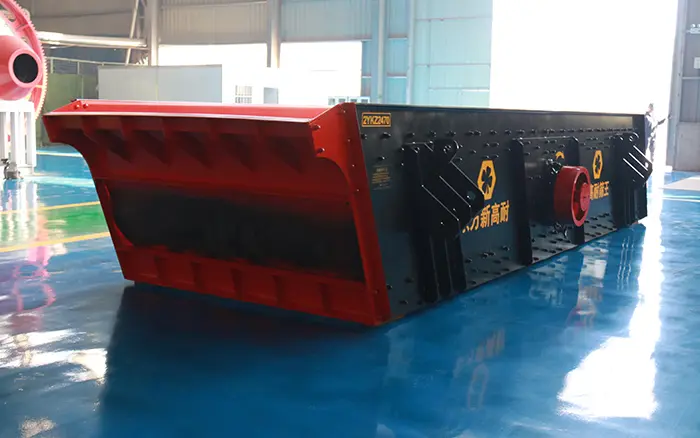
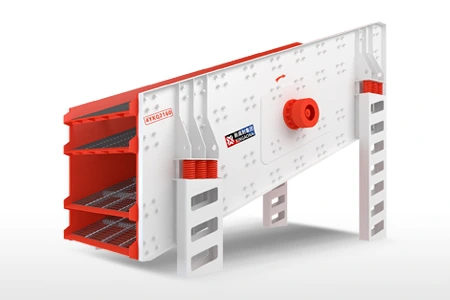
After crushing, the mixed material enters a vibrating screen and is separated according to the selected screen opening sizes.
The screening stage directs material to different destinations:
Material within specification moves to the appropriate finished product conveyor
Fine material passes through the smaller screen openings
Oversized material returns to the crushing circuit
Multiple screen decks separate several finished aggregate sizes
For example, one screening system can divide the crushed material into coarse, intermediate, and fine products. The actual size ranges should be based on local construction standards or customer requirements rather than on a universal set of values.
Screening performance has a direct effect on finished product consistency. Blocked screen openings, uneven feed distribution, overloaded screen decks, or worn screen media can allow oversized particles to enter the finished product.
As a result, stable crusher operation alone does not guarantee consistent aggregate sizes. The screening stage must also operate effectively. See the detailed guide to the vibrating screen working principle for more information.
6. Closed-Circuit Recirculation Controls Oversized Material
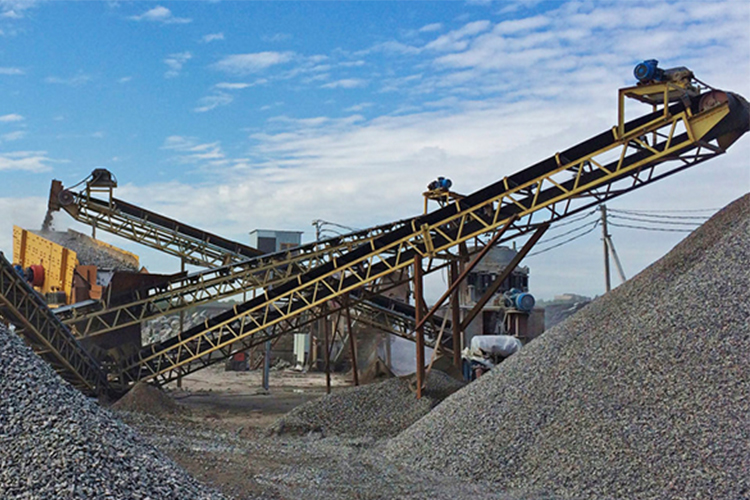
A closed circuit is created when oversized material from the screening stage is returned to a crusher for further size reduction.
The purpose is not simply to crush the same material repeatedly. The system separates material that already meets the product specification and recirculates only the particles that remain too large.
A properly balanced closed circuit can:
Reduce oversized particles in the finished product
Improve product-size consistency
Make better use of crushing and screening capacity
Accommodate reasonable variations in feed size and hardness
However, an excessive recirculating load may indicate that part of the process is not properly balanced.
Possible causes include:
A crusher discharge setting that is too wide
Insufficient screening capacity
Incorrect screen opening sizes
Uneven material distribution across the screen
A mismatch between crushing and screening capacity
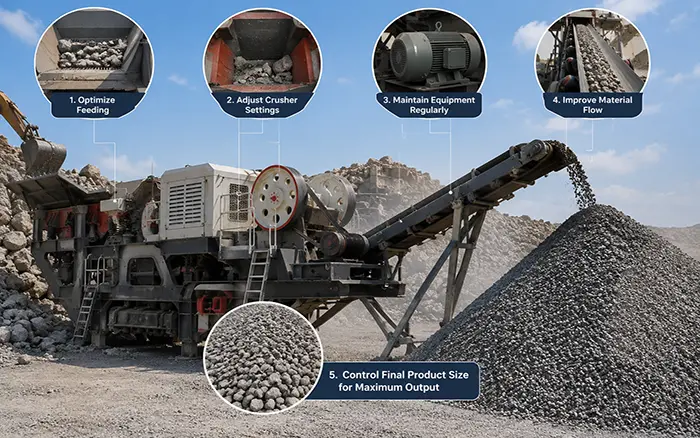
A stable aggregate production flow requires the crushing, screening, conveying, and recirculation stages to operate at compatible capacities. The guide on increasing stone crusher capacity and production explains further capacity-balancing considerations.
7. Washing Is Added Only When Required
Not every aggregate production process requires washing.
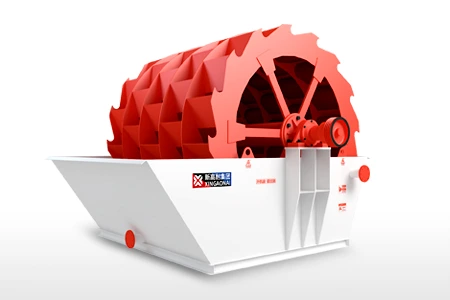
A washing stage may be added when the raw material contains clay, surface contamination, or excessive fine particles. It may also be required when the finished product must meet specific cleanliness standards.
Common reasons for adding washing include:
Clay attached to the surface of the raw material
Excessive dust or fine particles in the finished aggregate
Product specifications that limit silt or clay content
Fine material losses that need to be recovered
Wet processing conditions that produce slurry
Washed aggregate may also require dewatering before storage. A fine material recovery stage can be added when valuable fine sand would otherwise be lost with the process water.
If the raw material is relatively clean and dry screening already satisfies the product specification, washing should not be added automatically.
The selection of sand washing machines, dewatering equipment, and fine sand recovery systems should be covered in a separate equipment-selection guide.
8. Separate Stockpiling Protects Finished Product Quality
After screening or washing, each aggregate size is transported to a separate stockpile or storage bin.
Although stockpiling is the final stage, poor product handling can reduce the quality achieved during crushing and screening.
Common stockpiling problems include:
Different aggregate sizes mixing at adjacent stockpiles
Particle segregation caused by excessive discharge height
Loaders moving material between separate product areas
Soil contamination from an unprepared stockpile surface
Fine material losses caused by poor drainage
Finished products should be physically separated, and conveyor discharge points should be arranged to reduce segregation and contamination.
9. Key Control Points in the Production Process
The stability of the production line depends on coordination between all processing stages.
| Control Point | What to Monitor | Possible Effect |
|---|---|---|
| Feed hopper and feeder | Whether the feed rate is continuous and even | Fluctuating equipment load and plant output |
| Primary crusher discharge | Maximum discharge size | Changes in downstream crusher loading |
| Secondary crusher discharge | Particle-size distribution | Changes in screening efficiency and recirculating load |
| Vibrating screen | Screen openings, deck loading, and material distribution | Oversized particles entering finished products |
| Return conveyor | Abnormally high return volume | Excessive closed-circuit load |
| Finished product area | Separation between product sizes | Mixing or contamination of finished aggregate |
The actual output of an aggregate plant cannot be determined from the rated capacity of one machine alone. Production depends on whether feeding, crushing, screening, recirculation, and conveying remain balanced throughout the complete process.
Conclusion
The aggregate production process is a continuous system of particle-size control.
Feeding regulates the material flow. Crushing reduces the rock in stages. Screening determines where each particle should go. Oversized material returns for further crushing, while qualified products move to separate stockpiles.
The number of crushing and screening stages may vary between projects, but the process should always focus on three outcomes:
Producing the required aggregate sizes
Maintaining stable processing capacity
Avoiding unnecessary recirculating load and material loss
Before a production flow can be designed, the project owner should provide information about the raw material, maximum feed size, required capacity, and finished product specifications.
Based on these parameters, XINGAONAI can develop a suitable material flow and equipment configuration for the project.