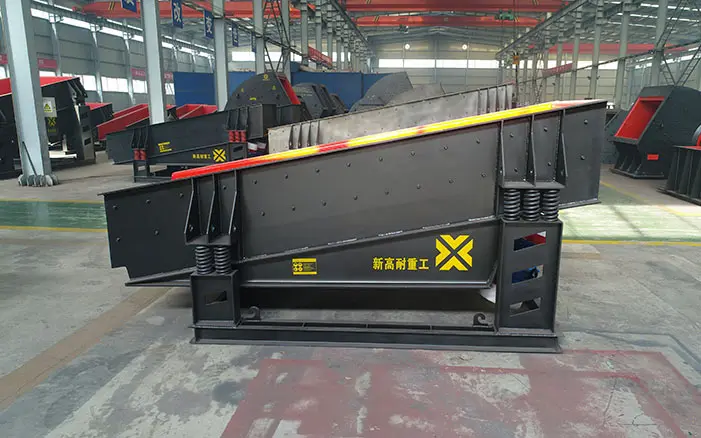
Auxiliary Equipment

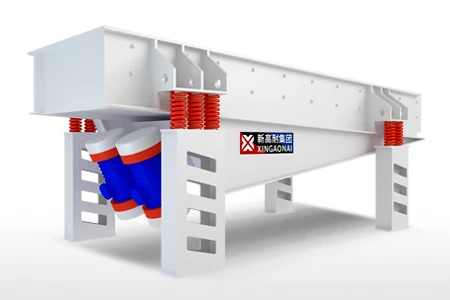
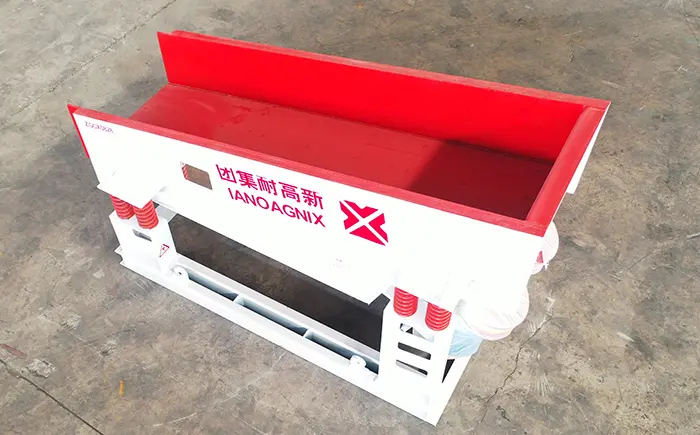
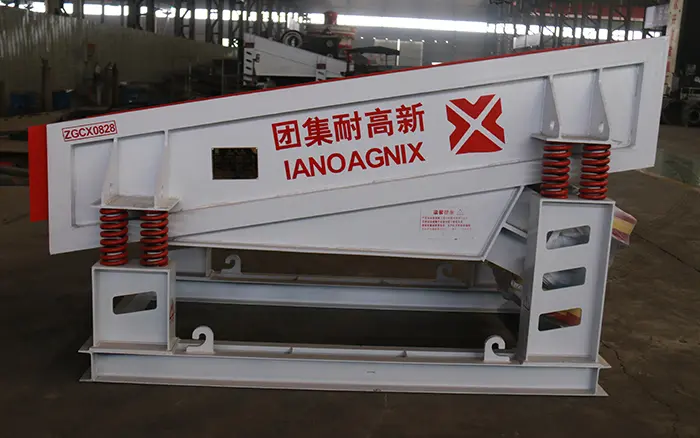
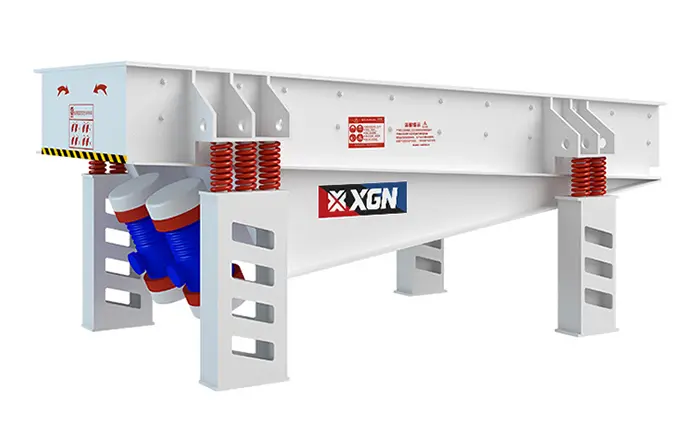
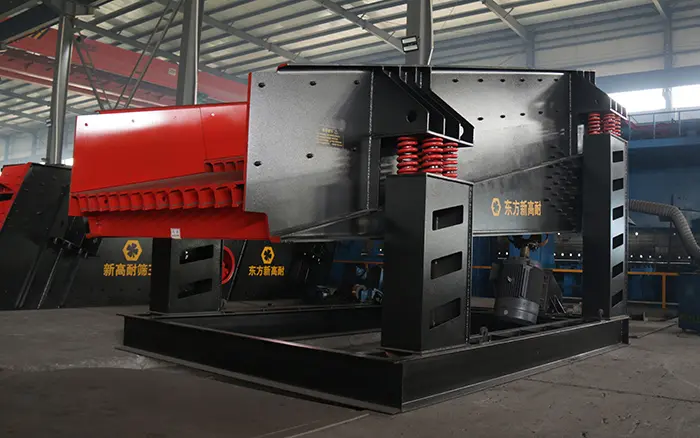
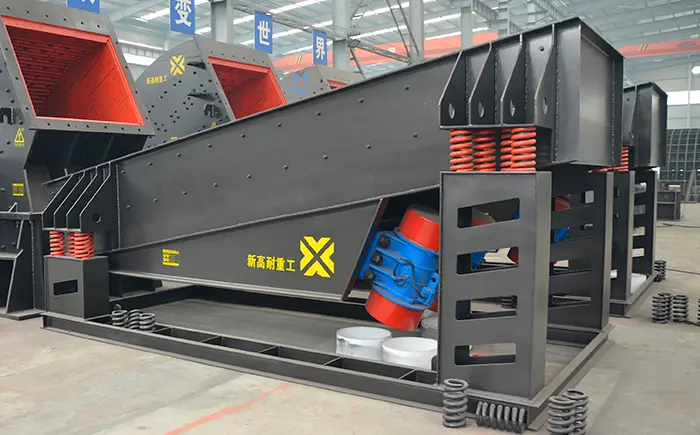
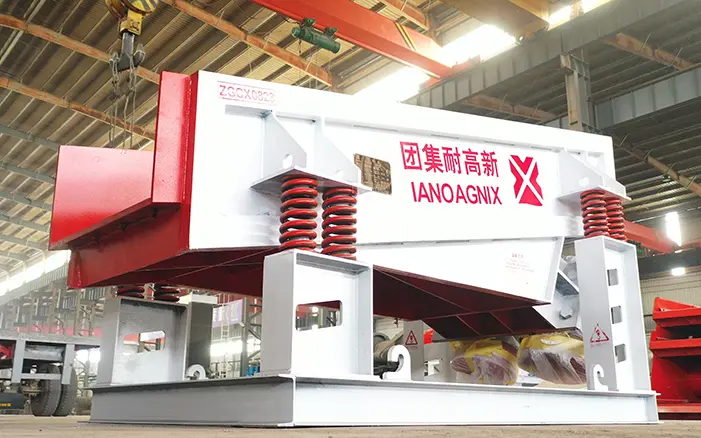
Vibrating Feeder

CAPACITY

80-3000t/h

FEED SIZE

200-1200mm
Application areas:Vibrating feeder is a feeding equipment with advanced economic and technical indicators. It is widely used in the combined crushing and screening operations of sand and gravel yards, building materials, metallurgy, abrasives and other industries.
Applicable materials:Vibrating feeder is suitable for the continuous and uniform transportation of various block, granular and powdery materials such as limestone, iron ore, copper ore, and granite.
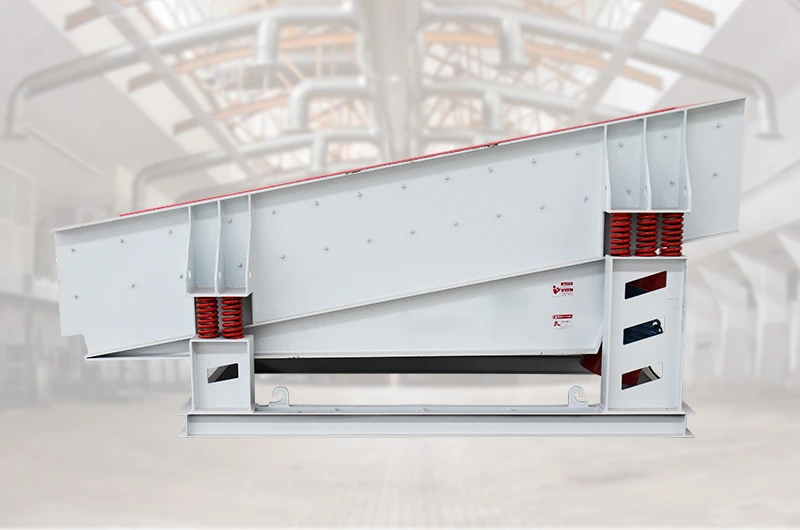
Product Overview

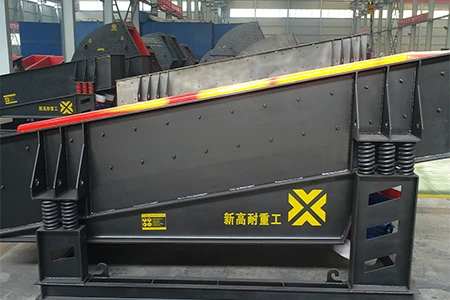
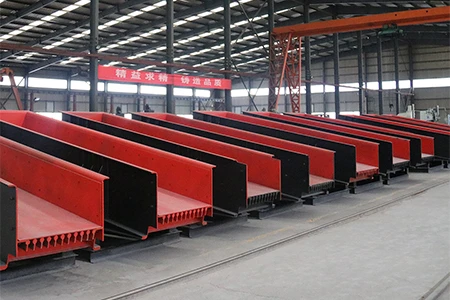
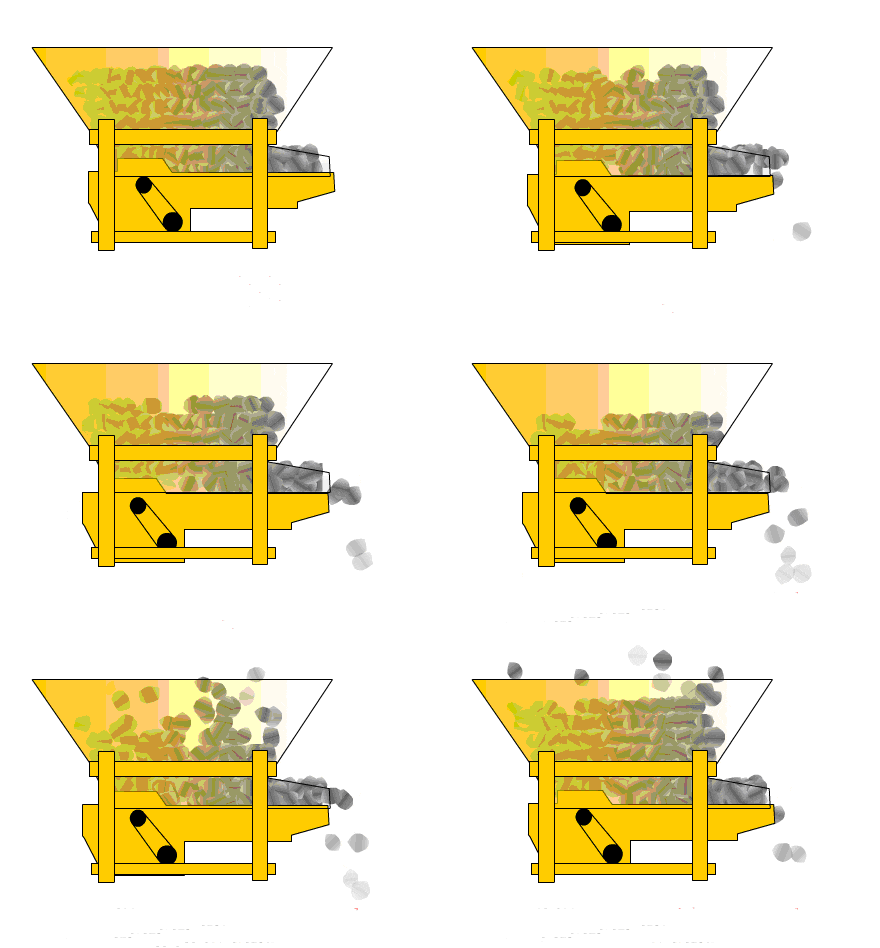
Vibrating feeder is used in the production process to uniformly, continuously or quantitatively transport bulk, granular and powdery materials from the storage bin or hopper to the receiving equipment. When production needs, the materials can be processed Initial screening. In the stone crushing production line, it can evenly and continuously feed the crushing machinery, and can also carry out primary screening of the stone, and the powdery and small materials are automatically discharged from the gap.

Key Advantages

Multipurpose machine

The liner is detachable, and the smaller materials fall through the gap and directly enter the next process, thus playing a pre-screening effect. It is used for both feeding and screening.

Stepless adjustment

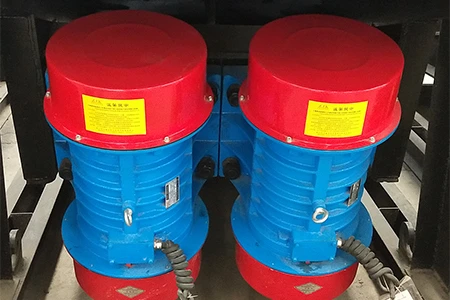
Steplessly adjust the relative angle of the eccentric block, change the size of the exciting force, conveniently control the feeding amount, and produce normally in rainy days.

Simple structure

The operation is convenient and the labor cost is effectively reduced.

Customized

Models can be customized as required.

Working Principle

Working Principle of Vibrating Feeder
The Vibrating Feeder operates via a dual-motor excitation system or single-motor eccentric drive, generating linear or elliptical vibration to evenly convey bulk materials. Its core mechanism involves a spring-supported trough and adjustable vibration amplitude (2-6mm), controlled by counterweights and frequency modulators. Materials are stratified and advanced along the trough surface through rhythmic up-down and forward motions, ensuring consistent flow rates (up to 1,200 t/h) and minimal blockage. Key features include dust-tight enclosures, self-lubricating bearings, and low-noise operation (≤75dB). Applications span mining, metallurgy, and bulk material handling, where precise metering and continuous feeding are critical.

Technical Parameters

Model

Trough Size

(mm)

Feed size

(mm)

Capacity

(tph)

Motor model

Motor power

(kw)

ZGCX0938900*3800≤500150-200YZU-40-63.7*2
ZGCX10381000*3800≤500160-210YZU-40-63.7*2
ZGCX12381200*3800≤750250-380YZU-65-64.2*2
ZGCX12501200*5000≤750250-380YZU-100-67.5*2
ZGCX15381500*3800≤1000400-500YZU-85-65.5*2
ZGCX15501500*5000≤1000400-600YZU-120-610*2
ZGCX20382000*3800≤1200500-800YZU-120-610*2
ZGCX20502000*5000≤1200800-1200Y180L-615*2
ZGCX25602500*6000≤16002000-3000YE2-250M-637*2
ZGCW0928850*2800≤50080-120YZU-40-63*2
ZGCW10281000*2800≤600150-200YZU-40-63*2
ZGCW12281200*2800≤700220-300YZU-50-63.7*2
ZGCW13281255*2800≤750250-300YZU-50-63.7*2
ZGCW14281350*2800≤800260-320YZU-75-65.5*2
ZGCW15281500*2800≤1000300-400YZU-75-65.5*2
ZGCW20282000*2800≤1200500-800YZU-100-67.5*2
ZGXG10201000*2000≤200150-250YZH-20-61.5*2
ZGXG12201200*2000≤200250-350YZH-30-62.2*2
ZGXG14201400*2000≤200400-600YZU-30-63*2
We are here waiting for you
Our professional team can tailor the solution to suit your needs and answer your questions
Contact Engineer

Frequently Asked Questions

A vibrating feeder is installed at the beginning of a crushing or screening line to deliver raw material from a hopper or stockpile to the primary crusher (usually a jaw crusher) at a controlled, steady rate. It prevents surge loading on the crusher, protects conveyor belts from impact damage, and allows operators to regulate the feed rate to match downstream equipment capacity — improving overall plant efficiency and reducing unplanned downtime.

A vibrating feeder uses vibratory motion to convey material along a trough and is best suited for dry, free-flowing materials up to medium lump sizes (≤1,200mm) at capacities up to 3,000 t/h. It has a simpler structure, lower maintenance cost, and smaller footprint. An apron feeder uses interlocking steel pans on a chain drive and is designed for heavy-duty feeding of very large, sharp, or abrasive materials that would damage a vibrating trough. The choice depends on material size, shape, and abrasiveness.

Feed rate is controlled by adjusting the vibration amplitude and frequency of the exciter. On models equipped with a frequency converter (VFD), the feed rate can be adjusted steplessly from the control panel during operation without stopping the machine. The feed rate can also be regulated by changing the eccentric weight configuration on fixed-speed models. For fully automated plants, feed rate control can be integrated with a weigh belt feeder or PLC system for closed-loop control.

Yes, but the feeder must be properly sized for the hopper opening and the maximum material load. Vibrating feeders are typically installed under a steel grizzly bar section at the feed end, which pre-screens fines and protects the feeder trough from direct impact of large rocks falling from a significant height. Proper hopper design (with sloped walls, liners, and controlled drop height) is critical to maximizing feeder service life.

The main wear items are the trough liner plates (replaceable steel or rubber liners), the exciter bearings, and the grizzly bars at the feed end. Liner plates in the impact zone under the hopper typically last 6–18 months depending on material abrasiveness and lump size. Exciter bearings should be re-greased every 200–300 operating hours and replaced when noise or temperature rise indicates fatigue. All wear parts are available from Xingaonai's global spare parts inventory.

Explore Our Projects

Related Blog

Vibrating Feeder Screen for Efficient Material Handling | Industrial Screening Solutions

Vibrating Feeder Screen for Efficient Material Handling | Industrial Screening Solutions

Learn how a vibrating feeder screen works, its key features, benefits, and applications in mining, quarrying, and aggregate processing industries.

2026-03-16 Read →
Reliable China Vibrating Feeder Supplier – XINGAONAI

Reliable China Vibrating Feeder Supplier – XINGAONAI

XINGAONAI is a trusted China vibrating feeder supplier providing durable and efficient feeders for mining, aggregate and construction industries.

2026-02-28 Read →
Vibrating Feeder Motor: Working Principle, Applications, and Selection Guide

Vibrating Feeder Motor: Working Principle, Applications, and Selection Guide

Learn about vibrating feeder motor, working principle, maintenance tips and industrial applications for reliable feeder performance.

2026-02-11 Read →
Linear Vibrating Feeder: A Complete Guide for Efficient Material Handling

Linear Vibrating Feeder: A Complete Guide for Efficient Material Handling

Learn about linear vibrating feeder, its key components, working principle, benefits and industrial applications for seamless material conveying.

2026-02-03 Read →
What Is a Vibrating Feeder? A Complete Industrial Guide

What Is a Vibrating Feeder? A Complete Industrial Guide

What is a vibrating feeder? Learn about its working principle, key features, types & industrial uses in mining, construction, and manufacturing.

2026-01-21 Read →
Mining Vibrating Feeder: Working Principle, Types & Applications

Mining Vibrating Feeder: Working Principle, Types & Applications

Mining vibrating feeder: Efficient, uniform feeding for mining & aggregate lines. Heavy-duty, stable performance for bulk material processing.

2026-01-08 Read →
Vibrating Feeder Manufacturers: Reliable Industrial Feeding Solutions

Vibrating Feeder Manufacturers: Reliable Industrial Feeding Solutions

Top vibrating feeder manufacturers deliver custom, durable feeding equipment for mining, quarries & industrial material handling.

2025-12-31 Read →
Vibrating Feeder Working Principle Explained in Detail

Vibrating Feeder Working Principle Explained in Detail

Explore the vibrating feeder working principle, including its components, vibration mechanisms, and industrial applications.

2025-12-20 Read →

Send message

Please enter your name
Please enter your email
Please enter your message