CAPACITY
FEED SIZE
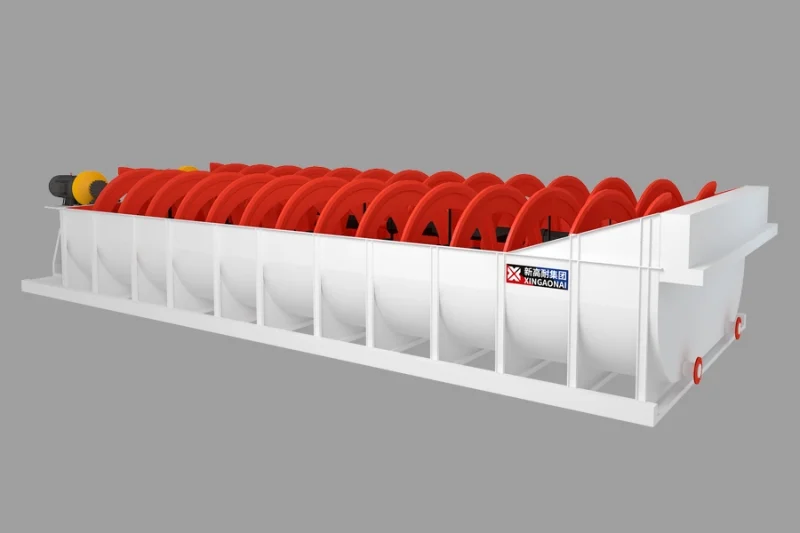
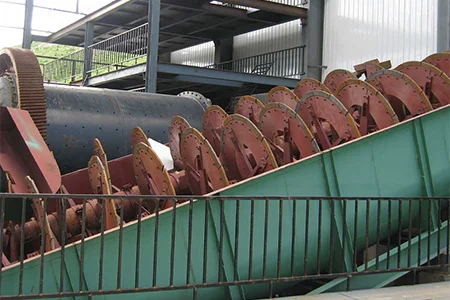
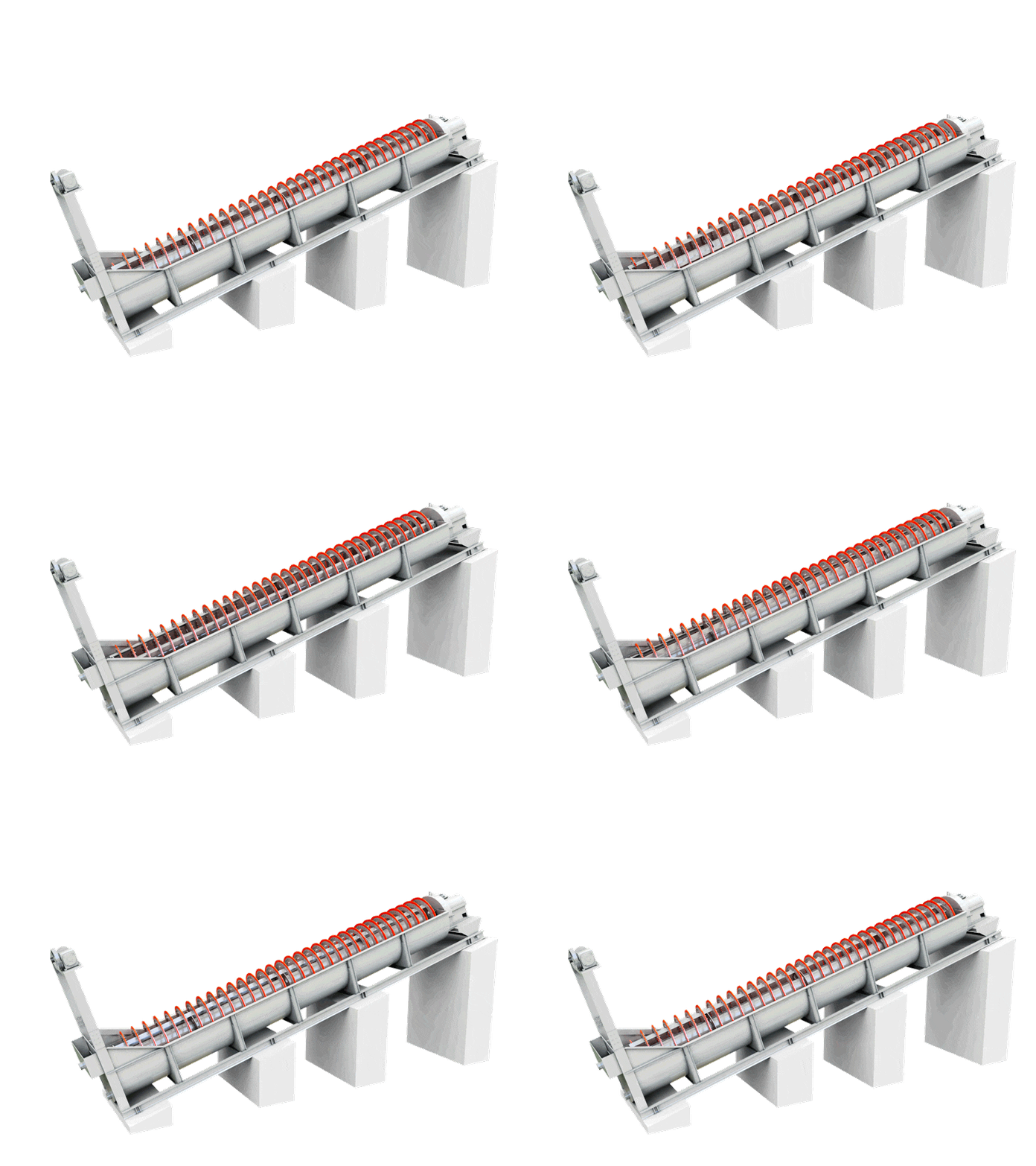
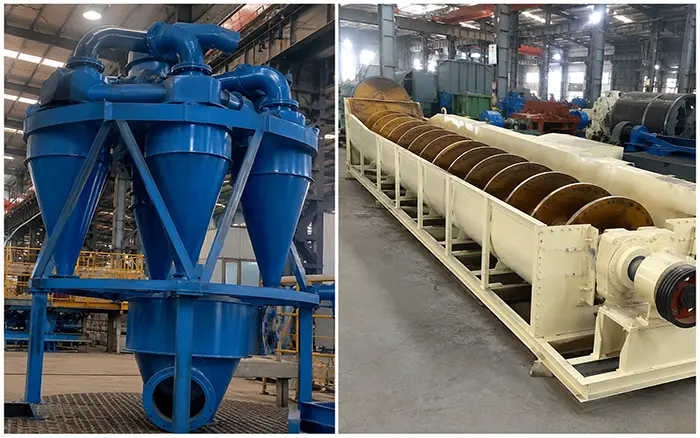
The Spiral Classifier is a continuous-duty wet classification machine that uses the difference in settling velocity between coarse and fine mineral particles in water to separate a mixed slurry into a coarse sand fraction and a fine overflow fraction, while simultaneously using the rotating helical screw to mechanically convey the settled coarse sand up the inclined trough and discharge it at the upper end for further processing or return to the grinding mill. As the standard classification and sand-return equipment in closed-circuit ball mill grinding systems worldwide, it is the essential companion machine to the ball mill in ore beneficiation circuits, providing continuous separation of correctly ground fine particles from oversize sand that requires further grinding.
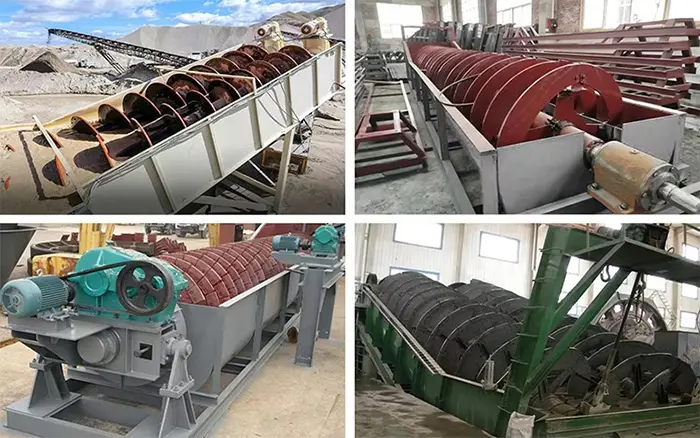
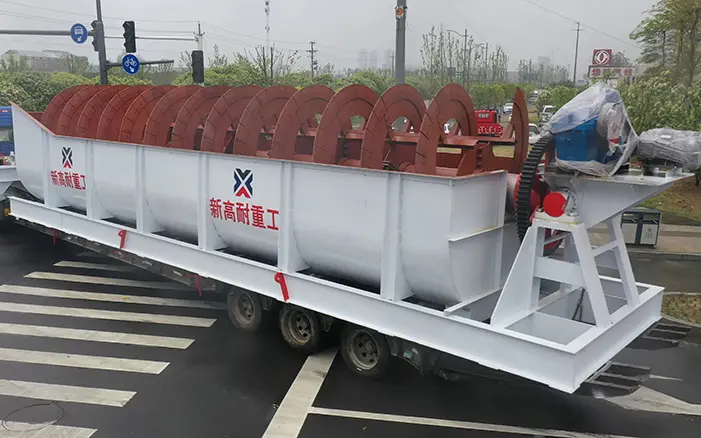
XINGAONAI Spiral Classifiers are available in single-spiral and double-spiral configurations, and in high-weir type and submerged type designs to accommodate different classification requirements. The high-weir type maintains a high overflow weir level, producing a coarser overflow product suitable for coarse classification duties in primary grinding circuits. The submerged type fully submerges the spiral in the slurry pool, extending the settling zone length and producing a finer overflow product suitable for fine classification duties in secondary grinding circuits and fine particle desliming applications.
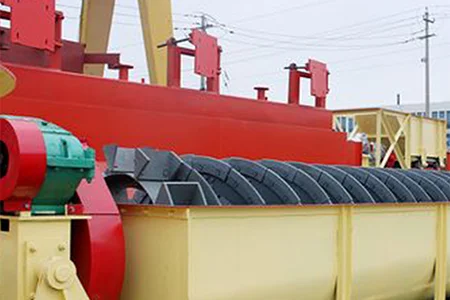
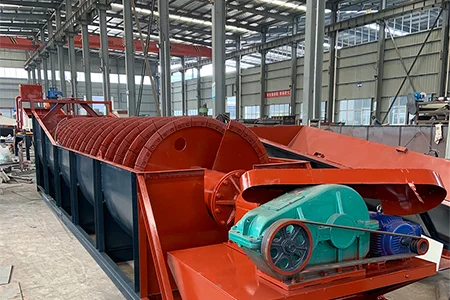
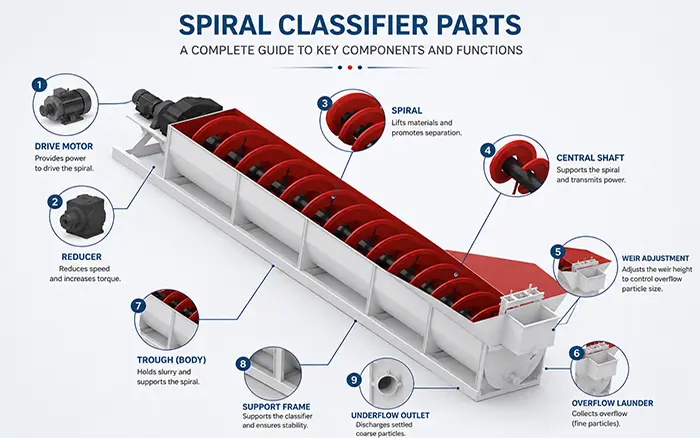
Spiral diameters range from 300 mm to 3,000 mm with processing capacities from 30 TPH to 2,800 TPH of sand return. The trough is fabricated from heavy-gauge carbon steel with replaceable wear-resistant rubber or polyurethane lining on the trough bottom and lower sides where abrasion is highest. The spiral shaft is fabricated from heavy-duty carbon steel pipe with cast iron or high-chrome alloy spiral blades, and the drive head uses a heavy-duty worm gear reducer with motor and overload-protection lifting device to raise the spiral out of the slurry when the machine is stopped, preventing the spiral from being locked by settled sand during restart.
Reliable Closed-Circuit Classification, Stable Sand Return
The Spiral Classifier provides continuous, stable separation of oversize sand particles from correctly ground fines in closed-circuit ball mill grinding systems, returning a consistent volume of sand to the mill feed at a stable density and particle size distribution. This stable sand return maintains the mill at its optimum grinding load, preventing both underloading — which reduces grinding efficiency — and overloading — which causes mill spills and circuit instability — ensuring maximum grinding circuit throughput and energy efficiency throughout 24-hour continuous operation.
High-Weir & Submerged Type for Different Classification Duties
The high-weir type and submerged type configurations offer two distinct overflow fineness ranges from the same basic machine design, allowing XINGAONAI Spiral Classifiers to serve both primary coarse classification duties (high-weir, overflow d80 typically 0.15–0.5 mm) and secondary fine classification duties (submerged, overflow d80 typically 0.074–0.15 mm) across the full range of industrial grinding circuit requirements. Selecting the appropriate type eliminates the need for hydrocyclones in many standard grinding circuit applications, reducing capital cost and simplifying the process layout.
Continuous Ore Washing & Desliming Capability
In ore washing and desliming applications, the Spiral Classifier continuously scrubs and conveys coarse sand particles up the inclined trough while fine clay, slime, and ultrafine gangue minerals overflow with the wash water, producing a clean, deslimed coarse sand product at the upper discharge and a slime-laden overflow at the lower end. This continuous washing and classification action eliminates the batch processing limitations of static washing tanks and produces consistently cleaner coarse product than alternative washing equipment.
Heavy-Duty Spiral & Trough Construction for Abrasive Slurries
The spiral blades are cast from high-chrome alloy iron or fitted with replaceable polyurethane wear inserts on the leading edge and outer diameter — the highest wear zones — extending blade service life to 8,000–15,000 operating hours in normal ore processing applications. The trough lining is fabricated from wear-resistant rubber or polyurethane sheet bonded to the steel trough, replaceable in sections without replacing the entire trough, minimizing maintenance downtime and wear part cost per tonne of material processed.
Overload-Protected Drive with Automatic Spiral Lift
The drive head incorporates a heavy-duty worm gear reducer rated for continuous duty at maximum torque, with a motor overload protection circuit and an automatic spiral lifting device that raises the spiral out of the settled sand bed when the machine is shut down — preventing the spiral from being buried in solidified settled sand during a shutdown period and eliminating the mechanical strain and motor burnout risk associated with restarting a spiral buried in compacted sand. The lifting device operates automatically on shutdown and lowers the spiral back to the operating position when the machine restarts.
Simple Structure, Low Maintenance, Long Service Life
The Spiral Classifier has no complex internal mechanisms, sealed chambers, or pressurized systems — the rotating spiral, the trough, the drive head, and the overflow weir are the only major components. This mechanical simplicity results in low scheduled maintenance requirements, long intervals between major overhauls, and straightforward on-site repair using standard workshop equipment and locally available carbon steel plate and wear-resistant liner materials. Spiral blade replacement and trough relining are the primary maintenance tasks, both performable by plant maintenance crews without specialist contractor support.
| Model | Spiral speed (r/min) | Return sand volume (t/d) | Overflow handling capacity (t/d) | Spiral diameter (mm) | Spiral length (mm) | Slope of sink | Drive motor model | Power (kw) | Lifting motor model | Power (kw) | Weight (kg) |
|---|---|---|---|---|---|---|---|---|---|---|---|
| FLG-300 | 7.7 | 30-80 | 10-30 | Φ300 | 3900 | 14-18 | Y100L1-4 | 2.2 | manual | - | 668 |
| FLG-500 | 8 | 145-260 | 21-75 | Φ500 | 4390 | Y112M-6 | 2.2 | manual | - | 1600 | |
| FLG-750 | 7.8 | 100-455 | 31-165 | Φ750 | 5500 | Y132S-6 | 3 | manual | - | 2716 | |
| FLG-1000 | 6.7 | 473-1026 | 85 | Φ1000 | 6556 | Y132M2-6 | 5.5 | manual | - | 4000 | |
| FLG-1200 | 5,6,7 | 1145-1600 | 150 | Φ1200 | 6500 | Y132M2-6 | 5.5 | Y90L-4 | 1.5 | 7943 | |
| FLG-1500 | 2.5,4,6 | 1140-2730 | 235 | Φ1500 | 8265 | Y160M-6 | 7.5 | Y100L1-4 | 2.2 | 11827 | |
| FLG-2000 | 3.6,5.5 | 3240-5940 | 400 | Φ2000 | 8700 | Y160L-6/4 | 11,15 | Y100L2-4 | 3 | 20814 | |
| FLG-2400 | 3.6 | 6800 | 580 | Φ2400 | 9130 | Y200L2-6 | 22 | Y112M-4 | 4 | 24194 | |
| FLG-3000 | 3.2 | 11625 | 890 | Φ3000 | 12500 | Y200L-4 | 30 | Y112M-4 | 4 | 42188 |
| Model | Spiral speed (r/min) | Return sand volume (t/d) | Overflow handling capacity (t/d) | Spiral diameter (mm) | Spiral length (mm) | Slope of sink | Drive motor model | Power (kw) | Lifting motor model | Power (kw) | Weight (kg) |
|---|---|---|---|---|---|---|---|---|---|---|---|
| 2FLG-1200 | 5,6,7 | 2290-3200 | 310 | Φ1200 | 6500 | 14-18 | Y132M2-6 | 5.5*2 | Y90L1-4 | 1.5*2 | 15840 |
| 2FLG-1500 | 2.5,4,6 | 2240-5360 | 460 | Φ1500 | 8230 | Y160M-6 | 7.5*2 | Y100L1-4 | 2.2*2 | 22903 | |
| 2FLG-2000 | 3.6,5.5 | 6400-10800 | 750 | Φ2000 | 8400 | Y160L-4 | 15*2 | Y100L2-4 | 3.0*2 | 34621 | |
| 2FLG-2400 | 3.63 | 13600 | 1160 | Φ2400 | 9130 | Y200L2-6 | 22*2 | Y112M-4 | 4*2 | 42460 | |
| 2FLG-3000 | 3.2 | 23300 | 1785 | Φ3000 | 12500 | Y200L-4 | 30*2 | Y112M-4 | 4*2 | 73030 |
Learn how a spiral classifier works: gravity settling to spiral conveying. Covers components, step-by-step process, parameters & types.
The global spiral classifiers market is valued at $1.2B+ in 2024, growing at ~5.5% CAGR to 2033. Explore key drivers, regional analysis, top players & trends.
A spiral classifier is a key piece of equipment in many mineral processing plants. It works together with a ball mill to form a closed grinding circuit. Its job is to separate fine particles from coar