The global spiral classifiers market is entering a sustained growth cycle, driven by expanding mining operations, accelerating critical mineral demand, and a wave of infrastructure investment across developing economies. Once considered a mature, slow-moving segment, the market is now being reshaped by energy transition tailwinds, tightening environmental regulations, and a steady push toward automated, intelligent mineral processing systems.
This report provides a comprehensive overview of the spiral classifiers market — covering current market size, historical growth, segmentation by type and application, regional performance, competitive dynamics, and the investment outlook through 2033.
What Is a Spiral Classifier?
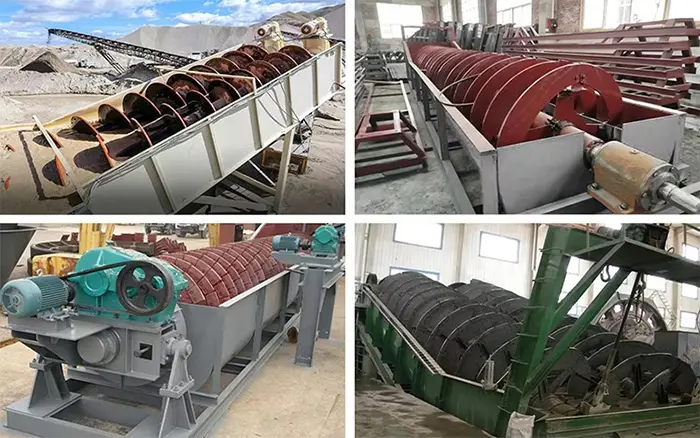
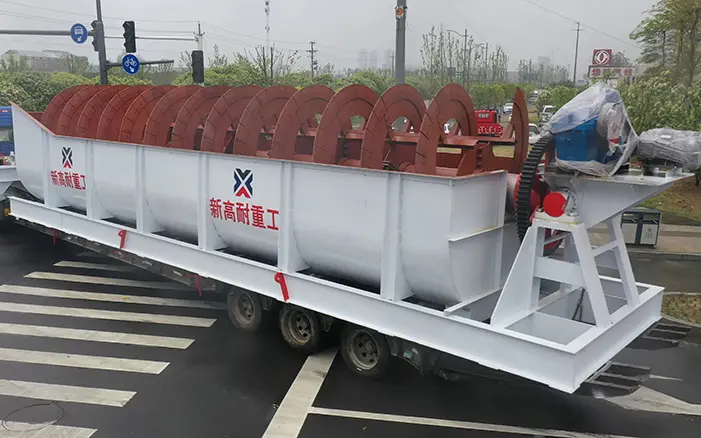
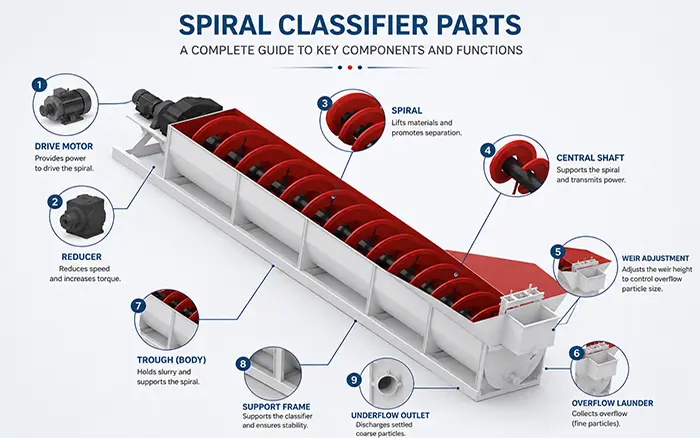
Spiral classifiers are primarily deployed in closed-circuit grinding systems alongside ball mills, ensuring that only correctly sized particles advance to downstream separation processes such as flotation, magnetic separation, or leaching. They are also used extensively in sand washing, slurry dewatering, and ore desliming operations.
The two main types in commercial use are:
High Weir Spiral Classifier — The overflow weir is positioned above the center of the uppermost spiral shaft. Suited for coarser classification (0.83–0.15 mm), it is widely used in the first stage of grinding circuits and sand washing plants where relatively coarse separation is acceptable.
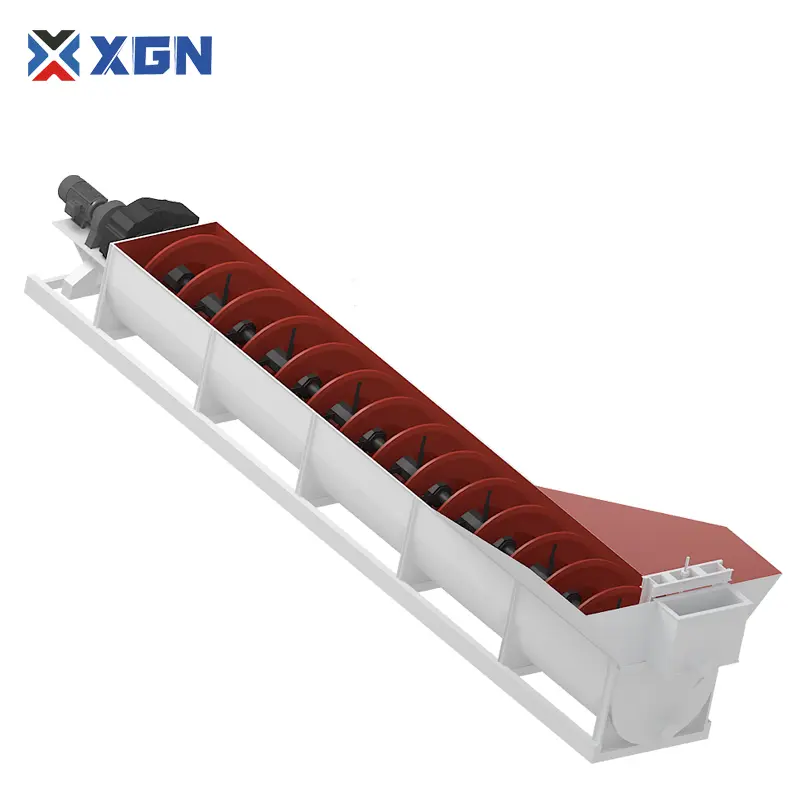
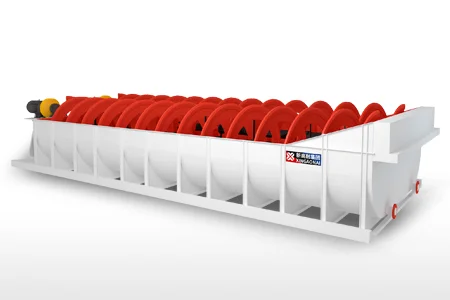
Submerged Spiral Classifier — The entire spiral is submerged below the overflow surface. This design achieves finer classification (0.15–0.07 mm) and is preferred for processing fine-grained ores or applications requiring tighter particle size control, such as copper, gold, and lithium processing.
Global Spiral Classifiers Market Size & Historical Growth
The global spiral classifiers market has demonstrated consistent expansion over the past decade, underpinned by steady growth in the global mining industry and ongoing infrastructure development across Asia-Pacific, Africa, and Latin America.
Multiple market research studies place the 2024 market value in the range of USD 1.2 billion to USD 2.1 billion, with differences attributable to scope variations — some reports focus on mechanical spiral classifiers alone, while broader analyses include related classification equipment categories. A widely cited consensus estimate places the market at approximately USD 1.2–1.6 billion in 2024. Looking ahead, the market is projected to grow at a compound annual growth rate (CAGR) of approximately 5.5% between 2025 and 2033, reaching an estimated value of USD 2.0–2.4 billion by 2033.
For context, this growth rate aligns with — and in some regions exceeds — the broader mineral processing equipment market, reflecting the increasing complexity of ore bodies being mined and the corresponding need for precise, reliable classification equipment.
Key market milestones:
| Year | Estimated Market Size | Growth Driver |
|---|---|---|
| 2019 | ~USD 0.9 billion | Steady mining CAPEX recovery |
| 2021 | ~USD 1.0 billion | Post-pandemic mining investment rebound |
| 2023 | ~USD 1.1–1.2 billion | Critical minerals boom; infrastructure spending |
| 2024 | ~USD 1.2–1.6 billion | Copper, lithium, iron ore expansion |
| 2025 (est.) | ~USD 1.3–1.7 billion | Energy transition momentum |
| 2033 (forecast) | ~USD 2.0–3.7 billion | Sustained critical mineral demand + automation |
Key Market Drivers
1. Surging Demand from the Mining Industry
2. Critical Minerals and the Energy Transition
The global push to decarbonize energy systems has created an unprecedented demand pipeline for minerals such as lithium, cobalt, nickel, graphite, and rare earth elements. Processing these minerals to battery-grade or industrial-grade specifications requires extremely precise particle size control — a task for which submerged spiral classifiers are well suited. As a result, greenfield lithium and rare earth processing projects are increasingly specifying high-performance classification systems, generating a new and fast-growing demand segment that did not exist at meaningful scale a decade ago.
3. Infrastructure Development in Emerging Economies
Rapid urbanization and large-scale infrastructure programs across Asia-Pacific, Sub-Saharan Africa, and Latin America are driving sustained demand for construction aggregates, cement raw materials, and processed sand. These applications require spiral classifiers for material washing, desliming, and size classification. Government-backed infrastructure initiatives in India, Indonesia, Nigeria, and across Southeast Asia are expected to remain strong through 2030, providing a durable source of demand independent of commodity price cycles.
4. Environmental Regulations Driving Equipment Upgrades
Tightening environmental regulations in mining and construction jurisdictions worldwide are prompting operators to replace aging, less-efficient classification systems with modern equipment that delivers lower water consumption, reduced slurry losses, and more reliable overflow quality. Compliance requirements related to tailings management and process water recycling are also increasing the complexity of classification circuits, in turn expanding the scope of spiral classifier deployments in mineral processing plants.
5. Technological Innovation: Automation and Smart Monitoring
Equipment manufacturers are increasingly incorporating variable-speed drives, real-time torque monitoring, automated feed control, and remote diagnostics into spiral classifier designs. These capabilities reduce operator intervention, improve classification consistency, and enable predictive maintenance scheduling — all factors that improve the business case for upgrading older equipment. The shift toward digital mineral processing is still in its early stages, but it is already influencing purchasing decisions among large mining operators in North America, Australia, and Europe.
Market Restraints and Challenges
Despite the positive growth outlook, several factors constrain the spiral classifiers market:
High initial capital cost remains a significant barrier, particularly for small- and medium-scale mining operators in developing economies. A complete spiral classifier installation — including supporting structure, drives, and integration with the grinding circuit — represents a meaningful capital commitment that not all operators can readily access.
Competition from hydrocyclones continues to grow as second-generation classification technology. Hydrocyclones offer a smaller footprint, higher throughput per unit, and lower upfront cost for high-capacity applications. While spiral classifiers maintain clear advantages in reliability, ease of operation, and ability to handle coarser feeds, the shift toward larger ball mills in greenfield projects has increased the relative attractiveness of hydrocyclone-based circuits.
Cyclical commodity markets directly influence mining capital expenditure, creating periods of demand contraction that affect equipment procurement. The spiral classifiers market is not immune to downturns in iron ore, coal, or base metal pricing, which can delay project approvals and reduce replacement equipment purchases.
Skilled labor requirements for installation, commissioning, and ongoing adjustment of spiral classifiers can present challenges in remote mining locations where access to trained mechanical personnel is limited.
Market Segmentation
By Type
High Weir Spiral Classifier currently holds the larger market share by volume, as it is the standard choice for sand washing, aggregate processing, and the first stage of two-stage grinding circuits. Its simpler construction and lower cost make it the dominant type in small- to medium-scale operations across developing markets.
Submerged Spiral Classifier is growing at a faster rate, driven by its suitability for fine-grained mineral processing applications. The energy transition metals sector — lithium, copper, rare earths — is disproportionately driving adoption of submerged types, given the fine classification required to achieve high mineral recovery at those ore grades.
By Application
Mineral Processing is the largest application segment, accounting for approximately 55–60% of total market value. Closed-circuit grinding in gold, copper, iron ore, lead-zinc, and lithium processing plants represents the core use case.
Sand Washing is the second-largest segment, with spiral classifiers used to remove fine clay and silt particles from construction sand and aggregates. Growth is closely tied to construction activity levels, particularly in Asia-Pacific and Africa.
Slurry Separation and Desliming covers applications in chemical processing, industrial minerals, and wastewater handling. This segment is smaller but growing as spiral classifiers find expanded use beyond traditional mining contexts.
By End-User Industry
Mining is the dominant end-user, contributing approximately 60–70% of total demand. The construction sector is second at roughly 20–25%, with the chemical and other industrial sectors making up the balance.
Regional Analysis
Asia-Pacific — Market Leader (~48% Share)
Asia-Pacific is by far the largest regional market for spiral classifiers, accounting for approximately 48% of global market value in 2024. China dominates the region, both as the world's largest producer and consumer of mineral processing equipment, with a massive installed base of spiral classifiers in iron ore, gold, and non-ferrous metal processing plants. India is the fastest-growing market within the region, driven by large-scale infrastructure programs, growing steel production, and accelerating mining sector investment. Australia contributes significant demand from its world-class iron ore, gold, and lithium operations. Southeast Asian markets — particularly Indonesia, Vietnam, and the Philippines — are emerging as the next wave of growth, driven by infrastructure buildout and increasing mineral extraction activity.
North America — Technology-Driven Replacement Market
North America represents approximately 20% of global market value, with demand concentrated in the United States and Canada. The region's mining sector is mature, which means a significant share of demand comes from equipment replacement and plant modernization rather than greenfield installations. There is growing interest in upgrading existing classifier systems with automated controls and energy-efficient drive systems. The push to develop domestic critical mineral supply chains — particularly for lithium, cobalt, and rare earths — is expected to generate new greenfield investment that will benefit the spiral classifier market over the 2025–2033 period.
Europe — Sustainability and Precision-Driven Demand
Europe accounts for approximately 15% of global market value. Demand is characterized by high technical specifications, strong emphasis on energy efficiency and environmental compliance, and a concentration among industrial minerals and specialty metals producers. Key producing nations include Sweden, Finland, Poland, and Germany. European operators have been among the early adopters of automated and remotely monitored classifier systems, and this technological positioning is influencing product development across leading global manufacturers.
Latin America — Mining Investment Pipeline
Latin America holds approximately 10% of global market share, with growth driven by continued investment in copper mining in Chile and Peru, iron ore operations in Brazil, and gold mining across the Andean region and Guiana Shield. The region's rich endowment of copper and lithium resources positions it as a long-term growth market for mineral processing equipment. Brazil's Vale and Chile's Codelco are among the region's largest operators of spiral classifiers, with ongoing plant expansions supporting replacement and capacity-addition demand.
Middle East & Africa — Emerging Opportunity
Africa in particular represents an underserved but fast-growing market for spiral classifiers, with major mining investment underway in the Democratic Republic of Congo (copper, cobalt), West Africa (gold), and Southern Africa (platinum, manganese, chrome). Infrastructure development across Sub-Saharan Africa is generating additional demand from the construction aggregates sector. The region's market share is currently small at around 5–7% of global value, but growth rates are among the highest globally, supported by increasing foreign investment in mineral development.
Competitive Landscape
The global spiral classifiers market is moderately consolidated, with the top five to seven manufacturers collectively holding an estimated 55–65% of market share. Competition centers on product reliability, technical support capability, customization flexibility, and price competitiveness — particularly in emerging market segments where cost sensitivity is high.
Key players in the global spiral classifiers market include:
Metso (Outotec) — One of the world's leading mineral processing equipment suppliers, offering a comprehensive range of classification equipment integrated with grinding and flotation solutions. Strong presence in large-scale mining operations globally.
FLSmidth — A major supplier of spiral classifiers to the global mining and cement industries, with particular strength in Africa, North America, and Europe. Known for engineering support and lifecycle service offerings.
Shandong Xinhai Mining Technology & Equipment — China's largest specialized mining equipment manufacturer and a dominant force in the Asia-Pacific market. Offers a full range of spiral classifiers from small laboratory-scale units to high-capacity industrial systems.
Weir Group — Supplies classification and separation equipment to the mining sector globally, with strong positions in North America, Australia, and Latin America.
Multotec — A South Africa-based supplier with significant market presence across Sub-Saharan Africa and growing positions in other developing markets. Known for wear-resistant construction and customized solutions.
Henan Bailing Machinery — A prominent Chinese manufacturer competing primarily on price and delivery speed in domestic and export markets across Asia, Africa, and the Middle East.
Binder+Co AG — An Austrian equipment specialist offering high-performance classification solutions for European industrial and mining clients.
Xingaonai Heavy Industry Group Co., Ltd. (XINGAONAI) — Another established Chinese supplier with a broad product range and growing export footprint.

Competitive strategies among leading players center on four themes: product innovation (particularly automation and wear life improvement), geographic expansion into emerging markets, aftermarket services and parts supply as a revenue diversification strategy, and strategic partnerships with engineering, procurement, and construction (EPC) contractors who specify equipment for major mining projects.
Investment Opportunities and Future Outlook
Several structural themes are expected to shape the spiral classifiers market through 2033 and beyond:
Critical mineral processing expansion is the single most powerful long-term demand driver. As the world builds out the mining capacity needed to supply electric vehicles, grid storage systems, and clean energy infrastructure, hundreds of new processing plants will be commissioned globally. Nearly all of them will require spiral classifiers at some stage of the grinding and classification circuit.
Brownfield modernization offers a large and relatively stable demand stream, as existing plants replace aging classifiers with modern, more efficient units. In mature mining regions such as North America, Australia, and Europe, replacement demand is already the primary growth driver and will remain significant throughout the forecast period.
Digitalization and smart equipment represent both an opportunity and a competitive differentiator. Manufacturers that can demonstrate measurable improvements in classification consistency, energy consumption, and maintenance costs through digital monitoring and control systems will command a pricing premium and stronger customer loyalty.
Africa and Southeast Asia are positioned as the highest-growth regional markets over the next decade, combining new greenfield mining investment with rapidly expanding construction sectors. Equipment suppliers that establish local service networks and distribution partnerships in these regions stand to benefit disproportionately from this growth.
The overall outlook for the spiral classifiers market through 2033 is positive. The market is not without its cyclical risks, and the ongoing competition from hydrocyclones in large-scale applications will continue to exert competitive pressure. However, the structural demand from critical mineral mining, infrastructure development, and equipment modernization provides a solid foundation for sustained growth at a CAGR of approximately 5–6% over the forecast period.
Conclusion
The global spiral classifiers market represents a resilient, steadily growing segment of the mineral processing equipment industry. Valued at approximately USD 1.2–1.6 billion in 2024, the market is on track to reach USD 2.0–2.4 billion by 2033, driven by the expanding mining sector, critical mineral processing needs, and infrastructure growth across emerging economies. For equipment buyers, the market offers a wide range of products from high-weir to submerged types, with increasing options for automation and digital integration. For investors and industry stakeholders, the market's linkage to the energy transition and global construction trends provides a durable and defensible growth story over the coming decade.