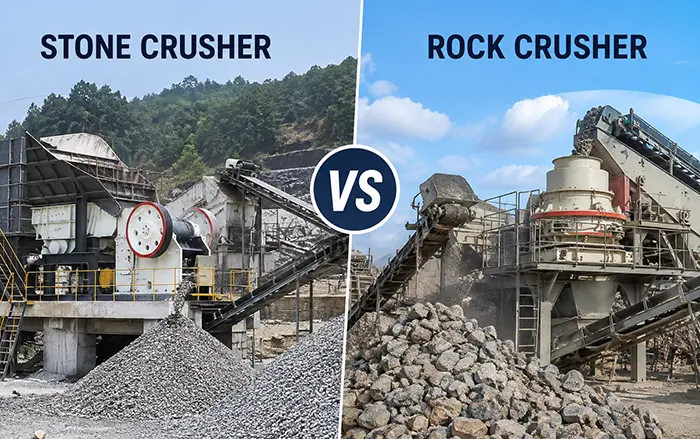
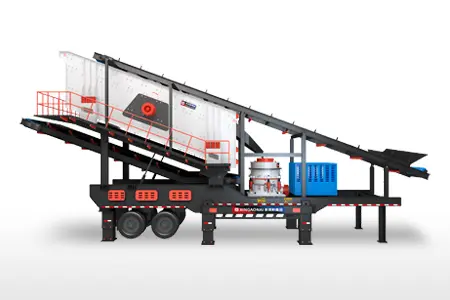
Stone crushers are essential machines in mining, quarrying, construction, and aggregate production. They reduce large rocks into smaller particles that can be used as construction aggregates, road base, manufactured sand, or feed material for further processing.
There are several stone crusher types, and each machine is designed for specific crushing stages, material characteristics, and product requirements. Choosing the right crusher depends on factors such as rock hardness, feed size, desired product size, capacity, and the required shape of the final aggregate.
This guide explains the main types of stone crushers, how they work, where they are used, and how to select the right crushing equipment for a project.
1. What Is a Stone Crusher?
A stone crusher is a mechanical machine that breaks rocks into smaller pieces through compression, impact, or other crushing forces.
A typical crushing plant may use more than one type of crusher because reducing large rocks directly to the final product size is usually inefficient.
A common crushing circuit is:
Primary Crushing → Secondary Crushing → Tertiary Crushing → Screening
The exact configuration depends on the feed material and the required final products.
For example, a hard-rock quarry may use a jaw crusher for primary crushing, a cone crusher for secondary crushing, and another cone crusher or impact crusher for final shaping and sizing.
2. Main Stone Crusher Types
The most common stone crusher types include:
Jaw crusher
Gyratory crusher
Cone crusher
Impact crusher
Hammer crusher
Vertical shaft impact crusher
Mobile crusher
Each type has different operating characteristics and applications.
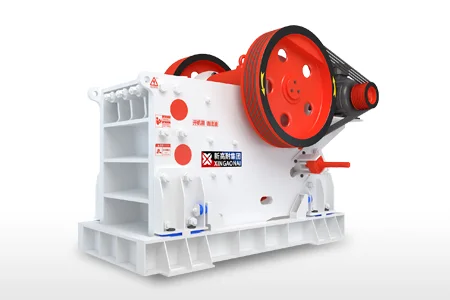
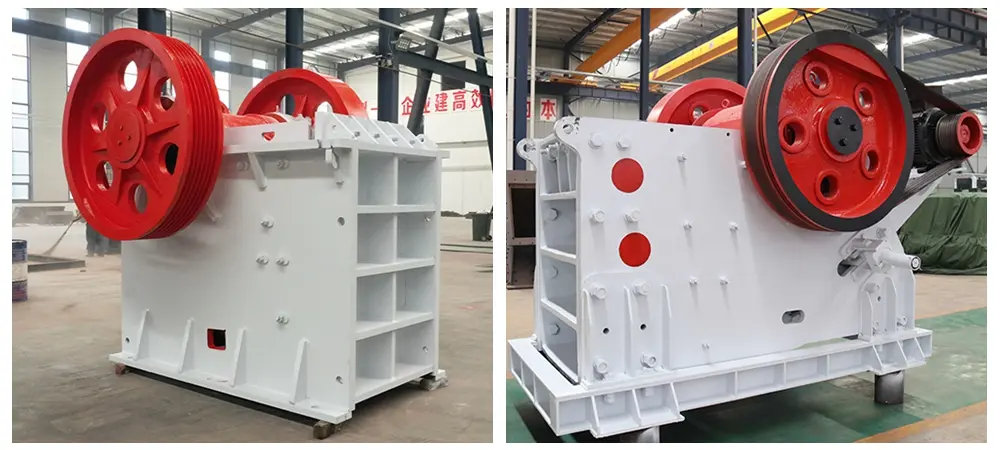
3. Jaw Crusher
A jaw crusher is one of the most widely used primary crushers.
It uses two jaw plates to compress material. One jaw remains relatively fixed while the other moves toward and away from it, creating a crushing action.
Typical Applications
Jaw crushers are commonly used for:
Hard rock
Granite
Basalt
Limestone
River stone
Construction and demolition materials
Primary crushing in mining operations
Advantages
Jaw crushers are popular because they offer:
Simple structure
High reduction capability
Good performance with hard materials
Relatively easy maintenance
Wide range of applications
Limitations
A jaw crusher is primarily designed for primary crushing. It may not produce the final aggregate shape or particle size required for some applications.
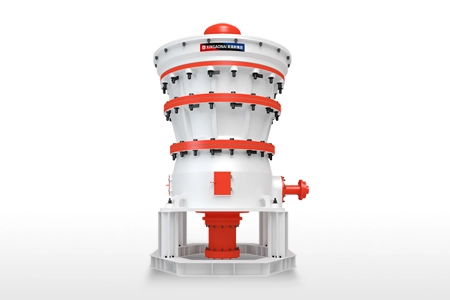
4. Gyratory Crusher
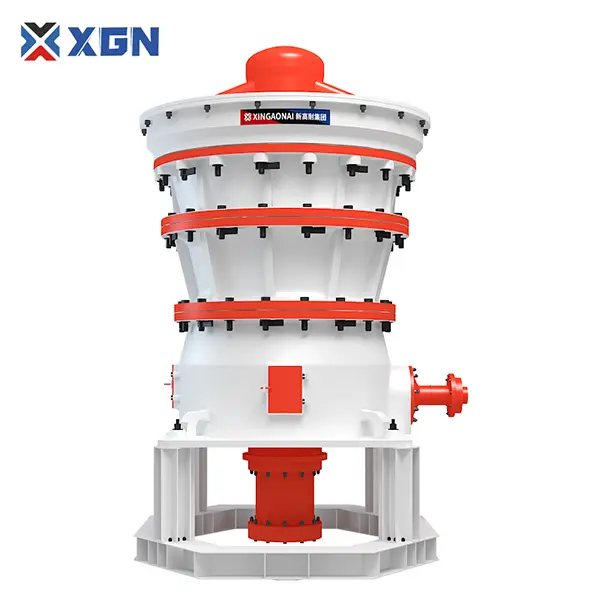
A gyratory crusher is a large primary crushing machine commonly used in high-capacity mining and quarrying operations.
The crushing head moves within a concave surface, continuously compressing material as it passes through the crushing chamber.
Typical Applications
Gyratory crushers are particularly suitable for:
Large-scale mining
High-capacity hard-rock crushing
Large quarry operations
Primary crushing of run-of-mine ore
Advantages
They can handle very large feed sizes and provide high continuous throughput.
Limitations
Gyratory crushers generally require a larger installation and higher initial investment than smaller primary crushers.
They are therefore more commonly considered for large-scale operations where high capacity justifies the investment.
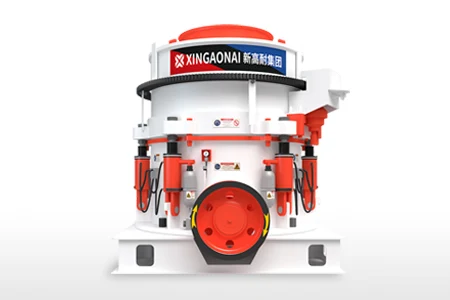
5. Cone Crusher
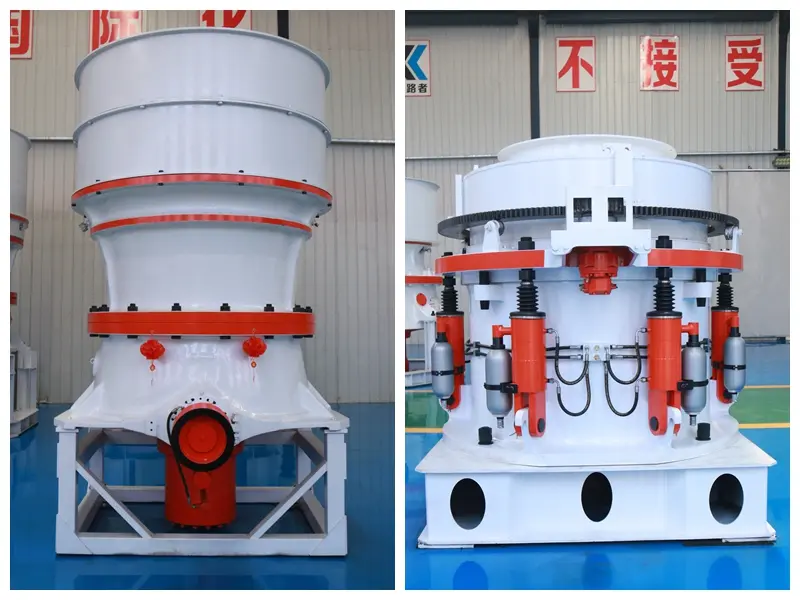
A cone crusher is widely used for secondary, tertiary, and sometimes quaternary crushing.
It works by compressing material between a moving mantle and a stationary concave.
Cone crushers are particularly effective for hard and abrasive materials.
Typical Applications
They are commonly used for:
Granite
Basalt
Iron ore
Copper ore
River stone
High-quality aggregates
Advantages
Cone crushers can provide:
Consistent product size
Good reduction efficiency
High capacity
Good performance with abrasive materials
Multiple crushing configurations
Different chamber designs and operating settings can be selected according to the feed and product requirements.
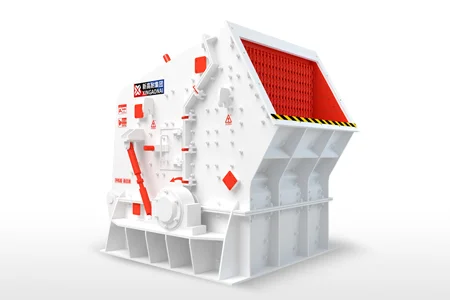
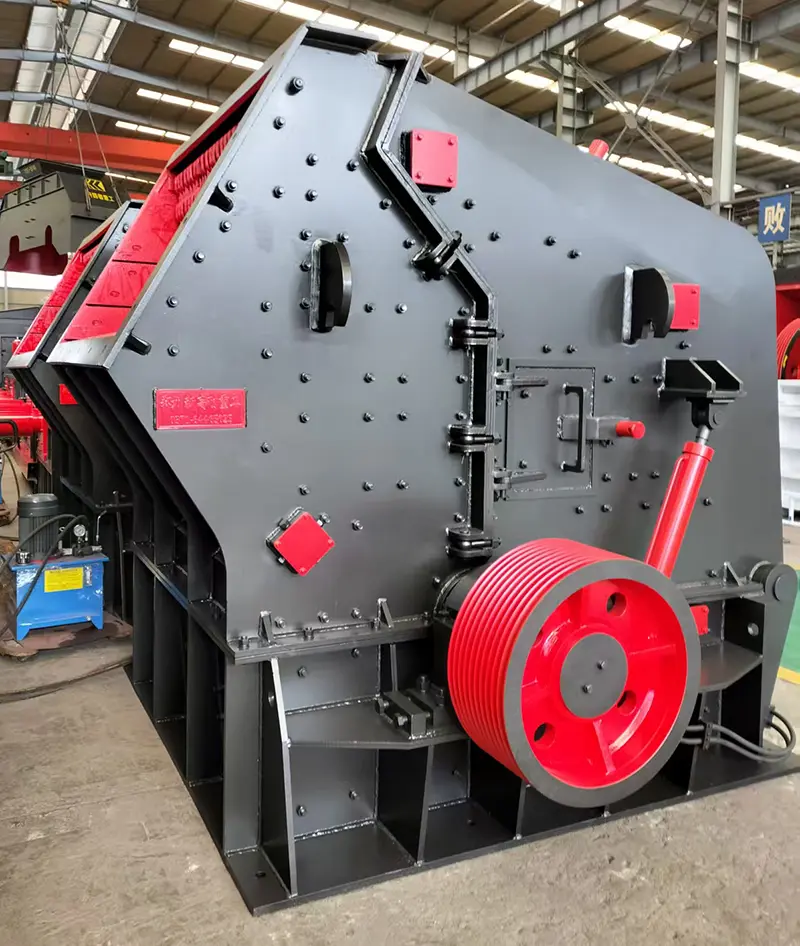
6. Impact Crusher
An impact crusher breaks material primarily through impact rather than compression.
The material is accelerated by a rotor and thrown against impact surfaces, causing it to fracture.
Impact crushers are often selected when aggregate shape and high reduction are important.
Typical Applications
They can be used for:
Limestone
Soft to medium-hard rock
Recycled concrete
Construction waste
Manufactured aggregate
Advantages
Impact crushing can produce a relatively cubical product, which is valuable for many construction and aggregate applications.
Limitations
Impact crushers may experience higher wear when processing highly abrasive materials.
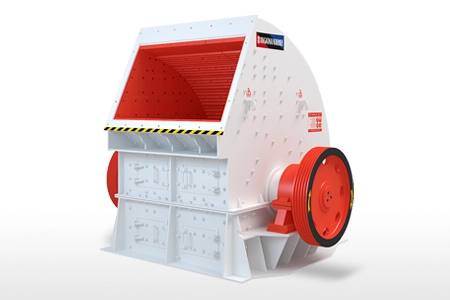
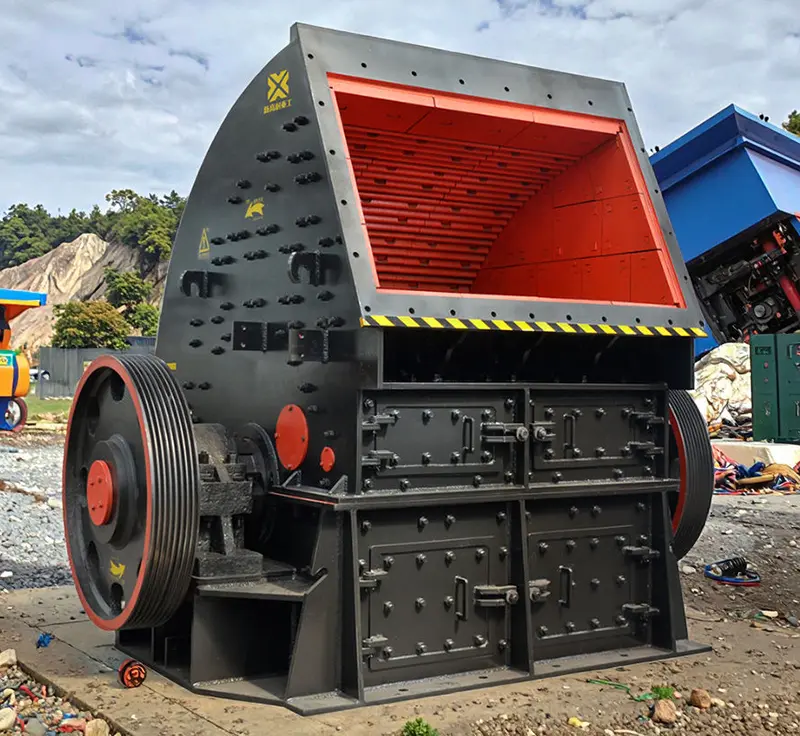
7. Hammer Crusher
A hammer crusher uses rapidly rotating hammers to break material against impact surfaces.
It is suitable for certain soft to medium-hard materials and applications where a relatively high reduction ratio is required.
Typical Applications
Hammer crushers can be used for:
Limestone
Coal
Gypsum
Some soft rocks
Certain industrial minerals
They are generally not the first choice for highly abrasive hard rock because wear can become a significant operating consideration.
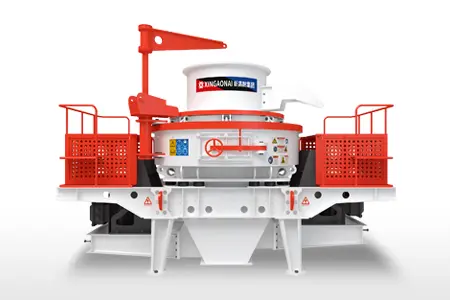
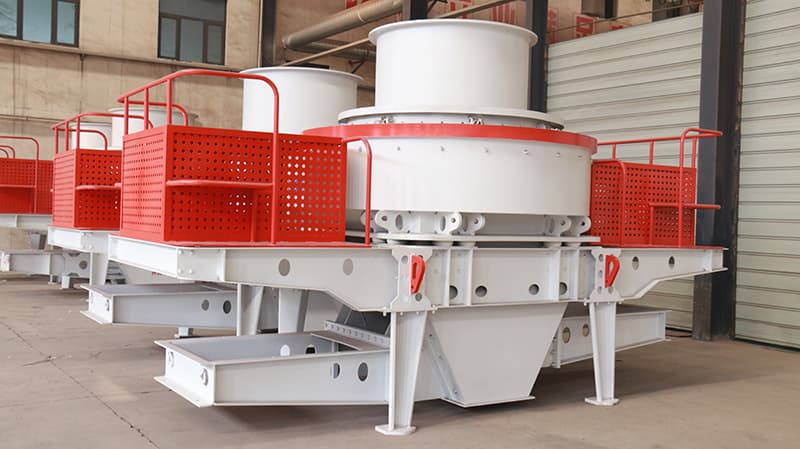
8. Vertical Shaft Impact Crusher
A vertical shaft impact crusher, commonly called a VSI crusher, uses a high-speed rotor to accelerate material and produce impact-based crushing.
VSI crushers are often used in the final stage of aggregate production.
Main Application
Their major advantage is particle shaping.
A VSI crusher can help produce more cubical and well-shaped particles, making it useful for:
Manufactured sand
High-quality aggregates
Concrete aggregates
Asphalt aggregates
Fine crushing and shaping
A VSI is generally used as part of a complete crushing circuit rather than as the only crusher in a plant.
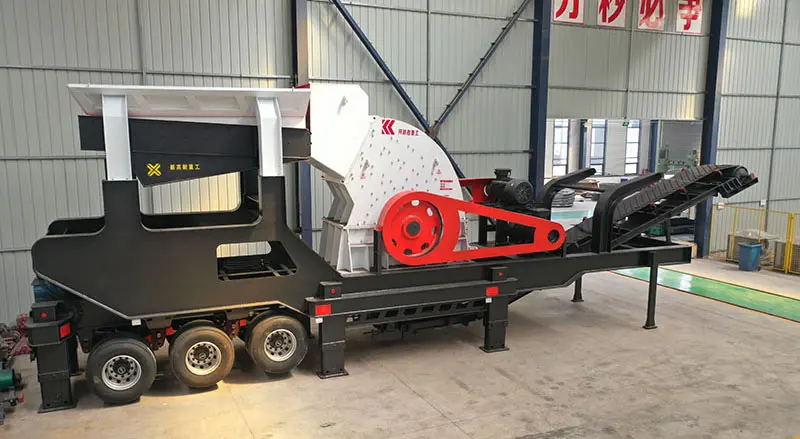
9. Mobile Crusher
A mobile crusher integrates crushing equipment with a mobile chassis or tracked platform.
It can be moved between working locations without requiring the same type of fixed installation as a stationary crushing plant.
Common mobile crusher configurations include:
Mobile jaw crusher
Mobile cone crusher
Mobile impact crusher
Mobile screening plant
Typical Applications
Mobile crushers are useful for:
Road construction
Quarrying
Mining
Construction and demolition waste
Recycling
Remote projects
Temporary crushing operations
Their main advantage is operational flexibility.
10. Primary vs Secondary vs Tertiary Crushers
Stone crusher types can also be classified according to their position in the crushing circuit.
Primary Crusher
The primary crusher receives the largest feed material.
Typical equipment includes:
Jaw crusher
Gyratory crusher
Large impact crusher
The main objective is to reduce run-of-mine material to a size suitable for the next stage.
Secondary Crusher
The secondary crusher further reduces the material.
Cone crushers and impact crushers are commonly used at this stage.
Tertiary Crusher
Tertiary crushing produces smaller and more closely controlled particles.
Cone crushers, VSI crushers, and some impact crushers can be used for tertiary applications.
The actual configuration depends on the required final product.
11. How Stone Crusher Types Compare
| Crusher Type | Typical Stage | Suitable Materials | Main Strength |
|---|---|---|---|
| Jaw Crusher | Primary | Hard and abrasive rock | Simple and robust |
| Gyratory Crusher | Primary | Large-scale hard rock | Very high capacity |
| Cone Crusher | Secondary/Tertiary | Hard and abrasive materials | Consistent product |
| Impact Crusher | Primary/Secondary | Soft to medium-hard materials | High reduction and good shape |
| Hammer Crusher | Primary/Secondary | Soft to medium-hard materials | High reduction |
| VSI Crusher | Tertiary | Aggregates and manufactured sand | Particle shaping |
| Mobile Crusher | Various | Many material types | Flexibility |
12. How to Choose the Right Stone Crusher
Selecting the correct stone crusher requires evaluating several factors.
Rock Hardness
Hard and abrasive rocks such as granite and basalt generally require robust crushing equipment.
Cone crushers are often used for secondary or tertiary crushing of these materials.
Softer materials such as limestone can often be processed with impact or hammer crushing, depending on the application.
Feed Size
The maximum feed size determines the appropriate primary crusher.
Large feed material may require a jaw or gyratory crusher before entering secondary equipment.
Required Capacity
The crusher must be able to process the required feed rate.
A machine that is too small can become a bottleneck, while excessive capacity can increase capital costs unnecessarily.
Final Product Size
The desired product size influences the number of crushing stages.
Producing coarse aggregate may require fewer stages than producing fine aggregate or manufactured sand.
Aggregate Shape
For concrete and asphalt applications, particle shape can be an important consideration.
Impact and VSI crushers can be useful when improved particle shape is required.
Abrasiveness
Highly abrasive materials can cause rapid wear.
For these materials, crusher selection should consider wear-part material, maintenance requirements, and expected operating costs.
13. Stone Crusher Types for Different Rocks
Different rocks respond differently to crushing.
Granite
Granite is hard and abrasive. A typical granite crushing plant may use:
Jaw Crusher → Cone Crusher → VSI Crusher → Screening
The exact circuit depends on the required aggregate specifications.
Basalt
Basalt is also hard and abrasive.
A jaw crusher can be used for primary reduction, followed by cone crushing for secondary or tertiary applications.
Limestone
Limestone is generally easier to crush than granite or basalt.
Depending on hardness and final product requirements, jaw crushers, impact crushers, hammer crushers, or cone crushers may be considered.
River Stone
River stone is often hard and rounded.
A common configuration is:
Jaw Crusher → Cone Crusher → Screening
Additional shaping may be required when the final aggregate needs a more cubical form.
14. Stone Crusher for Aggregate Production
Aggregate production usually requires more than one crushing stage.
A typical plant may include:
Feeding → Primary Crushing → Secondary Crushing → Screening → Tertiary Crushing → Final Screening
The screening equipment separates products into different size fractions.
Oversized material can be returned to the crusher through a closed circuit.
This approach allows the plant to produce multiple aggregate sizes while maintaining better control over the final product.
15. Stone Crusher for Manufactured Sand
Manufactured sand requires more controlled fine crushing and particle shaping than conventional coarse aggregate.
A typical process can include:
Primary Crushing → Secondary Crushing → Fine Crushing → VSI Shaping → Screening → Sand Washing
The VSI crusher can help improve particle shape, while screening controls the final particle-size distribution.
If the feed contains excessive dust, clay, or unwanted fines, a washing stage may also be required.
16. Fixed vs Mobile Stone Crushers
Another important decision is whether to use a stationary or mobile crushing plant.
Stationary Crushing Plant
A stationary plant is suitable when:
The operation is long-term
The material source is relatively stable
High production capacity is required
A permanent infrastructure is available
Stationary plants can be optimized for high-capacity continuous production.
Mobile Crushing Plant
A mobile plant is more suitable when:
The working location changes
Material needs to be processed close to the extraction point
Infrastructure is limited
Project duration is relatively short
Transportation flexibility is important
The best choice depends on the project's operating conditions and investment plan.
17. Common Mistakes When Selecting a Stone Crusher
Choosing Based Only on Price
The cheapest machine may not provide the lowest total cost over its operating life.
Wear, energy consumption, maintenance, and downtime should also be considered.
Ignoring Material Characteristics
A crusher designed for limestone may not be the best option for highly abrasive granite.
Material testing should be completed before final equipment selection.
Using Too Few Crushing Stages
Trying to achieve a very fine product with an unsuitable primary crusher can reduce efficiency and increase wear.
Ignoring Screening
Crushing and screening should be designed as one system. Poor screening can overload downstream crushers and reduce overall plant performance.
Not Considering Future Expansion
If production is expected to increase, the initial layout should allow for additional equipment or capacity upgrades where practical.
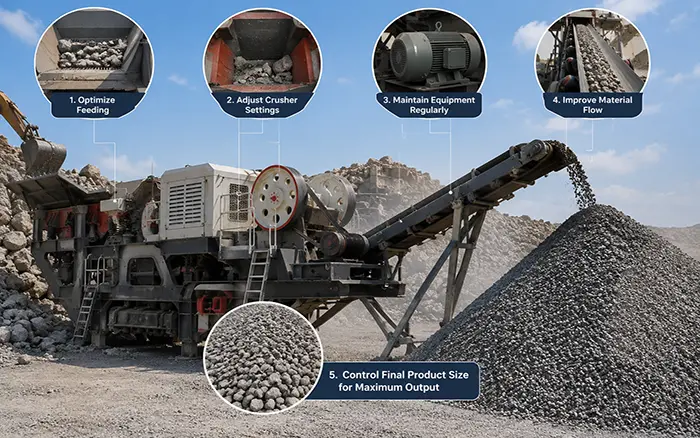
18. How to Optimize a Stone Crushing Plant
After selecting the appropriate stone crusher types, the complete circuit should be optimized.
Important areas include:
Stable Feeding
A consistent feed rate helps maintain stable crusher performance.
Proper Closed-Circuit Design
Oversized material can be returned to the crusher to improve product-size control.
Screen Selection
The screen should match the required product sizes and plant capacity.
Wear-Part Management
Regular inspection and timely replacement of wear parts can reduce unexpected downtime.
Equipment Matching
The capacity of each machine should be balanced so that one crusher or screen does not become a bottleneck.
19. Stone Crusher Equipment List
A complete stone crushing plant may include:
Feed hopper
Vibrating feeder
Jaw crusher
Cone crusher
Impact crusher
VSI crusher
Vibrating screen
Belt conveyor
Dust suppression system
Electrical control system
Magnet or metal removal equipment where required
Not every plant requires all of these components.
The equipment list should be developed according to the material, capacity, product requirements, and process flow.
Conclusion
There are many stone crusher types, but no single crusher is suitable for every application.
Jaw crushers and gyratory crushers are commonly used for primary crushing, while cone crushers and impact crushers are widely used for secondary and tertiary applications. Hammer crushers can be suitable for certain softer materials, while VSI crushers are often selected when particle shaping and manufactured sand production are important. Mobile crushers provide additional flexibility when the processing location needs to change.
The right choice depends on rock hardness, abrasiveness, feed size, required capacity, product size, aggregate shape, and the overall crushing circuit.
Instead of selecting a crusher based on one specification, it is better to evaluate the complete process. Properly matched crushing, screening, conveying, and material-handling equipment can improve plant capacity, product quality, and long-term operating efficiency.
For a new project, material testing and process design should be completed before finalizing the crusher model and plant configuration.