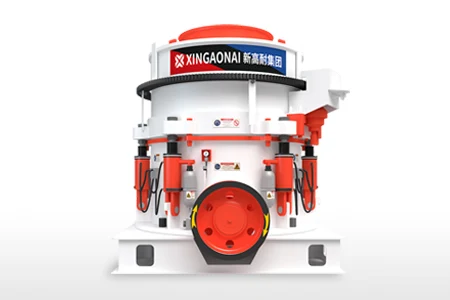
The terms stone crusher and rock crusher are often used interchangeably in the mining, quarrying, construction, and aggregate industries. In most cases, they refer to machines that reduce large pieces of natural material into smaller, usable sizes.
Although the terminology is similar, the two terms can have slightly different usage depending on the application. Understanding this distinction can help buyers choose equipment based on the material, crushing requirements, and production goals rather than simply on the machine's name.
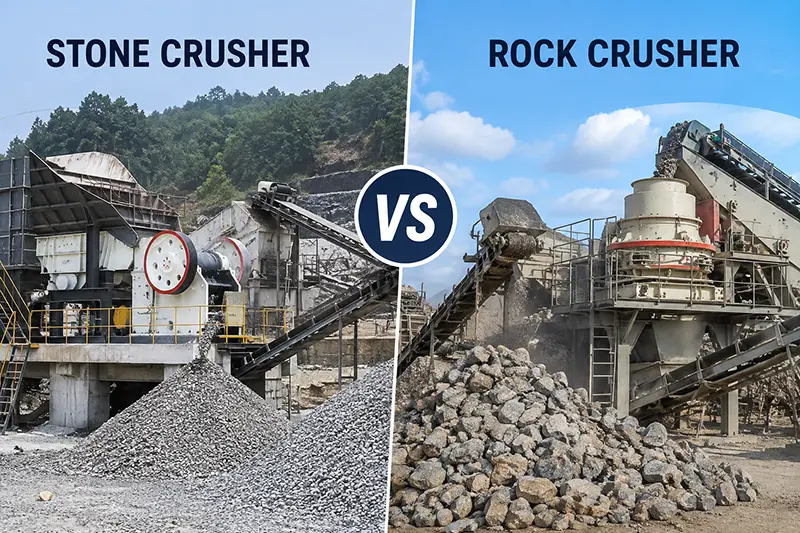
What Is a Stone Crusher?
A stone crusher is a machine designed to crush stone into smaller particles for further processing or direct use.
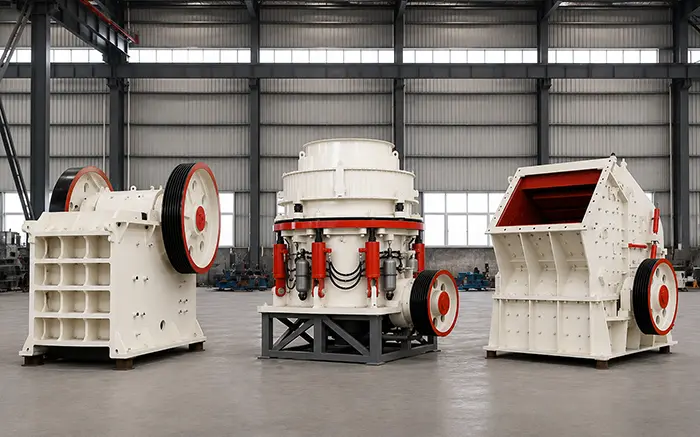
The term is commonly used in aggregate production, quarrying, road construction, and building-material applications. A stone crushing plant may use several types of crushers, including:
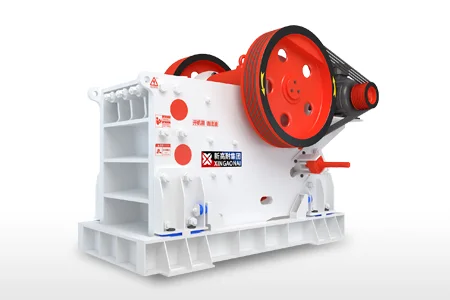
Jaw crushers
Cone crushers
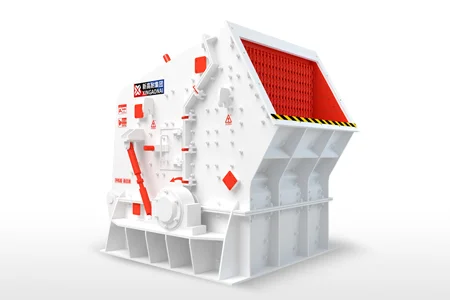
Impact crushers
Hammer crushers
VSI crushers
For example, a quarry producing construction aggregate may use a jaw crusher for primary crushing, followed by a cone or impact crusher for secondary crushing.
The term "stone crusher" often emphasizes the application and final aggregate production rather than a specific crusher mechanism.
What Is a Rock Crusher?
"Rock crusher" is a broader and more general term that is frequently used when describing the processing of natural rock, particularly in mining, quarrying, and construction projects.
Rock crushers can include the same major machine types:
Jaw crusher
Gyratory crusher
Cone crusher
The appropriate equipment depends more on the characteristics of the rock than on whether the machine is called a stone crusher or rock crusher.
Stone Crusher vs Rock Crusher: Is There a Real Difference?
In most industrial contexts, there is no fundamental mechanical difference between the terms.
A jaw crusher can be called a stone crusher or a rock crusher. The same applies to cone crushers and impact crushers.
The distinction is mainly related to terminology and context:
| Aspect | Stone Crusher | Rock Crusher |
|---|---|---|
| Basic function | Reduces stone into smaller sizes | Reduces rock into smaller sizes |
| Common usage | Aggregate and quarrying | Mining, quarrying, and general rock processing |
| Machine types | Jaw, cone, impact, VSI, etc. | Jaw, cone, impact, gyratory, VSI, etc. |
| Main selection factors | Material and product requirements | Material and product requirements |
| Mechanical distinction | Usually none | Usually none |
Therefore, searching for either stone crusher or rock crusher can lead to similar types of crushing equipment.
Which Crusher Is Suitable for Different Rocks?
The more important question is not whether a machine is called a stone crusher or rock crusher, but whether it is suitable for the material.
Hard and Abrasive Rock
Granite, basalt, and some other hard rocks generally require durable crushing equipment.
A typical circuit may use:
Jaw Crusher → Cone Crusher → Screening
Additional crushing or shaping stages can be added when finer or more cubical products are required.
Soft to Medium-Hard Rock
Limestone and similar materials can often be processed with jaw crushers, impact crushers, or hammer crushers, depending on the desired product.
Impact crushing can be particularly useful when particle shape is important.
River Rock
River rock can be relatively hard and abrasive. Its rounded shape can also influence the crushing process.
Jaw and cone crushers are commonly considered for multi-stage processing, with screening used to control the final product sizes.
Stone Crusher vs Rock Crusher for Different Applications
The equipment configuration should be matched to the application.
Quarrying
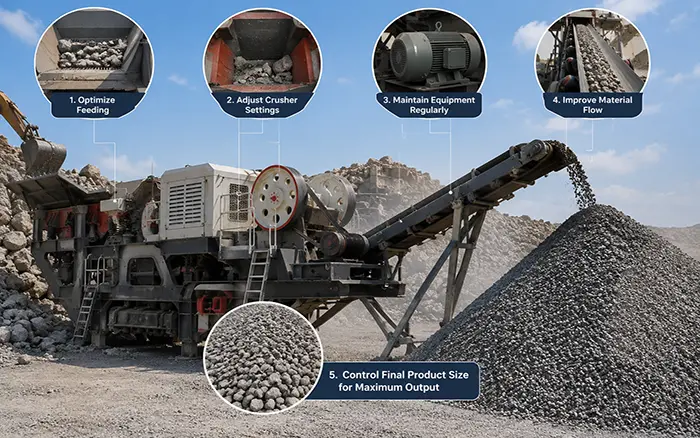
Quarries often require stationary or mobile crushing plants capable of producing several aggregate sizes.
Mining
Mining operations may require robust primary crushers and high-capacity secondary or tertiary crushing equipment.
Construction and Demolition
Mobile crushers are often useful for processing concrete, asphalt, and other demolition materials close to the project site.
Road Construction
Mobile crushing plants can produce aggregates near road projects, reducing the need to transport raw material over long distances.
How to Choose Between Stone and Rock Crushing Equipment
Rather than choosing equipment based on terminology, consider these factors:
1. Material Characteristics
Determine the material's hardness, abrasiveness, moisture, and maximum feed size.
2. Required Capacity
The crusher should provide sufficient throughput for the planned production rate without becoming a bottleneck.
3. Final Product Size
The target particle size determines the number and type of crushing stages required.
4. Product Shape
For concrete and asphalt aggregates, particle shape can be important. Impact and VSI crushers may be considered when better particle shaping is required.
5. Mobility
A stationary plant is generally suitable for long-term operations at a fixed location, while mobile crushers provide greater flexibility for changing work sites.
6. Operating Cost
Purchase price is only one part of the total cost. Wear parts, energy consumption, maintenance, transportation, and downtime should also be considered.
Stone Crusher or Rock Crusher: Which Term Should You Use?
For equipment buyers, either term can be useful when searching for crushing machinery. However, product specifications are much more important than the terminology.
Instead of focusing only on whether a supplier describes a machine as a stone crusher or rock crusher, check:
Crusher type
Maximum feed size
Capacity
Discharge size
Motor power
Material compatibility
Wear-part requirements
Crushing stages
Maintenance requirements
These specifications provide a much clearer basis for equipment selection.
Conclusion
The difference between a stone crusher and a rock crusher is primarily a matter of terminology rather than machine design. Both terms generally describe equipment used to reduce natural rock or stone into smaller particles.
The actual crusher selection should be based on material hardness, abrasiveness, feed size, capacity, final product requirements, particle shape, and plant configuration.
For a complete crushing project, the best solution is usually not a single machine but a properly matched system of crushers, screens, feeders, and conveyors. Understanding the material and production requirements first will make equipment selection more reliable and cost-effective.