This guide explains how to design a sand washing plant, from evaluating the raw material to selecting equipment and developing the process flow.
1. Start With Sand Material Testing
The first step in designing a sand washing plant is to understand the material that will be processed.
Different sand sources can have very different characteristics. River sand, manufactured sand, and silica-rich sand may require completely different washing circuits.
Important material properties include:
Feed particle size
Clay content
Silt and dust content
Moisture content
Mineral composition
Bulk density
Organic contamination
Percentage of fine particles
Degree of clay adhesion
Laboratory testing can help determine how easily the contaminants can be removed and whether simple washing is sufficient.
For materials with high clay content, a stronger scrubbing stage may be required before classification and final washing.
2. Define the Final Sand Requirements
The next step is to determine what the finished sand needs to achieve.
The required product specifications influence the entire plant design.
Key questions include:
What is the target product size?
How much clay or silt can remain?
What is the required production capacity?
How much fine sand can be lost?
What final moisture level is acceptable?
Is one sand product or several size fractions required?
For example, a plant producing construction sand may have different requirements from a plant producing high-quality manufactured sand for concrete or asphalt applications.
The washing circuit should therefore be designed around the final product specification, rather than selecting equipment first and defining the product later.
3. Determine the Required Capacity
Capacity is one of the most important design parameters.
Consider:
Hourly feed rate
Daily production target
Plant operating hours
Expected downtime
Seasonal changes in feed availability
Future production expansion
It is generally better to leave a reasonable operating margin rather than running every machine continuously at its maximum rated capacity.
4. Develop the Sand Washing Plant Process Flow
A typical sand washing plant can follow a process such as:
Raw Material → Screening → Scrubbing/Washing → Classification → Fine Sand Recovery → Dewatering → Finished Sand
However, not every project requires every stage.
A relatively clean feed may only need:
Screening → Washing → Dewatering
A more contaminated material may require:
Crushing → Screening → Scrubbing → Washing → Classification → Fine Sand Recovery → Dewatering
The process flow should be determined by the material test results.
5. Crushing and Screening Before Washing
If the raw material contains oversized rocks, crushing may be required before washing.
A typical crushing circuit can include:
Jaw crusher
Cone crusher or impact crusher
Vibrating screen
Belt conveyor
The objective is to produce a suitable feed size for the washing stage.
Screening can also remove oversized material and separate different size fractions before washing.
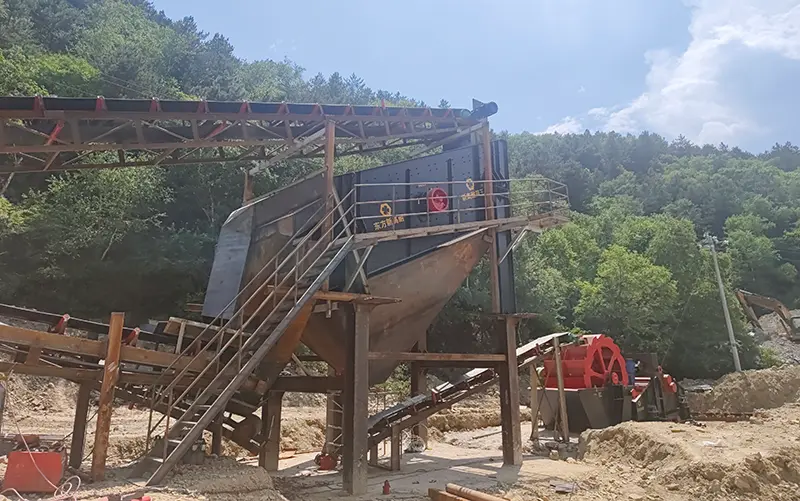
For manufactured sand, the crushing circuit may already be part of the existing aggregate plant. In this case, the sand washing system can be installed downstream of the crushing and screening circuit.
6. Select the Appropriate Washing Equipment
The washing equipment should be selected according to the feed characteristics and required washing intensity.
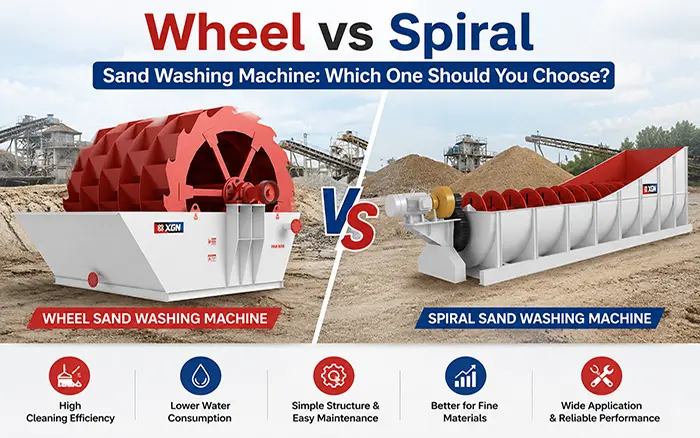
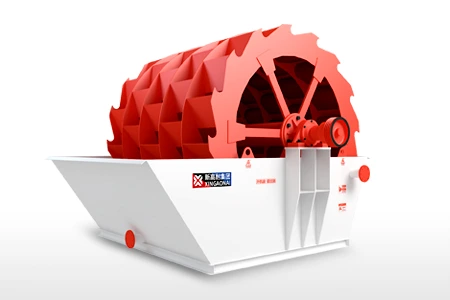
Wheel Sand Washing Machine
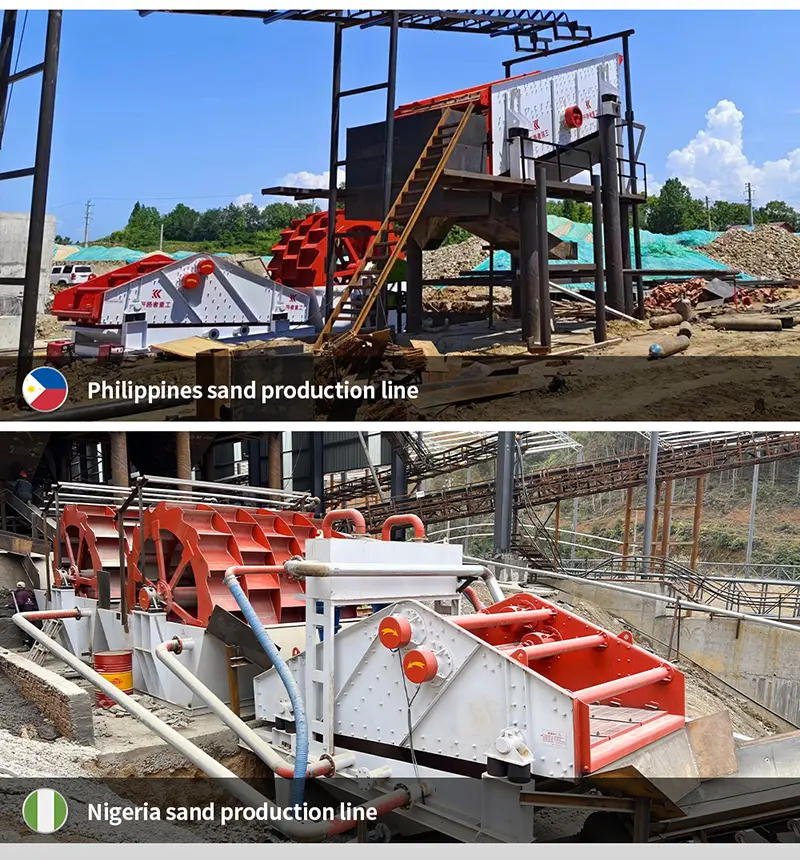
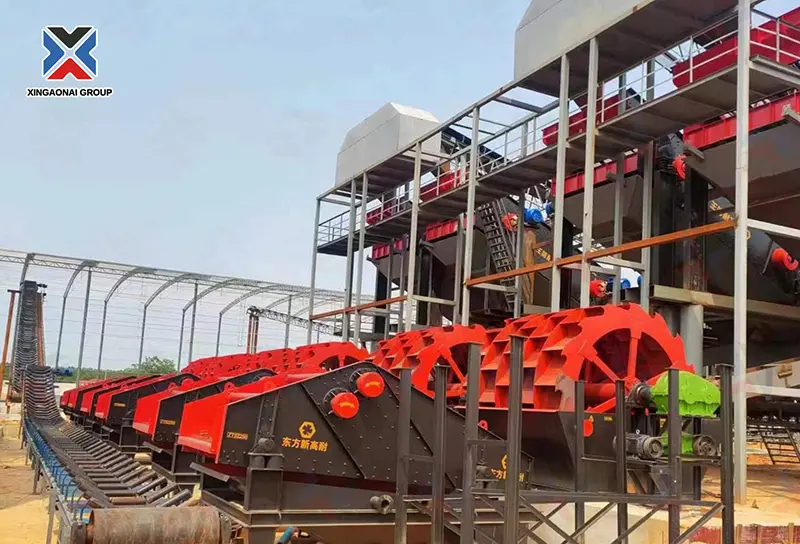
A wheel sand washing machine is commonly used for washing and dewatering sand.
It is suitable for applications where the feed contains relatively moderate levels of clay, silt, and dust.
Typical advantages include:
Simple structure
Relatively low water consumption
Good dewatering performance
Easy operation
Compact configuration
Wheel washers are often used in aggregate and manufactured sand plants.
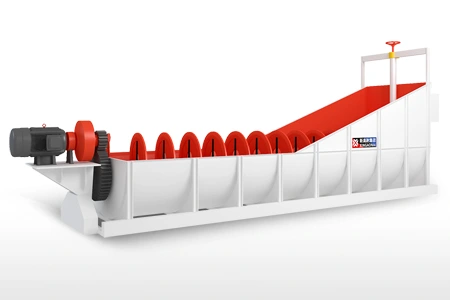
Spiral Sand Washing Machine
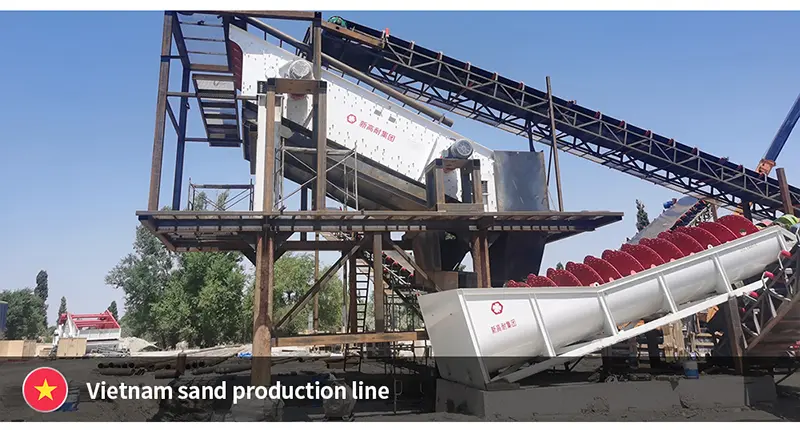
A spiral sand washing machine uses a rotating spiral to agitate, transport, and wash the material.
It can provide stronger washing and classification than a simple wheel washer and is suitable for materials requiring more intensive cleaning.
Typical applications include sand containing higher levels of clay and other contaminants.
Scrubbing Equipment
When clay is strongly attached to the surface of sand particles, conventional washing may not be sufficient.
A log washer or other intensive scrubbing equipment can be installed upstream of the classification and washing stages.
This helps break down clay lumps and release contaminants before the material enters the final separation stage.
7. Add Classification When Necessary
Classification separates particles according to size and helps control the composition of the final product.
A hydrocyclone is commonly used when fine-particle classification is required.
It can help:
Separate fine particles
Improve product consistency
Recover useful fine sand
Reduce unwanted fines in the final product
For plants processing significant quantities of fine sand, classification can be an important part of the overall circuit.
8. Consider Fine Sand Recovery
Fine sand can be lost with wastewater during the washing process.
If the feed contains a high proportion of valuable fine particles, excessive loss can reduce overall recovery and product yield.
A fine sand recovery system can include:
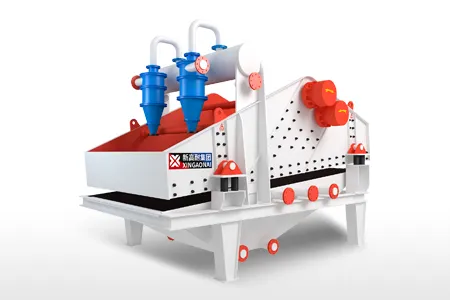
Hydrocyclone → Dewatering Screen → Fine Sand Product
The hydrocyclone separates fine sand from the water stream, while the dewatering screen removes excess water and produces a recoverable sand product.
This system can be particularly useful for manufactured sand and other feeds containing significant quantities of fine material.
9. Design the Dewatering Stage
After washing, the sand contains a considerable amount of water.
A dewatering screen is commonly used to reduce product moisture before the sand is transported to a stockpile or downstream process.
Important factors include:
Feed rate
Sand particle size
Desired moisture content
Screen configuration
Drainage requirements
Effective dewatering can improve stockpile management, transportation, and final product handling.
10. Design the Water Management System
Water is one of the most important resources in a sand washing plant.
The plant should consider both fresh-water consumption and wastewater treatment.
A basic water circulation system may include:
Washing → Slurry Water → Settling/Thickening → Clarified Water → Recycling
Depending on the plant scale and environmental requirements, the system may include:
Water tanks
Settling ponds
Thickener
Slurry pumps
Water pumps
Hydrocyclones
Filter press
Water recycling pipelines
Recycling process water can significantly reduce fresh-water demand and improve the overall sustainability of the plant.
11. Tailings and Sludge Management
Washing separates unwanted fines and contaminants from the useful sand, producing a slurry containing water and fine solids.
This stream must be properly managed.
Possible solutions include:
Thickener
A thickener separates solids from water and produces clarified water for recycling.
Filter Press
A filter press can further dewater fine tailings to produce a relatively dry filter cake.
Settling System
For some smaller plants, settling ponds or tanks can be used to allow solids to settle naturally.
The appropriate system depends on the volume of wastewater, solids concentration, site conditions, and environmental requirements.
12. Optimize Sand Recovery
A good sand washing plant should not focus only on impurity removal.
If washing intensity is too high or classification is poorly controlled, excessive amounts of usable sand may be discharged with the waste stream.
To improve recovery, consider:
Proper hydrocyclone selection
Controlled water flow
Suitable washing intensity
Accurate classification
Fine sand recovery equipment
Proper dewatering screen settings
The objective is to achieve the required cleanliness while minimizing the loss of valuable sand.
13. Consider Water Availability
Water availability can strongly influence plant design.
Projects in water-scarce regions may require a higher degree of water recycling.
In such cases, the plant may incorporate:
Sand Washer → Thickener → Clarified Water Tank → Water Recycling
A water balance should be developed during the engineering stage to estimate:
Fresh-water consumption
Recycled-water volume
Process-water losses
Sludge production
Makeup-water requirements
This helps prevent water shortages during normal operation.
14. Plan the Plant Layout
A well-organized layout improves material flow and maintenance access.
The equipment should be arranged to minimize unnecessary material handling.
A typical layout may follow:
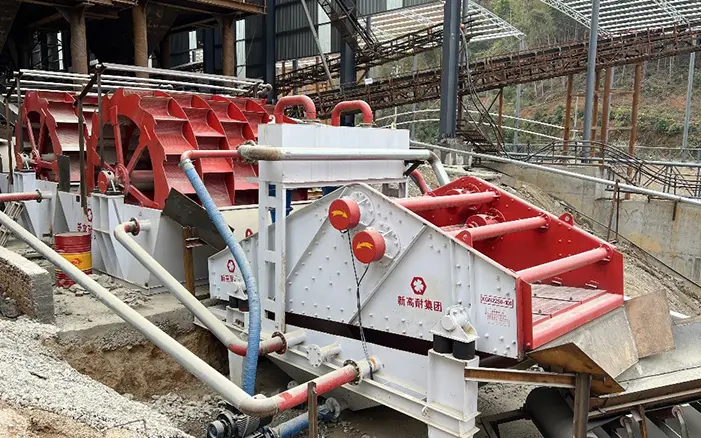
Feed Hopper → Screen → Washer → Hydrocyclone → Dewatering Screen → Finished Sand Stockpile
Water and slurry pipelines should also be arranged carefully to reduce unnecessary pumping distances.
Adequate space should be provided for:
Equipment maintenance
Wear-part replacement
Inspection
Material transportation
Electrical systems
Water tanks
Sludge handling
15. Select Equipment Based on the Complete Circuit
A common mistake is selecting individual machines without considering the complete process.
For example, a high-capacity sand washer cannot achieve the desired plant output if the screening system cannot supply enough material.
Similarly, a washing machine may remove contaminants effectively but still produce excessive moisture if there is no suitable dewatering stage.
Equipment selection should therefore consider the complete circuit:
| Stage | Possible Equipment |
|---|---|
| Feeding | Hopper, feeder |
| Crushing | Jaw crusher, cone crusher, impact crusher |
| Screening | Vibrating screen |
| Scrubbing | Log washer, scrubber |
| Washing | Wheel washer, spiral washer |
| Classification | Hydrocyclone |
| Fine sand recovery | Hydrocyclone + dewatering screen |
| Dewatering | Dewatering screen |
| Water recovery | Thickener, settling system |
| Tailings dewatering | Filter press |
Not every plant needs all of these machines.
16. Example Sand Washing Plant Flowsheets
Simple Washing Plant
For relatively clean sand:
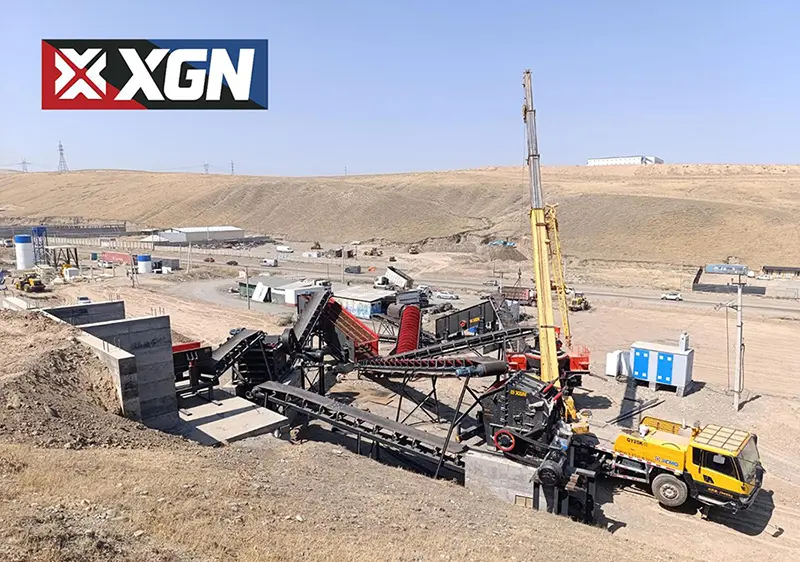
Feeding → Screening → Wheel Sand Washer → Dewatering Screen → Finished Sand
This configuration is relatively simple and can be suitable when contaminant levels are moderate.
Intensive Washing Plant
For clay-rich material:
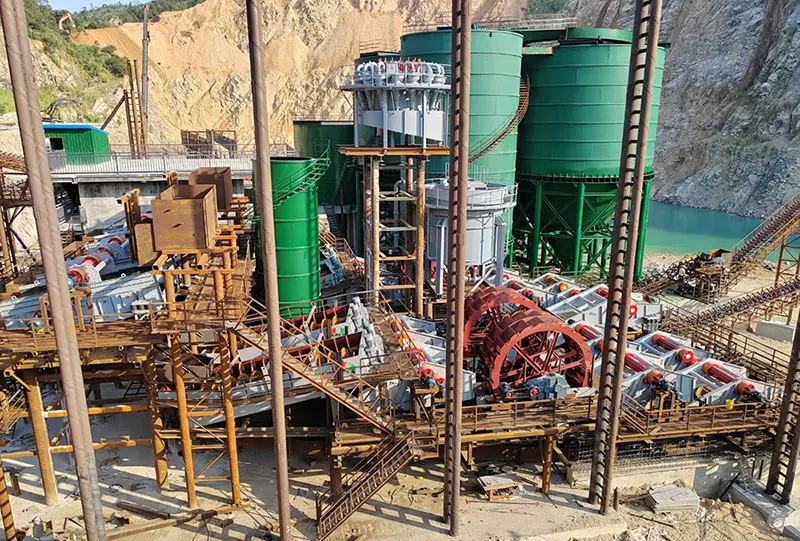
Feeding → Screening → Scrubbing → Spiral Sand Washer → Hydrocyclone → Dewatering Screen → Finished Sand
The additional scrubbing and classification stages provide greater control over difficult feed materials.
Manufactured Sand Washing Plant
A manufactured sand plant may use:
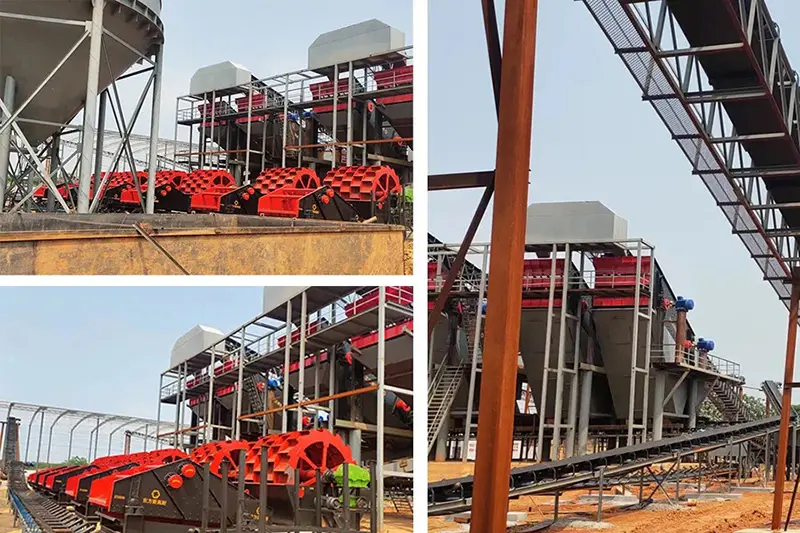
Crushing → Screening → Sand Washing → Hydrocyclone → Fine Sand Recovery → Dewatering → Finished Sand
The exact configuration depends on the amount of stone powder, clay, and other fine material generated during crushing.
17. Common Sand Washing Plant Design Mistakes
Several design mistakes can reduce plant performance.
Choosing Equipment Without Material Testing
Equipment selected without understanding the feed may provide insufficient washing or unnecessary processing capacity.
Ignoring Fine Sand Loss
A plant can produce clean sand while losing too much valuable fine material through the overflow.
Using Excessive Water
More water does not automatically mean better washing. Excessive water consumption can increase operating costs and complicate water treatment.
Underestimating Sludge Production
High-clay feed can generate large amounts of sludge. The water and tailings system should be designed accordingly.
Insufficient Dewatering
A washing system that produces excessively wet sand may create problems during transportation and stockpiling.
Poor Layout
Long material-transfer distances and complicated slurry pipelines can increase energy consumption and maintenance requirements.
18. How to Improve Sand Washing Plant Efficiency
Once the plant is operating, several parameters can be optimized.
Control Feed Rate
Stable feeding helps maintain consistent washing and classification conditions.
Adjust Water Flow
Water should be sufficient for effective washing without causing unnecessary fine sand loss.
Monitor Product Quality
Regularly test the final sand for:
Clay content
Silt content
Moisture
Particle-size distribution
Product consistency
Monitor Sand Loss
Inspect wastewater and overflow streams to determine whether valuable fine sand is being lost.
Maintain Wear Parts
Worn blades, screens, liners, and other components can reduce washing efficiency and affect product quality.
19. Key Factors for Sand Washing Plant Investment
Before investing in a sand washing plant, evaluate the total project rather than the purchase price of individual machines.
Important cost factors include:
Crushing equipment
Washing equipment
Screening equipment
Classification equipment
Dewatering equipment
Water treatment
Pumps and pipelines
Conveyors
Electrical systems
Civil construction
Installation
Maintenance
Energy and water consumption
A lower initial equipment cost does not necessarily result in a lower total operating cost.
The more appropriate approach is to compare the expected production capacity, recovery, product quality, energy consumption, water consumption, and maintenance requirements of different configurations.
Conclusion
Designing a sand washing plant requires a process-oriented approach.
The most important steps are to characterize the feed material, define the final product requirements, determine the required capacity, develop an appropriate process flow, and select equipment according to the actual washing and classification requirements.
A typical plant may combine screening, scrubbing, sand washing, hydrocyclone classification, fine sand recovery, dewatering, and water recycling. However, the optimal configuration depends on the specific material and production objectives.
For relatively clean sand, a simple washing and dewatering circuit may be sufficient. For clay-rich or heavily contaminated material, additional scrubbing and classification stages may be necessary.
Before finalizing equipment selection, laboratory testing and pilot-scale evaluation can help determine the appropriate washing intensity, water requirements, sand recovery, and equipment configuration.
A properly designed sand washing plant should achieve effective impurity removal, high usable sand recovery, controlled water consumption, suitable product moisture, and stable long-term operation.