Natural river sand is widely used in concrete, mortar, road construction and other aggregate applications. However, sand collected from a river deposit may contain clay, silt, dust, organic matter, lightweight debris and oversized particles.
These contaminants can affect grading, water demand, concrete consistency and final product quality. A river sand washing system removes unwanted material while retaining as much usable sand as possible.
Selecting a river sand washing machine should not be based on capacity alone. The correct washing process depends on the feed grading, clay content, required product specification, available water supply and acceptable fine-sand loss.
This guide explains how to evaluate river sand and choose an appropriate washing process without relying on unverified cleaning percentages or fixed equipment assumptions.

Does All River Sand Need Washing?
Not every river sand deposit requires the same washing intensity.
Some deposits contain relatively clean, naturally graded sand that may only need screening and light rinsing. Other deposits contain sticky clay, roots, shells, organic matter or excessive fine particles and therefore require more intensive scrubbing and classification.
Before selecting equipment, the raw material should be tested for:
Maximum feed size;
Particle-size distribution;
Clay and silt content;
Amount of material below the required product size;
Organic contaminants;
Moisture content;
Bulk density;
Degree of clay adhesion;
Required final grading;
Required production capacity.
Washing removes loose contaminants, but it cannot automatically correct every quality problem. If the feed contains unsuitable minerals, excessive salts or strongly bonded contaminants, additional treatment may be required.
Typical River Sand Washing Process
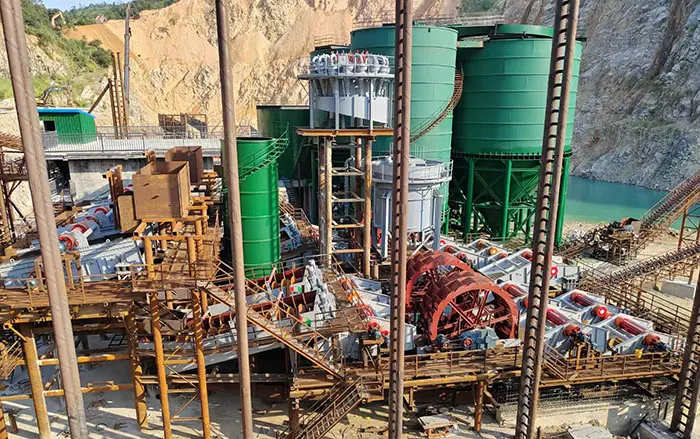
A basic river sand washing process may use the following flow:
Feeding → Screening → Washing → Dewatering → Finished Sand
When the raw material contains more clay and fine contaminants, the process may become:
Feeding → Screening → Scrubbing → Washing → Classification → Fine Sand Recovery → Dewatering
The correct configuration should be determined from material testing rather than copying a standard flow diagram.
1. Feeding the Raw River Sand
A stable feed rate is essential for consistent washing performance.
Raw material can be delivered by:
Feed hopper;
Vibrating feeder;
Belt conveyor;
Wheel loader;
Pumped slurry system, depending on the project.
The feeding system should prevent sudden surges. Overfeeding can reduce washing efficiency, increase motor load and cause material to accumulate inside the washing tank.
Large stones, branches and other foreign objects should be removed before the material enters the washer.
2. Screening Before Washing
Pre-screening separates oversized material and protects downstream washing equipment.
A vibrating screen can be used to:
Remove large stones and debris;
Separate commercial aggregate fractions;
Control the maximum washer feed size;
Reduce unnecessary equipment wear;
Stabilize the feed grading.
For relatively clean river sand, screening followed by light washing may be sufficient. If clay lumps remain after screening, a scrubbing stage may be needed.
3. Scrubbing Clay-Rich River Sand
Sticky clay is more difficult to remove than loose dust or silt. Simply adding more water does not always solve the problem.
For clay-rich feed, the process may require:
Log washer;
Attrition scrubber;
Trommel scrubber;
Spiral washer with stronger agitation.
Scrubbing breaks down clay lumps and releases contaminants attached to the sand particles. The scrubbed material can then be screened, washed and classified.
A wheel bucket washer is normally better suited to sand containing low to moderate amounts of loose contamination. It should not be expected to replace an intensive scrubber in every application.
Selecting the Right River Sand Washing Machine
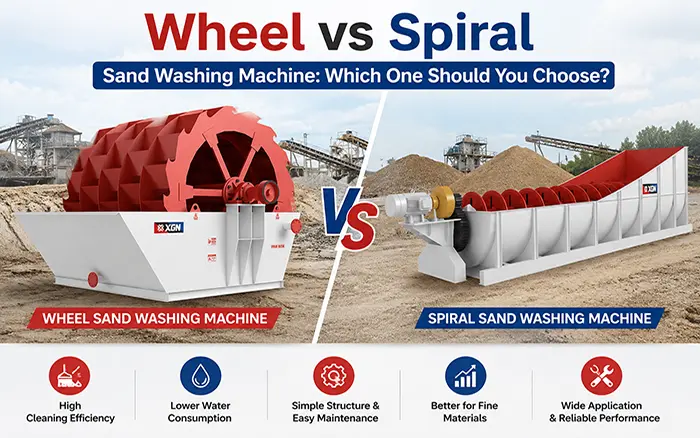
The two most common choices are wheel bucket and spiral washing machines.
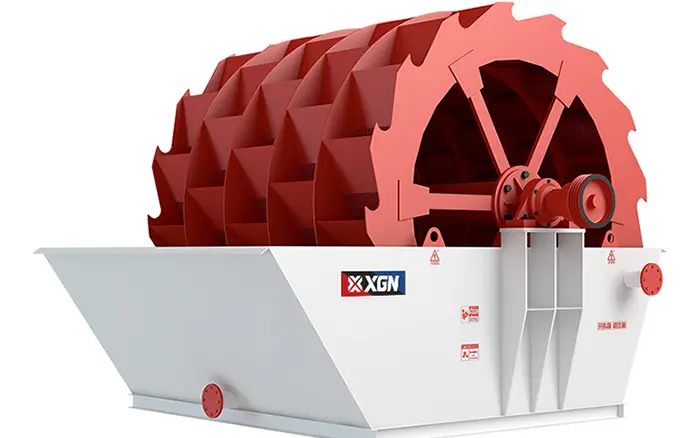
Wheel Bucket Sand Washing Machine
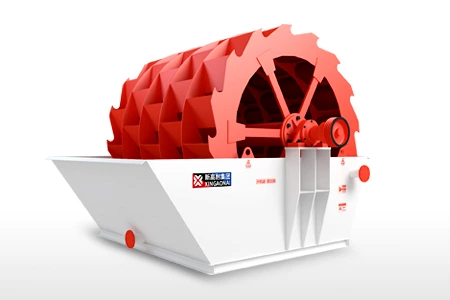
A wheel bucket sand washing machine uses a rotating bucket wheel to agitate, rinse, lift and drain sand.
It is generally suitable when:
The feed contains low to moderate levels of loose clay and silt;
Fine-sand loss needs to be controlled;
The project requires a simple washing circuit;
Power consumption and maintenance access are important;
The maximum feed size is within the selected model’s limit.
Typical advantages include:
Simple mechanical structure;
Continuous washing and discharging;
Relatively gentle handling of sand;
Convenient integration into aggregate plants;
Simultaneous lifting and preliminary drainage.
However, a wheel bucket washer may not provide enough scrubbing force for heavily contaminated or sticky material.
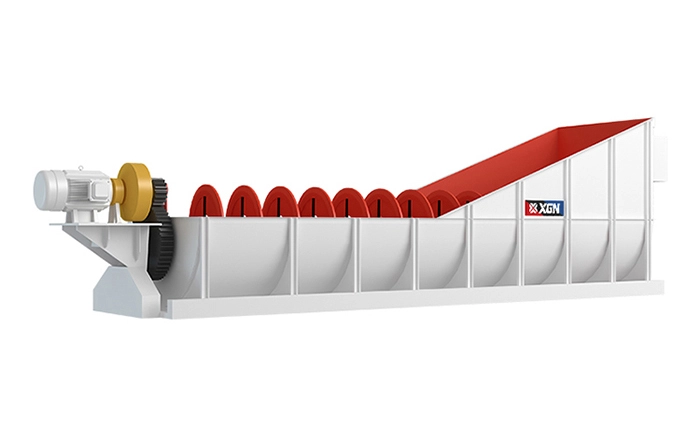
Spiral Sand Washing Machine
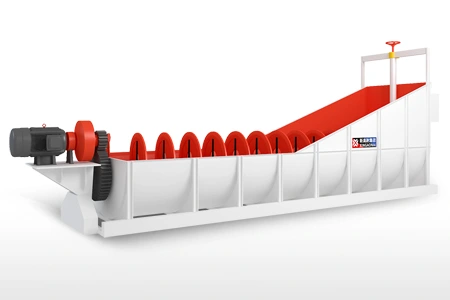
A spiral sand washing machine uses rotating spiral blades to agitate, transport and wash the material.
It is generally considered when:
The river sand contains more clay;
Stronger agitation is required;
The feed contains a wider particle-size range;
Washing and classification are both needed;
The process requires longer material retention inside the tank.
Spiral washers normally provide stronger material agitation but may require more installation space and power than a simple wheel washer.
For a detailed comparison, refer to the wheel vs spiral sand washing machine guide.
Wheel Washer or Spiral Washer?
The choice should be based on actual feed conditions.
| Selection factor | Wheel bucket washer | Spiral washer |
|---|---|---|
| Loose dust and moderate silt | Suitable | Suitable |
| Sticky clay | Limited | More suitable |
| Fine-sand retention | Generally better | Depends on configuration |
| Washing intensity | Moderate | Stronger |
| Equipment structure | Simpler | More complex |
| Installation space | Usually smaller | Usually larger |
| Power requirement | Generally lower | Generally higher |
| Best use | Final sand washing | Washing and classification |
This table is a general comparison. Actual performance depends on the selected model, tank design, water flow, feed grading and operating conditions.
4. Controlling the Washing Water
Water flow affects both cleaning performance and fine-sand loss.
Too little water may leave clay and silt in the product. Excessive water can carry useful fine particles into the overflow and increase the load on the wastewater system.
The operating water volume should be adjusted according to:
Feed rate;
Clay and silt content;
Particle-size distribution;
Required product cleanliness;
Washer tank volume;
Overflow-weir position;
Fine-sand recovery requirements.
Water quality also matters. Recycled water containing excessive suspended solids may reduce washing performance unless it is properly clarified before reuse.
5. Classification and Fine-Sand Recovery
During washing, very fine sand may leave the machine with the overflow water. This can reduce product yield and increase the amount of solids entering the settling system.
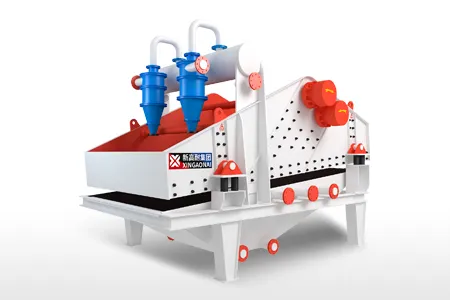
When the feed contains valuable fine particles, a fine sand recovery machine can be installed after the washer.
A typical fine-sand recovery process is:
Washer Overflow → Slurry Pump → Hydrocyclone → Dewatering Screen → Recovered Fine Sand
The hydrocyclone separates recoverable fine particles from water, while the dewatering screen reduces moisture before the recovered material returns to the product stream.
A fine-sand recovery system is not required for every project. It is most useful when laboratory testing shows that a significant amount of saleable material is being lost through the overflow.
6. Dewatering the Washed Sand
Sand discharged directly from the washer still contains moisture.
Depending on stockpiling and transport requirements, the plant may use:
Drainage through the wheel buckets;
Dewatering screen;
Dewatering stockpile;
Hydrocyclone and dewatering screen combination.
The required moisture level should be confirmed during process design. A wheel bucket washer provides preliminary drainage, but it does not always replace a dedicated dewatering screen.
7. Wastewater and Sludge Management
River sand washing produces wastewater containing clay, silt and fine suspended solids. The wastewater should not be treated as clean water without clarification.
Possible water-management equipment includes:
Settling pond;
Settling tank;
Thickener;
Clarified-water tank;
Slurry pump;
Filter press;
Recycled-water pipeline.
A typical recycling circuit is:
Washing Wastewater → Settling or Thickening → Clarified Water Tank → Recycled Water
The concentrated sludge may require further dewatering before disposal or reuse. The treatment system should be sized according to water flow and solids concentration.
Recommended River Sand Washing Configurations
Simple River Sand Washing Line
Suitable for relatively clean river sand with limited clay:
Hopper → Vibrating Screen → Wheel Bucket Washer → Dewatering Screen → Finished Sand
This process focuses on removing loose dust, silt and lightweight contaminants.
Clay-Rich River Sand Washing Line
Suitable for feed containing sticky clay:
Hopper → Screening → Scrubbing → Spiral Washer → Classification → Dewatering
The scrubbing stage releases clay before the final washing and classification stages.
River Sand Washing Line With Fine Recovery
Suitable when the feed contains valuable fine sand:
Screening → Sand Washer → Hydrocyclone → Dewatering Screen → Finished Sand
This configuration helps recover useful particles that would otherwise leave with the wastewater.
More complete system-planning information is available in the sand washing plant design guide.
How to Select the Correct Capacity
The washer should be sized according to the actual feed rate rather than the theoretical daily production target alone.
The following information is required:
Required hourly capacity;
Daily operating hours;
Expected downtime;
Feed particle-size distribution;
Maximum feed size;
Clay and silt content;
Feed moisture;
Required final product size;
Available water volume;
Future capacity expansion.
The upstream screen, conveyors and downstream dewatering system must also match the washer capacity. Installing a large washer does not increase production if the feeder or dewatering screen becomes the bottleneck.
Common River Sand Washing Problems
Excessive Fine-Sand Loss
Possible causes include:
Excessive water flow;
Low overflow-weir setting;
Large amounts of fine particles in the feed;
Incorrect classification conditions;
Lack of a fine-sand recovery stage.
Washed Sand Still Contains Mud
Possible causes include:
Insufficient washing intensity;
Excessive feed rate;
Sticky clay in the raw material;
Inadequate retention time;
Lack of a scrubbing stage.
Low Output
Possible causes include:
Irregular feeding;
Oversized feed;
Accumulated material inside the tank;
Worn or damaged transmission parts;
Downstream discharge restrictions.
High Product Moisture
Possible causes include:
Insufficient drainage time;
Damaged or blocked drainage screens;
Excessive water flow;
Lack of dedicated dewatering equipment.
Gearbox Noise or Overheating
Possible causes include low lubricant level, contaminated oil, damaged bearings, shaft misalignment or excessive mechanical load. Stop and inspect the drive system before the fault develops into major gear damage.
River Sand Washer Maintenance
Routine maintenance should include:
Inspecting the gearbox oil level;
Checking bearings and seals;
Removing accumulated material from the tank;
Inspecting buckets, spiral blades and screens;
Checking belts or couplings;
Tightening foundation bolts;
Cleaning water pipelines;
Monitoring motor current;
Recording abnormal noise and vibration.
Never perform cleaning or repair work while the machine is operating. Follow lockout/tagout procedures before entering the working area or removing guards.
Information to Provide Before Selecting Equipment
To recommend a suitable river sand washing system, provide:
Maximum feed size;
Particle-size distribution;
Required hourly capacity;
Clay and silt content;
Target product size;
Required product cleanliness;
Acceptable fine-sand loss;
Available water supply;
Project location;
Required wastewater-treatment method.
A material sample or laboratory analysis can significantly improve equipment selection accuracy.
Conclusion
An effective river sand washing process starts with material testing. Relatively clean sand may only need screening and wheel-bucket washing, while clay-rich feed may require scrubbing, spiral washing and classification.
The plant should also control water flow, fine-sand loss, product moisture and wastewater treatment. Selecting individual machines without considering the complete process can result in poor cleaning, excessive material loss or unstable production.
By matching the washing intensity and equipment configuration to the actual river sand characteristics, the plant can produce a more consistent finished product while controlling water consumption and operating costs.