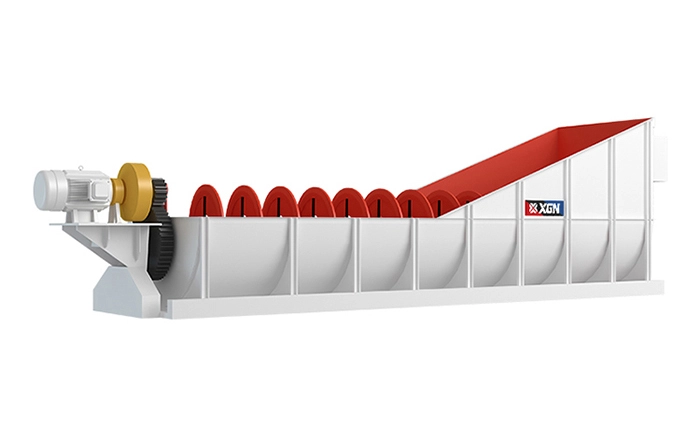
Sand Crusher

Spiral Sand Washing Machine

CAPACITY

40-300t/h
Application areas:Sand and aggregate washing plants, manufactured sand lines, quarries, concrete aggregate production, construction-material processing and selected mineral washing circuits requiring washing, desliming, wet grading and partial dewatering.
Applicable materials:River sand, manufactured sand, quartz sand, silica sand, feldspar sand, crushed sand and fine aggregate up to 10 mm. Actual suitability depends on clay content, particle-size distribution and required final grading.
Product Overview

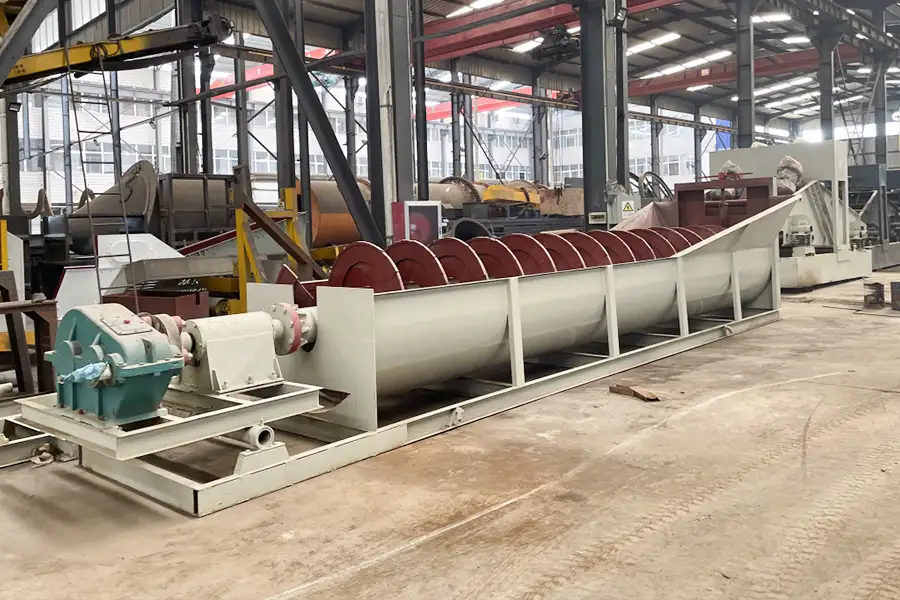
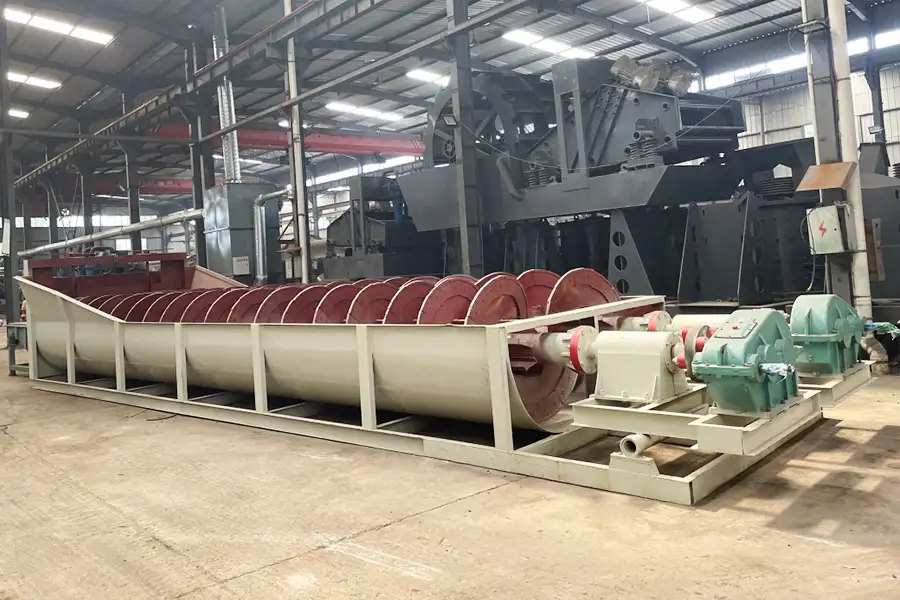
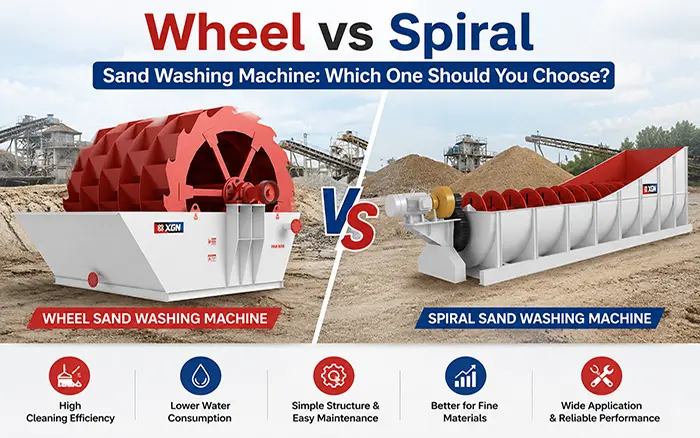
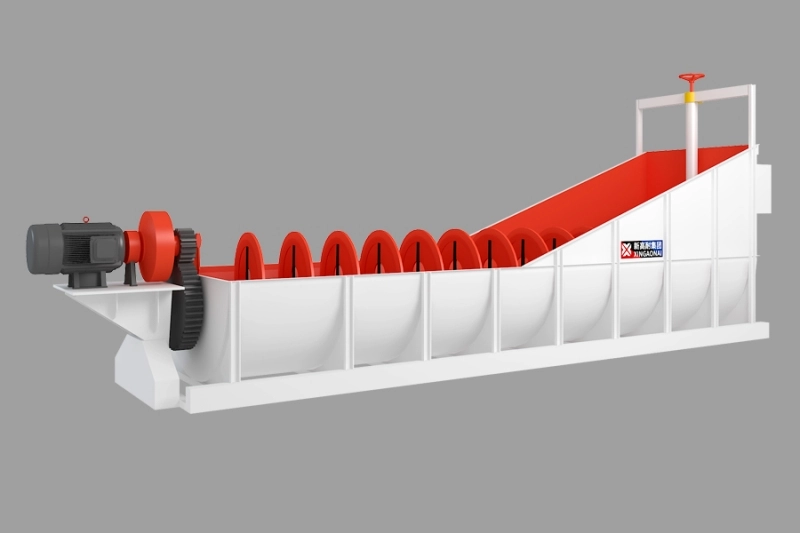
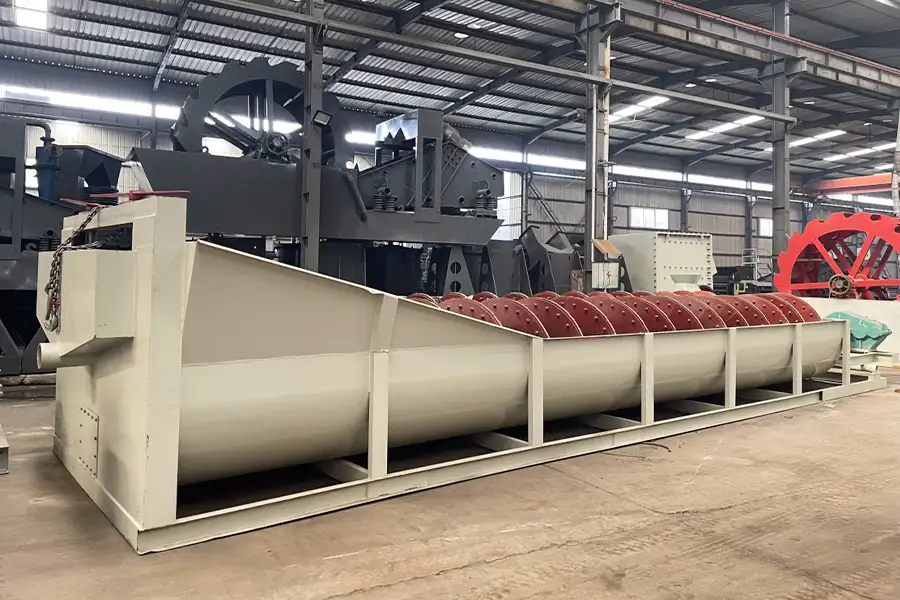
The Spiral Sand Washing Machine, also called a spiral sand washer, screw sand washer or sand screw, is a wet-processing machine used to wash, deslime, classify, convey and partially dewater sand and fine aggregate.

Feed material enters the lower washing pool, where one or two slowly rotating spiral shafts agitate the sand and loosen clay, silt and dust. Lighter fine contaminants leave with the overflow water, while settled sand is conveyed upward along the inclined trough. Water drains from the material before it is discharged at the upper end.

XINGAONAI spiral sand washers are available in single-spiral and double-spiral configurations with published capacities from 40 to 300 t/h. They can process river sand, manufactured sand, quartz sand, silica sand and selected fine aggregate. Actual washing capacity and product quality depend on feed size, clay content, water supply, required fines removal and downstream dewatering requirements.

Key Advantages

Effective Washing and Desliming

The rotating spiral agitates and turns the feed material in the washing pool, helping release loose clay, silt and dust from the sand surface. Wash water carries the separated fine contaminants toward the overflow.

Single and Double Spiral Configurations

Single-spiral models are available for lower and medium capacities, while double-spiral models provide greater conveying and washing capacity for larger production lines. Final selection depends on feed conditions and required throughput.

Washing, Wet Grading and Partial Dewatering

The machine combines material agitation, impurity removal, hydraulic separation and upward conveying. Sand drains as it moves above the water level, although a separate dewatering screen may be required for lower final moisture.

Adjustable Operating Conditions

Water flow, feed rate, pool level and overflow settings can be adjusted to balance washing intensity, fines removal and product recovery. Adjustments should be based on feed gradation and product testing.

Replaceable Wear Components

Spiral flights, liners and other material-contact components can be inspected and replaced according to actual wear. Accessible mechanical components simplify routine inspection and maintenance.

Working Principle

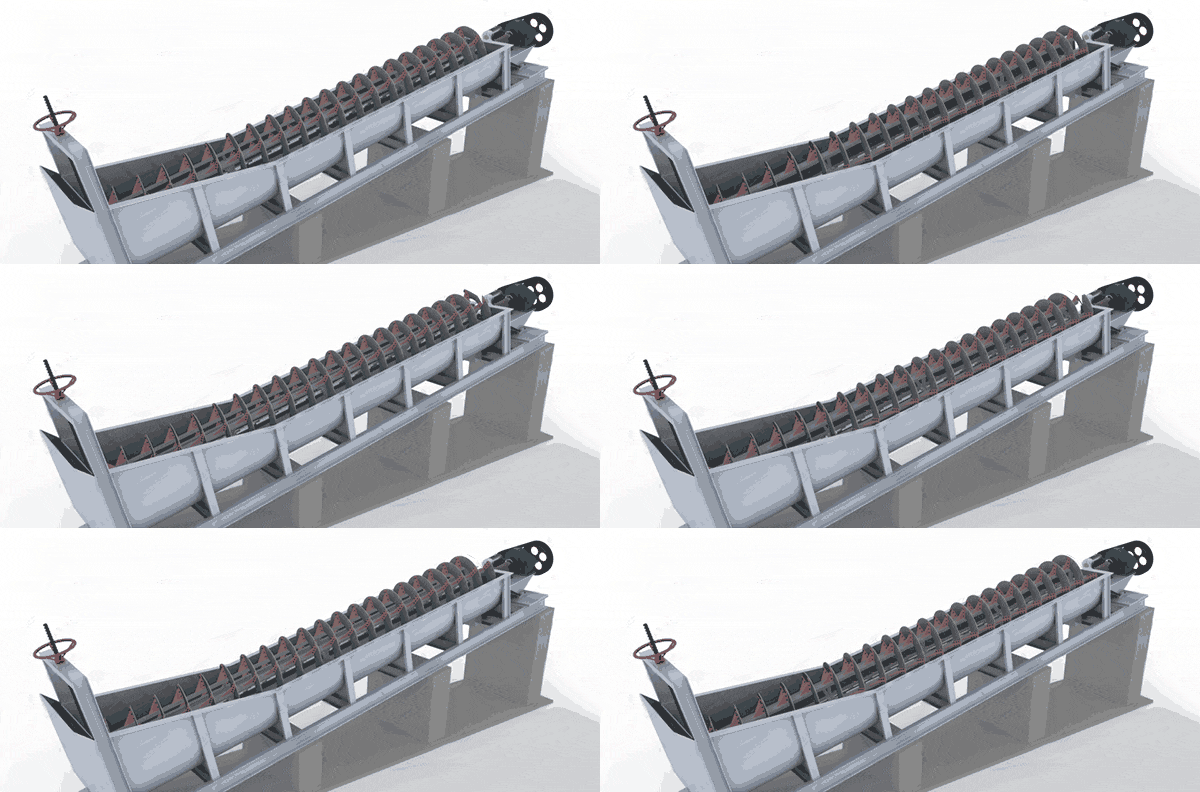
Working Principle of Spiral Sand Washing Machine
The spiral sand washing machine uses a rotating spiral shaft to continuously agitate and convey the material inside an inclined washing tank. After the sand–water mixture enters the tank, friction between particles and the washing action of the spiral blades loosen and remove clay, silt and other surface impurities. Fine contaminants overflow with the process water, while the cleaned sand settles to the bottom, is lifted along the inclined tank by the spiral blades, undergoes preliminary dewatering and is discharged from the upper outlet. The final washing result depends on the material’s clay content, particle-size distribution, feed consistency and water flow.

Technical Parameters

Model

Power

(mm)

Capacity

(mm)

NOTES

XL920-8M
1140-60ZQ400 Reducer
2XL920-8M11x290-120ZQ400 Reducer
XL1120-8M18.560-80ZQ400 Reducer
2XL1120-8M18.5x2180-260ZQ400 Reducer
XL1500-8M18.5100-120ZQ500 Reducer
XL1500-9M22100-120ZQ500 Reducer
2XL1500-8M22x2240-300ZQ500 Reducer


We are here waiting for you
Our professional team can tailor the solution to suit your needs and answer your questions
Contact Engineer

Frequently Asked Questions

It can wash river sand, manufactured sand, quartz sand, silica sand, feldspar sand, crushed sand and selected fine aggregate. The feed should remain within the specified size, and suitability should be confirmed from clay content, abrasiveness and required product grading.

Choose a spiral sand washer when the process requires active agitation, washing, desliming and upward conveying in one machine. It is often considered for material with more silt or surface contamination than a wheel washer can efficiently handle. Highly plastic clay lumps may require stronger scrubbing equipment or material testing.

Water consumption depends on the model, feed rate, clay content, feed moisture, overflow setting and required product cleanliness. Water demand should be calculated from the actual process rather than using one fixed value for every model. A settling and recycling system can reduce fresh-water demand.

Some fine particles can leave with the overflow water. The amount depends on feed gradation, water flow, pool level and operating settings. If valuable fines must be retained, connect the overflow to a hydrocyclone or fine-sand recovery system.

A single-spiral machine uses one shaft and is generally selected for lower or medium capacities. A double-spiral model uses two parallel shafts and provides greater conveying and washing capacity. The increase is not always exactly double because capacity also depends on spiral diameter, trough length, feed conditions and motor configuration.

Yes. XINGAONAI supplies new single- and double-screw sand washers for aggregate and manufactured-sand plants. Model selection is based on feed size, required capacity, clay content, product grading and water conditions.

Related Blogs

Send message

Please enter your name
Please enter your email
Please enter your message