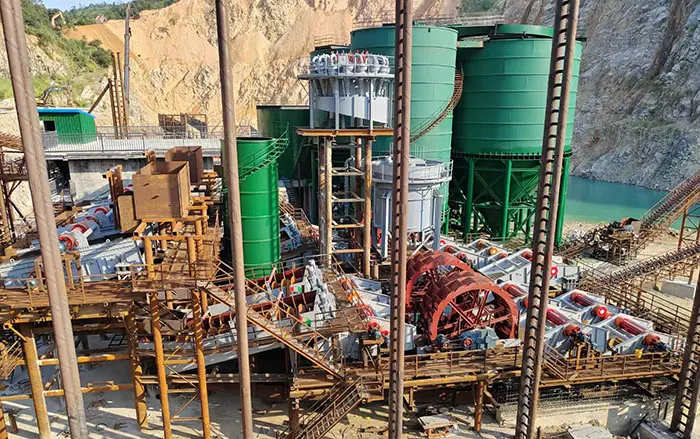
Silica sand is used in construction materials, glass, foundry applications, ceramics and other industrial processes. However, raw silica-rich sand may contain clay, silt, iron-bearing particles, feldspar, mica, heavy minerals and organic contaminants.
A silica sand washing machine removes loose clay, dust and surface contamination through water flow and mechanical agitation. It can improve the physical cleanliness of the sand, but it cannot automatically remove every mineral impurity or guarantee a specific chemical purity.
The correct process depends on the raw material composition and the final product specification. Construction sand may require only screening and washing, while silica sand intended for glass or other industrial applications may require scrubbing, desliming, classification, magnetic separation and additional treatment.
This guide explains how to evaluate the raw material and select an appropriate silica sand washing process.
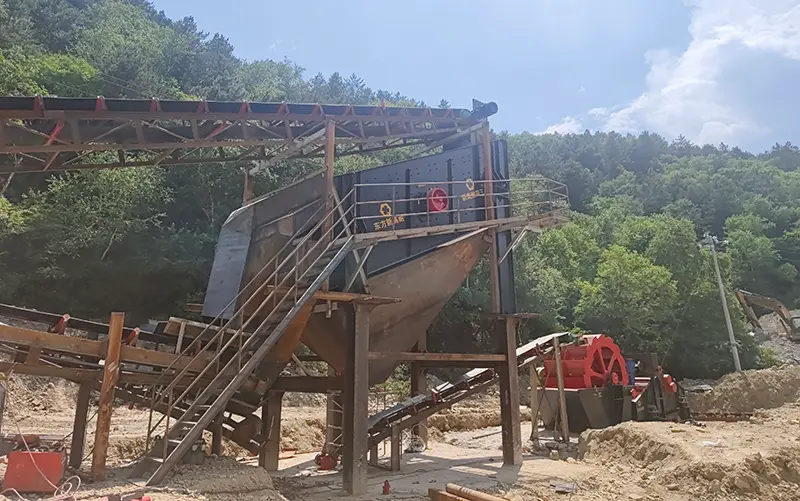
What Does a Silica Sand Washing Machine Do?
A silica sand washing machine uses water and mechanical movement to separate unwanted fine particles from usable sand.
Its primary functions include:
Removing loose clay and silt;
Washing dust from particle surfaces;
Separating lightweight contaminants;
Reducing excessive fine material;
Preparing sand for classification;
Improving downstream dewatering;
Creating a more consistent feed for further purification.
The machine normally works as one stage in a complete silica sand processing line. It should not be treated as a complete purification plant by itself.
What Washing Cannot Remove
Ordinary water washing may not effectively remove:
Iron minerals locked inside quartz particles;
Strongly bonded iron coatings;
Feldspar with a particle size similar to quartz;
Mica and other plate-shaped minerals;
Heavy minerals with similar settling behavior;
Chemical impurities within the quartz crystal;
Strongly adhered clay without prior scrubbing.
These contaminants may require additional processes such as attrition scrubbing, classification, magnetic separation or other mineral-processing methods.
Laboratory testing is necessary before selecting a purification process.
Test the Raw Silica Sand First
The process should begin with representative sampling and material testing.
Important test information includes:
SiO₂ content;
Iron content and mineral form;
Clay and silt content;
Particle-size distribution;
Maximum feed size;
Percentage of material below the required product size;
Feldspar, mica and heavy-mineral content;
Degree of surface staining;
Organic contamination;
Moisture content;
Required product specification.
Chemical analysis alone is not enough. Two silica sands with similar iron content may respond differently if the iron exists in different mineral forms.
A mineralogical examination can help determine whether iron is present as a free magnetic mineral, a surface coating or an inclusion inside the quartz.
Typical Silica Sand Washing Process
A basic construction-grade silica sand process may use:
Feeding → Screening → Washing → Dewatering → Finished Sand
A clay-rich silica sand process may use:
Screening → Attrition Scrubbing → Washing → Desliming → Classification → Dewatering
A higher-purity industrial silica sand process may require:
Screening → Scrubbing → Desliming → Classification → Magnetic Separation → Dewatering → Drying
Not every plant requires every stage. The flow should be selected from test results and final product requirements.
1. Feeding and Pre-Screening
Stable feeding improves washing and classification consistency.
The feed system may include:
Hopper;
Vibrating feeder;
Belt conveyor;
Slurry pump, when the material is already wet.
A vibrating screen can remove oversized particles, roots and debris before the material enters the washer.
Pre-screening helps:
Protect washing equipment;
Stabilize maximum feed size;
Separate commercial size fractions;
Reduce unnecessary wear;
Improve downstream process control.
If the feed contains large lumps, appropriate crushing or disaggregation may be necessary before washing.
2. Attrition Scrubbing
Silica sand often contains clay films or iron staining attached to the quartz surface. Simple rinsing may not provide enough force to remove these coatings.
Attrition scrubbing creates particle-to-particle contact that helps release:
Surface clay;
Soft mineral coatings;
Fine iron-bearing contamination;
Organic films;
Material trapped in surface irregularities.
Scrubbing performance depends on:
Feed solids concentration;
Particle size;
Scrubbing time;
Impeller speed;
Degree of surface contamination;
Mineral hardness.
After scrubbing, the released contaminants must be removed through desliming or classification. Scrubbing without an effective separation stage can allow the released fines to remain in the product.
3. Selecting the Washing Machine
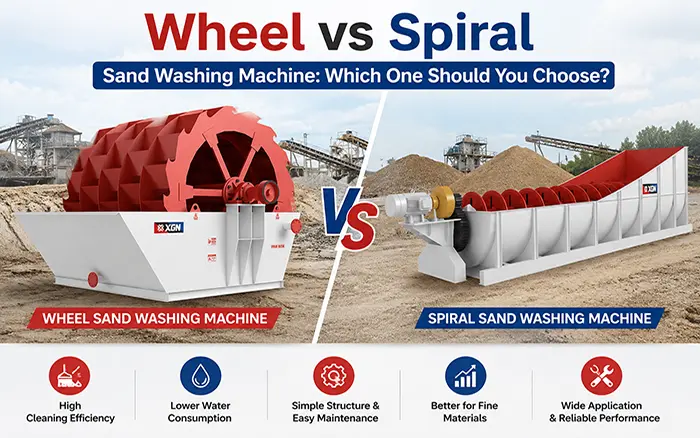
The most common washing choices are wheel bucket and spiral machines.
Wheel Bucket Sand Washing Machine
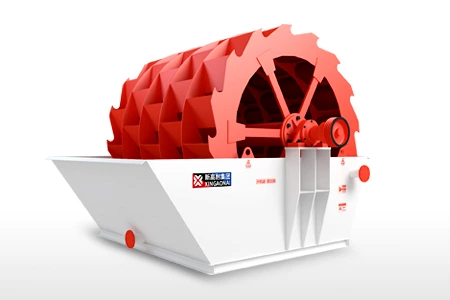
A wheel bucket sand washing machine uses a rotating bucket wheel to rinse, lift and drain sand.
It is generally suitable when:
The feed contains loose dust and moderate silt;
Intensive scrubbing is not required;
Fine-sand loss needs to be controlled;
The plant requires a relatively simple washing stage;
Installation space is limited;
The feed size is within the selected model’s limit.
A wheel washer can provide final rinsing and preliminary drainage, but it may not be sufficient for silica sand with strongly adhered clay or mineral coatings.
Spiral Sand Washing Machine
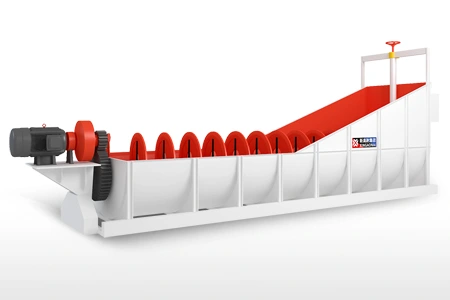
A spiral sand washing machine uses rotating spiral blades to agitate, transport and wash material in an inclined tank.
It is generally considered when:
The feed contains more clay;
Stronger agitation is required;
Washing and classification need to be combined;
The material requires a longer retention time;
The plant processes a wider particle-size distribution;
Surface contamination is more difficult to remove.
The spiral washer provides stronger agitation, but final performance still depends on feed properties, water flow and equipment configuration.
Wheel or Spiral Washer for Silica Sand?
| Selection factor | Wheel bucket washer | Spiral washer |
|---|---|---|
| Loose dust and light silt | Suitable | Suitable |
| Higher clay content | Limited | More suitable |
| Washing intensity | Moderate | Stronger |
| Fine-sand retention | Generally better | Depends on settings |
| Installation space | Usually smaller | Usually larger |
| Power requirement | Generally lower | Generally higher |
| Typical role | Final rinsing | Washing and classification |
For a more detailed comparison, see wheel vs spiral sand washing machine.
4. Desliming
After washing or scrubbing, fine clay and released contaminants must be separated from the usable sand.
Desliming equipment may include:
Hydrocyclone;
Hydraulic classifier;
Spiral classifier;
Dewatering screen;
Appropriate screening equipment.
The desliming cut size should be selected carefully. Removing too little fine material may leave contaminants in the product, while excessive desliming can discard valuable fine silica sand.
Sampling the overflow and underflow helps determine whether the separation is operating correctly.
5. Particle-Size Classification
Different silica sand applications require different particle-size ranges.
Classification can help:
Remove oversized particles;
Remove unwanted fines;
Produce narrower size fractions;
Improve product consistency;
Prepare material for magnetic separation;
Produce multiple saleable products.
The classification system should be designed according to the product specification rather than using one standard cut size for every project.
6. Fine-Sand Recovery
Fine silica particles may leave with the washing overflow. If these particles meet the required specification, losing them reduces product yield.
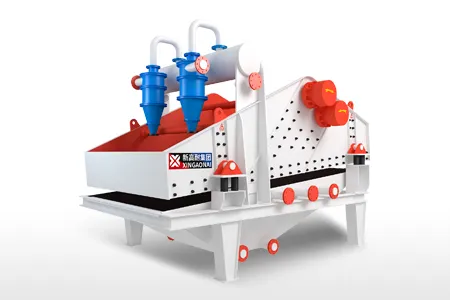
A fine sand recovery machine may be used to recover fine material from the slurry.
A typical process is:
Washer Overflow → Slurry Pump → Hydrocyclone → Dewatering Screen → Recovered Fine Sand
Fine-sand recovery should not be added automatically. Overflow samples should first be tested to determine:
Amount of recoverable sand;
Particle-size distribution;
Clay content;
Chemical composition;
Commercial value.
Recovering contaminated ultrafines and returning them directly to the product may reduce final sand quality.
7. Magnetic Separation
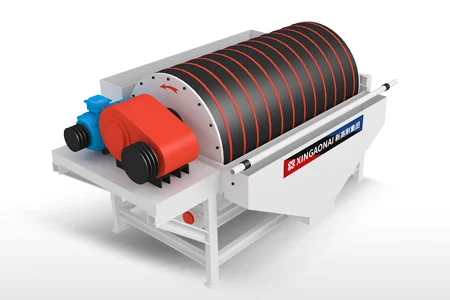
Some silica sands contain magnetic or weakly magnetic iron-bearing minerals. When testing shows that these particles can be separated magnetically, a magnetic separator may be added after washing and classification.
Possible purposes include:
Removing free iron particles;
Reducing magnetite or other magnetic minerals;
Removing iron introduced during upstream processing;
Improving feed quality for further purification.
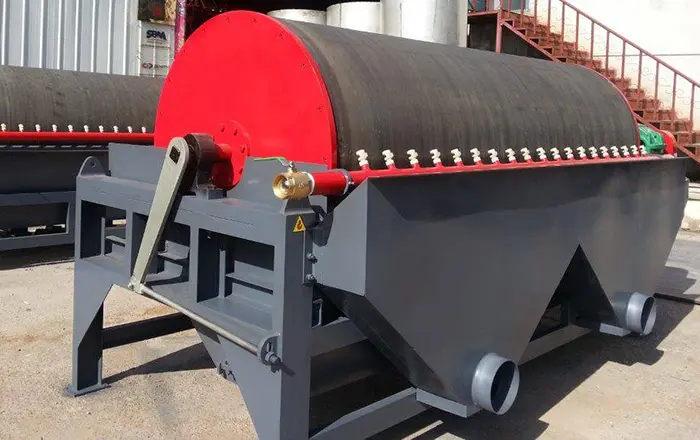
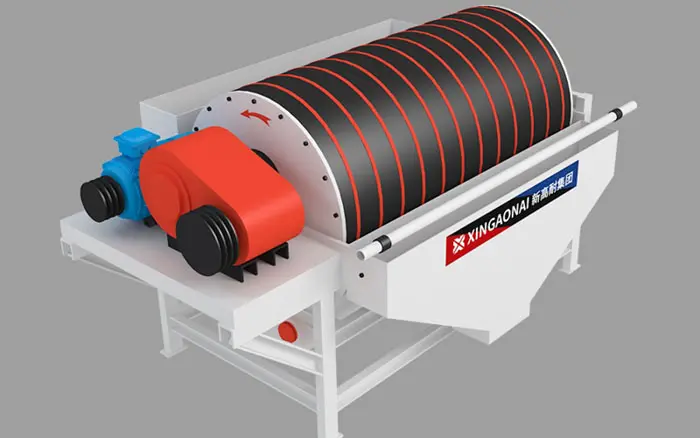
A wet drum magnetic separator may be suitable for certain wet-process applications, but equipment selection depends on mineral magnetic susceptibility, particle size and required separation intensity.
For more information, see how a magnetic separator works.
Magnetic separation cannot remove iron locked inside quartz particles or non-magnetic impurities. Laboratory separation tests are required before specifying the equipment.
8. Dewatering
Washed silica sand contains water that must be removed before stockpiling, drying or further processing.
Dewatering equipment may include:
Dewatering screen;
Hydrocyclone and dewatering-screen combination;
Drainage stockpile;
Filter system for very fine products.
The selected method depends on:
Product particle size;
Required discharge moisture;
Downstream drying process;
Capacity;
Available installation space.
A washer provides preliminary drainage but may not achieve the moisture level required for storage or thermal drying.
9. Water and Sludge Management
Silica sand washing produces wastewater containing clay, fine silica and other suspended solids.
A typical water-recycling circuit is:
Washing Wastewater → Thickening or Settling → Clarified-Water Tank → Recycled Water
Possible equipment includes:
Settling tank;
Thickener;
Slurry pump;
Clarified-water tank;
Filter press;
Recycled-water pipeline.
Recycled water quality should be monitored. Water containing excessive suspended solids can reduce washing performance and reintroduce contaminants into the product.
The concentrated sludge should be tested before disposal or reuse because it may contain clay, iron-bearing minerals and fine silica particles.
Silica Sand Washing Processes by Application
Construction Silica Sand
A relatively simple process may be sufficient:
Screening → Wheel or Spiral Washing → Dewatering
The main objectives are normally removing clay, silt and oversized material while maintaining the required aggregate grading.
Foundry Sand
Foundry applications may require closer control of:
Particle-size distribution;
Grain shape;
Clay content;
Loss on ignition;
Mineral composition.
Washing may be followed by classification, dewatering and drying. Final suitability must be confirmed by product testing.
Glass Sand
Silica sand for glass manufacturing generally requires stricter control of chemical impurities and particle size.
A possible process may include:
Scrubbing → Desliming → Classification → Magnetic Separation → Dewatering → Drying
The exact process depends on the glass type and raw material. Washing alone should not be presented as a guarantee that glass-grade specifications will be achieved.
High-Purity Industrial Silica Sand
High-purity applications require detailed mineralogical testing and specialized processing.
Depending on the impurity form, the process may require additional beneficiation stages beyond mechanical washing. These should be developed through laboratory testing rather than assumed from the total iron value alone.
Key Operating Factors
Stable Feed Rate
Sudden feed changes affect washing intensity, classification and product consistency. A feeder should maintain a stable load.
Water Flow
Insufficient water may leave contaminants in the sand. Excessive water can increase fine-particle loss and wastewater volume.
Feed Solids Concentration
Scrubbing, classification and hydrocyclone performance depend on slurry concentration. The operating range should match the selected equipment.
Particle-Size Distribution
A wide size distribution can reduce separation accuracy. Pre-screening or staged classification may be necessary.
Equipment Wear
Metal wear from crushers, pumps and pipelines can introduce iron contamination into the product. Wear materials should be considered when the final application has strict iron limits.
Product Sampling
Regularly sample:
Raw feed;
Washed product;
Washer overflow;
Hydrocyclone overflow and underflow;
Magnetic concentrate and non-magnetic product;
Final dewatered sand.
Sampling is necessary to determine whether the plant is removing contaminants or simply moving them between process streams.
Common Silica Sand Washing Problems
Clay Remains in the Product
Possible causes include:
Insufficient scrubbing;
Excessive feed rate;
Short retention time;
Poor desliming;
Inadequate water flow;
Sticky clay in the feed.
Excessive Fine-Sand Loss
Possible causes include:
Excessive water flow;
Incorrect overflow setting;
Unsuitable classification cut size;
High fine-particle content;
Lack of a recovery stage.
Iron Content Does Not Decrease
Possible causes include:
Iron locked inside quartz particles;
Non-magnetic iron minerals;
Insufficient surface scrubbing;
Incorrect magnetic-separator selection;
Iron contamination from worn processing equipment.
Product Size Is Inconsistent
Possible causes include:
Unstable feed;
Damaged screens;
Incorrect classifier settings;
Variable water flow;
Large changes in raw-material grading.
Final Sand Moisture Is Too High
Possible causes include:
Insufficient dewatering area;
Blocked screen openings;
Excessive feed rate;
Unsuitable screen media;
Lack of a dedicated dewatering stage.
Common Equipment-Selection Mistakes
Selecting Equipment Without Mineral Testing
Silica content alone does not determine the correct process. The mineral form and location of impurities are equally important.
Assuming Washing Produces High-Purity Sand
Washing mainly removes loose surface contaminants and fine clay. Additional beneficiation may be required for strict industrial specifications.
Returning All Recovered Fines to the Product
Recovered fines should be tested before being returned. Some overflow material may contain a higher concentration of clay or iron-bearing contaminants.
Ignoring Equipment-Generated Iron
Wear from steel components can introduce iron into silica sand. This is especially important for products with strict iron limits.
Using Excessive Water
More water does not automatically mean cleaner sand. Excessive flow can increase fine-sand loss and wastewater-treatment costs.
Selecting Machines Independently
The washer, hydrocyclone, dewatering screen, pumps and water-treatment equipment must be sized as one process. A mismatch can create bottlenecks and unstable product quality.
Information Required for Equipment Selection
Provide the following information before requesting a silica sand washing solution:
Raw material source;
Maximum feed size;
Particle-size distribution;
SiO₂ content;
Iron content;
Clay and silt content;
Main impurity minerals;
Required hourly capacity;
Target product size;
Required chemical specification;
Required discharge moisture;
Available water supply;
Project location;
Planned downstream process.
Representative samples and mineral-processing tests are recommended for industrial-grade silica sand projects.
For complete system planning, refer to the sand washing plant design guide.
Conclusion
A silica sand washing machine is an important part of the processing circuit, but it is not a complete purification solution by itself.
Relatively clean construction sand may require only screening, washing and dewatering. Clay-rich feed may require attrition scrubbing and desliming, while industrial silica sand may also require classification and magnetic separation.
The most reliable process begins with representative sampling and laboratory testing. Equipment should then be selected as a complete circuit based on the impurity minerals, product size, required purity, capacity and water conditions.