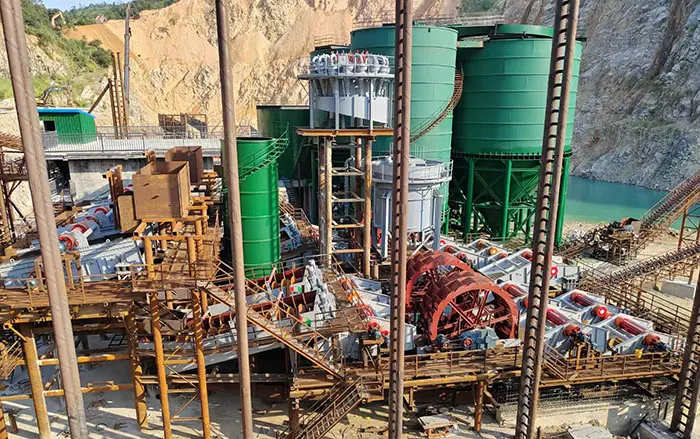
A small sand washing machine is used to clean manufactured sand, natural sand and fine aggregates in projects where production capacity, installation space, water supply or investment is limited.
However, “small” does not refer to one fixed capacity or machine weight. A compact machine that is suitable for a local sand producer may be too small for a continuously operating quarry, while a lower-capacity model may still require screening, water recycling and dewatering equipment.
The correct machine should therefore be selected according to the material and complete washing process—not simply by choosing the smallest available model.
This guide explains the main types of small sand washing machines, their advantages and limitations, and the information required to select the correct configuration.
What Is a Small Sand Washing Machine?
A small sand washing machine is a lower-capacity or compact washing unit designed for operations that do not require a large industrial washing plant.
Typical users include:
Small aggregate producers;
Local sand suppliers;
Small quarries;
Concrete and precast plants;
Construction projects;
Manufactured-sand production lines;
Temporary or space-limited processing sites;
Existing crushing plants adding a washing stage.
A small washing system may consist of only a washer and feeding conveyor, but projects requiring controlled grading, lower product moisture or water recycling will need additional equipment.
A typical compact process is:
Feeding → Screening → Sand Washing → Dewatering → Finished Sand
If fine-particle recovery is important, the process may become:
Screening → Washing → Fine Sand Recovery → Dewatering → Finished Sand
Main Types of Small Sand Washing Machines
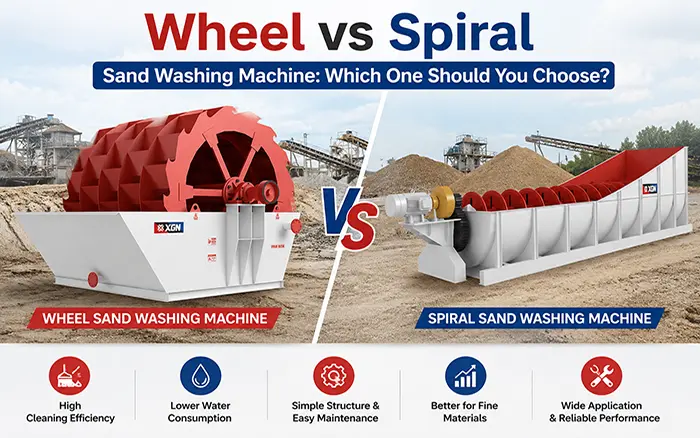
The two most common configurations are wheel bucket and spiral washers.
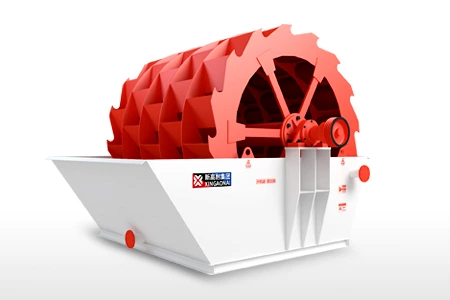
Small Wheel Bucket Sand Washing Machine
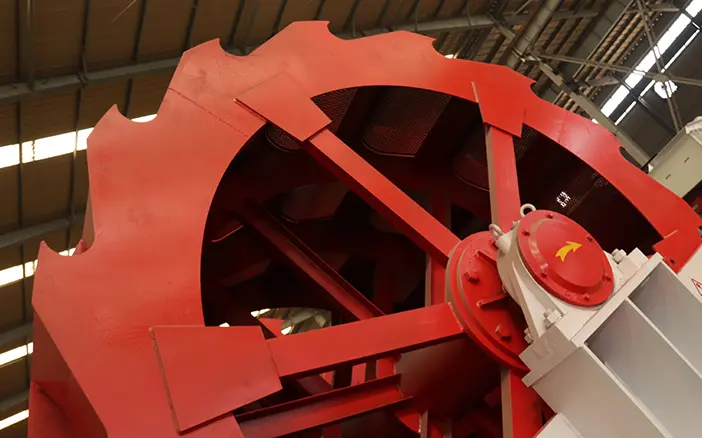
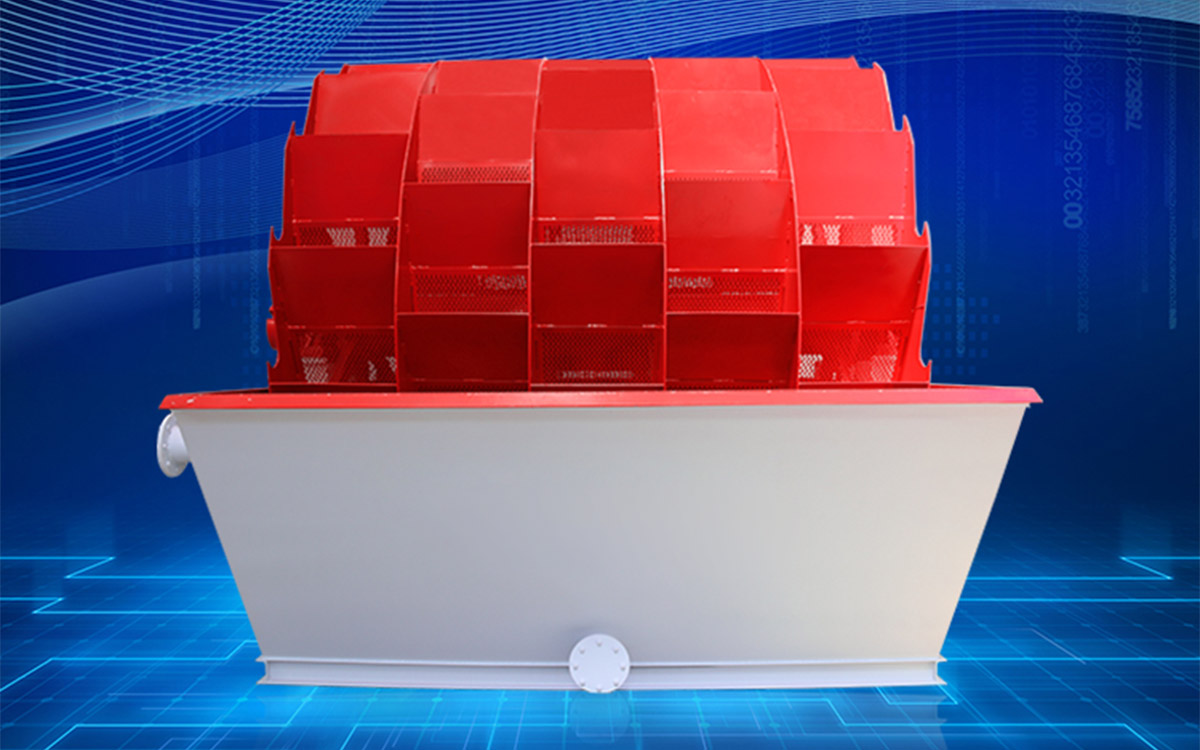
A wheel bucket sand washing machine uses a rotating bucket wheel to agitate, rinse, lift and drain sand.
It is generally suitable for:
Manufactured sand containing loose dust;
Natural sand with low to moderate silt content;
Small aggregate plants;
Projects requiring a relatively simple washing process;
Applications where lower fine-sand loss is important;
Plants with limited installation space.
Typical characteristics include:
Simple mechanical structure;
Continuous washing and discharge;
Relatively low power demand;
Convenient daily inspection;
Preliminary dewatering during bucket discharge;
Easy integration with screens and conveyors.
A wheel bucket washer is not an intensive scrubber. Feed containing sticky clay or strongly adhered contaminants may require stronger agitation before final washing.
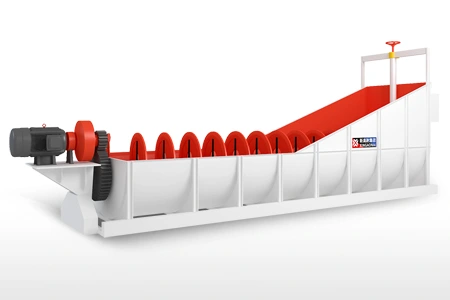
Small Spiral Sand Washing Machine
A spiral sand washing machine uses rotating spiral blades to agitate, transport and wash the material inside an inclined tank.
It is normally considered when:
The feed contains more clay;
Stronger washing action is required;
Washing and classification need to be combined;
The material requires longer retention inside the tank;
The feed grading is wider;
A wheel washer cannot achieve the required cleanliness.
Spiral washers can provide stronger agitation but generally require more installation space and may have higher power and water requirements.
Wheel or Spiral: Which Is Better for a Small Plant?
Neither design is automatically better. The decision depends on the feed material.
| Selection factor | Small wheel washer | Small spiral washer |
|---|---|---|
| Loose dust and moderate silt | Suitable | Suitable |
| Sticky clay | Limited | More suitable |
| Washing intensity | Moderate | Stronger |
| Fine-sand retention | Generally better | Depends on configuration |
| Equipment structure | Simpler | More complex |
| Installation space | Usually smaller | Usually larger |
| Power requirement | Generally lower | Generally higher |
| Best application | Final washing | Washing and classification |
For a more detailed comparison, see wheel vs spiral sand washing machine.
Advantages of a Small Sand Washing Machine
Lower Initial Equipment Requirement
A small washer usually requires a lower initial equipment investment than a large washing plant. This can make it suitable for projects with limited production targets or for companies adding washing to an existing screening line.
However, the cost comparison should include more than the washer itself. A complete budget may also include:
Feeding equipment;
Vibrating screen;
Conveyors;
Water pumps;
Dewatering screen;
Fine-sand recovery system;
Settling tank or pond;
Electrical controls;
Foundations and installation.
Choosing a small washer does not eliminate the need for these supporting systems when the product specification requires them.
Compact Installation
Smaller models generally require less operating space and simpler foundations. This can be useful for:
Existing aggregate plants with limited space;
Urban or restricted construction sites;
Small quarries;
Modular production lines;
Plants installed close to the sand source.
Adequate access must still be left around the equipment for maintenance, bearing inspection, gearbox service and wear-part replacement.
Lower Power Demand
Lower-capacity machines generally use smaller motors than large industrial units. This can reduce the connected electrical load and make installation easier at sites with limited power availability.
Actual energy consumption depends on:
Selected model;
Feed rate;
Material density;
Clay content;
Washing intensity;
Mechanical condition;
Operating hours.
The smallest motor is not always the most economical choice. An undersized washer operating continuously under overload can consume more energy per tonne and suffer frequent failures.
Simple Operation
A basic wheel-bucket washing line can be operated with relatively few process stages.
The operator should still monitor:
Feed rate;
Water flow;
Tank level;
Overflow condition;
Gearbox temperature;
Motor current;
Vibration and abnormal noise;
Product cleanliness;
Fine-sand loss.
Simple equipment still requires proper operating procedures and regular inspection.
Easier Maintenance Access
Compact washers normally have fewer process components than complete multi-stage plants. This can make routine inspection and cleaning easier.
Maintenance commonly includes:
Checking lubricant level;
Inspecting bearings and seals;
Cleaning the washing tank;
Inspecting wheel buckets or spiral blades;
Checking screen openings;
Tightening bolts;
Inspecting belts and couplings;
Cleaning water pipes;
Monitoring motor current.
All maintenance must be performed after the equipment has been stopped, electrically isolated and locked out.
Flexible Integration
A small washer can be installed:
After a sand-making machine;
After a vibrating screen;
In an existing crushing and screening plant;
In a compact river-sand processing line;
Before a fine-sand recovery machine;
Before a dewatering screen.
This makes it possible to expand an existing plant without replacing the entire production line.
Limitations of Small Sand Washing Machines
A small washer is not suitable for every project.
Limited Capacity
If actual feed consistently exceeds the rated capacity, the washer may experience:
Poor cleaning;
Material accumulation;
High motor current;
Reduced drainage;
Accelerated wear;
Unstable product quality.
A reasonable operating margin should be included during model selection.
Limited Clay Removal
A compact wheel washer may remove loose dust and silt but may not break down sticky clay lumps. Clay-rich material may require:
Pre-soaking;
Trommel scrubbing;
Log washing;
Spiral washing;
Additional classification.
Adding more water does not always compensate for insufficient mechanical scrubbing.
Fine-Sand Loss
Fine particles can leave with the overflow water. The amount of loss depends on:
Feed particle-size distribution;
Water volume;
Overflow-weir position;
Washing intensity;
Tank design;
Operating conditions.
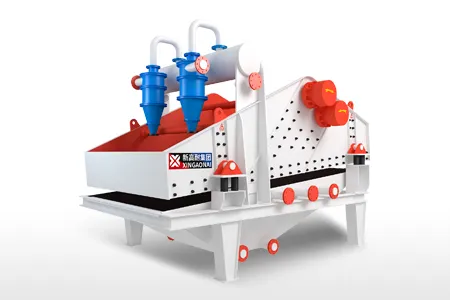
When the feed contains valuable fine particles, a fine sand recovery machine may be installed after the washer.
Wastewater Treatment Is Still Required
A small washing line still produces wastewater containing clay, silt and suspended solids.
Depending on the site, the water system may need:
Settling tank;
Settling pond;
Thickener;
Clarified-water tank;
Slurry pump;
Filter press;
Recycled-water pipeline.
The washer itself does not automatically provide a closed-loop water-recycling system.
How to Select the Correct Small Sand Washer
1. Confirm the Feed Material
Identify whether the feed is:
Manufactured sand;
River sand;
Crushed sand;
Silica-rich sand;
Recycled fine aggregate;
Quarry fines.
Different materials require different washing intensities. Manufactured sand may contain stone powder, while river sand may contain clay, roots and organic matter.
2. Measure the Feed Size
The maximum feed size must remain within the selected model’s specification. Oversized stones can block the tank, damage buckets or increase transmission load.
A vibrating screen should be installed before the washer when the feed contains oversized material.
3. Test the Clay and Silt Content
Loose silt can often be removed by rinsing and moderate agitation. Sticky clay requires stronger scrubbing.
Material testing should determine:
Total clay and silt content;
Amount of sticky clay;
Percentage of fine particles;
Required contaminant removal;
Final product specification.
4. Determine the Real Required Capacity
Capacity should be calculated from actual production requirements:
Required hourly feed = Daily feed requirement ÷ Effective operating hours
Effective operating hours should account for:
Feeding interruptions;
Cleaning;
Maintenance;
Material changes;
Planned downtime.
Avoid selecting a machine that must operate continuously at its maximum theoretical capacity.
5. Evaluate Water Availability
Confirm:
Available fresh-water volume;
Water pressure;
Possibility of water recycling;
Space for settling equipment;
Local discharge requirements;
Seasonal water availability.
A water balance should be prepared when water supply is limited.
6. Define the Final Product
The washing system should be designed around the required finished sand.
Confirm:
Target particle size;
Maximum allowable silt or clay;
Required product moisture;
Acceptable fine-sand loss;
Whether one or several product fractions are required.
If low discharge moisture is important, add a dewatering screen instead of relying only on the washer.
7. Check Installation Space
A compact machine still requires space for:
Feeding;
Discharge conveyor;
Maintenance access;
Water tank;
Pump and pipelines;
Electrical cabinet;
Sludge removal;
Product stockpile.
Choosing a washer before checking the complete layout can create difficult maintenance and material-flow problems.
Example Small Sand Washing Configurations
Basic Manufactured-Sand Washing Line
Suitable for manufactured sand containing loose stone powder:
Vibrating Screen → Wheel Bucket Washer → Finished Sand
A dewatering screen can be added when lower product moisture is required.
Small River-Sand Washing Line
Suitable for relatively clean river sand:
Hopper → Screen → Wheel Washer → Dewatering Screen
For more detailed river-sand processing information, see the river sand washing machine guide.
Small Clay-Rich Sand Washing Line
Suitable for sand containing more clay:
Hopper → Screening → Spiral Washer → Dewatering Screen
If clay is strongly adhered, an additional scrubbing stage may be required.
Small Washing Line With Fine Recovery
Suitable when fine particles represent a valuable part of the product:
Screen → Sand Washer → Hydrocyclone → Dewatering Screen → Finished Sand
The complete process should be planned before equipment capacity is finalized. Refer to the sand washing plant design guide.
Common Selection Mistakes
Selecting Only by Price
A lower equipment price can lead to higher operating costs if the machine is undersized, frequently overloaded or unable to achieve the required product quality.
Ignoring Clay Characteristics
Clay content alone does not describe how difficult the material is to wash. Sticky clay requires more intensive treatment than loose silt.
Assuming the Washer Recovers All Fine Sand
Every wet washing process can lose some fine particles. Particle-size testing and overflow sampling are necessary to determine whether a recovery system is justified.
Ignoring Water and Sludge Treatment
Without an appropriate settling or recycling system, wastewater can become the main operating bottleneck.
Choosing Capacity Without Operating Margin
Operating continuously at maximum rated capacity can reduce cleaning consistency and increase mechanical load.
Treating Every Small Washer as Mobile
Compact equipment is not automatically mobile. A mobile installation requires a suitable frame, transport design, pipes, cables and supporting equipment.
When a Small Sand Washer Is Not the Right Choice
A larger or more complete washing plant should be considered when:
Required capacity exceeds the smaller models;
Feed contains large amounts of sticky clay;
Several final product sizes are required;
Product grading must be tightly controlled;
Water recycling is mandatory;
Fine-sand recovery is commercially important;
Continuous multi-shift operation is required;
Future capacity expansion is expected.
Installing two undersized machines is not always better than selecting one correctly sized system.
Information Required for Model Selection
Provide the following information before requesting a machine recommendation:
Material type;
Maximum feed size;
Particle-size distribution;
Required hourly capacity;
Clay and silt content;
Target product size;
Required product cleanliness;
Acceptable moisture level;
Available water supply;
Installation space;
Project location;
Planned operating hours.
Material samples, photographs and laboratory test results can improve selection accuracy.
Conclusion
The main advantage of a small sand washing machine is not simply its compact size. Its real value comes from matching equipment capacity and washing intensity to a smaller production requirement.
A wheel bucket washer is generally suitable for relatively clean sand and simpler washing circuits, while a spiral washer is more appropriate when stronger agitation is required. Supporting equipment such as screens, dewatering units, fine-sand recovery systems and water-treatment equipment should be selected according to the final product requirements.
The most economical solution is a correctly sized system—not necessarily the smallest machine.