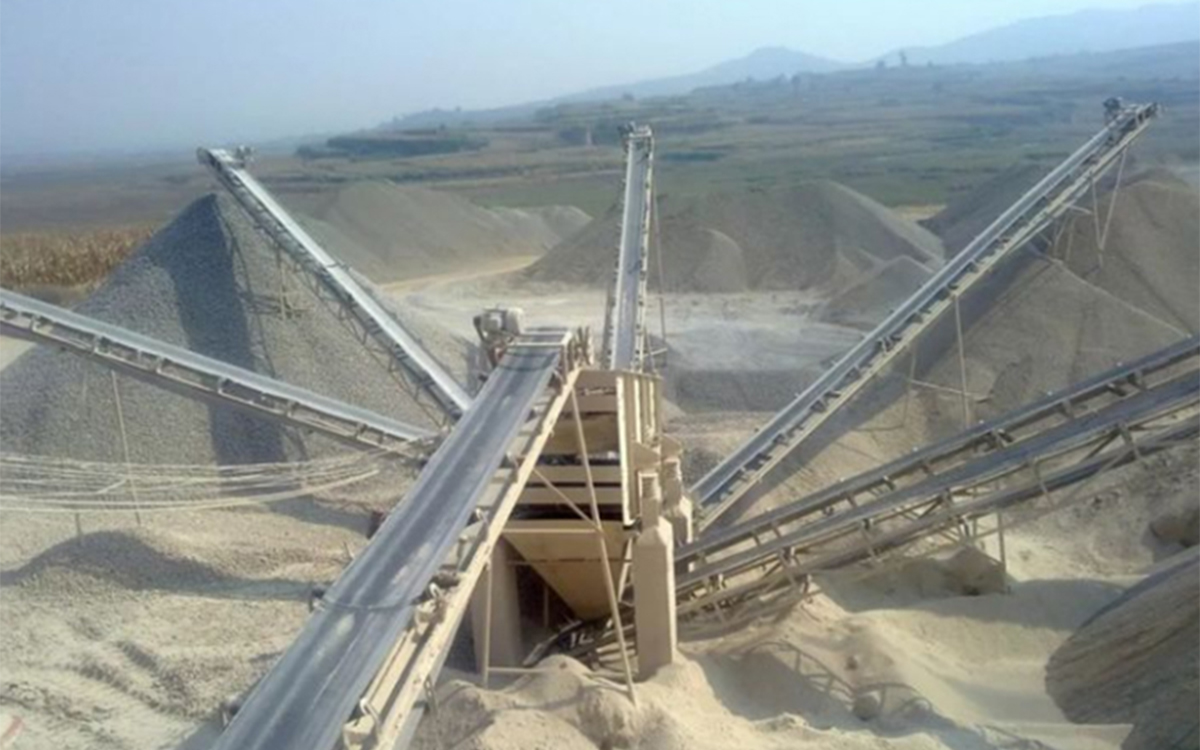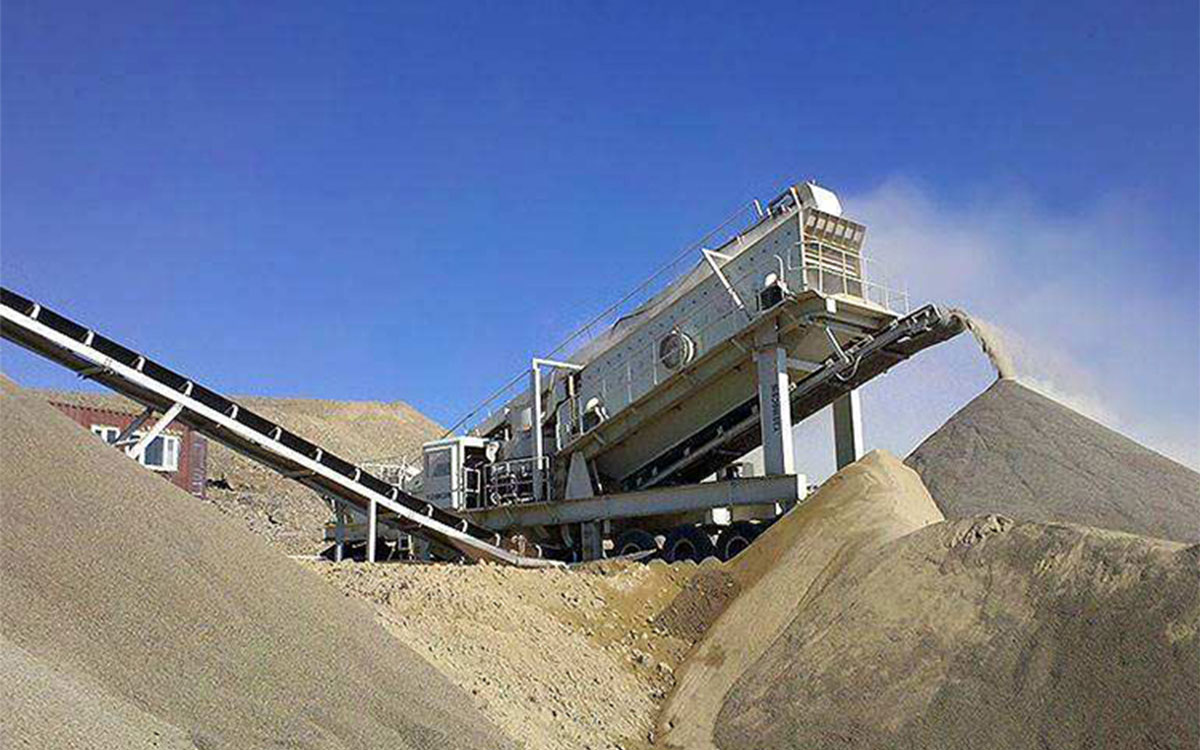
Turning natural stone into high-quality manufactured sand requires more than simply crushing rocks into smaller particles. A complete stone-to-sand process must control feed size, crushing stages, particle shape, grading, fines content, and final product quality.
Manufactured sand is increasingly used in concrete, asphalt, road construction, and other infrastructure projects where natural sand is limited or its quality is inconsistent. A properly designed crushing and sand making plant can convert suitable rock materials into controlled sand products while also producing useful aggregate fractions.
This guide explains the complete process from stone feeding and crushing to sand making, screening, and final product classification.
1. What Is the Stone-to-Sand Process?
The stone-to-sand process is a series of crushing, shaping, screening, and classification operations used to produce manufactured sand from natural rock.
A typical process can be summarized as:
Raw Stone → Primary Crushing → Secondary Crushing → Screening → Sand Making → Fine Screening → Manufactured Sand
Depending on the raw material and final product requirements, additional crushing, washing, or classification stages may be included.
The objective is to reduce large rocks to the required size while producing particles with suitable shape and gradation.
2. Step 1: Feeding the Raw Stone
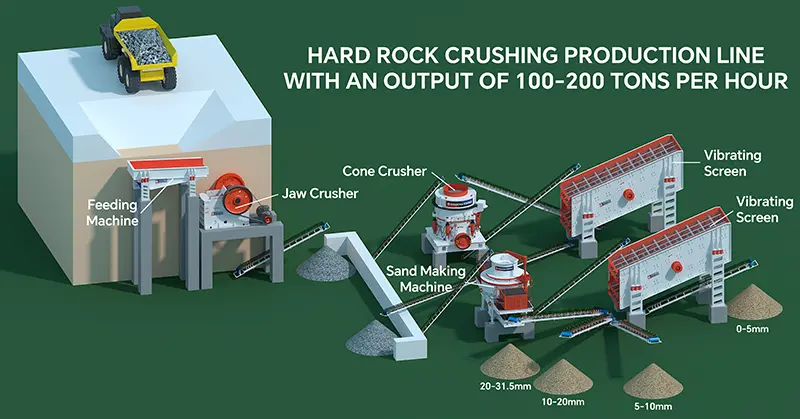
The process begins with raw stone being loaded into a feed hopper.
A vibrating feeder is commonly used to regulate the flow of material into the primary crusher. Consistent feeding helps maintain stable crusher operation and prevents sudden fluctuations in production.
Before feeding, the material should be evaluated for:
Maximum lump size
Hardness
Abrasiveness
Moisture content
Clay and soil content
Natural particle-size distribution
These characteristics influence the selection of crushers, screens, and other equipment in the plant.
3. Step 2: Primary Crushing
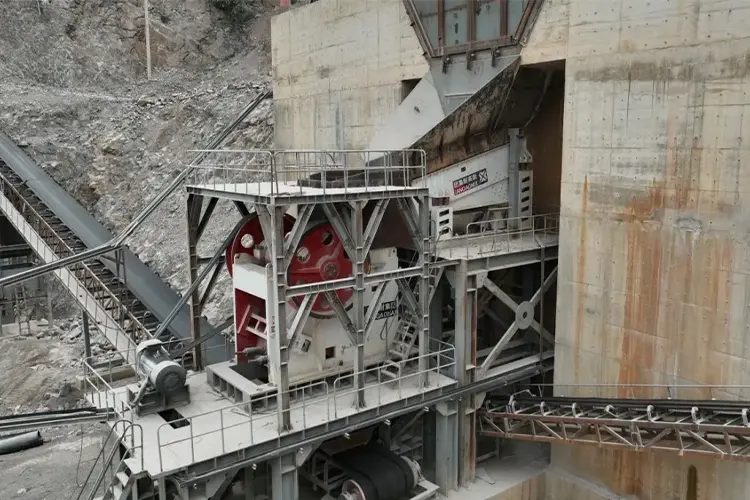
The primary crusher reduces large rocks into a size that can be handled by the downstream crushing equipment.
A jaw crusher is commonly used for primary crushing because it can accept relatively large feed material and provide reliable size reduction.
The main objectives of primary crushing are to:
Reduce large rocks
Create a suitable feed for secondary crushing
Improve material handling
Establish a stable feed size for the next stage
The primary crusher does not normally produce the final manufactured sand. Instead, it prepares the material for further reduction.
4. Step 3: Secondary Crushing
After primary crushing, the material enters the secondary crushing stage.
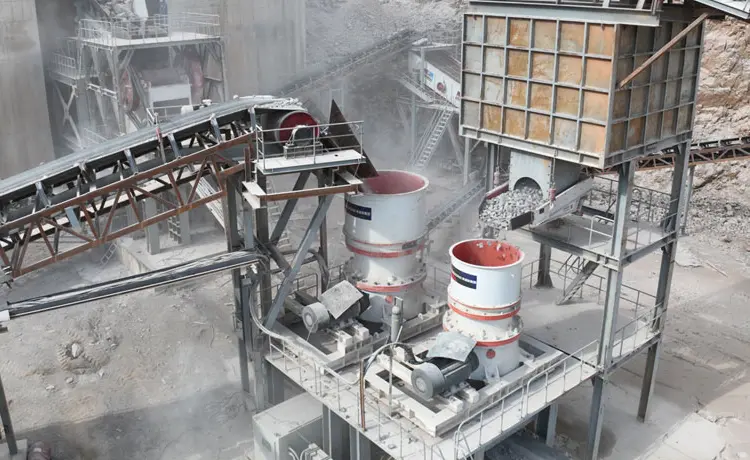
Cone crushers, impact crushers, or other suitable crushing equipment may be used depending on the rock characteristics and desired product.
Secondary crushing further reduces the material and prepares it for the sand making stage.
For hard and abrasive rocks such as granite and basalt, cone crushers are commonly considered because of their ability to handle demanding materials.
For some softer or medium-hard materials, impact crushing may be appropriate.
The correct choice depends on the material properties and required reduction ratio.
5. Step 4: Screening and Material Classification
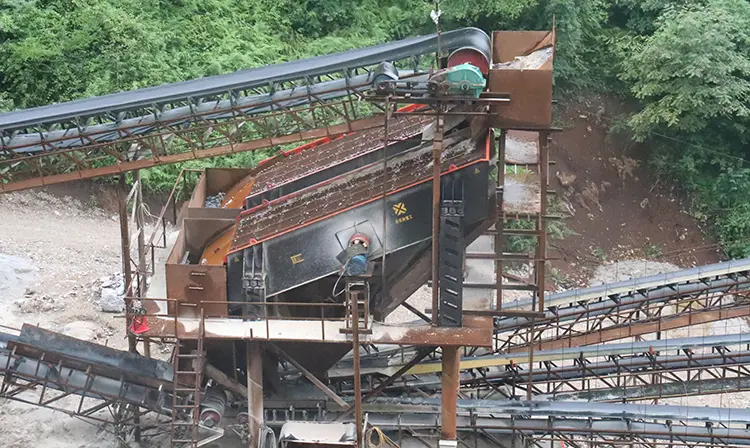
After secondary crushing, the material is typically screened.
A vibrating screen separates particles according to size. Oversized material can be returned to the crusher, while properly sized material can move to the next stage.
A simplified closed circuit may look like:
Secondary Crusher → Vibrating Screen → Oversize Return → Secondary Crusher
Screening helps control the particle-size distribution entering the sand making machine.
It can also prevent material that already meets the required size from undergoing unnecessary crushing.
6. Step 5: Sand Making
The prepared stone is then fed into a sand making machine.
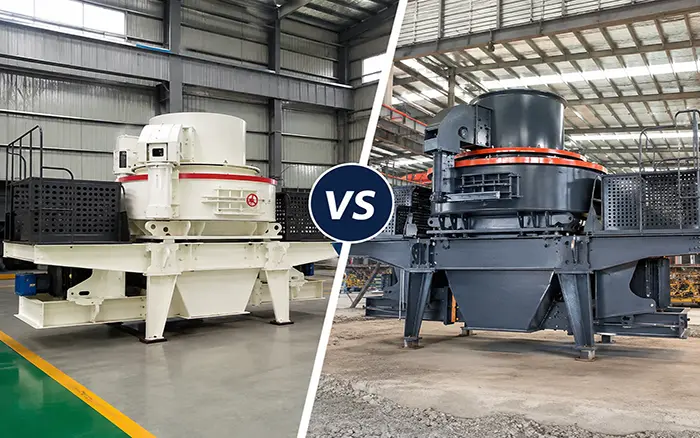
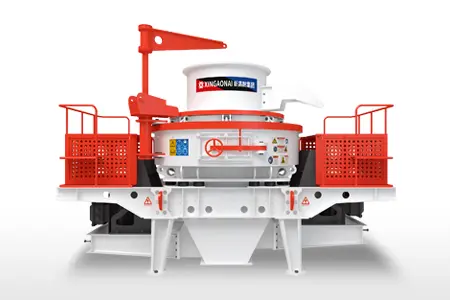
A vertical shaft impact (VSI) crusher is widely used for this stage because impact crushing can reduce particle size while improving the shape of the final product.
Inside the machine, material is accelerated and subjected to high-speed impact. This process breaks the particles and can help produce more cubical fine aggregates.
The sand making stage is particularly important when the final product must meet strict requirements for particle shape and gradation.
7. Step 6: Final Screening
After sand making, the crushed material is screened again.
The final screening stage separates the finished manufactured sand from coarser particles.
Depending on the plant design, several product fractions may be produced, such as:
Manufactured sand
Fine aggregate
Medium aggregate
Oversized material
Oversized particles can be returned to the sand making machine for additional crushing.
This closed-circuit arrangement allows the plant to maintain more consistent product sizes.
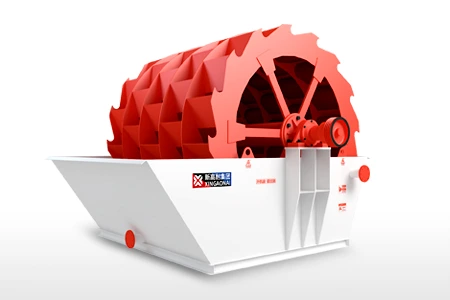
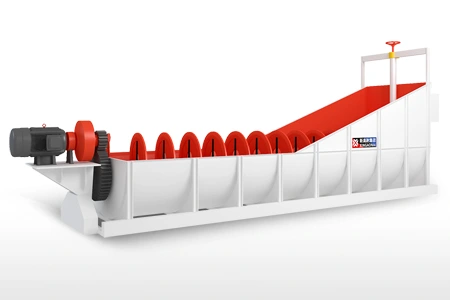
8. Step 7: Sand Washing When Necessary
Not every stone-to-sand plant requires washing.
If the raw material contains excessive clay, silt, dust, or other unwanted impurities, a sand washing stage may be added.
Common equipment includes:
Wheel sand washing machines
Spiral sand washing machines
Hydrocyclones
Dewatering screens
Washing can improve the cleanliness of manufactured sand and help control unwanted fine contaminants.
However, washing also creates additional water consumption and requires slurry and wastewater management. It should therefore be included only when the raw material and final product specifications justify it.
9. How Does a Stone-to-Sand Plant Control Product Quality?
Manufactured sand quality depends on several factors rather than the sand making machine alone.
Important parameters include:
Particle Size Distribution
The final sand should have a suitable gradation for its intended application.
Particle Shape
Excessively elongated or flaky particles may affect packing and downstream concrete performance.
Fine Material Content
An appropriate amount of fine material can be beneficial, but excessive fines may affect the performance of the finished product.
Cleanliness
Clay, organic material, and excessive dust can reduce the suitability of manufactured sand for certain applications.
Consistency
The plant should maintain stable product quality throughout continuous operation.
Proper crushing, screening, classification, and process control are therefore all important.
10. Common Equipment in a Stone-to-Sand Plant
A typical stone-to-sand production line may include:
| Processing Stage | Typical Equipment |
|---|---|
| Feeding | Vibrating feeder |
| Primary crushing | Jaw crusher |
| Secondary crushing | Cone crusher or impact crusher |
| Screening | Vibrating screen |
| Sand making | VSI crusher |
| Fine screening | Vibrating screen |
| Washing | Sand washer or hydrocyclone |
| Dewatering | Dewatering screen |
| Conveying | Belt conveyor |
The actual equipment configuration should be adapted to the raw material and required production capacity.
For example, a relatively soft limestone may require a different crushing arrangement from highly abrasive granite.
11. Stone-to-Sand Process for Different Rocks
Limestone
Limestone is commonly processed into manufactured sand for concrete, asphalt, and construction applications. Its relatively favorable crushing characteristics can make it suitable for impact-based sand production.
Granite
Granite is hard and abrasive, so the crushing circuit needs to account for higher wear. A multi-stage crushing circuit with appropriate screening and a VSI sand making machine may be used.
Basalt
Basalt is also hard and abrasive. Equipment selection should focus on crushing efficiency, wear resistance, and the required particle shape.
River Pebbles
River pebbles are typically hard and rounded. A suitable impact-based sand making stage can help reshape the material while producing fine aggregate.
The best flowsheet depends on the specific properties of the deposit rather than the rock name alone.
12. Open-Circuit vs Closed-Circuit Sand Making
A stone-to-sand plant can operate with different circuit configurations.
Open Circuit
In an open circuit, material passes through the crusher without being systematically returned for additional crushing.
This configuration can be simpler, but product size control may be less precise.
Closed Circuit
In a closed circuit, a screen separates the finished product from oversize material and returns the oversize fraction to the crusher.
A typical arrangement is:
Sand Making Machine → Screen → Finished Product + Oversize Return
Closed-circuit operation generally provides better control over product size and can be useful when consistent manufactured sand specifications are required.
13. How to Improve Stone-to-Sand Production Efficiency
Several measures can improve the performance of a crushing and sand making plant.
Maintain Stable Feeding
An even feed helps crushers operate closer to their intended conditions.
Control Feed Size
Oversized material can increase energy consumption and wear.
Avoid Unnecessary Crushing
Material that already meets the required size should not be repeatedly processed.
Optimize Crusher Settings
Crusher settings should balance production capacity with final product requirements.
Maintain Screens
Damaged or blocked screen media can reduce classification efficiency.
Monitor Wear Parts
Worn components can affect both production and particle shape.
Reduce Unplanned Downtime
Preventive maintenance can improve plant availability and overall production.
14. How to Design a Stone-to-Sand Production Line
A practical design process should start with the raw material rather than the equipment.
First, determine the required production capacity and final sand specifications.
Next, analyze the raw material for hardness, abrasiveness, moisture, clay content, and particle-size distribution.
The crushing stages can then be selected according to the required reduction ratio.
A typical design sequence is:
Raw Material Analysis → Capacity Calculation → Crushing Stage Selection → Screening Design → Sand Making Selection → Product Classification → Washing/Dewatering if Required
Equipment should be matched across the entire circuit.
For example, a high-capacity sand making machine will not increase overall production if the upstream crusher or final screening system cannot provide enough suitable feed.
15. Typical Stone-to-Sand Flow Sheet
A basic manufactured sand production line can be arranged as follows:
Raw Stone
↓
Vibrating Feeder
↓
Jaw Crusher
↓
Cone Crusher / Impact Crusher
↓
Vibrating Screen
↓
VSI Sand Making Machine
↓
Final Screening
↓
Manufactured Sand
If the material contains excessive impurities, the process can be expanded:
Final Screening → Sand Washing → Dewatering → Finished Sand
The final flowsheet should be customized according to the feed material and product specifications.
Conclusion
The stone-to-sand process converts suitable natural rock into manufactured sand through a combination of crushing, screening, shaping, and, when necessary, washing and dewatering.
A typical production line includes primary crushing, secondary crushing, screening, sand making, and final classification. VSI technology is commonly used in the sand making stage because it can reduce particle size while helping improve aggregate shape.
However, producing high-quality manufactured sand depends on the complete processing circuit. Feed consistency, crusher selection, screening efficiency, product classification, material characteristics, and maintenance all influence the final result.
For a new project, the most reliable approach is to test representative raw material and design the crushing and sand making circuit around the required capacity and finished-product specifications.