Choosing between manufactured sand and natural sand is not simply a matter of deciding which material is stronger or cheaper. The correct choice depends on particle grading, shape, fines content, moisture, local specifications, concrete mix design, transport distance, and the consistency of the available supply.
Natural sand can provide good workability because its particles are often smoother and more rounded. Manufactured sand offers more controllable production and grading but must be properly crushed, shaped, screened, and, when necessary, washed.
For many projects, both materials can produce satisfactory results if they meet the applicable aggregate specification and are verified through laboratory testing or trial mixes.
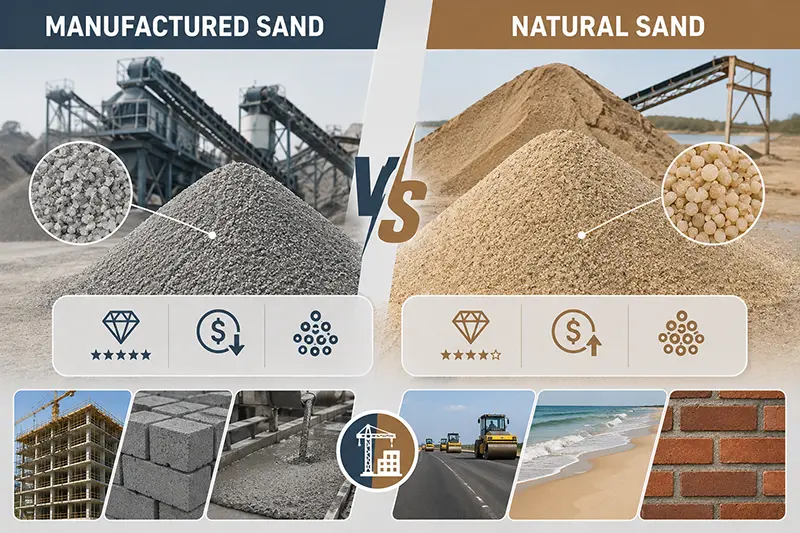
Quick Comparison: Manufactured Sand vs Natural Sand
| Comparison factor | Manufactured sand | Natural sand |
|---|---|---|
| Source | Produced by crushing and processing suitable rock | Obtained from rivers, pits, lakes, or other natural deposits |
| Particle shape | Usually angular or cubical, depending on shaping equipment | Commonly smoother and more rounded |
| Surface texture | Generally rougher | Generally smoother |
| Grading control | Can be adjusted through crushing, screening, and classification | Depends on the natural deposit and may vary between batches |
| Fines | Contains crushed rock fines; quality depends on the parent rock and process | May contain clay, silt, organic matter, or other natural contaminants |
| Workability | May require grading, fines, or mix-design adjustment | Rounded particles often provide good flow and workability |
| Supply consistency | Can be produced according to a controlled process | May vary as the extraction area changes |
| Washing requirement | Depends on dust, clay contamination, fines specification, and end use | Depends on silt, clay, salts, and other impurities |
| Availability | Depends on local rock resources and production capacity | Depends on permitted natural deposits and seasonal supply |
| Cost | Influenced by crushing, shaping, screening, washing, and power consumption | Influenced by extraction restrictions and transport distance |
Neither material is automatically suitable for every project. Final acceptance should be based on test results rather than the material name alone.
What Is Natural Sand?
Natural sand is created through the long-term weathering and erosion of rock. It may be collected from riverbeds, sand pits, lakes, or other permitted deposits.
River sand is one of the most familiar forms of natural sand. Its particles are often rounded because of repeated movement and abrasion in water. This particle shape can improve the flow and workability of concrete and mortar.
However, natural sand quality is not always consistent. Depending on the deposit, it may contain:
Clay and silt
Organic matter
Shell fragments
Mica or soft particles
Chlorides or salts
Excessively fine or coarse particles
Unstable particle grading
Natural sand should therefore be sampled and tested before use, especially in structural concrete and projects with durability requirements.
What Is Manufactured Sand?
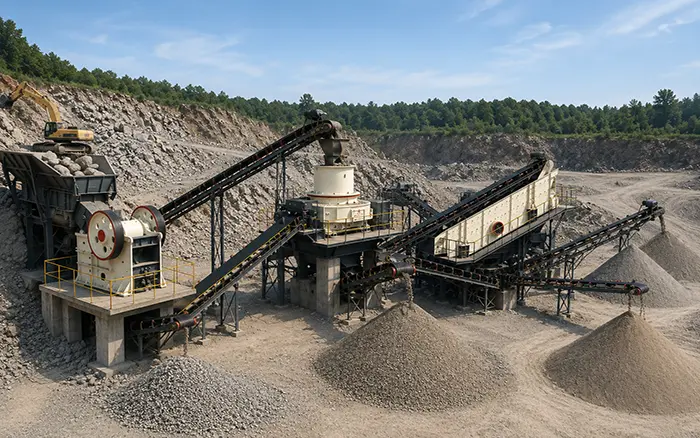
Manufactured sand, also called M-sand or crushed sand, is produced by crushing suitable rock into controlled fine aggregate.
A typical production process may include:
Primary and secondary crushing
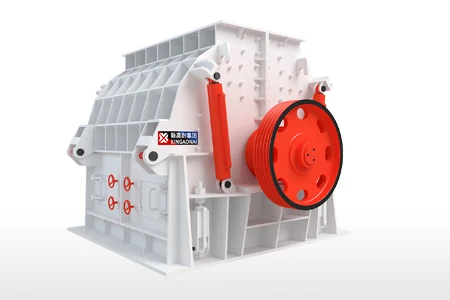
Fine crushing or sand making
Particle shaping
Screening and classification
Dust removal or sand washing
Dewatering and moisture control
Finished-product testing
The specific equipment configuration depends on the parent rock, feed size, required output, target grading, fines specification, and application.
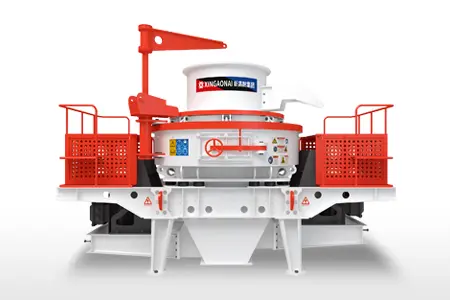
A VSI vertical shaft impact crusher is commonly used when improved particle shape and controlled fine aggregate production are required. Other sand-making technologies may be selected according to material abrasiveness and production capacity.
For a detailed process explanation, see the stone-to-sand production process.
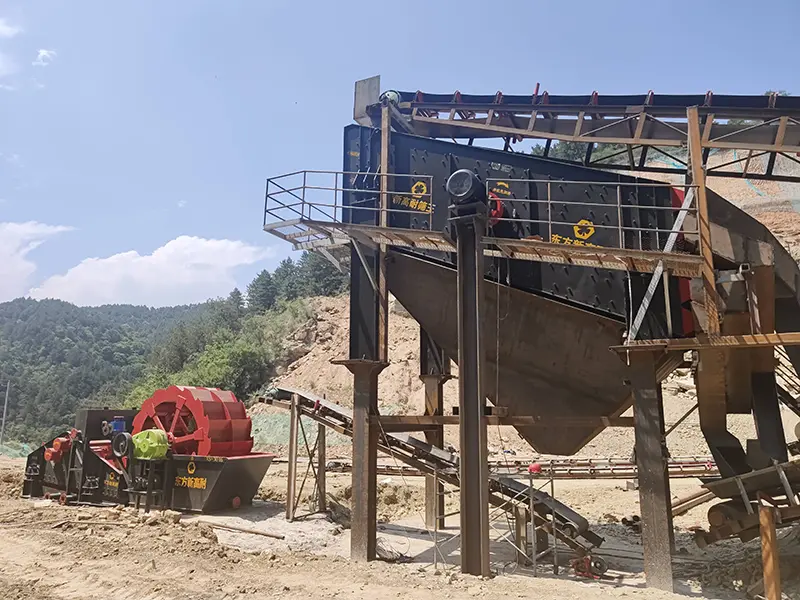
Key Differences Between Manufactured Sand and Natural Sand
1. Particle Shape and Surface Texture
Natural sand particles are commonly smoother and more rounded. This reduces friction between particles and can improve workability and pumping performance.
Manufactured sand particles are usually more angular and have a rougher surface. These characteristics can improve mechanical interlock with cement paste or asphalt binder, but poorly shaped particles may increase water demand and reduce workability.
Particle shape depends heavily on the crushing and shaping process. Properly configured equipment can produce more cubical particles and reduce excessive flaky or elongated material.
2. Particle Grading
Natural sand grading is controlled by the geological deposit. Quality may change as extraction moves to another section of the source.
Manufactured sand grading can be adjusted through:
Crusher settings
Screening deck selection
Air classification
Washing
Blending different particle fractions
Returning oversized material for reprocessing
Controllable grading is one of the main advantages of manufactured sand, but production equipment must be monitored consistently. A poorly controlled plant can still produce unstable material.
3. Fines, Clay and Stone Powder
The fine particles in natural and manufactured sand are not necessarily the same.
Natural sand may contain clay and silt. These materials can coat aggregate particles, interfere with bonding, increase water demand, and affect durability.
Manufactured sand commonly contains crushed rock fines or stone powder. A controlled quantity of suitable rock fines may contribute to particle packing, but excessive or unsuitable fines can create problems.
Therefore, sand should not be accepted or rejected based only on total fines content. The type, mineral composition, particle size, and effect on the concrete or mortar should also be evaluated.
For detailed acceptance items, refer to the manufactured sand quality requirements.
4. Concrete Workability
Natural sand often provides good initial workability because of its rounded particles. Manufactured sand may require adjustment of:
Water content
Sand ratio
Admixture dosage
Combined aggregate grading
Fines content
Moisture correction
This does not mean manufactured sand cannot be used in workable or pumpable concrete. It means the mix design should be developed for the actual aggregate rather than copied directly from a natural-sand mixture.
5. Concrete Strength and Durability
Concrete performance cannot be predicted from the sand source alone.
Well-graded manufactured sand with suitable particle shape and controlled fines can produce reliable concrete. Natural sand can also perform well when it is clean, properly graded, and free from harmful substances.
Strength and durability depend on the combined effect of:
Aggregate grading
Particle shape
Water-to-binder ratio
Cementitious materials
Admixtures
Mixing and curing
Chloride, sulfate and organic contamination
Moisture variation
Trial mixes should be conducted before changing from natural sand to manufactured sand in structural concrete.
6. Quality Consistency
Manufactured sand can provide relatively consistent quality when the feed rock and production settings remain stable. Automated crushing, screening, classification, and moisture monitoring can further reduce variation.
Natural sand quality may change as the deposit, extraction depth, weather, or season changes. That does not make natural sand unsuitable, but it can require more frequent incoming-material inspection.
7. Cost and Availability
The lowest material price does not always produce the lowest total project cost.
Natural sand cost may include:
Extraction and environmental restrictions
Long-distance transportation
Seasonal shortages
Washing and classification
Quality variation and rejected loads
Manufactured sand cost may include:
Crushing and shaping
Screening and classification
Electricity
Wear parts
Washing and dewatering
Water treatment
Fine-sand recovery
The correct comparison is the delivered and qualified cost per tonne, not only the price at the source.
Which Sand Is Better for Concrete?
Both manufactured sand and natural sand can be used for concrete when they comply with the applicable project requirements.
Natural sand may be preferred when:
A clean and consistent local source is available
Good workability is a priority
Transport distance is short
The material passes grading and contaminant tests
Manufactured sand may be preferred when:
Natural sand supply is limited or inconsistent
The required grading needs to be controlled
Suitable parent rock is available locally
A stable large-volume supply is required
The production plant can control particle shape, fines, and moisture
When manufactured sand is intended to replace river sand, the producer should not rely only on a sieve analysis. Concrete trial mixes should also be used to verify workability, pumping performance, strength, shrinkage, and durability.
See how to produce manufactured sand for concrete that can replace river sand for a more focused production and qualification procedure.
Which Sand Is Better for Mortar and Plaster?
Mortar and plaster are particularly sensitive to excessive coarse particles, angularity, clay contamination, and unstable fines.
Natural sand may provide smoother finishing because of its rounded particle shape. Manufactured sand can also be used, but it generally requires:
Suitable maximum particle size
Stable fine grading
Controlled stone powder
Low clay contamination
Consistent moisture
Application testing
Sand intended for plaster should not be selected only because it is clean. Particle distribution and finishing performance are equally important.
Is Washed Sand Always Better?
Not necessarily.
Washing can remove clay, silt, dust, and unwanted fine particles, but excessive washing can also remove useful fine material and disturb the target grading.
Whether washing is required depends on:
Type of contamination
Clay and silt content
Required fines range
End-use specification
Water availability
Wastewater treatment capacity
Fine-sand loss
Read why sand washing is important before deciding whether a washing stage is necessary.
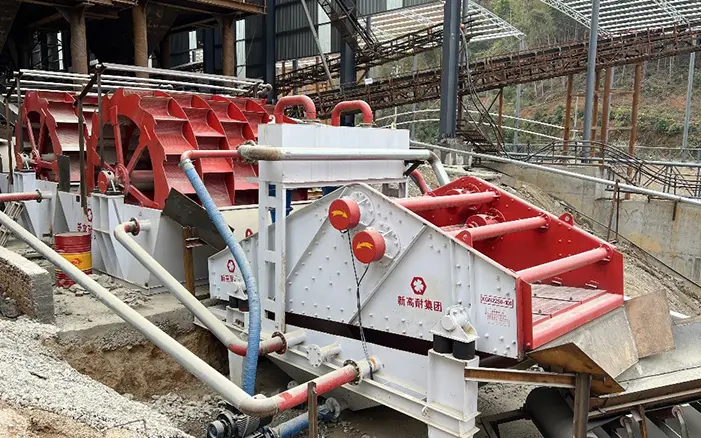
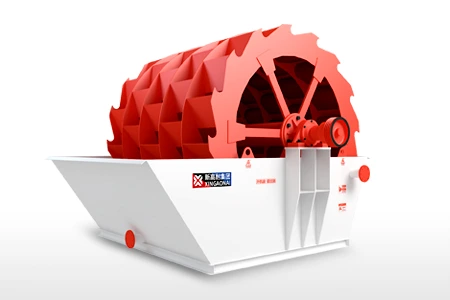
A wheel bucket sand washing machine may be used for aggregate washing where low fine-sand loss and continuous processing are required. Equipment selection should be based on feed grading, clay content, capacity, and finished-product requirements.
How to Choose Between Manufactured Sand and Natural Sand
Use the following process instead of selecting sand only by price or appearance.
Step 1: Confirm the Applicable Specification
Identify the aggregate requirements for the country, concrete grade, road standard, mortar application, or customer specification.
Step 2: Test Representative Samples
Recommended checks may include:
Sieve analysis and fineness modulus
Material passing the specified fine sieve
Clay and silt contamination
Particle shape
Moisture content
Bulk density
Chloride and sulfate content where relevant
Organic impurities
Parent-rock suitability
Consistency between batches
Step 3: Conduct Trial Mixes
For concrete or mortar, verify the actual material in a trial mix. Check:
Water demand
Workability
Slump retention
Pumpability
Surface finish
Compressive strength
Bleeding and segregation
Shrinkage and durability where required
Step 4: Compare Delivered Cost
Include processing, transportation, testing, moisture variation, rejected material, and mix-design adjustment.
Step 5: Evaluate Long-Term Supply
A slightly cheaper source may become expensive if its grading, moisture, or contamination changes frequently.
Common Selection Mistakes
Avoid the following mistakes:
Assuming all natural sand is clean
Assuming all manufactured sand contains excessive dust
Treating stone powder and clay as the same material
Comparing purchase price without transportation and processing costs
Using fixed quality limits without checking the applicable standard
Copying a natural-sand concrete mix without trial adjustment
Ignoring moisture variation
Selecting sand from a single visual inspection
Washing sand without evaluating useful fines loss
Conclusion
Manufactured sand and natural sand can both be suitable construction aggregates. Natural sand commonly offers rounded particles and good workability, while manufactured sand provides greater control over production, grading, and long-term supply.
The better option is the material that:
Meets the applicable specification
Provides stable grading and moisture
Contains acceptable fines and contaminants
Performs successfully in trial mixes
Can be supplied consistently
Offers a reasonable delivered cost
Before making a final decision, test representative samples and evaluate the material under actual project conditions.