VSI and HVI sand making machines are both used to produce manufactured sand and shape crushed aggregates. Although they perform similar duties, their crushing mechanisms, product characteristics, operating conditions, and typical applications are different.
Choosing between a VSI and an HVI sand making machine should not be based only on the equipment name. The right choice depends on the raw material, feed size, required output, final particle shape, sand fineness, capacity, and operating environment.
This guide compares VSI and HVI sand making machines and explains the key factors to consider when selecting equipment for a manufactured sand or aggregate production plant.
1. What Is a VSI Sand Making Machine?
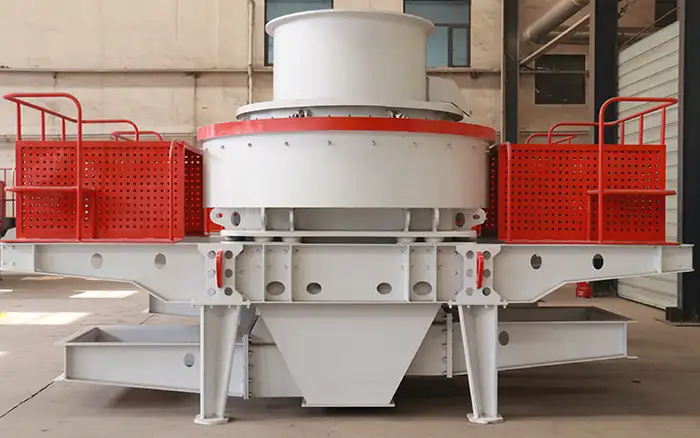
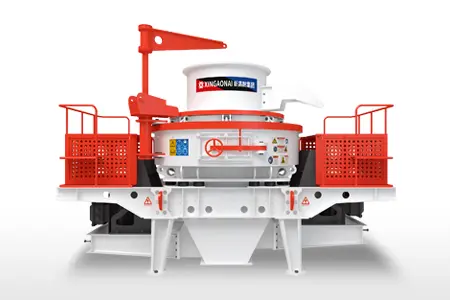
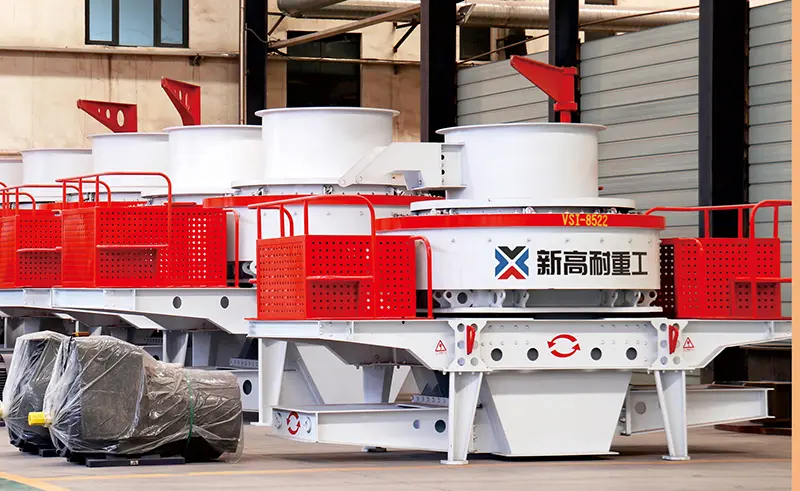
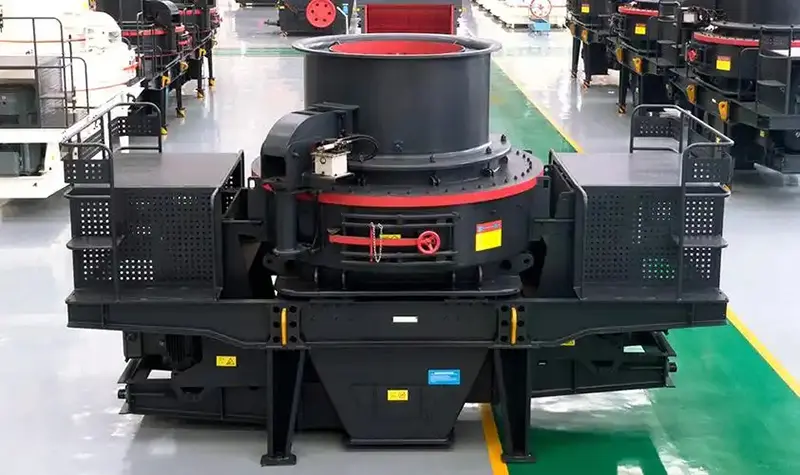
VSI stands for Vertical Shaft Impact. A VSI sand making machine uses a high-speed rotor to accelerate the material and then crush it through impact.
Depending on the design, material may be thrown against a crushing chamber or collide with other material. This high-speed impact breaks particles and can improve the shape of the final product.
VSI crushers are widely used for:
Manufactured sand production
Fine crushing
Aggregate shaping
Gravel and rock processing
Ore crushing
High-quality cubical aggregate production
One of the main advantages of a VSI is its ability to produce well-shaped particles through impact crushing.
2. What Is an HVI Sand Making Machine?
HVI is commonly used to describe a high-efficiency vertical shaft impact sand making machine.
An HVI sand making machine combines impact crushing with a design intended to improve crushing efficiency, particle shaping, and production performance.
The equipment can be used for producing manufactured sand and shaping aggregates from a range of materials.
Typical applications include:
Manufactured sand
Construction aggregates
Concrete aggregate
Road-building materials
Limestone processing
Granite and basalt processing
Pebble and river stone processing
The exact performance of an HVI machine depends on its configuration, material characteristics, and operating conditions.
3. VSI vs HVI: How Do They Work?
Both machines use vertical-shaft impact crushing, but their structural design and operating configuration can differ.
VSI Working Principle
Material enters the machine and is accelerated by a high-speed rotor. The particles are then subjected to impact forces that break and reshape them.
The process can be summarized as:
Feed → Rotor Acceleration → High-Speed Impact → Crushing and Shaping → Product
VSI technology is particularly useful when particle shape is an important product requirement.
HVI Working Principle
An HVI sand making machine also uses high-speed impact as the primary crushing mechanism. Its design emphasizes efficient crushing, shaping, and controlled product production.
The material undergoes impact inside the crushing chamber and is discharged after reaching the required size.
Both machines can produce manufactured sand, but their detailed internal configurations and operating parameters should be evaluated when comparing specific models.
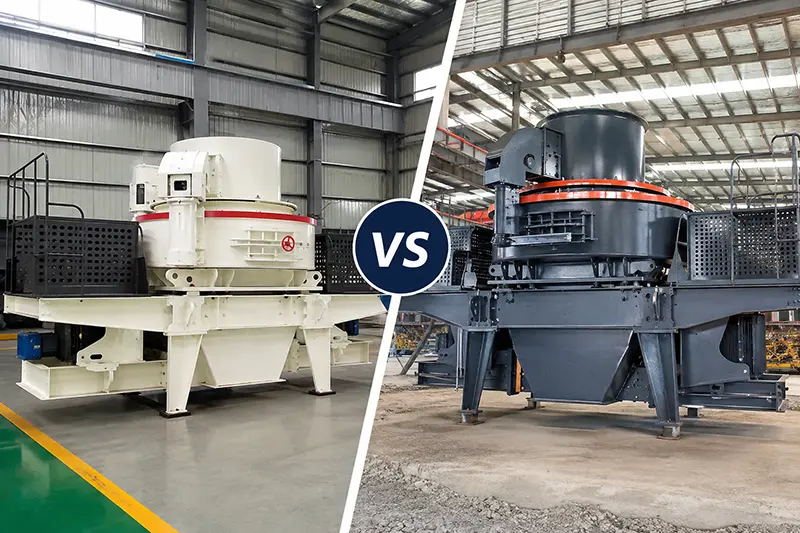
4. Key Differences Between VSI and HVI Sand Making Machines
| Factor | VSI Sand Making Machine | HVI Sand Making Machine |
|---|---|---|
| Main principle | Vertical shaft impact | High-efficiency vertical shaft impact |
| Main function | Crushing and shaping | Crushing and shaping |
| Product shape | Good cubical shape | Good particle shaping |
| Typical application | Sand and aggregate production | Sand and aggregate production |
| Feed material | Various rocks and ores | Various rocks and aggregates |
| Configuration | Multiple design options | High-efficiency impact configuration |
| Maintenance | Depends on rotor and wear parts | Depends on rotor and wear parts |
| Best choice | Depends on material and product requirements | Depends on material and product requirements |
The table provides a general comparison. Actual performance should be evaluated using the specifications and test results of the particular models being considered.
5. Product Shape: VSI vs HVI
Particle shape is an important reason for using vertical shaft impact equipment.
Poorly shaped aggregates can contain excessive elongated or flaky particles, which may negatively affect packing characteristics and concrete performance.
Impact crushing can help reshape these particles.
Both VSI and HVI machines can produce relatively cubical manufactured sand and aggregates when properly configured.
However, the final particle shape depends on several factors, including:
Rock properties
Feed particle size
Rotor speed
Crushing chamber configuration
Feed rate
Closed-circuit operation
Crusher setting
Therefore, machine type alone does not determine final product shape.
6. VSI vs HVI for Manufactured Sand
Manufactured sand production requires more than simply reducing rock size.
A good sand-making circuit should control:
Particle-size distribution
Fine-particle content
Particle shape
Fineness modulus
Stone powder content
Product consistency
VSI machines are widely used as tertiary or quaternary crushing equipment in manufactured sand plants.
HVI machines can also be used for sand production where high-efficiency impact crushing and shaping are required.
The better option depends on the feed material and the specifications of the finished sand.
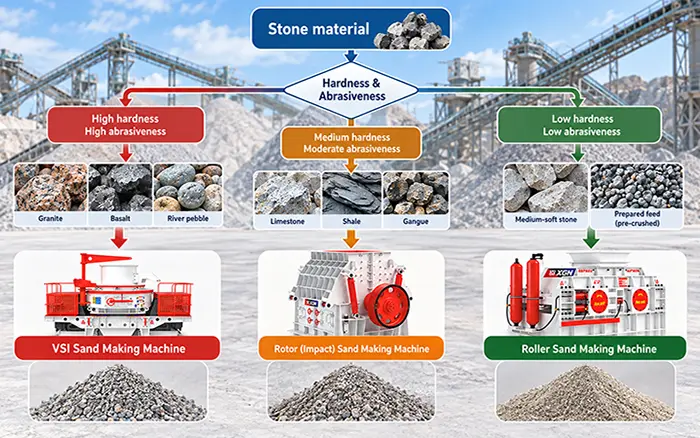
7. VSI vs HVI for Hard Rock
Hard and abrasive materials such as granite and basalt require careful equipment selection.
The machine must be able to withstand continuous impact and abrasive wear.
For hard-rock applications, consider:
Feed hardness
Abrasiveness
Feed size
Required reduction ratio
Wear-part material
Expected throughput
Maintenance requirements
Neither VSI nor HVI should be selected solely because it is described as a sand making machine. The complete crushing circuit and wear characteristics need to be considered.
8. VSI vs HVI for Limestone
Limestone is generally easier to crush than highly abrasive hard rock, although its properties can vary significantly between deposits.
Both VSI and HVI machines can be used in limestone aggregate and manufactured sand applications.
For limestone sand production, the selection should consider the desired product gradation, amount of stone powder, feed moisture, capacity, and downstream screening requirements.
If the feed contains excessive fines, a suitable screening or classification arrangement may be needed before or after the sand making stage.
9. Capacity Considerations
Production capacity is one of the most important factors in equipment selection.
A sand making machine should be selected according to the required hourly output rather than its maximum theoretical capacity.
For example, a plant producing 150 TPH of manufactured sand needs to consider the capacity of the entire circuit:
Feeder → Primary Crusher → Secondary Crusher → Screen → Sand Making Machine → Final Screen
If the screening system or feeder cannot support the required flow, installing a higher-capacity sand making machine will not necessarily increase plant production.
The actual operating capacity should therefore be evaluated under the expected feed conditions.
10. Feed Size Requirements
VSI and HVI machines are generally used after primary and secondary crushing rather than as the first stage for large run-of-mine rocks.
The feed should be reduced to an appropriate size before entering the sand making machine.
An oversized feed can:
Increase wear
Reduce crushing efficiency
Cause unstable operation
Increase energy consumption
Affect product consistency
Proper screening before the sand making stage can help maintain a stable feed size.
11. Energy Consumption
Vertical shaft impact machines use significant mechanical energy to accelerate material and generate impact forces.
Energy consumption depends on:
Feed hardness
Feed size
Crushing ratio
Rotor speed
Throughput
Product size
Material moisture
Equipment design
Instead of comparing only the motor power of a VSI and an HVI machine, it is better to compare energy consumption per ton of acceptable final product.
This provides a more meaningful measure of operating efficiency.
12. Wear Parts and Maintenance
Wear is an important consideration when processing abrasive rocks.
Common wear components in vertical shaft impact machines can include:
Rotor components
Wear plates
Distributor components
Crushing chamber liners
Impeller-related parts
The actual wear rate depends strongly on the material.
Quartz-rich rock, granite, and other abrasive materials can result in higher wear than softer limestone.
Regular inspection and timely replacement of worn components help maintain stable product quality and production capacity.
13. Open Rotor vs Closed Rotor Configuration
Vertical shaft impact machines may use different rotor and crushing chamber configurations.
An open rotor configuration can be useful in certain applications where throughput and material-on-material crushing are important.
Other configurations may use different internal arrangements to achieve specific crushing and shaping characteristics.
The appropriate configuration depends on the feed material and product requirements.
When comparing VSI and HVI equipment, the internal configuration should be evaluated rather than treating each equipment category as a single standardized design.
14. Should You Use VSI or HVI as a Tertiary Crusher?
Both can be considered for tertiary crushing.
The choice depends on the required final product.
A typical aggregate circuit might be:
Primary Crushing → Secondary Crushing → Screening → VSI/HVI → Final Screening
The sand making machine can process oversize material from the screening stage and produce additional fine aggregate or manufactured sand.
In a closed circuit, the final screen controls the product size and returns oversize material for further crushing.
15. How to Choose Between VSI and HVI
Before making a decision, evaluate the following factors.
1. Raw Material
Determine whether the feed is limestone, granite, basalt, river pebble, quartz, or another material.
2. Feed Size
Check the maximum and average feed size entering the sand making machine.
3. Required Capacity
Determine the target tons per hour under actual operating conditions.
4. Final Product
Define the required sand and aggregate specifications.
5. Particle Shape
Determine whether the application requires highly cubical particles.
6. Abrasiveness
Estimate expected wear and the required wear-part materials.
7. Energy Consumption
Compare power consumption against actual production and product quality.
8. Maintenance
Consider access to wear parts, replacement frequency, maintenance time, and local service support.
9. Total Cost
Compare not only the purchase price but also energy, wear parts, maintenance, downtime, and expected service life.
16. When Is VSI a Better Choice?
A VSI may be a good option when the plant requires:
Manufactured sand production
Aggregate shaping
Cubical particle production
Fine crushing
High-quality aggregate
Flexible impact-crushing applications
VSI technology has been widely applied in aggregate and mineral processing plants, making it a familiar choice for many crushing applications.
17. When Is HVI a Better Choice?
An HVI sand making machine may be worth considering when the project emphasizes:
High-efficiency sand production
Aggregate shaping
Manufactured sand production
Continuous high-volume operation
Optimized impact crushing
Construction aggregate applications
However, the specific machine model should be evaluated based on technical specifications and test results rather than the HVI designation alone.
18. VSI vs HVI: Which One Should You Choose?
There is no universal answer to which machine is better.
If the main requirement is high-quality manufactured sand and aggregate shaping, a vertical shaft impact machine can be an effective solution.
The final decision should consider the complete production system:
Raw Material → Feed Preparation → Crushing → Screening → Sand Making → Final Classification
The best equipment is the one that achieves the required capacity and product specifications with acceptable energy consumption, wear, maintenance requirements, and operating cost.
For a new plant, laboratory testing and sample crushing trials can help determine the most suitable configuration before equipment is purchased.
Conclusion
VSI and HVI sand making machines are both designed for impact crushing, manufactured sand production, and aggregate shaping. Their practical differences are mainly related to machine configuration, efficiency, operating conditions, and specific model design.
A VSI may be suitable for a wide range of fine crushing and shaping applications, while an HVI machine can be considered where high-efficiency sand production and shaping are important.
However, equipment selection should not be based on the machine name alone. Feed characteristics, capacity, product requirements, particle shape, wear rate, energy consumption, and the rest of the crushing circuit all need to be considered.
For the best result, conduct material testing and compare actual production data before selecting a VSI or HVI sand making machine