Manufactured sand can replace river sand in concrete, but crushing rock to the correct nominal size is not enough.
The finished sand must provide suitable grading, particle shape, fines characteristics, moisture stability and consistency. More importantly, it must perform satisfactorily in the actual concrete mix.
The objective is not to make manufactured sand look exactly like river sand. The objective is to produce fine aggregate that meets the applicable specification and delivers the required workability, strength, pumping performance and durability.
A reliable qualification process includes:
Defining the concrete and project requirements
Selecting suitable parent rock
Controlling crushing and particle shaping
Establishing stable particle grading
Separating useful rock fines from harmful clay
Washing or dry-classifying only when necessary
Controlling moisture and stockpiles
Conducting laboratory tests
Verifying performance through concrete trial mixes
Maintaining long-term production consistency
1. Define the Intended Application Before Designing the Sand
The production target should be based on the final application rather than a general definition of “good manufactured sand.”
Before configuring the production process, confirm:
Concrete strength class
Ready-mixed, precast or site-mixed concrete
Pumping requirements
Maximum aggregate size
Cementitious materials
Available coarse aggregate
Required workability
Exposure environment
Applicable aggregate standard
Customer grading requirements
Required production capacity
Whether complete or partial river-sand replacement is planned
Fine aggregate suitable for road base may not provide the workability needed for pumped concrete. Similarly, sand accepted for ordinary concrete may not meet the surface-finish requirements of precast products.
The governing specification should be confirmed at the beginning. Examples include China’s GB/T 14684-2022 or ASTM C33/C33M for projects that specify the ASTM concrete-aggregate system.
These standards should not be treated as interchangeable, and project-specific requirements may be stricter than a general aggregate standard.
2. Select and Qualify the Parent Rock
Manufactured sand inherits its mineral composition, strength and durability from the source rock.
Potential source materials include:
Granite
Basalt
Limestone
Quartzite
Diabase
Other durable quarried rock
Suitable recycled mineral material where permitted
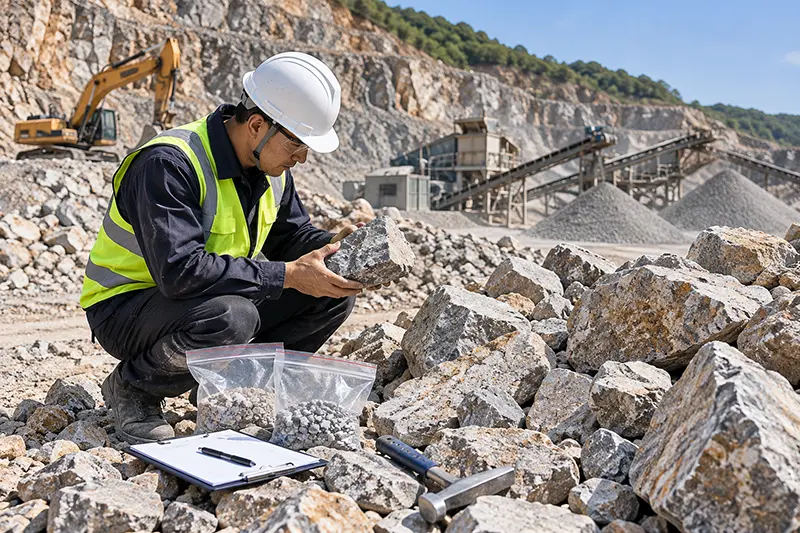
The rock name alone does not confirm suitability. Representative samples should be examined for:
Weathering
Soft or friable particles
Clay-bearing seams
Mica
Sulfide minerals
Chloride or salt contamination
Potential alkali–aggregate reactivity
Variability between quarry zones
Resistance to breakdown during crushing and handling
The quarry should separate heavily weathered or contaminated material before it enters the crushing circuit.
Whenever the mining face or raw-material source changes, the producer should repeat the relevant qualification tests.
3. Produce a Stable Feed Through Primary and Secondary Crushing
A sand-making machine performs more consistently when it receives material with a controlled feed size and stable composition.
Primary and secondary crushing should:
Reduce large rock to a suitable sand-making feed size
Remove or separate contaminated material
Prevent sudden changes in feed grading
Maintain a stable flow to the shaping stage
Avoid excessive production of uncontrolled fines
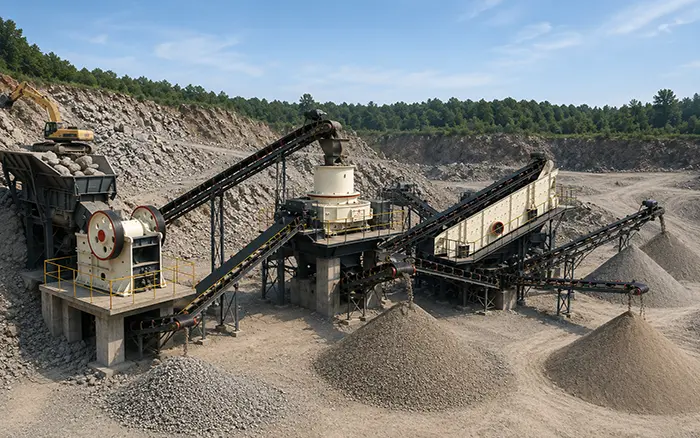
Jaw, gyratory, cone or impact crushers may be used in the upstream process depending on the feed size, rock properties and plant capacity.
This article does not cover the complete aggregate crushing layout. For the broader equipment sequence, see the stone-to-sand production process.
4. Control Particle Shape During Sand Making
River sand particles are often rounded by natural abrasion. Manufactured sand is generally more angular because it is produced by mechanical crushing.
Manufactured sand does not need to duplicate the exact shape of river sand, but excessive flat, elongated or irregular particles can:
Increase water demand
Reduce workability
Increase admixture demand
Affect pumping performance
Create unstable void content
Produce a rough concrete finish
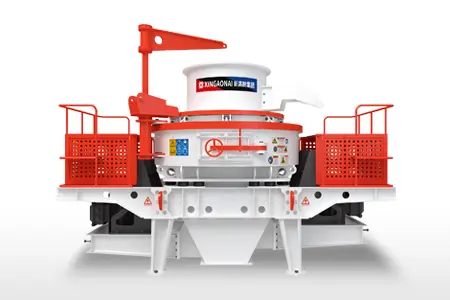
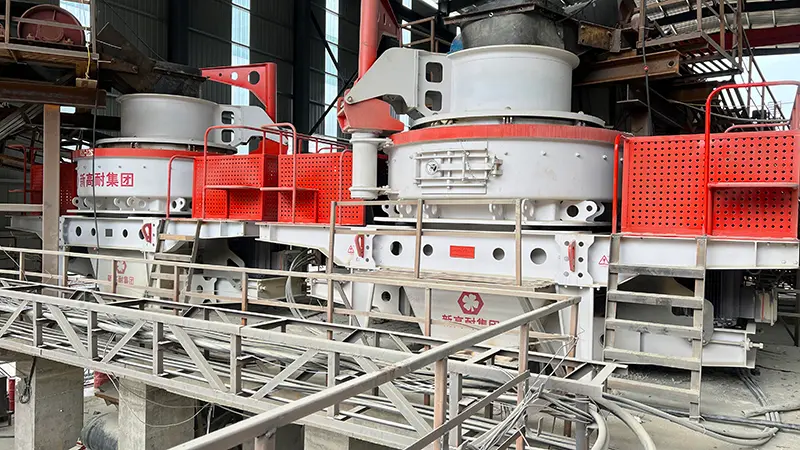
A VSI vertical shaft impact crusher may be used to improve particle shape and produce a more cubical fine aggregate.
Particle shape is influenced by:
Parent-rock characteristics
Feed size
Rotor speed
Crusher load
Circulating load
Wear-part condition
Crushing chamber configuration
Number of crushing and shaping passes
Higher rotor speed does not automatically produce better sand. Excessive impact may increase power consumption, wear and uncontrolled fines. Settings should be adjusted according to test results.
5. Establish the Required Particle Grading
Grading is one of the most important differences between a stable manufactured sand product and ordinary crusher dust.
A continuous particle-size distribution can help reduce voids and improve concrete consistency. However, there is no single grading curve that is ideal for every concrete mixture.
The target should be based on:
Applicable aggregate specification
Coarse aggregate grading
Concrete mix design
Pumping requirements
Required workability
Cementitious-material content
Local production conditions
A closed-circuit screening system should be used where possible:
Oversized particles return to the crushing or shaping stage.
Acceptable sand enters the finished-product stream.
Fine material is controlled through classification, washing or blending.
Non-compliant material is not mixed directly into the approved stockpile.
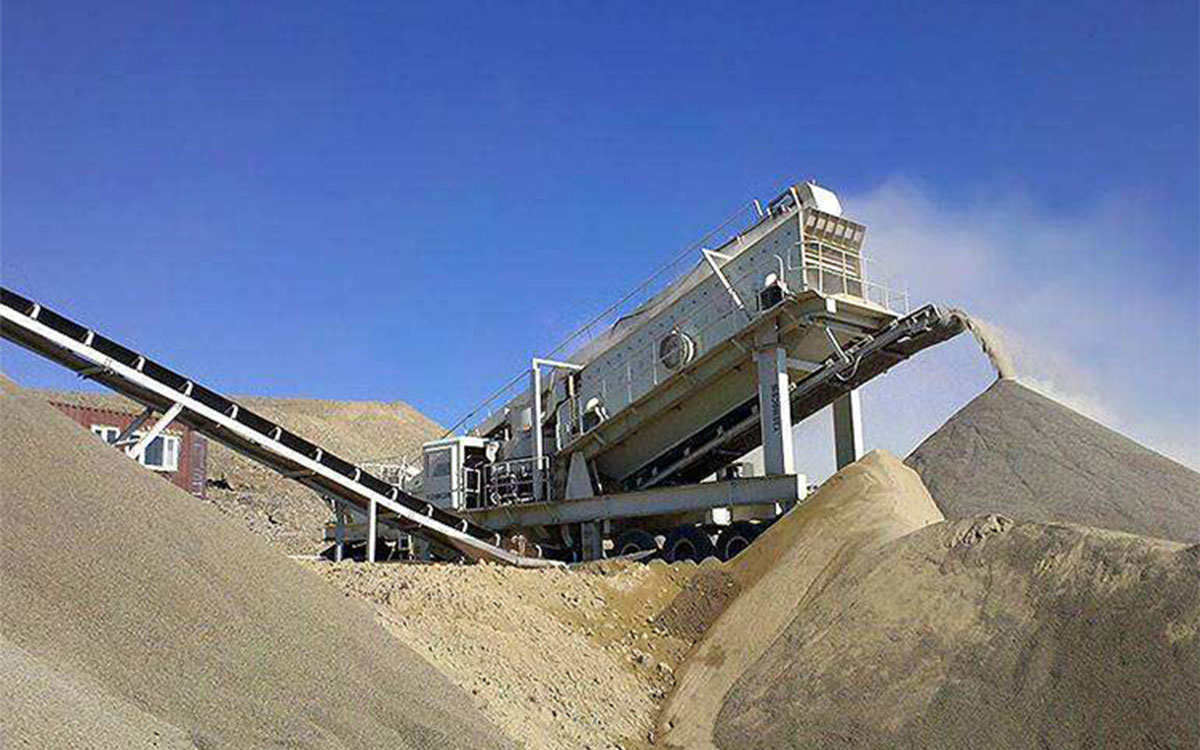
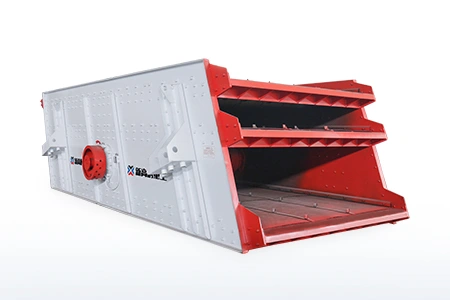
A linear vibrating screen can be used to separate particle fractions and stabilize the grading of the finished product.
6. Distinguish Stone Powder From Harmful Clay
All material passing a fine sieve should not automatically be treated as harmful.
Manufactured sand may contain fine particles generated from the same parent rock. These particles are usually called stone powder or crushed-rock fines. Their effect depends on:
Mineral composition
Particle-size distribution
Surface area
Clay contamination
Concrete mix design
Applicable specification
A controlled amount of suitable rock fines may improve particle packing. Excessive fines may increase water and admixture demand or reduce consistency.
Clay contamination is different. Clay minerals may coat aggregate particles, absorb water and interfere with cement paste or chemical admixtures.
Testing may include:
Fine-sieve analysis
Methylene blue or equivalent clay test
Sand equivalent
Clay lumps and friable particles
Mineralogical examination where necessary
For detailed testing items, refer to the manufactured sand quality requirements.
7. Decide Between Washing and Dry Classification
Manufactured sand should not be washed automatically.
Washing may be appropriate when the feed contains:
Clay
Silt
Surface dust
Unwanted ultrafine particles
Contamination from stockpiles or runoff
Dry classification may be appropriate when:
Useful rock fines need to be retained
Water supply is limited
Wastewater treatment is difficult
The feed contains dust but little clay
The plant needs more precise control of fine fractions
When wet washing is used, the process must also control fine-sand loss. Removing too much fine material can interrupt the grading curve and reduce yield.
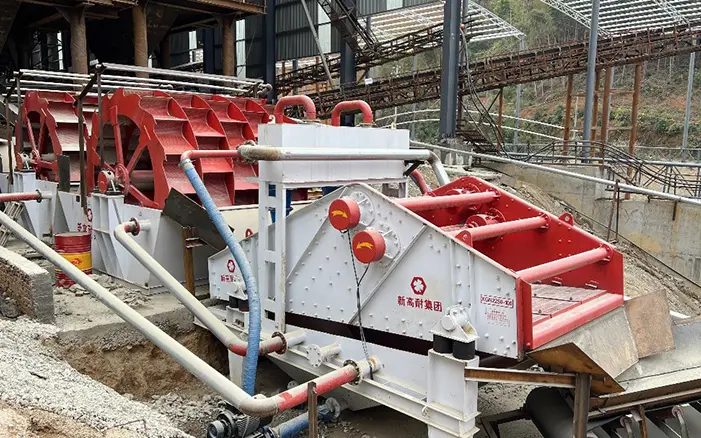
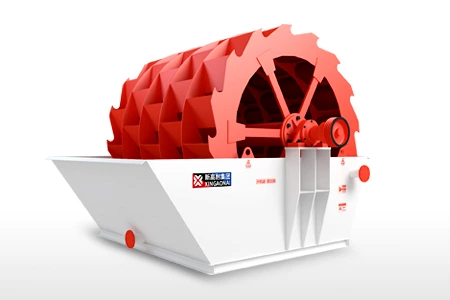
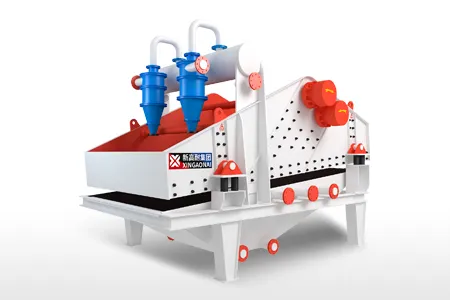
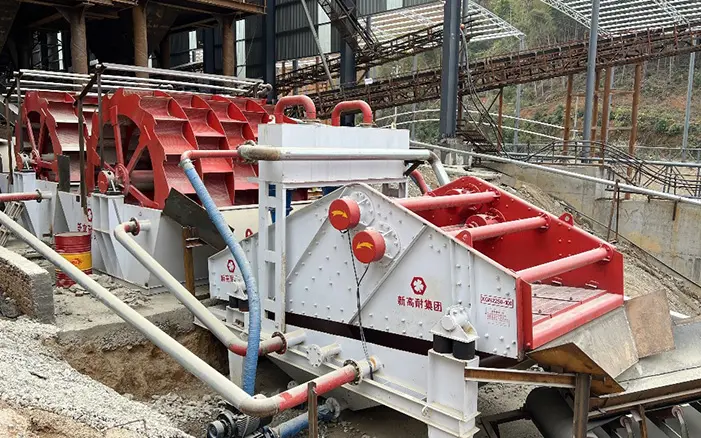
A wheel bucket sand washing machine may be used for continuous aggregate washing. A fine sand recovery machine can help recover usable fine particles from process water.
Read why sand washing is important before determining the washing configuration.
8. Control Moisture and Finished-Sand Stockpiles
Even compliant manufactured sand can create batching problems if its moisture changes significantly.
Moisture variation affects:
Actual mixing water
Water-to-binder ratio
Concrete slump
Batch weight
Admixture performance
Material flow through bins and conveyors
After wet processing, manufactured sand should be adequately dewatered and allowed to drain before delivery.
Recommended stockpile practices include:
Separating newly washed and stabilized material
Building stockpiles in controlled layers
Avoiding contamination from soil
Preventing uncontrolled runoff
Providing drainage
Monitoring moisture at multiple locations
Avoiding mixing compliant and non-compliant batches
Concrete plants should measure sand moisture and adjust batch water instead of relying on a fixed moisture assumption.
9. Test the Manufactured Sand Before Concrete Trials
The testing plan should follow the governing project specification.
Typical checks include:
| Property | Why it matters |
|---|---|
| Particle-size distribution | Affects packing, workability and mixture stability |
| Fineness modulus | Helps monitor grading consistency |
| Fine-particle content | Influences water demand and particle packing |
| Clay indicator | Distinguishes harmful clay from suitable rock fines |
| Particle shape | Affects workability, interlock and void content |
| Moisture | Affects batching water and delivered weight |
| Bulk density | Supports yield and storage calculations |
| Harmful constituents | Helps protect strength, reinforcement and durability |
| Durability | Evaluates resistance to weathering and breakdown |
| Source consistency | Reduces changes between production batches |
Passing these tests does not by itself prove that the sand can replace river sand in concrete. The next stage is application testing.
10. Conduct Concrete Trial Mixes
Concrete trial mixes are the most important step in confirming whether manufactured sand can replace river sand.
Use the actual materials intended for the project:
Cement
Supplementary cementitious materials
Coarse aggregate
Chemical admixtures
Mixing water
Manufactured sand
River sand used as the baseline, where available
The producer or concrete laboratory can evaluate several replacement ratios, including partial and complete replacement where appropriate.
The trial program should measure:
Water demand
Initial slump
Slump retention
Pumpability
Cohesion
Bleeding
Segregation
Surface finish
Air content where required
Early and later-age strength
Density
Shrinkage
Relevant durability indicators
Do not increase water automatically to compensate for lower workability. First evaluate grading, particle shape, fines, moisture and admixture dosage.
A manufactured sand mixture should only be accepted when it meets the required fresh- and hardened-concrete performance.
11. Adjust the Process Based on Trial-Mix Results
Aggregate testing and concrete testing should be connected to production control.
If water demand is too high
Check:
Excessive angularity
Poor grading
Excessive surface area
Unsuitable fines
Clay contamination
Low moisture accuracy
If the mixture segregates or bleeds
Check:
Lack of intermediate particle sizes
Insufficient suitable fines
Excessively coarse sand
Incompatible sand ratio
If pumping is difficult
Check:
Particle shape
Continuous grading
Total paste volume
Moisture variation
Admixture compatibility
If strength is below the target
Check:
Actual water-to-binder ratio
Harmful contaminants
Weak or weathered parent rock
Poor compaction
Curing conditions
Incorrect batching caused by moisture errors
Changing the plant process should be followed by new sampling and trial verification.
12. Maintain Long-Term Production Consistency
Approval of the initial sample is not enough. Manufactured sand quality can change because of:
Quarry-face changes
Crusher wear
Screen wear or damage
Feed-size changes
Variations in circulating load
Washing-water adjustments
Fine-sand loss
Stockpile mixing
Seasonal moisture changes
A practical quality-control system should include:
Routine sampling at defined production intervals
Regular sieve analysis and moisture measurement
Periodic clay and harmful-substance testing
Inspection after equipment adjustments
Retesting after source-rock changes
Production records and trend analysis
Separate storage of non-compliant material
Periodic concrete performance verification
Consistency is often more valuable to a concrete producer than one exceptionally good test result followed by unstable deliveries.
When Can Manufactured Sand Replace River Sand?
Manufactured sand may replace river sand when:
The parent rock is suitable
The grading complies with the project requirement
Particle shape is controlled
Clay and harmful substances are within the specified limits
Moisture variation is manageable
Production is consistent
Concrete trial mixes meet fresh-performance requirements
Strength and durability requirements are satisfied
The supplier can maintain the approved quality
For a broader comparison of the two materials, see manufactured sand vs natural sand.
Common Production Mistakes
Avoid the following mistakes:
Designing the plant before confirming the end use
Selecting source rock by name without laboratory testing
Using ordinary crusher dust as finished manufactured sand
Copying one universal grading curve
Treating all stone powder as harmful clay
Washing away useful fine particles
Ignoring moisture correction
Qualifying only one sample
Changing crusher settings without retesting
Claiming complete river-sand replacement without concrete trials
Mixing non-compliant material into approved stockpiles
Conclusion
Producing manufactured sand that can replace river sand is not simply a crushing operation. It is a controlled qualification process.
The producer must:
Start with suitable parent rock
Create stable crusher feed
Control particle shape
Maintain continuous grading
Distinguish rock fines from clay
Wash or classify only when necessary
Control moisture
Test representative samples
Verify concrete performance
Maintain consistent production
Manufactured sand should be considered ready to replace river sand only when both aggregate test results and concrete trial mixes confirm its suitability.