High-purity graphite is an important material for advanced industrial applications, including lithium-ion batteries, electronics, refractories, lubricants, and other high-performance products. Compared with conventional graphite concentrate, high-purity graphite requires much stricter control of carbon content and impurity levels.
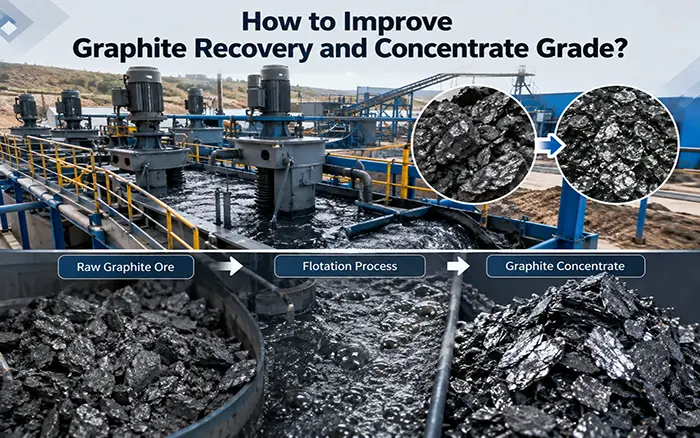
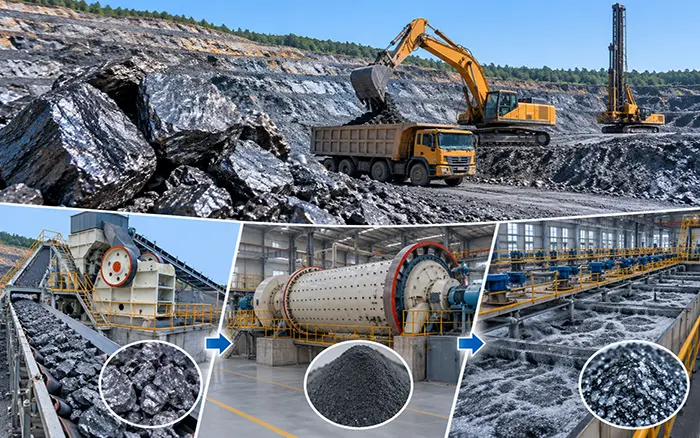
A typical graphite purification process begins with a graphite concentrate produced through beneficiation, usually including crushing, grinding, and flotation. Additional purification is then used to remove residual mineral impurities and increase the fixed carbon content.
The appropriate purification method depends on the starting graphite concentrate, impurity composition, target purity, particle characteristics, and final application. The main approaches include chemical purification, thermal purification, and combined treatment.
1. What Is High-Purity Graphite?
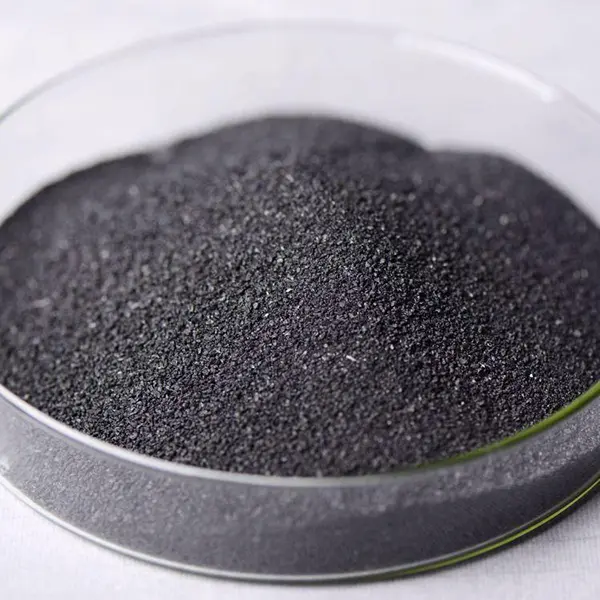
High-purity graphite generally refers to graphite with a very high fixed-carbon content and low levels of metallic and mineral impurities.
Graphite concentrate after flotation may still contain impurities such as:
Silicon
Aluminum
Iron
Calcium
Magnesium
Sulfur
Other mineral elements
The required purity depends on the end use. Traditional industrial graphite may tolerate higher impurity levels, while applications such as battery materials, advanced electronics, and specialty graphite can require much stricter specifications.
Therefore, graphite purification is not simply about increasing carbon content. It is about selectively removing impurities while maintaining the physical characteristics required by the final product.
2. Why Is Graphite Purification Necessary?
Flotation can effectively upgrade many natural graphite ores, but some impurities remain attached to or locked within the graphite concentrate.
These impurities can negatively affect the performance of graphite in demanding applications.
For example, certain metallic impurities may affect electrical or electrochemical properties, while mineral residues can influence thermal behavior and chemical stability.
Purification can therefore provide several benefits:
Higher fixed-carbon content
Lower ash content
Reduced metallic impurities
Improved product consistency
Better suitability for high-value applications
The required purification level should be determined by the specifications of the intended graphite product.
3. Graphite Purification Process Flow
A simplified high-purity graphite processing route may be:
Graphite Ore → Crushing → Grinding → Flotation → Graphite Concentrate → Purification → Washing → Drying → High-Purity Graphite
The actual process can vary considerably.
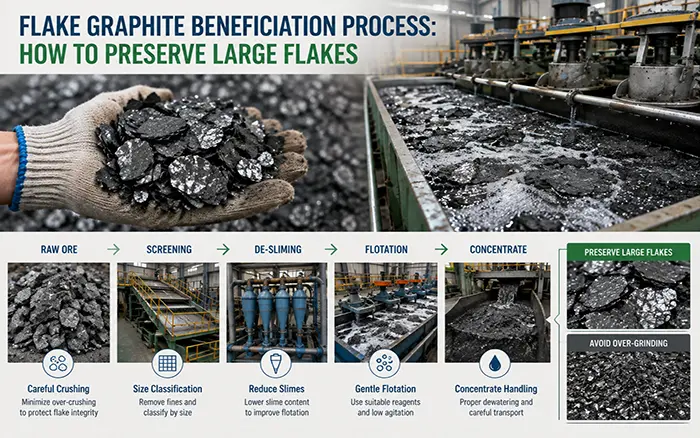
A flotation concentrate may undergo additional grinding or classification before purification if the remaining impurities are not sufficiently liberated.
After purification, the material may require washing, filtration, drying, and particle-size control before becoming a finished product.
The purification stage should therefore be considered as part of the complete graphite processing flowsheet rather than as an isolated operation.
4. Main Methods of Graphite Purification
The three major approaches are:
Chemical purification
Thermal purification
Combined chemical and thermal purification
Each method has different operating requirements, advantages, limitations, and suitable applications.
5. Chemical Purification of Graphite
Chemical purification uses suitable reagents to dissolve or remove mineral impurities while leaving the graphite structure largely intact.
Commonly considered chemical systems include acidic treatment, alkaline treatment, or combinations of different reagents.
A simplified process can be described as:
Graphite Concentrate → Chemical Treatment → Impurity Dissolution → Washing → Filtration → Drying
The specific reagent system depends on the mineralogy and the type of impurities present.
Advantages
Chemical purification can be effective for removing many mineral impurities at relatively moderate temperatures.
It may also be suitable for graphite concentrates where impurities are difficult to eliminate through physical beneficiation alone.
Considerations
Chemical purification requires careful management of:
Reagent consumption
Reaction conditions
Washing requirements
Wastewater
Residual chemicals
Corrosion
Environmental controls
The purification chemistry should be selected based on representative test work rather than a standard reagent recipe.
6. Acid Leaching for Graphite Purification
Acid leaching is one possible chemical purification approach.
During treatment, acid reacts with susceptible mineral impurities and converts them into soluble compounds that can subsequently be separated from the graphite.
The process generally involves:
Acid Treatment → Solid-Liquid Separation → Washing → Filtration → Drying
Different minerals respond differently to acid treatment. For this reason, the mineralogical composition of the graphite concentrate is an important factor when designing the process.
Acid purification can achieve substantial impurity removal when the target impurities are chemically amenable to the selected treatment.
However, acid consumption and wastewater treatment requirements must be included in the overall process evaluation.
7. Alkaline or Combined Chemical Treatment
Some graphite concentrates contain impurities that are not efficiently removed through a single acidic treatment.
In such cases, alkaline or combined chemical treatment may be considered.
The objective is to improve the removal of specific impurity minerals through different chemical reactions.
The exact sequence depends on:
Impurity composition
Mineral associations
Concentrate grade
Required purity
Reagent compatibility
Environmental requirements
A customized chemical purification circuit can therefore be more effective than applying the same treatment to every graphite deposit.
8. Thermal Purification of Graphite
Thermal purification uses very high temperatures to remove volatile impurities or promote the separation of unwanted components.
A typical thermal purification route may involve:
Graphite Concentrate → High-Temperature Treatment → Impurity Removal → Cooling → Product Handling
Thermal treatment can produce extremely high-purity graphite under suitable conditions.
However, it generally requires significant energy and specialized equipment.
The furnace atmosphere, temperature, residence time, feed characteristics, and impurity composition must be carefully controlled.
9. Chemical vs Thermal Graphite Purification
| Factor | Chemical Purification | Thermal Purification |
|---|---|---|
| Main mechanism | Chemical removal of impurities | High-temperature treatment |
| Operating temperature | Generally lower | Very high |
| Energy requirement | Relatively lower | High |
| Reagent requirement | Yes | Usually lower chemical consumption |
| Wastewater | Requires management | Generally less process wastewater |
| Equipment | Reactors, filters, washing systems | High-temperature furnace system |
| Suitable applications | Many high-purity products | Very high-purity applications |
| Key consideration | Chemical and wastewater management | Energy and furnace control |
Neither method is universally better.
The selection should be based on the impurity profile, target purity, production scale, environmental requirements, and overall economics.
10. Combined Chemical and Thermal Purification
Some projects may benefit from combining chemical and thermal treatment.
For example, chemical treatment can first remove a large proportion of mineral impurities, while thermal treatment is subsequently used to achieve a higher purity level.
A simplified route is:
Flotation Concentrate → Chemical Purification → Washing → Drying → Thermal Purification → High-Purity Graphite
A combined process can provide greater impurity removal flexibility, but it also increases process complexity and capital investment.
Whether it is economically justified depends on the required final product specification.
11. Role of Graphite Flotation Before Purification
Purification should normally be considered after producing a suitable graphite concentrate.
Flotation can remove a substantial portion of the gangue minerals before chemical or thermal purification.
This is important because removing as much impurity as practical through beneficiation can reduce the burden on the purification stage.
A typical strategy is:
Beneficiation First → Purification Second
Improving the quality of the flotation concentrate can reduce reagent consumption, energy requirements, and purification workload.
12. Importance of Grinding and Liberation
The effectiveness of purification depends partly on how impurities occur within the graphite concentrate.
If impurity minerals are physically locked within graphite particles, additional size reduction may be needed before certain separation or purification steps.
However, graphite is relatively soft compared with many associated minerals, so excessive grinding can generate unwanted fines and alter the particle-size distribution.
The objective is therefore to achieve adequate liberation without unnecessary graphite degradation.
13. Washing and Solid-Liquid Separation
Chemical purification produces a mixture containing graphite, dissolved impurities, and process chemicals.
Effective washing is therefore essential.
The washing stage helps remove:
Residual reagents
Dissolved impurities
Soluble salts
Reaction products
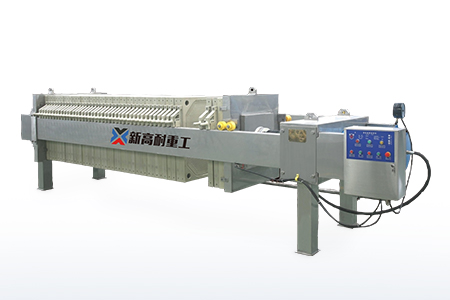
After washing, filtration or another solid-liquid separation method can be used to reduce moisture before drying.
Poor washing can leave residual chemicals or soluble contaminants in the graphite product, potentially affecting final quality.
14. Drying High-Purity Graphite
After purification and washing, graphite typically contains substantial moisture.
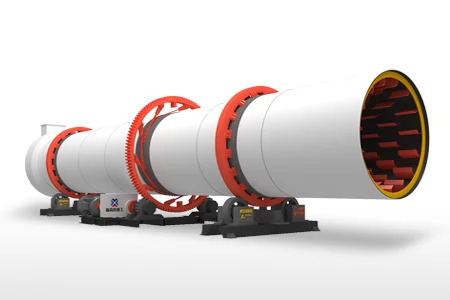
A drying system reduces moisture to the required product level.
Depending on production capacity and product requirements, suitable drying equipment may include industrial dryers designed for fine mineral materials.
Temperature control is important because the final product may have strict specifications for moisture, particle size, and physical properties.
15. Equipment for Graphite Purification
A high-purity graphite plant may require equipment such as:
| Stage | Typical Equipment |
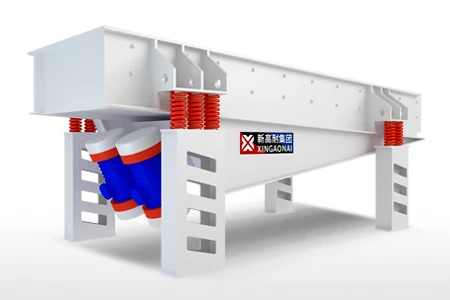
| Feed preparation | Hopper, conveyor, feeder |
| Chemical treatment | Reaction tank or reactor |
| Solid-liquid separation | Filter press, vacuum filter |
| Washing | Washing tanks or multi-stage washing system |
| Drying | Industrial dryer |
| Thermal purification | High-temperature furnace |
| Gas handling | Scrubber and exhaust-treatment system |
| Product handling | Conveyor, storage, packaging equipment |
The final equipment list depends on the selected purification technology and production scale.
16. Factors Affecting Graphite Purification Efficiency
Several factors determine whether a purification process can achieve the required product quality.
Starting Concentrate Quality
A higher-quality flotation concentrate generally reduces the burden on downstream purification.
Impurity Mineralogy
The chemical behavior of impurities determines how easily they can be removed.
Target Purity
Higher purity requirements generally require more intensive treatment or additional purification stages.
Particle Size
Particle size affects reaction kinetics, impurity exposure, filtration, and product handling.
Reagent Conditions
Chemical concentration, temperature, reaction time, and solid-liquid ratio can affect impurity removal.
Thermal Conditions
For thermal purification, temperature, atmosphere, residence time, and furnace design are critical.
17. How to Design a High-Purity Graphite Processing Plant
A practical design process can follow several steps.
Step 1: Characterize the Graphite Concentrate
Determine fixed carbon, ash, particle-size distribution, and major impurity elements.
Step 2: Identify Impurity Minerals
Mineralogical analysis helps determine how impurities are associated with graphite.
Step 3: Define the Product Specification
Establish the target carbon content and acceptable impurity levels based on the intended market.
Step 4: Conduct Purification Tests
Compare chemical, thermal, or combined purification methods under controlled laboratory conditions.
Step 5: Evaluate Washing and Filtration
Determine how effectively residual chemicals and dissolved impurities can be removed.
Step 6: Optimize Drying and Product Handling
Ensure the final product meets moisture and particle-size requirements.
Step 7: Conduct Economic and Environmental Evaluation
Compare capital costs, energy consumption, reagent requirements, wastewater treatment, emissions control, and product value.
Step 8: Confirm the Flowsheet
Pilot-scale testing can help verify process stability before commercial plant construction.
18. Graphite Purification for Battery Applications
Battery-related graphite applications typically require strict control of purity and particle characteristics.
A graphite concentrate intended for battery applications may therefore require more than conventional flotation.
Depending on the product specification, downstream processing may include:
High-purity purification
Particle-size classification
Shaping
Spheroidization
Surface coating
Drying
Quality control
Purification is only one part of preparing graphite for advanced battery applications.
The required process should be determined by the specifications of the final anode material rather than assuming that a conventional graphite concentrate is sufficient.
19. Environmental Considerations
Environmental management is an important part of graphite purification plant design.
Chemical purification can generate acidic or alkaline wastewater containing dissolved minerals and residual reagents. Treatment and recycling systems may therefore be required.
Thermal purification can involve high energy consumption and may require appropriate gas handling and emission-control systems.
A responsible plant design should consider:
Wastewater treatment
Water recycling
Chemical storage
Gas and dust control
Solid waste management
Worker safety
Energy efficiency
Environmental controls should be integrated into the process design from the beginning.
20. How to Improve the Graphite Purification Process
Process optimization should focus on achieving the required purity without unnecessary treatment.
Several approaches can help:
Improve the quality of the flotation concentrate.
Remove easily separable gangue before purification.
Select reagents according to impurity mineralogy.
Optimize reaction conditions through test work.
Improve washing efficiency.
Reduce unnecessary water consumption.
Optimize filtration and drying.
Recover and recycle process water where practical.
Monitor impurity levels throughout the process.
The best purification circuit is not necessarily the one that achieves the highest possible purity. It should provide the required product specification at an economically and environmentally sustainable cost.
Conclusion
The graphite purification process is designed to remove residual impurities from graphite concentrate and produce a product with the purity required for its intended application.
Chemical purification, thermal purification, and combined processes are the main approaches. The appropriate method depends on the graphite concentrate, impurity mineralogy, target purity, production scale, energy costs, and environmental requirements.
A successful high-purity graphite project should begin with a well-characterized flotation concentrate and systematic laboratory testing. Purification should then be integrated with washing, solid-liquid separation, drying, product handling, and environmental control.
For projects targeting demanding applications, especially advanced battery materials, purification should be treated as one part of a broader downstream processing chain. Careful flowsheet design and representative pilot testing can help achieve consistent product quality while controlling operating costs