A reliable basalt crushing plant cannot be designed by selecting a jaw crusher, cone crusher and VSI from a standard equipment list. The correct process depends on the actual basalt, feed size, required products, production capacity, operating hours, site conditions and acceptable wear cost.
Basalt is generally hard and abrasive, but its crushing behavior varies between deposits. Weathered basalt, fresh dense basalt, vesicular basalt and basalt containing clay or altered minerals may behave differently in feeding, crushing and screening.
Before selecting equipment, the designer must answer four questions:
What material will enter the plant?
What products must the plant produce?
What sustained output must each stage handle?
How will oversized material, fines, moisture and wear be controlled?
This guide explains how to convert those project requirements into a practical basalt crushing and screening circuit.
For basalt formation, composition and general applications, refer to what is basalt rock.
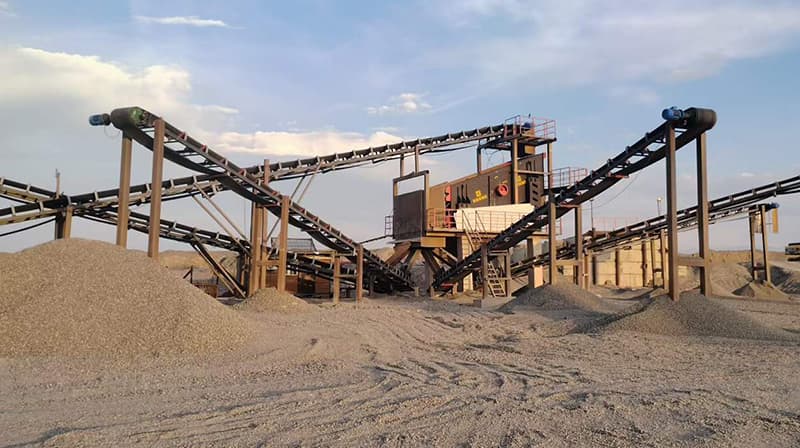
Why Basalt Crushing Plants Require Careful Design
Basalt commonly presents several processing challenges:
High compressive strength
High abrasiveness
Dense and competent rock structure
Rapid wear when unsuitable crushing equipment is used
Large variations between fresh and weathered zones
Difficulty producing cubical particles without a shaping stage
High recirculating load when screens and crushers are mismatched
Dust and fine-particle generation
Potential clay contamination in weathered quarry zones
These properties do not mean every basalt deposit needs the same crusher arrangement.
The plant design should be based on test data rather than a generic hardness description. The role of strength and geology is covered separately in basalt compressive strength and crusher selection.
Step 1: Define the Finished Products
The first design input is not the crusher model. It is the required product specification.
Confirm:
Required aggregate sizes
Required manufactured sand fraction
Permitted oversized material
Grading envelope
Particle-shape requirement
Flakiness or elongation requirement
Permitted fines content
Clay and contamination limits
Required moisture
Applicable road, concrete, asphalt or railway specification
Required hourly and annual product tonnage
A plant producing only coarse road-base aggregate may need a different circuit from one producing several concrete aggregates and manufactured sand.
Typical product groups may include:
Coarse aggregate
Medium aggregate
Fine aggregate
Manufactured sand
Road-base material
Railway ballast
Asphalt aggregate
The exact size boundaries must follow the customer’s specification. They should not be copied from another project.
Product balance is as important as total capacity
A project may require several saleable products, but demand is rarely equal for every size.
For example, the market may consume far more medium aggregate than coarse aggregate. If the crushing circuit naturally produces excessive coarse material, finished stockpiles can become unbalanced even when the total plant capacity is achieved.
The design must therefore estimate:
Percentage of each finished product
Expected crusher product distribution
Screen separation efficiency
Oversized recirculation
Demand for each stockpile
Options for reprocessing slow-selling sizes
Step 2: Characterize the Basalt Feed
Representative feed testing should be completed before the final equipment configuration is selected.
Important information includes:
Maximum feed size
Typical feed-size distribution
Compressive strength
Abrasion or wear characteristics
Bulk density
Moisture content
Clay and soil content
Percentage of weathered material
Fracture characteristics
Mineral composition
Presence of metal contamination
Variation between quarry zones
Why representative sampling matters
A sample taken from fresh exposed rock may not represent:
Weathered overburden zones
Clay-rich seams
Different benches
Blasted material
Seasonal moisture conditions
Future quarry development areas
A plant designed only around the hardest sample may be unnecessarily expensive. A plant designed only around the easiest sample may fail to achieve capacity when harder ore enters the circuit.
Use representative data from the planned quarry life whenever possible.
Step 3: Establish the Real Design Capacity
The required capacity should be expressed as more than one tonnes-per-hour figure.
Define:
Nominal feed rate
Peak feed rate
Required saleable product rate
Hours per shift
Shifts per day
Operating days per year
Target mechanical availability
Expected recirculating load
Planned annual production
Future expansion requirement
A plant required to deliver 300 tonnes per hour of finished products may need individual crushers, screens and conveyors rated above 300 tonnes per hour because of recirculated oversized material.
Feed capacity is not the same as product capacity
The crusher may process fresh feed plus recirculating load.
For example:
Crusher duty = Fresh feed + Returned oversized material
If screen separation is inefficient or the crusher produces a large coarse fraction, the recirculating load may increase significantly. This affects:
Crusher chamber loading
Screen loading
Conveyor capacity
Surge-bin size
Power demand
Wear rate
A material balance should be prepared for every major stream before final equipment selection.
Step 4: Decide Whether the Plant Needs Two or Three Crushing Stages
Three-stage crushing is common for hard basalt, but it is not mandatory for every project.
Two-stage basalt crushing
A possible two-stage circuit is:
Feeding → Primary crushing → Secondary crushing → Screening → Finished products
It may be suitable when:
The feed size is moderate.
The capacity is relatively limited.
Only coarse and medium aggregate products are required.
The secondary crusher can achieve the required reduction.
Particle-shape requirements are not unusually strict.
Manufactured sand is not required.
Three-stage basalt crushing
A possible three-stage circuit is:
Feeding → Primary crushing → Secondary crushing → Screening → Tertiary crushing → Final screening → Finished products
It may be suitable when:
Several tightly controlled aggregate sizes are required.
Fine aggregate or manufactured sand is needed.
The total reduction ratio cannot be achieved efficiently in two stages.
Product shape must be improved.
The secondary stage would otherwise carry excessive load.
Higher capacity or greater process flexibility is required.
Additional parallel crushing
Large plants may use:
Multiple primary crushers
Parallel secondary cone crushers
Multiple tertiary crushers
Parallel screening lines
Separate aggregate and sand-making circuits
The number of machines should be determined by material balance, maintenance strategy and required plant availability.
Step 5: Design the Feeding and Pre-Screening Stage
The feeding system controls the stability of the entire plant.
A suitable system may contain:
Dump hopper
Rock breaker
Apron or vibrating feeder
Grizzly section
Pre-screen
Bypass chute
Metal detection or removal system
A vibrating feeder can help provide a controlled flow into the primary crusher.
Why pre-screening matters
Removing material that is already smaller than the primary crusher’s target product can:
Reduce unnecessary crusher loading
Reduce jaw-plate wear
Improve primary crusher capacity
Remove soil and clay before crushing
Reduce energy consumption
Prevent wet fines from packing in the crushing chamber
However, bypassed material should not automatically be sent to a finished-product stockpile. It may contain clay, soil or weathered rock and may require separate screening or disposal.
Step 6: Select the Primary Crusher
The primary crusher must accept the largest expected feed and provide a stable product for the secondary stage.
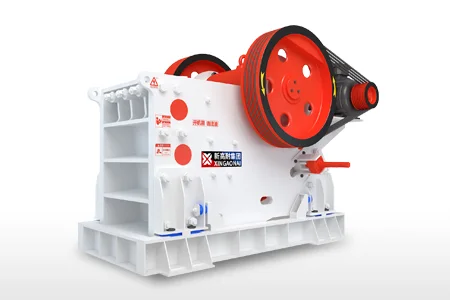
Jaw crusher
A jaw crusher is commonly suitable for:
Hard and abrasive basalt
Small to large stationary plants
Moderate to high reduction requirements
Quarry and aggregate applications
Plants requiring a robust primary stage
The PEV Series jaw crusher can be evaluated for primary basalt crushing after feed size, capacity and downstream requirements are defined.
Important selection factors include:
Maximum feed opening
Capacity at the required setting
Feed-size distribution
Moisture and clay
Discharge setting
Motor and drive arrangement
Jaw-plate profile
Maintenance access
Rock-breaker requirement
Gyratory crusher
A primary gyratory crusher may be considered when:
The required capacity is very high.
Continuous large-volume feeding is expected.
The quarry has long-term reserves.
The larger civil and installation cost can be justified.
Downstream equipment can accept the continuous output.
The choice between a jaw and gyratory crusher should be based on lifecycle cost and plant duty—not on one capacity threshold.
Step 7: Select the Secondary Crusher
For hard, abrasive basalt, cone crushing is commonly considered for the secondary stage because it uses compression rather than relying entirely on high-velocity impact.
A secondary cone crusher should be selected by:
Feed opening
Maximum feed size
Required product distribution
Closed-side setting
Chamber profile
Expected circulating load
Required capacity
Motor power
Wear-liner selection
Tramp-metal protection
Automation and setting control
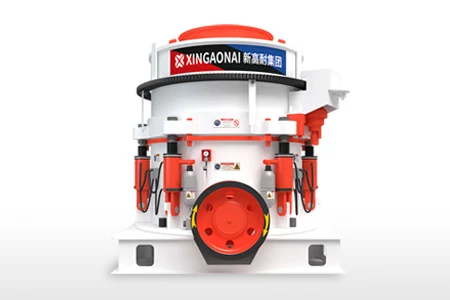
The XHP Series multi-cylinder hydraulic cone crusher can be evaluated for secondary or tertiary hard-rock duties.
Choke feeding
Cone crushers generally perform more consistently when the crushing chamber receives a stable, properly distributed feed.
Unstable or segregated feeding may cause:
Uneven liner wear
Reduced capacity
Poor product shape
Increased setting variation
Higher recirculating load
A surge bin and controlled feeder between crushing stages can improve operating stability.
Closed-side setting
The crusher setting influences capacity, reduction ratio, product size and circulating load.
For a detailed explanation, refer to the closed-side setting guide.
The setting should be verified physically and adjusted according to wear. A control-panel setting should not be assumed to remain accurate throughout the liner life.
Step 8: Choose the Tertiary Crusher or Shaping Stage
The tertiary stage depends on the required final products.
Cone crusher for tertiary reduction
A cone crusher may be preferred when:
Wear cost is a major concern.
The feed is highly abrasive.
Fine aggregate is required without intensive shaping.
The plant needs a controlled closed-circuit product.
The target product can be achieved through compression crushing.
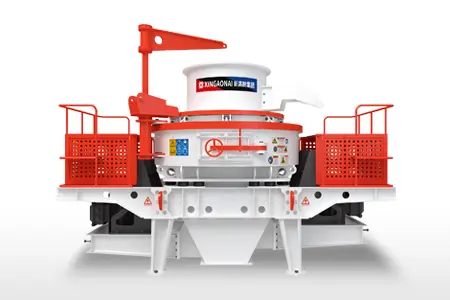
VSI for shaping and manufactured sand
A VSI vertical shaft impact crusher may be added when:
Improved cubical shape is required.
Manufactured sand is part of the product plan.
Flaky or elongated particles must be reduced.
The feed size falls within the VSI’s allowable range.
Fines generation can be managed.
The project can support the required wear-part and power cost.
The VSI should not receive oversized feed directly from an unsuitable upstream stage. Stable, correctly sized feed is important for consistent performance and wear.
Can an impact crusher process basalt?
Yes, an impact crusher can process some basalt, but suitability must be evaluated rather than assumed.
Important factors include:
Abrasion index
Feed size
Required product shape
Crusher duty
Throughput
Blow-bar metallurgy
Wear-part availability
Cost per tonne
Maintenance time
For highly abrasive basalt and continuous secondary crushing, a cone crusher may provide a more favorable wear profile. In other projects, an impact-based stage may still be justified by product requirements, available equipment or project economics.
Avoid universal statements that an impact crusher must always or must never be used.
Step 9: Design the Screening and Closed-Circuit System
Screens determine which material becomes a finished product and which material returns to a crusher.
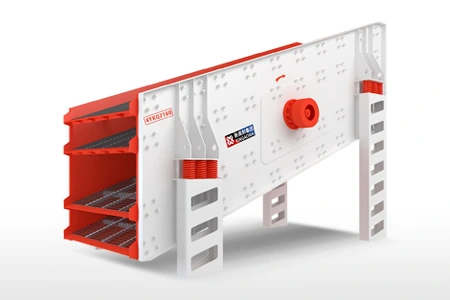
A circular vibrating screen can be evaluated for aggregate classification after the feed size, number of products and required capacity are known.
Screen selection should consider:
Feed rate
Maximum feed size
Particle-size distribution
Number of finished products
Required cut sizes
Moisture
Percentage of near-size particles
Screen inclination
Deck area
Number of decks
Aperture shape
Wear protection
Required screening efficiency
Why near-size material matters
Material close to the screen aperture is more difficult to separate than material that is much larger or smaller.
A screen processing large quantities of near-size basalt may require more effective screening area than a simple tonnes-per-hour estimate suggests.
Closed-circuit crushing
In a closed circuit:
The crusher produces a range of particle sizes.
The screen removes finished material.
Oversized material returns to the crusher.
The circuit repeats until the material passes the required screen.
Closed-circuit crushing improves size control, but it also creates circulating load. Conveyors, crushers and screens must be sized for total circuit duty.
Step 10: Decide Whether Washing Is Required
Not every basalt plant needs wet washing.
Washing may be required when:
The feed contains clay or soil.
Manufactured sand contains excessive unwanted fines.
Finished aggregate cleanliness is critical.
Dust removal cannot be achieved by dry classification.
The applicable specification requires additional cleaning.
Washing may be unnecessary when:
The feed is clean.
Dry screening and dust extraction meet the specification.
Water supply is limited.
Useful fines would be lost.
Wastewater treatment would be impractical.
If washing is included, the design may also require:
Sand washer
Fine-sand recovery system
Dewatering screen
Thickener
Sludge handling
Recycled-water system
The decision should be based on feed testing and product requirements.
Step 11: Complete the Material Balance
A material balance estimates how much material passes through every stage.
It should include:
Fresh feed
Primary crusher product
Pre-screened bypass
Secondary crusher feed and product
Tertiary crusher feed and product
Screen oversize
Recirculating load
Finished product quantities
Fines or waste
Moisture where relevant
Without a material balance, it is easy to select:
A crusher that is too large for the screen
A screen that is too small for the crusher
Conveyors that cannot carry the recirculating load
Insufficient finished-product stockpile capacity
A washing system that cannot handle the fine fraction
The general movement of material through feeding, crushing, screening and recirculation is explained in the aggregate production process.
Step 12: Plan Surge Capacity
Surge bins and intermediate stockpiles prevent a short interruption in one section from stopping the entire plant.
Possible locations include:
Before the primary crusher
Between primary and secondary crushing
Before tertiary crushing
Before the sand-making circuit
Before final screening
Surge capacity can:
Stabilize crusher feeding
Reduce production fluctuations
Allow upstream and downstream maintenance
Improve chamber utilization
Reduce conveyor starting and stopping
Support separate product campaigns
Surge structures must be designed to prevent bridging, segregation and uncontrolled discharge.
Step 13: Design the Plant Layout
The layout should support material flow, safe maintenance and future operation.
Main layout objectives
A good layout should:
Minimize unnecessary material transfer
Use gravity where practical
Avoid excessively long or steep conveyors
Provide maintenance access
Separate people from vehicle routes
Allow crane or lifting access
Provide space for liner replacement
Protect control and electrical equipment
Separate finished-product stockpiles
Allow drainage and dust collection
Reserve space for future expansion
Fixed plant
A fixed plant may be appropriate when:
Quarry reserves support long-term operation.
High sustained capacity is required.
Civil construction can be justified.
Product storage and permanent infrastructure are needed.
The quarry face will remain within a practical haulage distance.
Mobile or semi-mobile plant
A mobile or modular plant may be appropriate when:
The project is temporary.
The feed location changes frequently.
Rapid installation is important.
Civil construction must be minimized.
The plant will move between sites.
Multiple quarry faces must be served.
Mobile equipment should not be selected only because installation is faster. Check transport dimensions, site gradients, maintenance access, fuel or electrical supply and the ability to achieve the required finished-product control.
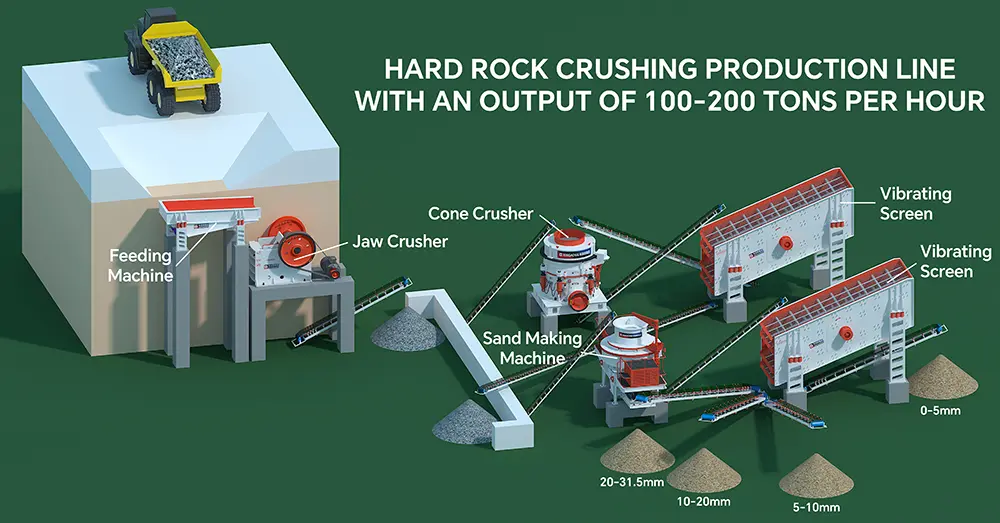
Step 14: Plan for Wear and Maintenance
Wear should be treated as a plant-design input rather than an unexpected operating problem.
Important measures include:
Select wear materials from actual abrasion conditions.
Maintain stable crusher feeding.
Prevent tramp metal from entering crushers.
Monitor liner condition.
Measure crusher settings regularly.
Keep critical wear parts available.
Provide lifting points and maintenance platforms.
Allow safe liner-removal space.
Track wear cost per tonne.
Replace liners before chamber geometry deteriorates excessively.
Do not assume that one manganese grade will always last a fixed multiple longer than another. Wear life depends on:
Rock abrasiveness
Feed distribution
Crusher chamber
Liner profile
Work-hardening conditions
Operating setting
Tramp events
Maintenance practice
Design for maintenance access
Provide adequate space for:
Jaw-plate removal
Cone-liner replacement
Screen-media replacement
Motor and bearing maintenance
Conveyor-belt replacement
Chute-liner replacement
Mobile crane or overhead lifting equipment
Safe isolation and inspection
A compact layout that cannot be maintained safely may create more downtime than it saves in land area.
Step 15: Control Dust, Noise and Spillage
A basalt crushing plant can generate dust at:
Truck dumping
Crusher discharge
Screen decks
Conveyor transfers
Stockpile discharge
VSI or sand-making stages
Possible controls include:
Enclosed transfer points
Local extraction
Bag filtration
Water mist where appropriate
Covered conveyors
Reduced transfer height
Sealed chutes
Regular housekeeping
Paved or treated traffic areas
Water suppression should not be added without considering screen performance, freezing conditions, product moisture and downstream handling.
Noise control may require:
Equipment enclosures
Acoustic barriers
Isolation mounts
Controlled operating zones
Appropriate worker protection
Step 16: Protect Finished-Product Quality
Qualified material can become contaminated or segregated after screening.
Stockpile planning should include:
Separate areas for each product
Hard and clean stockpile floors
Controlled discharge height
Drainage
Prevention of loader cross-contamination
Moisture control
Stockpile rotation
Sufficient storage capacity
Accessible sampling points
Avoid dropping material from excessive height because this can cause:
Particle segregation
Aggregate breakage
Excess fines
Dust
Uneven grading within the stockpile
Example Basalt Crushing Configurations
The following configurations are conceptual—not fixed equipment lists.
Configuration A: Coarse and medium aggregate
Feeder → Jaw crusher → Cone crusher → Vibrating screen → Product stockpiles
Suitable when:
Manufactured sand is not required.
The required reduction can be achieved in two stages.
Product-shape requirements are moderate.
Feed size and capacity match one secondary stage.
Configuration B: Multiple concrete aggregate sizes
Feeder and pre-screen → Jaw crusher → Secondary cone crusher → Screen → Tertiary cone crusher → Final screen → Product stockpiles
Suitable when:
Several controlled aggregate sizes are required.
Closed-circuit control is important.
Hard and abrasive feed favors compression crushing.
Greater reduction is required.
Configuration C: Aggregate and manufactured sand
Feeder and pre-screen → Jaw crusher → Cone crusher → Screen → VSI shaping or sand making → Final classification → Optional washing and recovery → Stockpiles
Suitable when:
Cubical aggregate is required.
Manufactured sand is part of the product plan.
The project can control fines and moisture.
A suitable market exists for all product fractions.
Configuration D: Large parallel plant
Primary crushing → Surge storage → Parallel cone crushing lines → Parallel screening → Separate aggregate and sand-making circuits
Suitable when:
High sustained capacity is required.
Maintenance must not stop the complete plant.
Product demand justifies parallel lines.
Sufficient site area and infrastructure are available.
The basalt crushing solution provides a separate overview of the application and equipment categories.
How to Verify the Design Before Purchase
Before final equipment orders, complete the following checks.
Process verification
Confirm representative feed data.
Confirm all finished-product specifications.
Prepare the material balance.
Calculate circulating loads.
Check crusher feed openings.
Check screen load and separation duty.
Verify conveyor and chute capacity.
Confirm surge storage.
Review washing and water requirements.
Confirm stockpile volumes.
Mechanical verification
Review wear-part materials.
Confirm maintenance clearances.
Check lifting requirements.
Plan spare parts.
Review foundation loads.
Confirm access roads.
Verify feeding and discharge interfaces.
Commercial verification
Compare capital cost.
Estimate energy consumption.
Estimate wear cost per tonne.
Include planned downtime.
Check local spare-part availability.
Estimate product revenue by size.
Review future expansion.
A real project can be compared with the 1000 TPH basalt crushing and screening plant in Uganda, but its equipment configuration should not be copied without checking the new project’s feed and product requirements.
Common Basalt Plant Design Mistakes
Selecting equipment before defining the products
A crusher cannot be selected correctly until the required size distribution, particle shape and product quantities are known.
Using only nominal crusher capacity
Catalog capacity does not include every effect of feed grading, moisture, setting, liner condition and circulating load.
Assuming every basalt plant needs exactly three stages
The stage count should be based on feed size, reduction ratio and product requirements.
Ignoring recirculating load
Returned oversize may overload the crusher, screen and conveyors even when fresh feed is within the nominal plant capacity.
Using an undersized screen
A large crusher cannot deliver qualified products if the screen cannot separate them efficiently.
Feeding a cone crusher unevenly
Segregated or intermittent feed can reduce capacity and cause uneven liner wear.
Selecting an impact crusher only by purchase price
For abrasive basalt, wear cost and downtime may outweigh the lower initial investment. Conduct a lifecycle comparison.
Assuming VSI production automatically equals qualified sand
Manufactured sand quality also depends on feed grading, screening, fines control, washing and testing.
Omitting maintenance space
Equipment may fit into the layout but still be impossible to service efficiently.
Mixing finished products
Poor stockpile management can destroy the grading achieved by the crushing and screening plant.
Copying another project’s equipment list
Even two basalt projects can differ in feed size, abrasiveness, moisture, capacity and finished-product demand.
Information Required for a Basalt Crushing Plant Proposal
Provide the following information before requesting a final plant configuration:
Project location
Raw material
Geological or laboratory test data
Maximum feed size
Feed-size distribution
Moisture and clay content
Required capacity
Operating schedule
Finished-product sizes
Required percentage of each product
Particle-shape requirement
Fines specification
Fixed, modular or mobile preference
Site topography
Available plant area
Power supply
Water availability
Dust-control requirements
Stockpile requirements
Future expansion plan
Conclusion
Designing a basalt crushing plant begins with the feed and finished products—not with a standard crusher package.
The design process should:
Characterize the basalt.
Define every required product.
Establish nominal and peak capacity.
Determine whether two, three or parallel crushing stages are required.
Select crushers based on feed, reduction duty and wear.
Size screens and conveyors for recirculating load.
Provide surge capacity and stable feeding.
Plan safe maintenance access.
Control dust, moisture and stockpile contamination.
Verify the complete material balance before equipment purchase.
A jaw crusher, cone crusher and VSI can form an effective basalt circuit, but that is only one possible configuration. The best plant is the one that produces the required product mix consistently at an acceptable lifecycle cost.