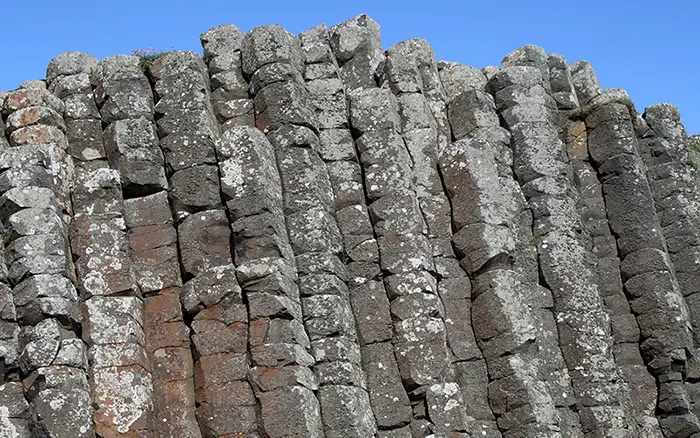
Basalt is one of the most widely distributed volcanic rocks used in the mining, quarrying, and aggregate industries. Because of its high compressive strength, strong abrasiveness, and dense crystalline structure, it is also one of the most challenging materials to crush efficiently.
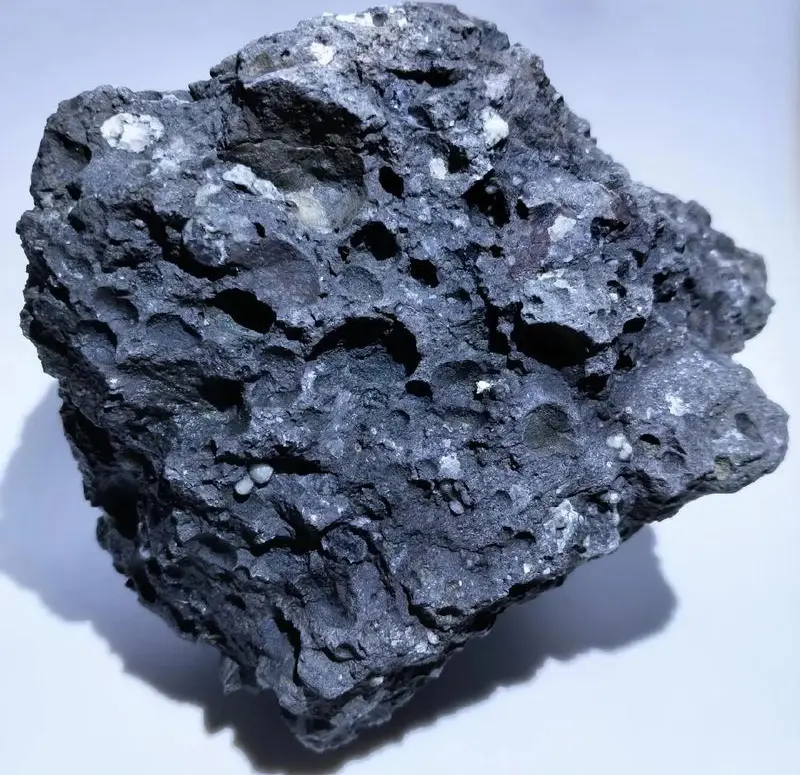
Understanding basalt compressive strength is not just a geological concept—it directly affects crusher selection, energy consumption, wear part life, and overall production cost.
What Is Basalt Compressive Strength?
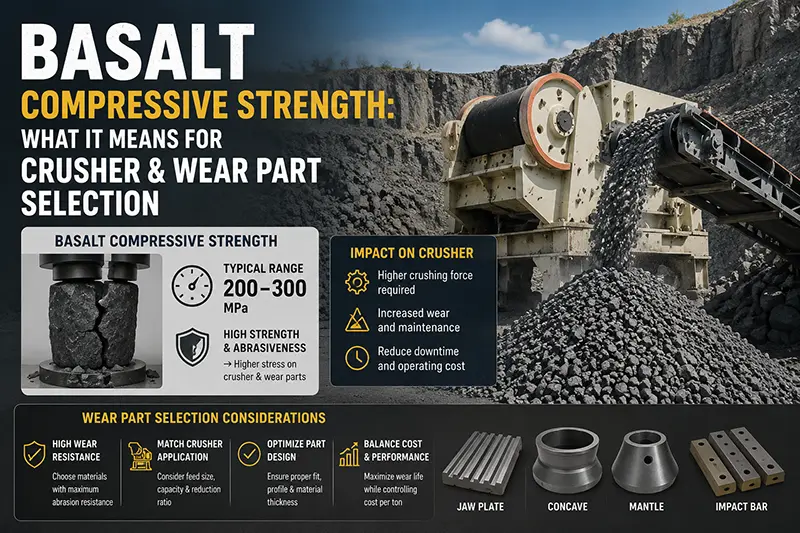
Compressive strength refers to the maximum pressure a material can withstand before failure.
For basalt, the typical compressive strength ranges:
100 MPa – 300 MPa (common range)
Some dense basalt formations can exceed 300 MPa
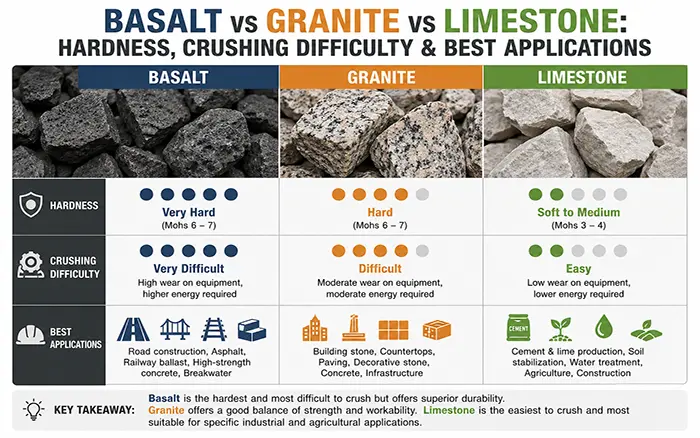
This places basalt in the category of hard rock materials, similar to granite and much harder than limestone or sandstone.
Why This Matters in Crushing
The higher the compressive strength:
The more crushing force required
The higher the energy consumption
The faster wear parts degrade
The more critical equipment selection becomes
Geological Characteristics That Affect Crushing Behavior
Basalt is not only strong—it is also structurally challenging.
1. Interlocking Crystal Structure
Basalt forms through rapid cooling of lava, creating a dense microcrystalline structure. This reduces natural fracture planes.
2. High Mineral Hardness
Common minerals include:
Pyroxene
Olivine
Plagioclase feldspar
These minerals increase abrasion resistance.
3. Low Porosity
Unlike limestone, basalt has very low porosity, making it harder for cracks to propagate during crushing.
Why Basalt Is One of the Hardest Rocks to Process
From a crushing perspective, basalt creates three major operational challenges:
1. High Crushing Force Requirement
Due to high compressive strength, crushers must generate higher pressure to break particles.
2. Severe Abrasive Wear
Basalt acts like a natural grinding material, causing rapid wear on:
Jaw plates
Cone liners
Blow bars
Feed liners
3. High Power Consumption
More energy is required per ton compared to softer rocks like limestone.
Crusher Selection for Basalt Processing
Selecting the correct crushing equipment is essential for balancing efficiency, cost, and wear life.
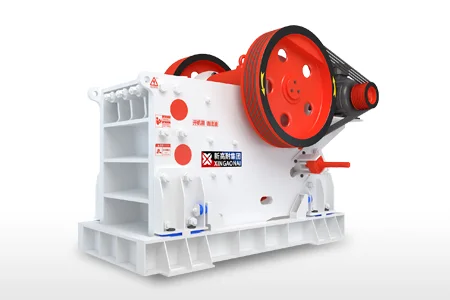
Primary Crushing: Jaw Crusher
Jaw crushers are the most common choice for basalt primary reduction.
Why it works:
Handles very high compressive strength
Suitable for large feed sizes
Simple and robust structure
Typical role in basalt line:
First stage crushing (large boulders → medium size)
Key requirement:
Heavy-duty design with reinforced jaw plates
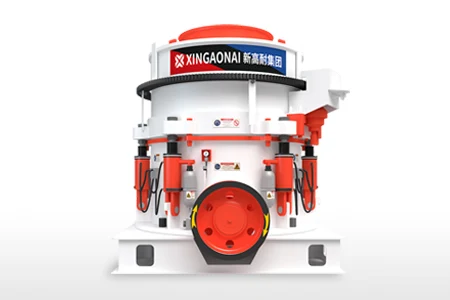
Secondary Crushing: Cone Crusher (Core Equipment)
Cone crushers are the most important machines in basalt processing plants.
Advantages:
High pressure resistance
Continuous crushing action
Lower wear rate than impact crushers
Better particle shape than jaw crushers
Why cone crushers are preferred:
Basalt’s hardness makes compression crushing more efficient than impact crushing.
Result:
Stable output
Better gradation control
Lower cost per ton in long-term operation
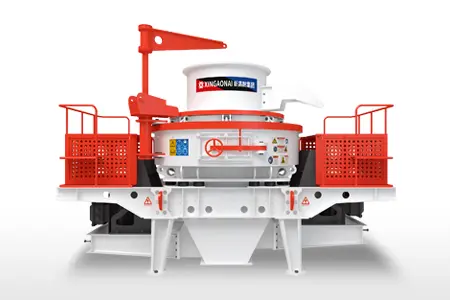
Tertiary Crushing: VSI Crusher (Shaping Stage)
VSI crushers are widely used for final shaping and sand production.
Main function:
Improve particle shape
Produce cubical aggregates
Optimize concrete-grade sand
Important note:
VSI crushers are not for reducing very large basalt pieces—they are for shaping pre-crushed material.
Wear Part Selection for Basalt Crushing
Wear parts are often the largest operating cost in basalt crushing plants.
1. Jaw Crusher Wear Parts
For basalt, jaw plates must withstand both impact and abrasion.
Recommended materials:
High manganese steel (Mn13, Mn18, Mn22)
Why manganese steel:
Work hardening effect
Improves surface hardness during operation
Good impact resistance
2. Cone Crusher Liners
Cone liners are critical for long-term performance.
Common materials:
High manganese steel
Modified alloy manganese
High-chrome composite materials (in special cases)
Selection depends on:
Feed size
Moisture content
Abrasiveness level
3. VSI Crusher Wear Parts
VSI crushers face extreme abrasion due to high-speed rock-on-rock impact.
Typical wear parts:
Rotor tips
Wear plates
Feed tubes
Recommended materials:
Tungsten carbide inserts
Ceramic composite materials
How Basalt Compressive Strength Impacts Production Cost
Basalt directly affects key economic factors:
1. Energy Cost
Higher compressive strength = higher crushing energy demand.
2. Wear Part Consumption
Abrasive nature leads to frequent replacement cycles.
3. Downtime Frequency
Poor material selection can significantly increase maintenance stops.
4. Output Efficiency
Incorrect crusher selection reduces throughput and product quality.
Crushing Flow Design for Basalt (Recommended Setup)
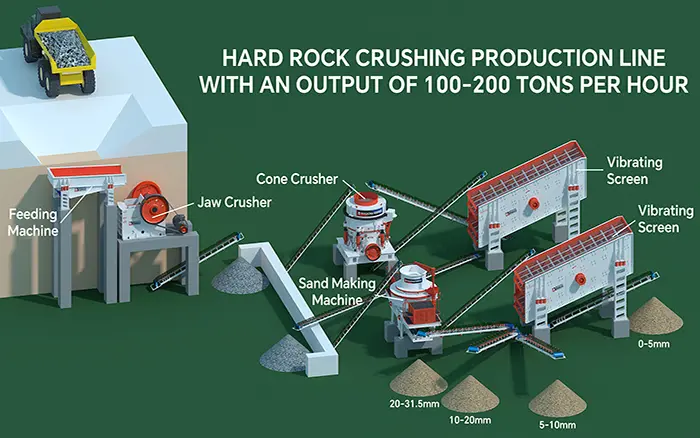
A typical high-efficiency basalt crushing plant includes:
Vibrating feeder – stable material feeding
Jaw crusher – primary crushing
Cone crusher – secondary crushing
VSI crusher – shaping and sand making
Vibrating screen – grading and separation
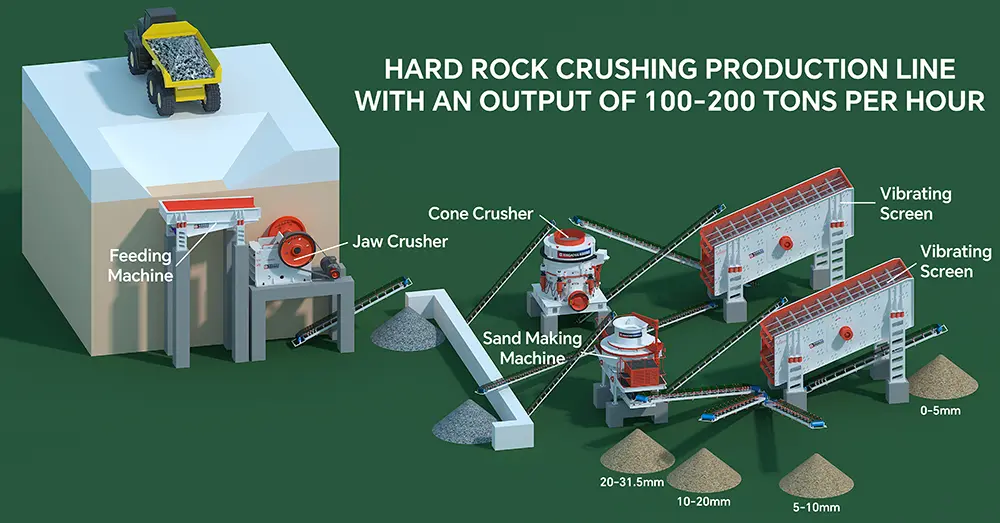
This multi-stage process ensures:
Lower wear cost per stage
Better product shape
Higher overall efficiency
Optimization Tips for Basalt Crushing Plants
To improve performance and reduce operating cost:
Avoid oversize feeding into cone crushers
Use staged crushing instead of single-stage reduction
Select wear parts based on real working conditions
Maintain consistent feed rate to avoid shock loading
Regularly inspect liners and replace before failure
Conclusion
Basalt compressive strength is a critical factor that determines how the material behaves in crushing operations. Its high strength and abrasiveness require a carefully designed crushing process and durable wear-resistant components.
A well-optimized basalt crushing system is not about using the strongest crusher alone—it is about matching crusher type, wear material, and process stage to rock properties.