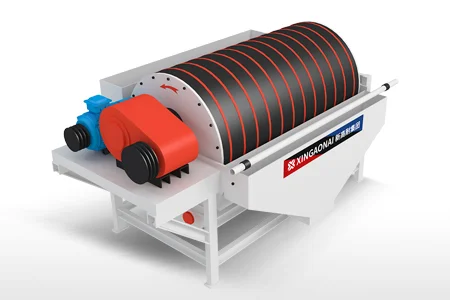
Magnetic separators are machines that remove magnetic materials from non-magnetic ones. They are used in mining, recycling, food processing, and many other industries. But not all magnetic separators work the same way. There are many types of magnetic separators, and each one is designed for a specific job. Some work on dry materials, others work on wet slurries. Some are weak and only catch large iron pieces, while others are very strong and can catch fine magnetic particles. This article explains the most common types of magnetic separators, how they work, and where to use them.
What Is a Magnetic Separator?
A magnetic separator uses a magnetic field to attract ferrous materials (iron, steel, and some alloys) and separate them from non-magnetic materials like sand, plastic, or food. The basic idea is simple: a magnet pulls the magnetic particles away while the non-magnetic material passes through. The design changes depending on whether the material is dry or wet, coarse or fine, and how strong the magnetic field needs to be.
Now let us look at the main types of magnetic separators.
1. Dry Drum Magnetic Separator
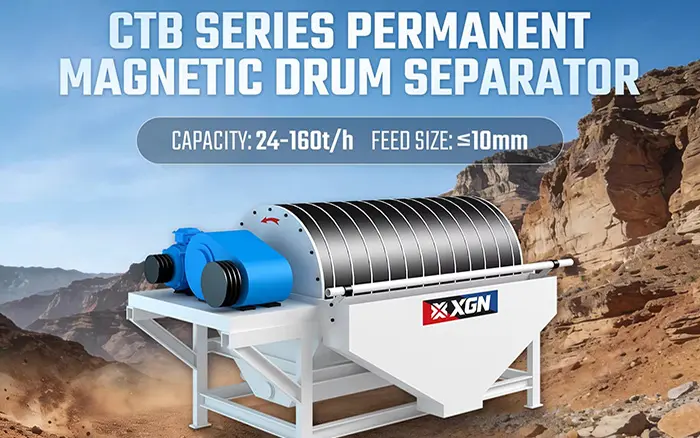
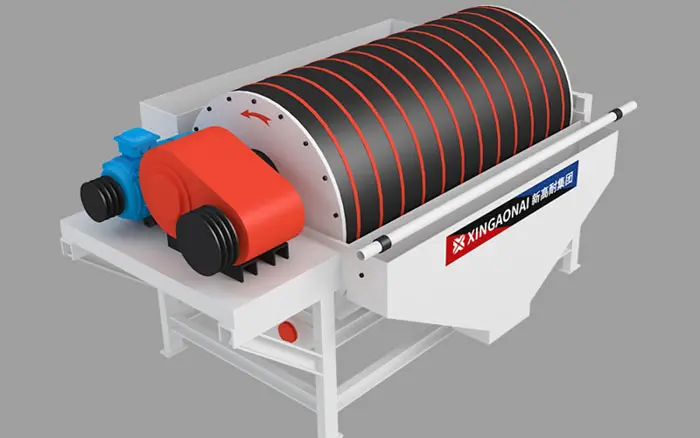
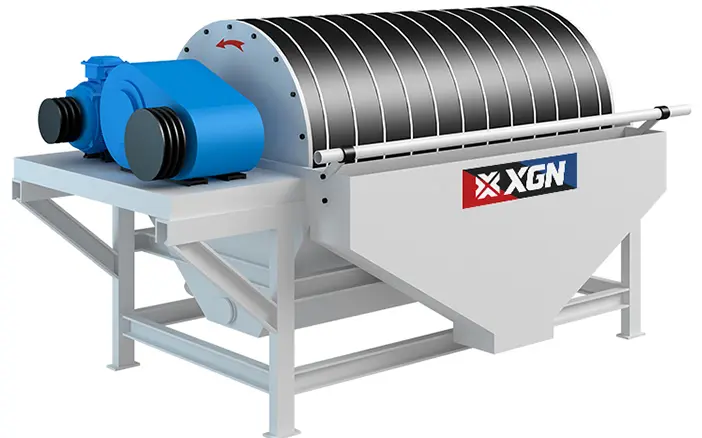
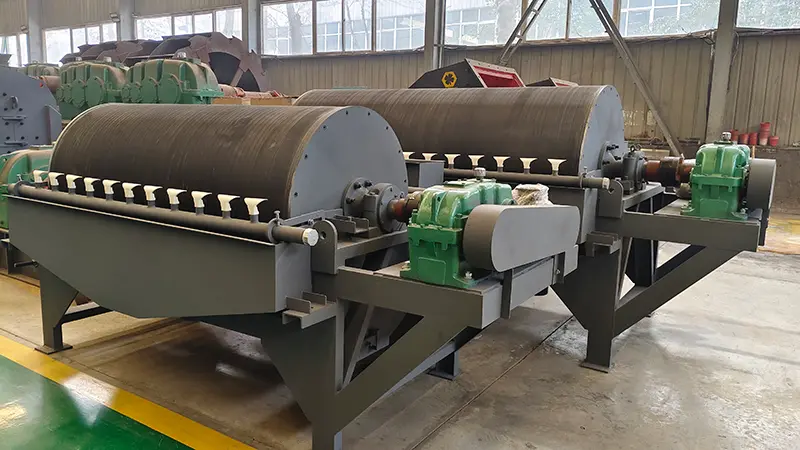
The dry drum magnetic separator is one of the most common types of magnetic separators for dry materials. It has a rotating drum with a stationary magnet inside. The dry material falls onto the drum. Magnetic particles stick to the drum and are carried away. Non-magnetic material falls off freely.
Best for: Dry, coarse materials like sand, slag, and mineral sands.
Pros: Simple, low maintenance, works well for high throughput.
Cons: Not good for wet materials or very fine particles.
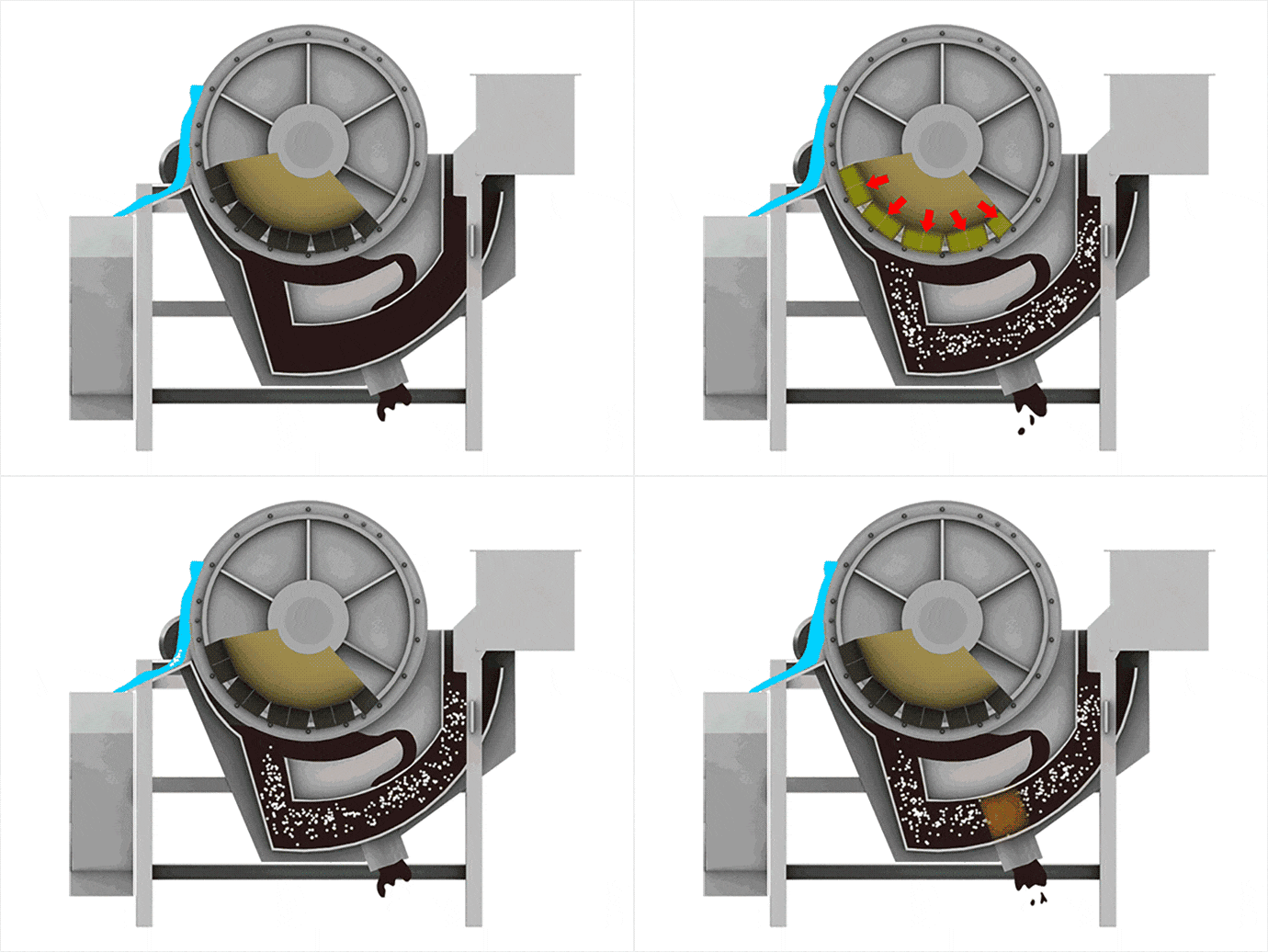
2. Wet Drum Magnetic Separator
The wet drum magnetic separator looks similar to the dry drum, but it handles wet slurries. It is widely used in mineral processing plants, especially for iron ore beneficiation. The slurry flows into a tank, and the rotating drum picks up magnetic particles. Non-magnetic material flows out.
Best for: Wet iron ore, magnetite, and dense media recovery.
Pros: High recovery of fine magnetic particles, low operating cost.
Cons: Only for wet applications.
3. Cross-Belt Magnetic Separator
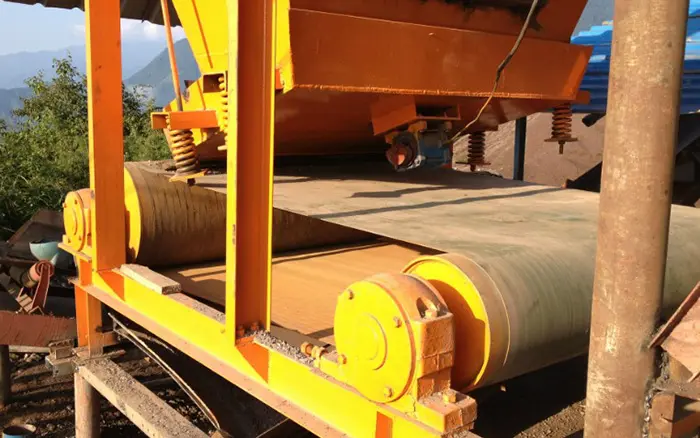
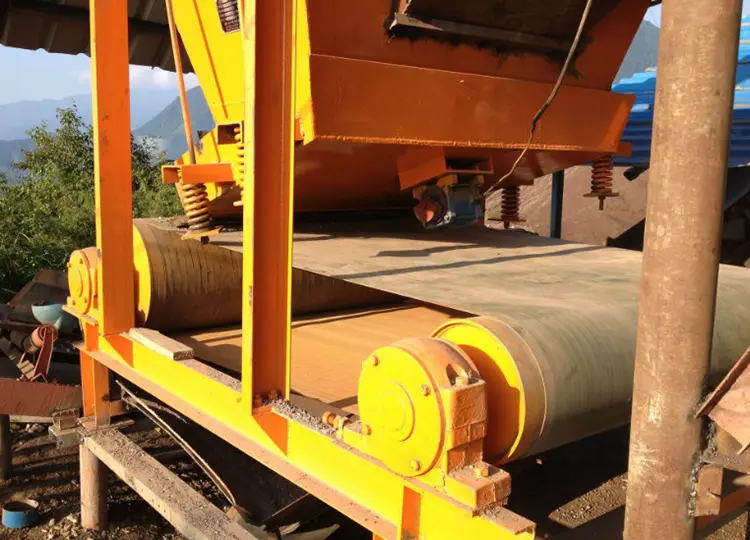
The cross-belt separator has a belt that moves across a conveyor belt (at a right angle). A strong magnet sits above the conveyor. As material passes under, the magnet pulls out tramp iron and drops it onto the cross-belt, which carries the iron away. This type is common for reclaiming metal from crusher feed or from shredded waste.
Best for: Removing tramp iron from material on a conveyor belt.
Pros: Effective for large pieces, works on moving belts.
Cons: Not for fine magnetic particles.
4. Overband Magnetic Separator
Overband magnetic separators hang above a conveyor belt. They have a strong magnet inside a self-cleaning belt system. As the conveyor moves, the magnet lifts ferrous material from the belt and the cleaning belt drops it to the side. This type is very popular in recycling and waste processing.
Best for: Removing iron from municipal waste, wood chips, slag, and glass.
Pros: Self-cleaning, high capacity, works with thick material layers.
Cons: Higher cost than some simpler types.
5. High-Intensity Magnetic Separator (WHIMS and HGMS)
For materials that are weakly magnetic (like hematite, ilmenite, or manganese), you need a much stronger magnetic field. That is where high-intensity magnetic separators come in. There are two main designs:
Wet High-Intensity Magnetic Separator (WHIMS): Uses a matrix of steel balls or rods in a magnetic field. Slurry passes through. Weakly magnetic particles stick to the matrix while non-magnetic material passes out.
High Gradient Magnetic Separator (HGMS): Similar to WHIMS but with even higher gradients. Used for very fine, weakly magnetic materials.
Best for: Beneficiation of hematite, ilmenite, and rare earth minerals.
Pros: Can recover very fine and weakly magnetic particles.
Cons: High capital cost, high energy consumption, complex maintenance.
6. Permanent Magnetic Plate Separator
This is a very simple type of magnetic separator. It is just a plate with permanent magnets inside. The plate is installed in a chute, duct, or at the end of a conveyor. Material slides over the plate. Magnetic particles stick to it. This works well for small amounts of tramp iron in free-flowing dry materials.
Best for: Protecting crushers or mills in food, chemical, and ceramic industries.
Pros: Low cost, no moving parts, easy to clean.
Cons: Requires manual cleaning, not for high flow rates.
7. Eddy Current Separator
The eddy current separator is not a traditional magnetic separator that attracts iron. Instead, it uses a high-speed rotating magnetic field to repel non-ferrous metals like aluminum, copper, and brass. It is very efficient for separating non-ferrous metals from non-metallic waste.
Best for: Recycling of aluminum cans, copper wire, and shredded cars.
Pros: Recovers valuable non-ferrous metals.
Cons: Does not work for iron or stainless steel.
8. Magnetic Pulley (Head Pulley)
A magnetic pulley replaces the head pulley of a conveyor belt. The pulley has permanent magnets inside. As material falls off the belt at the end, the magnetic pulley pulls ferrous items down into a separate chute. Non-magnetic material falls straight ahead.
Best for: Simple tramp iron removal in aggregate and recycling plants.
Pros: No extra motor or belt, compact design.
Cons: Less effective than overband separators for thick material layers.
How to Choose Among the Types of Magnetic Separators
To pick the right one from all the types of magnetic separators, answer these questions:
Is your material dry or wet? Dry: dry drum, plate, overband. Wet: wet drum, WHIMS.
What is the particle size? Coarse: drum, pulley. Fine: WHIMS, wet drum.
How magnetic is your target material? Strongly magnetic (magnetite): low-intensity drum. Weakly magnetic (hematite): high-intensity separator.
Do you need to remove tramp iron only? Use overband, pulley, or plate.
Do you need to separate non-ferrous metals? Use eddy current separator.
Common Applications by Industry
| Industry | Common types used |
|---|---|
| Iron ore mining | Wet drum, WHIMS |
| Mineral sands | Dry drum |
| Recycling (waste) | Overband, eddy current |
| Aggregate production | Magnetic pulley, overband |
| Food and chemical | Plate separator |
| Rare earth minerals | HGMS |
Conclusion
There are many types of magnetic separators, but they fall into a few basic categories: dry drum, wet drum, high-intensity, overband, plate, pulley, and eddy current. Each type solves a different separation problem. By understanding your material (dry or wet, coarse or fine, strongly or weakly magnetic) and your goal (remove tramp iron or recover valuable minerals), you can choose the best magnetic separator for your operation.