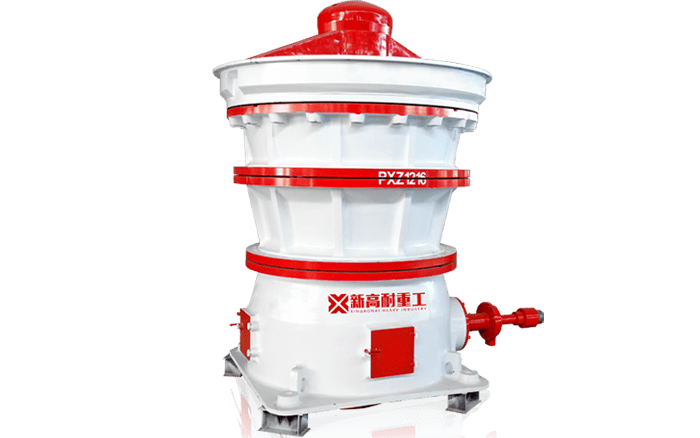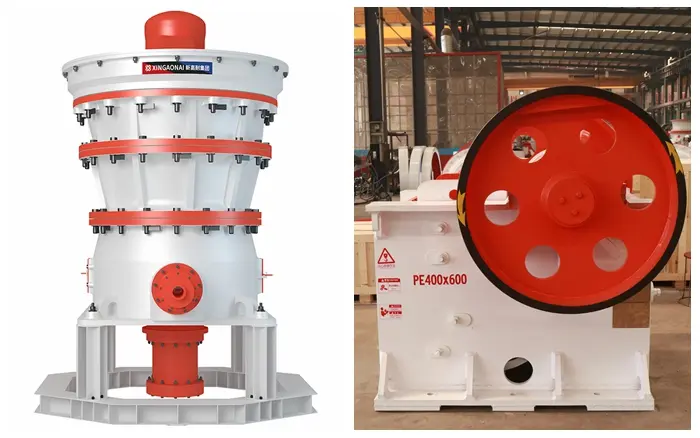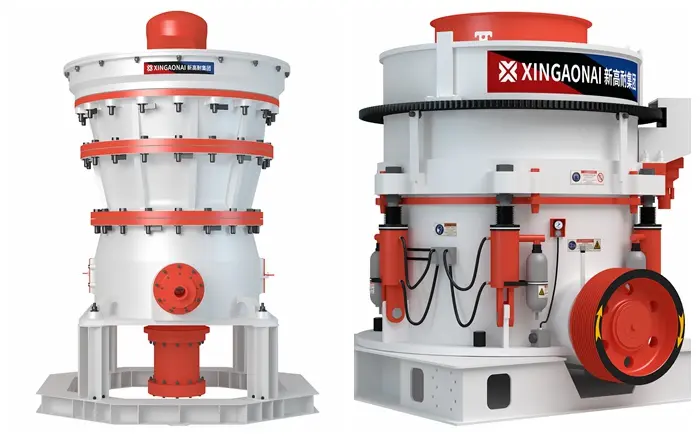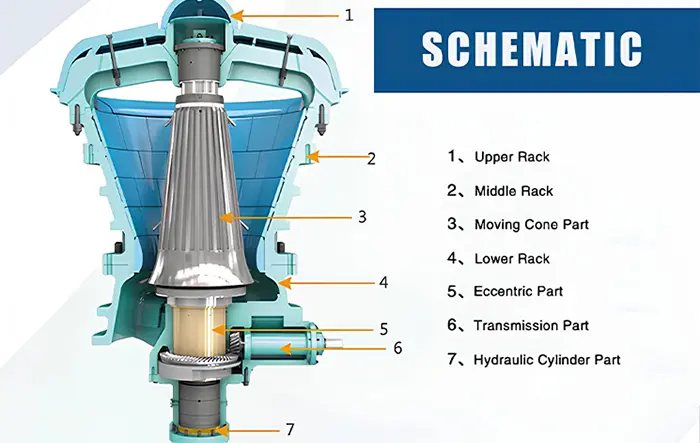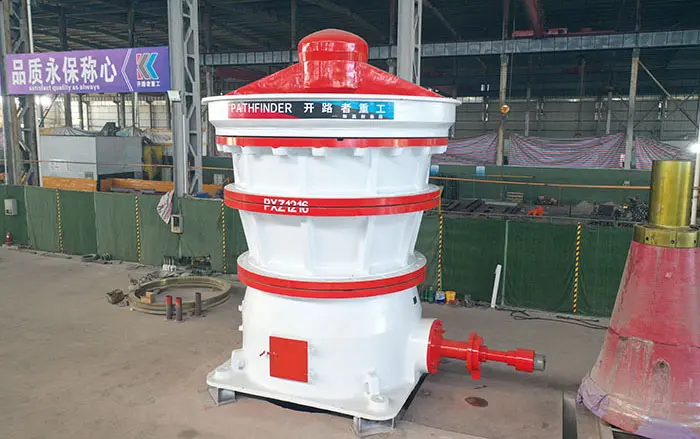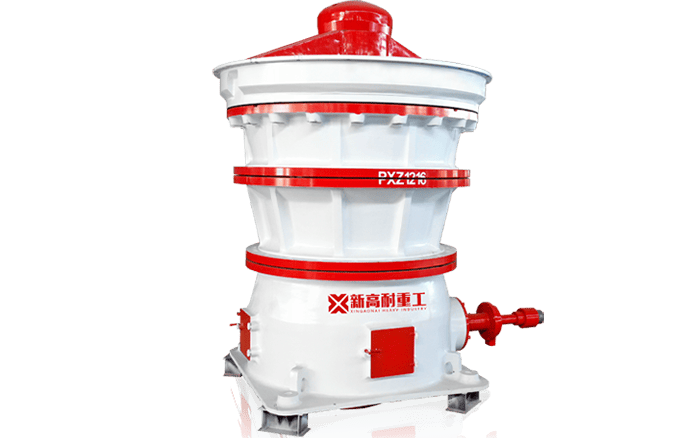
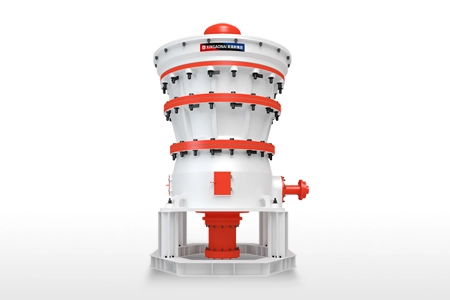
A gyratory crusher is a primary crushing machine designed for large mines, hard-rock quarries and high-capacity aggregate plants. Its continuous gyrating motion allows it to process large volumes of run-of-mine ore and blasted rock.
The main advantages of a gyratory crusher are high capacity, continuous material flow and a large feed opening. Its main disadvantages are high initial investment, complex installation and demanding maintenance requirements.
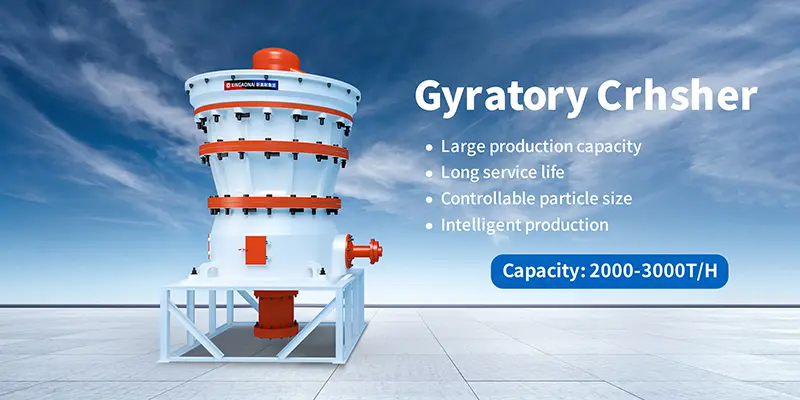
A gyratory crusher is therefore most suitable when the project’s production volume, operating life and feed conditions justify a large permanent primary-crushing station.
Gyratory Crusher Advantages and Disadvantages at a Glance
| Advantages | Disadvantages |
|---|---|
| High continuous capacity | High initial investment |
| Large feed opening | Complex civil construction |
| Suitable for hard rock and ore | Normally unsuitable for mobile plants |
| Stable discharge flow | Requires significant installation space |
| Efficient in large-scale operations | Maintenance work requires specialized planning |
| Hydraulic CSS adjustment | Wear parts are large and difficult to handle |
| Can reduce parallel equipment count | Poor economics at low utilization |
| Long-term value in suitable projects | Wet or sticky feed may cause operating problems |
The importance of each factor depends on the material, required capacity, plant layout and expected operating life.
Advantages of a Gyratory Crusher
1. High Production Capacity
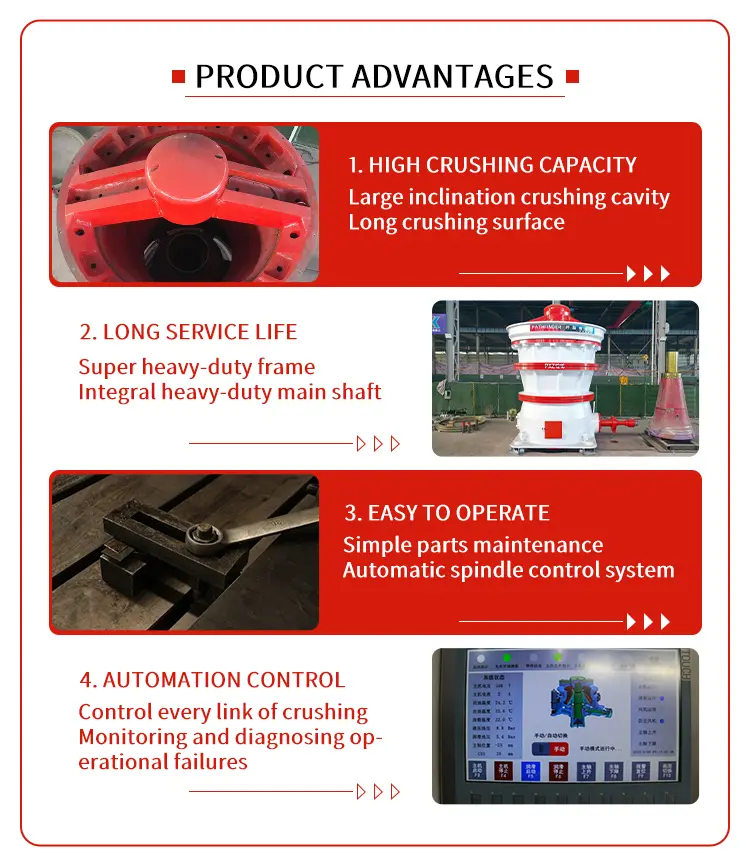
A gyratory crusher uses continuous gyrating motion. While material is being compressed on one side of the crushing chamber, crushed material can move downward on the opposite side.
This continuous process allows a correctly selected machine to handle high throughput in suitable applications.
High capacity is particularly valuable in:
Large open-pit mines
Underground mine crushing stations
Iron and copper ore plants
Hard-rock quarries
Long-life aggregate projects
Actual capacity depends on the crusher model, chamber profile, CSS, feed gradation, bulk density and material properties.
2. Continuous Material Flow
Unlike a jaw crusher’s reciprocating crushing cycle, a gyratory crusher continuously compresses and discharges material around different areas of the chamber.
This can provide more stable feed to:
Discharge conveyors
Surge bins
Secondary cone crushers
Ore stockpiles
Grinding circuits
The final flow stability also depends on the feeding, conveying and downstream equipment.
3. Large Feed Opening
Large primary gyratory crushers can accept run-of-mine ore and blasted rock. This makes them suitable for permanent primary-crushing stations handling large feed material.
However, the feed-opening dimension is not the same as the maximum allowable feed size. Oversized boulders can still cause bridging or unstable feeding.
Depending on the project, the plant may require:
Dump pocket
Rock breaker
Apron feeder
Grizzly
Metal detector
Feed-control system
4. Suitable for Hard and Abrasive Material
Gyratory crushers use compression rather than impact to reduce material. They can process:
Iron ore
Copper ore
Gold ore
Granite
Basalt
Quartzite
Other hard rock and mineral materials
Material abrasiveness and silica content still affect mantle and concave consumption. Wear-part material and chamber configuration must be selected for the actual feed.
5. Stable Product for Secondary Crushing
A properly maintained crushing chamber and closed-side setting can produce a relatively stable primary-crusher discharge.
Stable output helps maintain consistent loading on the downstream cone crusher, conveyor or grinding process.
Product size is affected by:
Closed-side setting
Crushing-chamber profile
Eccentric throw
Feed gradation
Liner condition
Material properties
6. Hydraulic CSS Adjustment
The hydraulic system can raise or lower the main shaft to adjust the closed-side setting.
This allows operators to:
Control product size
Compensate for liner wear
Maintain downstream feed requirements
Keep the crusher within its permitted operating range
A smaller CSS does not automatically improve performance. An excessively small setting may reduce capacity and increase power consumption and wear.
7. Overload Protection
Depending on the crusher design, the hydraulic system can help increase the discharge opening when tramp metal or another uncrushable object enters the chamber.
This reduces the risk of serious damage but does not eliminate it. Upstream metal detection and removal systems are still recommended.
8. Fewer Primary Crushers in High-Capacity Plants
In suitable large-scale projects, one correctly selected gyratory crusher may provide the required primary-crushing capacity without multiple parallel jaw crushers.
This may reduce:
Equipment count
Transfer points
Parallel feeding systems
Number of drive systems
Plant footprint
The economic benefit should be confirmed using the complete plant design and lifecycle cost.
9. Lower Unit Cost at High Utilization
A gyratory crusher can provide a competitive processing cost per tonne when:
Annual production is high
Feed supply is continuous
Equipment utilization is high
The project has a long operating life
Maintenance is properly planned
Downstream equipment can use the available capacity
High nominal capacity alone does not guarantee a low cost per tonne.
Disadvantages of a Gyratory Crusher
1. High Initial Investment
The cost of a gyratory crushing station includes more than the crusher itself.
A complete investment may include:
Crusher equipment
Reinforced foundation
Structural steelwork
Dump pocket
Rock breaker
Feeding equipment
Discharge conveyor
Lubrication and cooling system
Electrical control system
Dust-control equipment
Maintenance crane
For a small or short-term project, this investment may not be economically justified.
2. Complex Installation
A gyratory crusher normally requires a permanent installation and substantial civil engineering.
The design must consider:
Static and dynamic loads
Foundation conditions
Crusher elevation
Discharge clearance
Equipment assembly
Maintenance access
Liner handling
Lifting equipment
Local construction standards
Installation is generally more complex than for a typical jaw crusher.
3. Limited Mobility
Large gyratory crushers are not normally selected for mobile or frequently relocated crushing plants.
Projects requiring mobility or rapid relocation are usually better served by:
Mobile jaw crushers
Modular jaw crushing stations
Semi-mobile primary crushing systems
A gyratory crusher is most suitable for a fixed, long-term installation.
4. Large Space and Height Requirements
The crusher, dump pocket and discharge arrangement require considerable vertical and structural space.
Underground installations may require extensive excavation for:
Crusher chamber
Feed access
Discharge conveyor
Maintenance levels
Lifting equipment
Ventilation and dust extraction
Available site space must be evaluated early in the project.
5. Specialized Maintenance Requirements
Maintenance work involves large components, stored energy and restricted internal areas.
Maintenance may require:
Trained technicians
Lockout/tagout procedures
Confined-space controls
Heavy lifting equipment
Specialized measuring tools
Oil analysis
Vibration monitoring
Planned shutdown periods
A practical schedule is available in the gyratory crusher maintenance checklist.
6. Large and Heavy Wear Parts
Mantles, concave segments and internal liners can be heavy and difficult to handle.
Wear-part replacement requires:
Correct part identification
Approved lifting tools
Safe access
Trained personnel
Planned spare-parts inventory
Sufficient shutdown time
Wear life varies according to abrasiveness, silica content, feed distribution, CSS and operating conditions. See the gyratory crusher wear parts guide.
7. Poor Economics at Low Utilization
A high-capacity crusher may have a high cost per tonne if the plant cannot keep it consistently loaded.
Low utilization may result from:
Limited ore supply
Intermittent operation
Downstream bottlenecks
Short project life
Seasonal production
Oversized equipment selection
The crusher should be selected according to realistic production requirements, not the highest possible capacity.
8. Sensitive to Uneven Feeding
Long-term one-sided feeding can cause:
Uneven mantle and concave wear
Unstable motor load
Reduced capacity
Coarser product
Shorter liner life
The dump pocket, feed arrangement and material distribution must be designed to provide stable chamber loading.
9. Challenges With Wet or Sticky Feed
Material containing excessive moisture or clay may build up in the feed area or crushing chamber.
Possible effects include:
Bridging
Reduced capacity
Unstable feeding
Material buildup
Difficult cleaning
Discharge restrictions
Wet or sticky material should be tested before final equipment selection.
Gyratory Crusher vs Jaw Crusher
Both machines are used for primary crushing, but they are suited to different project conditions.
| Selection factor | Gyratory crusher | Jaw crusher |
|---|---|---|
| Typical plant size | Large | Small to large |
| Operation | Continuous gyrating motion | Reciprocating crushing |
| Capacity | Best suited to high throughput | Flexible capacity range |
| Installation | More complex | Generally simpler |
| Initial investment | Higher | Generally lower |
| Mobility | Normally stationary | Fixed and mobile options |
| Feed conditions | Best with stable feed supply | More flexible for variable projects |
| Typical project life | Long-term operation | Short- and long-term projects |
For the complete comparison, see jaw crusher vs gyratory crusher.
When Should You Choose a Gyratory Crusher?
A gyratory crusher should be considered when:
High continuous capacity is required.
The project handles large run-of-mine material.
The plant has a long expected operating life.
Feed supply is stable.
A permanent crushing station is planned.
Sufficient foundation and installation space is available.
Downstream equipment can use the available capacity.
The lifecycle economics justify the investment.
Typical applications include large iron ore, copper ore and hard-rock mining operations.
When Should You Choose a Jaw Crusher Instead?
A jaw crusher may be more appropriate when:
Capacity requirements are lower.
Initial budget is limited.
The installation must be simple.
Equipment must be mobile or relocated.
Feed supply is intermittent.
The project has a shorter operating life.
Maintenance and lifting resources are limited.
The material source or plant layout may change.
The selection should be based on total project requirements rather than assuming one crusher type is always better.
How to Evaluate the Total Cost
Compare the complete lifecycle cost rather than the purchase price alone.
Include:
Equipment price
Civil construction
Installation
Power consumption
Wear parts
Maintenance labour
Spare-parts inventory
Planned shutdown time
Equipment availability
Annual production
Project life
A high initial investment may be justified in a large operation if the machine maintains high utilization and reduces the number of parallel crushing units.
Information Required for Crusher Selection
Provide the manufacturer with:
Material type
Maximum feed size
Feed-size distribution
Required capacity
Required discharge size
Bulk density
Compressive strength
Abrasiveness and silica content
Moisture and clay content
Daily operating hours
Expected project life
Feeding method
Downstream equipment
Project location and elevation
The manufacturer should confirm the feed opening, chamber profile, CSS range, power requirement, expected capacity and auxiliary equipment.
The X Series Primary Gyratory Crusher is available in multiple sizes for large mining and quarrying projects. Final model selection should be based on actual feed and operating data.
Conclusion
A gyratory crusher offers high capacity, continuous material flow, large feed acceptance and reliable primary crushing of hard rock. Its limitations include high investment, complex installation, demanding maintenance and limited mobility.
It is best suited to large, long-life operations with stable feed supply and high annual production. For smaller, mobile or lower-utilization projects, a jaw crusher may provide a more economical solution.
The final decision should be based on feed characteristics, production requirements, plant layout and total lifecycle cost.