Selecting the right primary crusher is one of the most important decisions when designing a mining or aggregate processing plant. The primary crusher determines the feed size for downstream equipment, influences production efficiency, and significantly affects overall operating costs.
Among the most widely used primary crushers are jaw crushers and gyratory crushers. Both are compression crushers capable of handling large rocks, but they differ considerably in design, operating principle, capacity, installation requirements, and ideal applications.
Understanding the difference between a jaw crusher and a gyratory crusher helps plant designers and operators choose the most suitable machine for their production requirements. This guide compares the two crushers in detail, including their working principles, performance, advantages, disadvantages, costs, and typical applications.
What Is a Jaw Crusher?
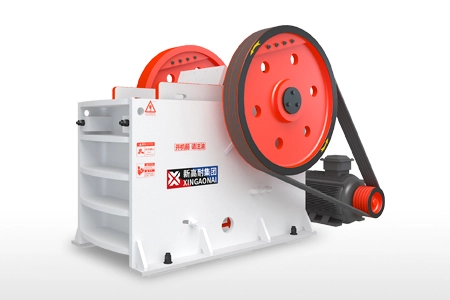
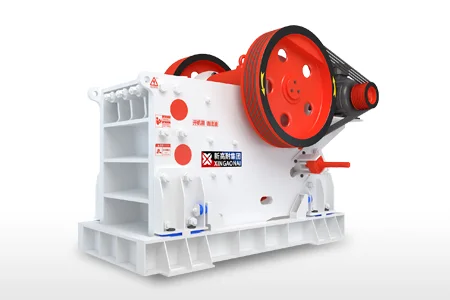
A jaw crusher is a compression-type crusher that uses a fixed jaw plate and a moving jaw plate to crush material.
As the movable jaw moves back and forth, rocks are compressed between the two jaw plates until they are small enough to pass through the discharge opening.
Jaw crushers are known for their simple structure, reliable operation, and relatively low investment cost. They are widely used as primary crushers in mining, quarrying, recycling, and construction projects.
Typical feed size:
Up to 1,200 mm
Typical capacity:
50–1,500 TPH
Common applications include:
What Is a Gyratory Crusher?
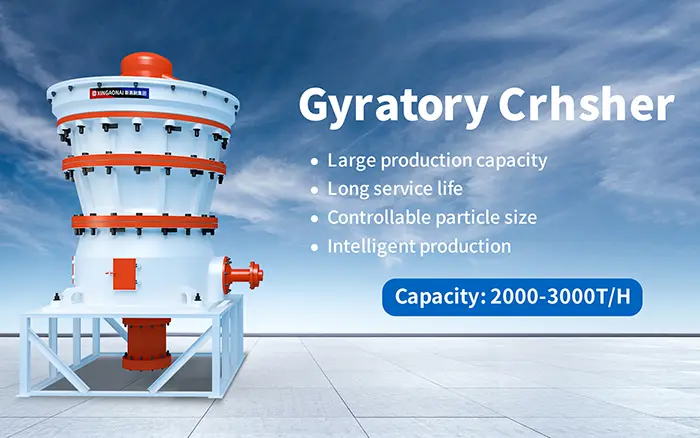
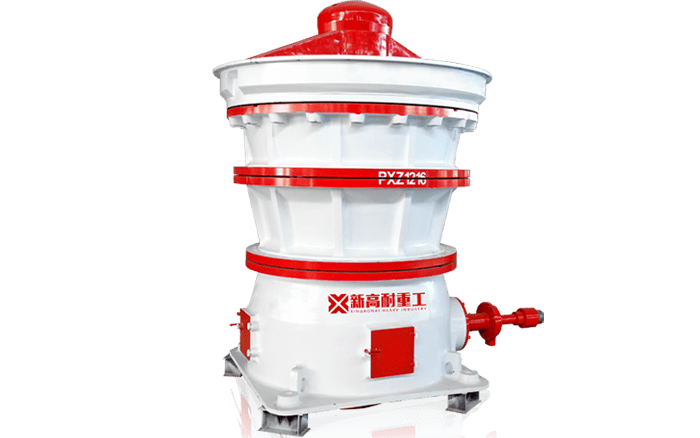
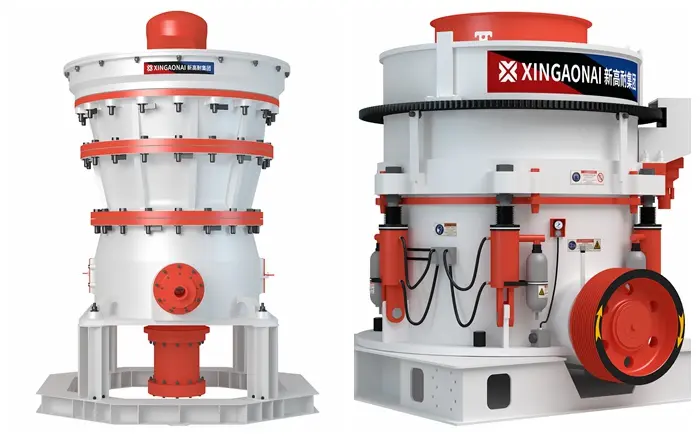
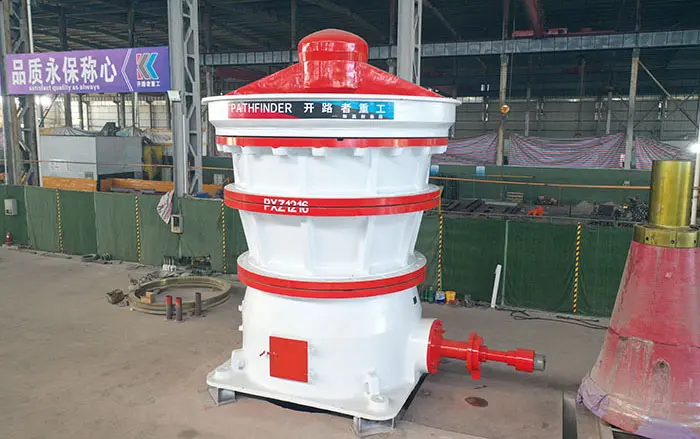
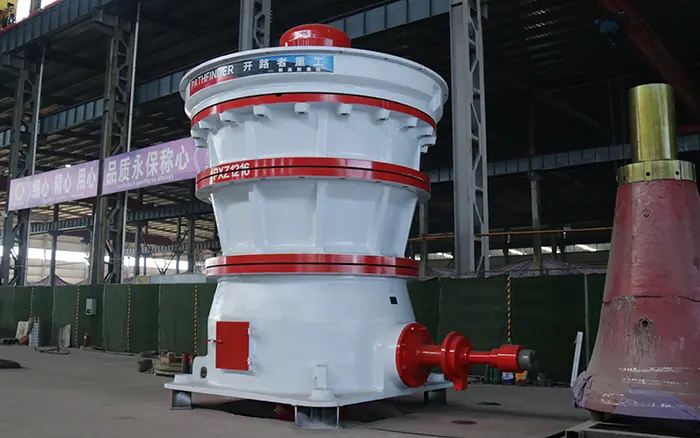
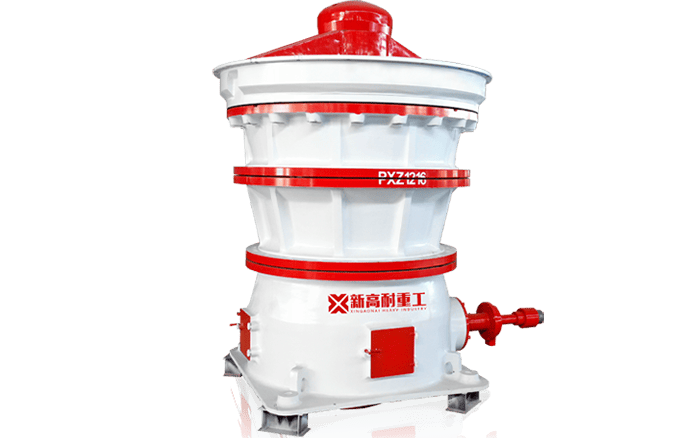
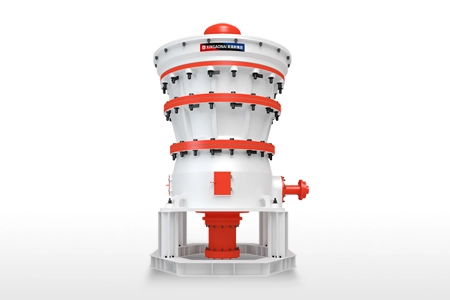
A gyratory crusher is a heavy-duty primary crusher designed for continuous crushing of large rocks.
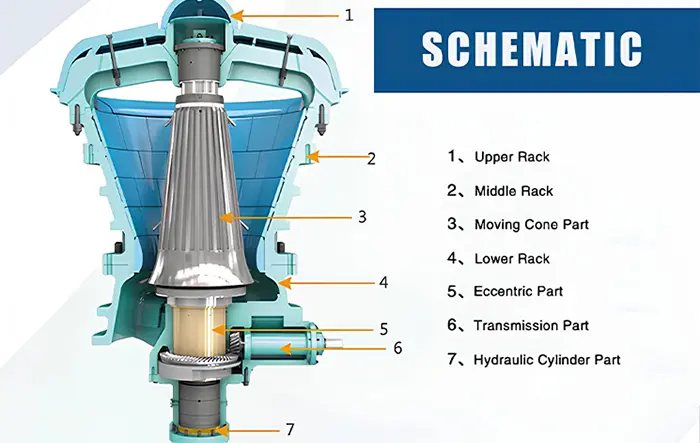
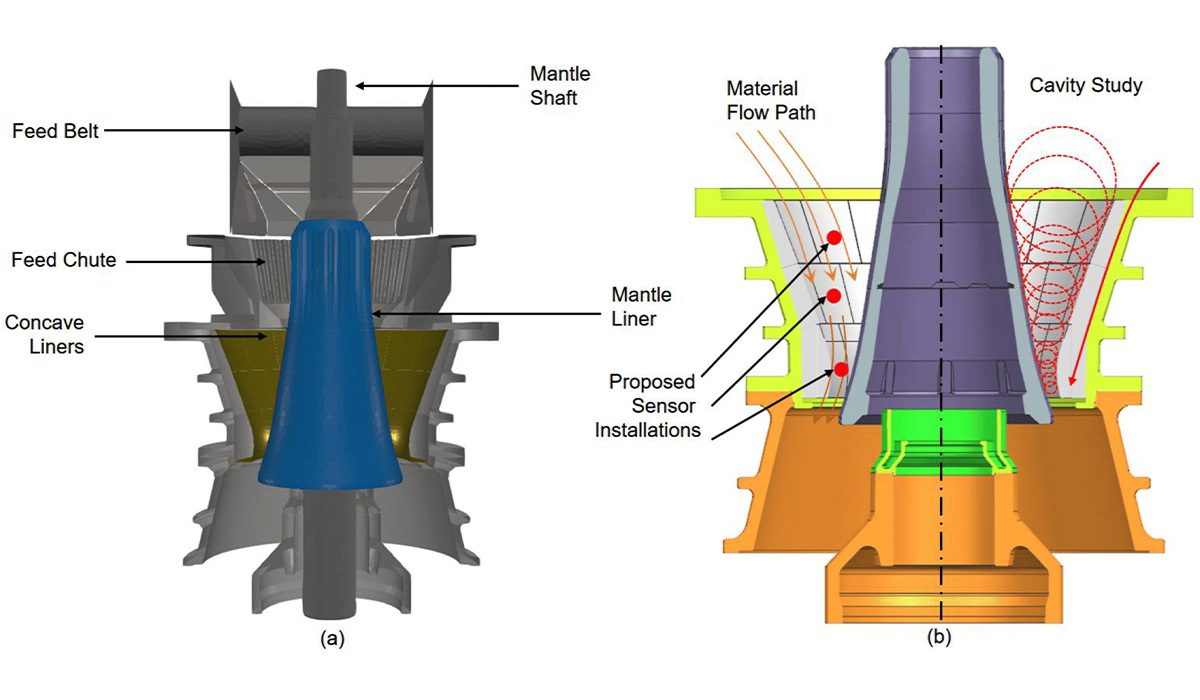
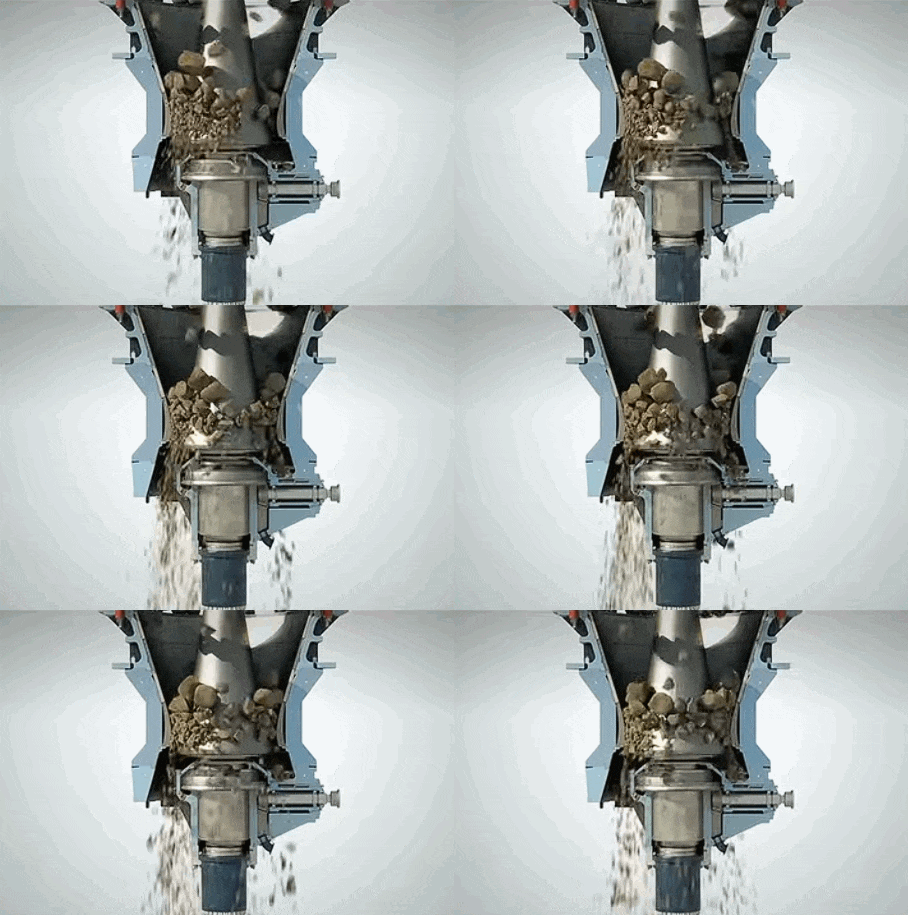
Instead of a moving jaw, it uses a conical mantle that gyrates within a stationary concave. Material is continuously compressed and crushed as it moves downward through the crushing chamber.
Because crushing occurs continuously, gyratory crushers provide significantly higher capacities than jaw crushers and are commonly installed in large mining operations.
Typical feed size:
Up to 1,500 mm
Typical capacity:
1,000–10,000 TPH
Typical applications include:
Iron ore mining
Copper mining
Gold mining
High-capacity aggregate plants
Jaw Crusher Working Principle
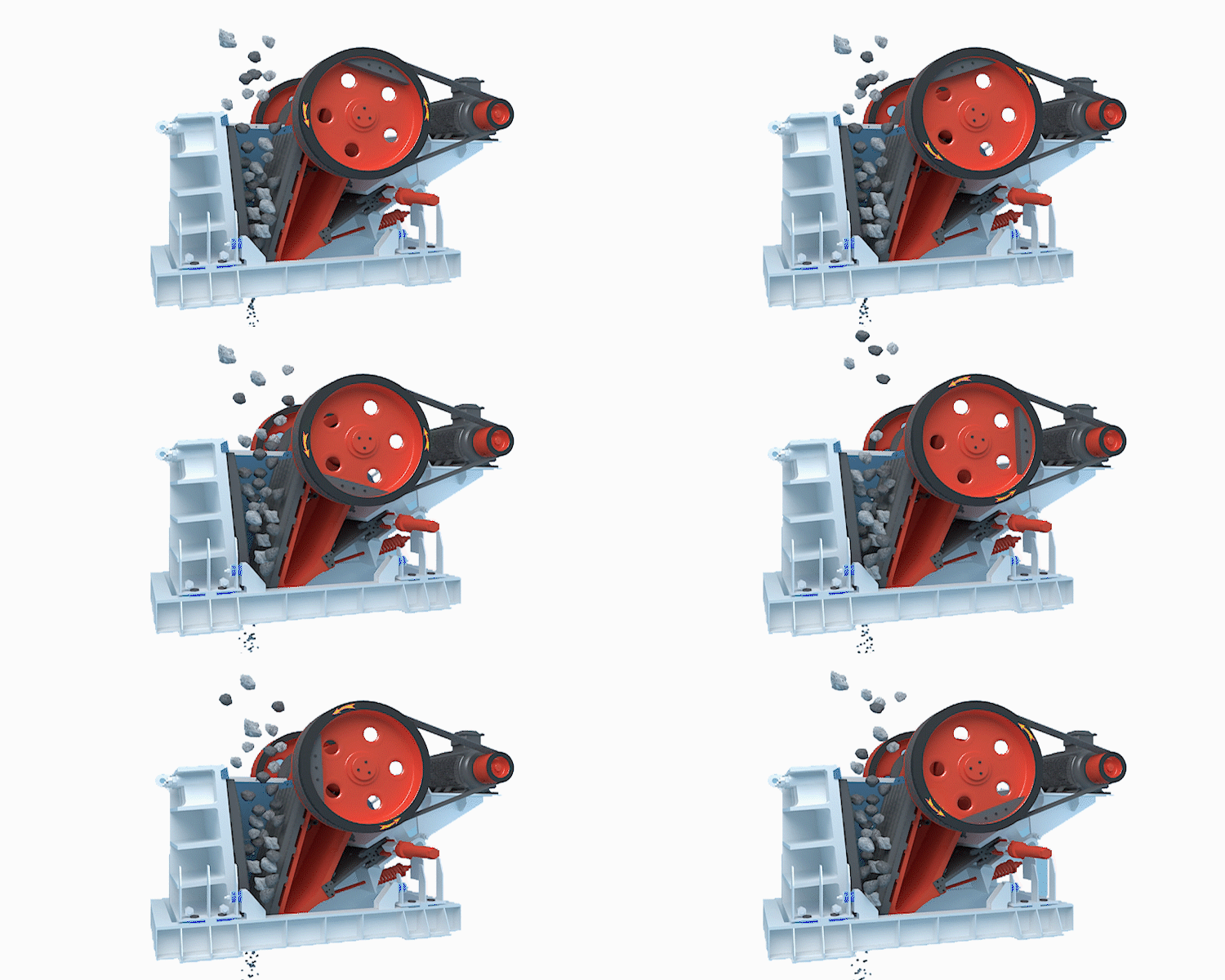
A jaw crusher operates using a reciprocating compression motion.
The crushing process follows these steps:
Large rocks enter the crushing chamber through the feed opening.
The movable jaw moves toward the fixed jaw.
Material is compressed and fractured.
The movable jaw retreats.
Crushed material moves downward by gravity.
The cycle repeats until particles are small enough to exit through the discharge opening.
This intermittent crushing action makes jaw crushers highly reliable and suitable for various rock types.
Gyratory Crusher Working Principle
A gyratory crusher works through continuous compression.
The eccentric drive causes the mantle to gyrate inside the concave, creating a continuously changing crushing gap.
The crushing process is continuous:
Material enters the top of the crusher.
The mantle compresses rock against the concave.
Broken material moves downward automatically.
Crushing continues until the material reaches the desired size.
Product is discharged from the bottom.
Continuous crushing allows gyratory crushers to process much larger volumes of material than jaw crushers.
Difference Between Jaw Crusher and Gyratory Crusher
Although both are primary crushers, their structural design and performance differ significantly.
| Feature | Jaw Crusher | Gyratory Crusher |
|---|---|---|
| Crushing Principle | Reciprocating compression | Continuous compression |
| Crushing Action | Intermittent | Continuous |
| Feed Size | Up to 1,200 mm | Up to 1,500 mm |
| Capacity | 50–1,500 TPH | 1,000–10,000 TPH |
| Product Size | Coarser | More uniform |
| Energy Efficiency | Good | Excellent for large capacities |
| Installation | Simple | Complex |
| Foundation | Smaller | Larger |
| Initial Investment | Lower | Higher |
| Maintenance | Easier | More complex |
| Best Application | Small to medium plants | Large mining operations |
Capacity Comparison
Production capacity is one of the biggest differences.
Jaw Crusher
Typical capacity:
50–1,500 TPH
Suitable for:
Small quarries
Medium-sized aggregate plants
Recycling facilities
Gyratory Crusher
Typical capacity:
1,000–10,000 TPH
Suitable for:
Large mines
High-capacity crushing stations
Continuous production lines
If extremely high production is required, a gyratory crusher is generally the better option.
Feed Size Comparison
Both machines can handle large rocks, but gyratory crushers typically accept larger feed sizes.
Jaw Crusher
Maximum feed:
Approximately 1,200 mm
Gyratory Crusher
Maximum feed:
Approximately 1,500 mm
This allows gyratory crushers to process larger blasted rock directly from the mine.
Product Size Comparison
Jaw Crusher
Produces coarse material with a wider particle size distribution.
Typical discharge size:
100–300 mm
Gyratory Crusher
Produces a more uniform coarse product.
Typical discharge size:
150–300 mm
The more consistent product size from a gyratory crusher can improve the performance of downstream secondary crushers.
Installation and Space Requirements
Jaw Crusher
Advantages include:
Compact footprint
Simple civil foundation
Easy transportation
Faster installation
Jaw crushers are commonly used in both stationary and mobile crushing plants.
Gyratory Crusher
Requires:
Deep concrete foundation
Large installation area
Heavy lifting equipment
Longer installation time
Most gyratory crushers are installed in permanent mining facilities.
Maintenance Comparison
Jaw Crusher
Routine maintenance includes:
Replacing jaw plates
Lubricating bearings
Checking toggle plates
Adjusting discharge settings
Most maintenance tasks are relatively straightforward.
Gyratory Crusher
Maintenance typically involves:
Replacing mantles and concaves
Inspecting the main shaft
Maintaining lubrication systems
Using heavy lifting equipment for liner replacement
Maintenance is generally more specialized and time-consuming.
Cost Comparison
| Cost Item | Jaw Crusher | Gyratory Crusher |
|---|---|---|
| Initial Investment | Low | High |
| Installation Cost | Low | High |
| Operating Cost | Moderate | Lower per ton at high capacity |
| Maintenance Cost | Lower | Higher |
| Spare Parts | Less expensive | More expensive |
For small and medium-sized plants, jaw crushers usually provide the lowest total investment.
For very large operations, gyratory crushers often achieve a lower cost per ton despite their higher purchase price.
Applications Comparison
Jaw Crusher Applications
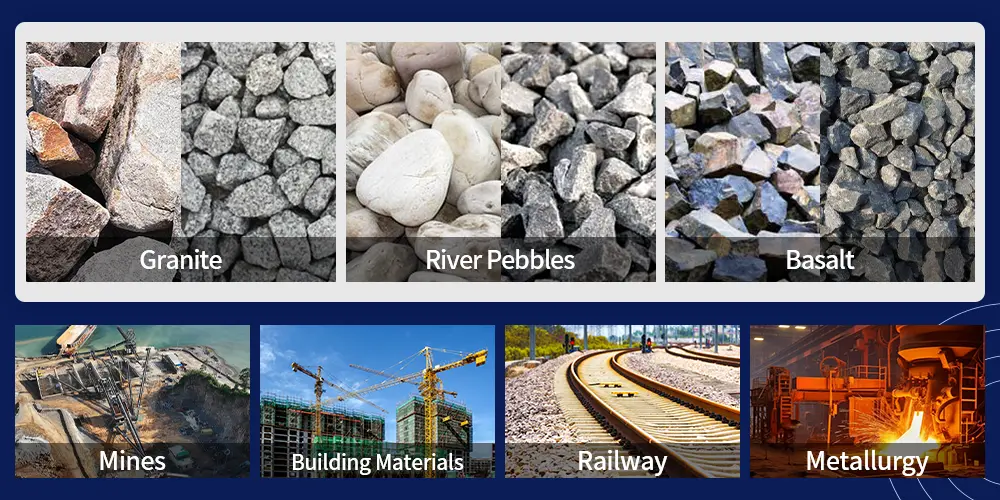
Jaw crushers are widely used for:
Quarrying
Aggregate production
Road construction
Recycling
Small and medium mining projects
Mobile crushing plants
Gyratory Crusher Applications
Gyratory crushers are primarily used in:
Open-pit mining
Underground mining
Iron ore processing
Copper mining
Large limestone operations
High-capacity crushing plants
Advantages and Disadvantages
Jaw Crusher
Advantages
Lower purchase cost
Suitable for mobile crushing plants
Flexible installation
Disadvantages
Lower production capacity
Intermittent crushing
Higher wear under extremely high-capacity conditions
Gyratory Crusher
Advantages
Extremely high capacity
Continuous crushing
Handles larger feed sizes
Stable operation
Lower cost per ton in large operations
Disadvantages
Higher capital investment
Complex installation
Larger footprint
More demanding maintenance
Which Crusher Should You Choose?
Choose a jaw crusher if:
Your plant capacity is below 1,500 TPH.
You need a cost-effective primary crusher.
You require a compact or mobile crushing solution.
Your project has limited installation space or budget.
Choose a gyratory crusher if:
Production exceeds 1,000 TPH.
You process very large blasted rocks.
Your operation runs continuously.
You need the lowest long-term crushing cost per ton.
Your project is a large-scale mining operation.
Can Jaw Crushers and Gyratory Crushers Be Used Together?
In most crushing plants, only one primary crusher is used. A jaw crusher and a gyratory crusher are alternatives, not complementary machines at the primary stage.
Typical crushing circuits include:
Option 1
Jaw Crusher
Cone Crusher
Cone Crusher
VSI Sand Maker (optional)
Option 2
Gyratory Crusher
Cone Crusher
Cone Crusher
Vertical Shaft Impact Crusher (optional)
Both configurations can produce high-quality aggregates or mineral products, depending on production capacity and project requirements.
Selecting the Best Primary Crusher
The difference between a jaw crusher and a gyratory crusher extends far beyond their appearance. Jaw crushers offer simplicity, lower investment, and excellent flexibility, making them ideal for small to medium-sized operations and mobile crushing plants. Gyratory crushers, on the other hand, deliver unmatched capacity, continuous crushing, and lower operating costs per ton in large mining projects.
The right choice depends on feed size, required capacity, installation conditions, project budget, and long-term production goals. By evaluating these factors carefully, operators can select the most efficient primary crusher for reliable performance and maximum return on investment.