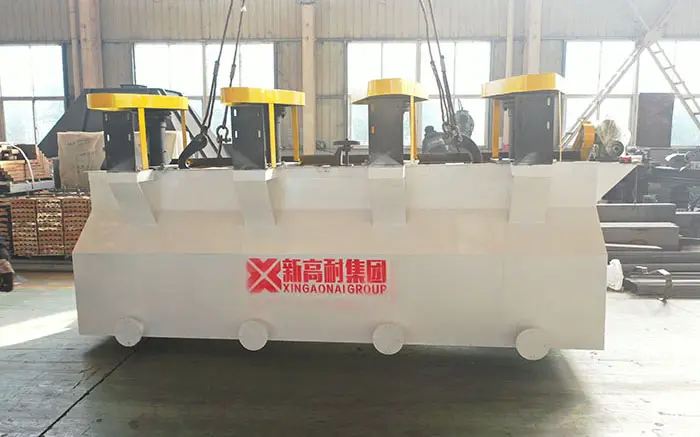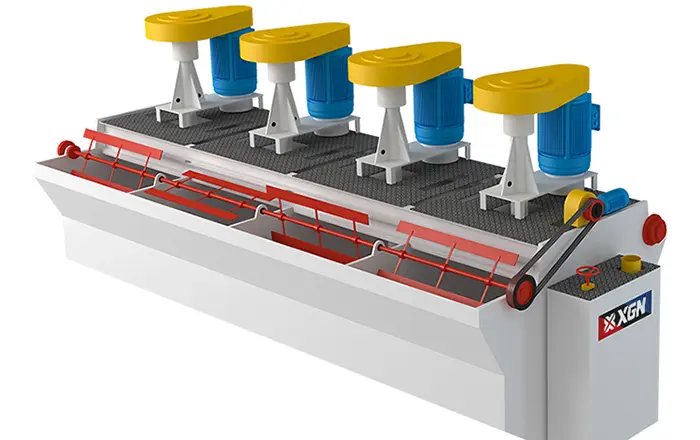
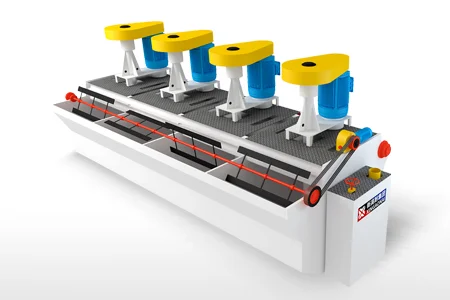
Flotation machines are widely used to separate valuable minerals from waste rock. They work by making valuable particles attach to air bubbles and float to the surface. But not every flotation machine runs at high efficiency. Many factors can lower the recovery rate or the grade of the concentrate. So the question is: what factors affect flotation machine efficiency? This article gives a simple answer. It lists the seven most important factors and explains how each one changes the flotation result.
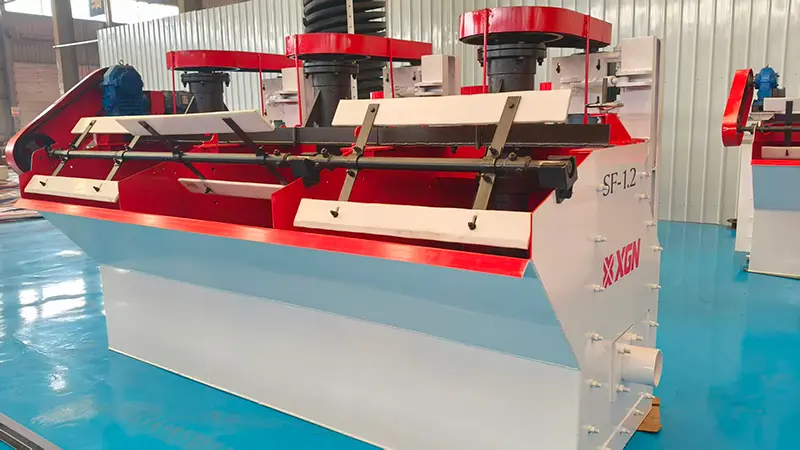
What Is Flotation Machine Efficiency?
Before we look at what factors affect flotation machine efficiency, let us define it. Efficiency in flotation has two parts:
Recovery: the percentage of valuable mineral that you collect.
Grade: how much valuable mineral is in the concentrate (purity).
Good efficiency means high recovery and high grade at the same time. But many things can reduce one or both.
Factor 1: Particle Size of the Feed
Particle size is one of the first things to check when asking what factors affect flotation machine efficiency.
Too coarse: Heavy particles cannot stay attached to bubbles. They sink and are lost.
Too fine: Very small particles have very low mass, but they also have high surface area. They may stick to the wrong bubbles or get carried into the froth mechanically (entrainment). This lowers grade.
The best size range for most minerals is between 10 and 100 microns. For sulfide ores, grinding to 70-80% passing 200 mesh often works well.
Factor 2: Pulp Density (Percent Solids)
Pulp density means how much solid material is in the water. It affects bubble-particle collision and froth stability.
Low density (thin pulp): Fewer particles per volume. This may lower recovery because there are fewer chances for collision.
High density (thick pulp): Too many particles can block bubbles and make the froth heavy. It also increases viscosity, which slows down bubble movement.
The ideal pulp density depends on the ore type. For many flotation circuits, 25% to 40% solids works well. You should test to find the best value for your material.
Factor 3: Reagent Type and Dosage
Reagents are chemicals added to the flotation machine. They make the valuable mineral water-repellent (hydrophobic) so it attaches to air bubbles. They also help create a stable froth.
If you ask experienced operators what factors affect flotation machine efficiency the most, many will say reagents.
Too little collector: The mineral does not become hydrophobic enough. Recovery drops.
Too much collector: It can make waste minerals also float, lowering grade.
Wrong frother dosage: Too little frother gives weak froth that collapses. Too much gives very stable froth that may carry too much water and fine gangue.
Always perform a reagent optimization test (like a full factorial test) when you start with a new ore.
Factor 4: Air Flow Rate
Air is blown into the flotation cell to create bubbles. The bubbles carry the valuable particles to the top.
Low air flow: Not enough bubbles. Fewer collisions, lower recovery.
High air flow: Too many bubbles can merge into large ones that rise too fast. Large bubbles have less surface area per volume. Also, high air flow can create turbulence that knocks particles off bubbles.
The right air flow rate is usually given by the flotation machine manufacturer. For mechanical cells, it is often between 0.5 and 1.5 m³ per minute per cubic meter of cell volume.
Factor 5: Impeller Speed (Agitation)
The impeller is the rotor at the bottom of a mechanical flotation cell. It mixes the pulp and disperses air into small bubbles.
Slow speed: Poor mixing, coarse bubbles, low recovery.
Fast speed: High shear forces can detach particles from bubbles. Also, it increases energy cost and may wear out the impeller faster.
Most flotation machines run at an impeller tip speed between 5 and 10 meters per second. You can adjust it to get the right balance between bubble size and froth stability.
Factor 6: Pulp Temperature
Temperature affects chemical reactions and bubble stability. Most flotation reagents work best within a certain temperature range.
Cold pulp: Reagents dissolve slowly. Froth may be less stable. Recovery drops.
Hot pulp: Some reagents may evaporate or decompose. Also, heating large volumes of pulp costs money.
For many sulfide ores (copper, lead, zinc), a temperature of 20–30°C is normal. Some ores need higher temperatures (40–60°C) for specific collectors.
Factor 7: Water Quality and pH
Water chemistry can change flotation performance a lot.
Hard water (high calcium, magnesium): It can react with some collectors and reduce their effectiveness.
High clay content: Fines can coat the bubbles and prevent mineral attachment.
pH level: pH affects how collectors work. For example, flotation of copper sulfide works best at pH 8–10. Flotation of iron oxide (reverse flotation) may need pH 10–11.
Regularly measure the pH of the pulp and adjust with lime or acid as needed.
Other Factors to Keep in Mind
Beyond the seven main factors, there are a few more that can also affect flotation machine efficiency:
Froth depth: Deep froth gives better washing of gangue but may lower recovery.
Feed rate (throughput): Too high feed overloads the cell. Too low wastes capacity.
Wear of impeller and stator: Worn parts produce larger bubbles and less agitation.
How to Diagnose Efficiency Problems
If you see that recovery or grade is dropping, use this quick checklist based on what factors affect flotation machine efficiency:
| Symptom | Possible cause |
|---|---|
| Low recovery, froth looks weak | Low collector dosage, low air flow, too cold |
| Low grade, froth very thick | Too much frother, high impeller speed, high pulp density |
| Bubbles large and unstable | Worn impeller, low frother, high agitation |
| Particle sizes too coarse or too fine | Check grinding circuit |
Conclusion
So what factors affect flotation machine efficiency? The seven main ones are: particle size, pulp density, reagent dosage, air flow rate, impeller speed, temperature, and water quality (including pH). By controlling these parameters, you can improve both recovery and grade. Start by checking your feed particle size and reagent addition. Then adjust air flow and pulp density step by step. Keep records of all changes. With careful tuning, your flotation machine can reach its best performance.