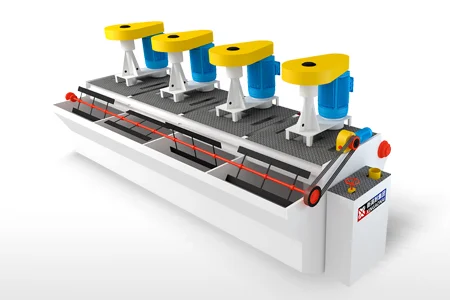
A flotation machine separates valuable minerals from gangue by using differences in their surface wettability. Inside the machine, an impeller suspends the ore slurry and disperses air into small bubbles. Flotation reagents make the target mineral surfaces hydrophobic, allowing them to attach to the bubbles. The mineral-loaded bubbles rise and form a froth concentrate, while hydrophilic gangue remains in the slurry and is discharged as tailings.
This process is widely used for copper, lead, zinc, nickel, molybdenum, gold-bearing sulfides, fluorite, graphite, phosphate, coal, and other minerals. Successful flotation depends on more than the machine itself: the ore must be properly liberated, conditioned with suitable reagents, and operated under controlled airflow, agitation, pulp density, pH, and froth conditions.
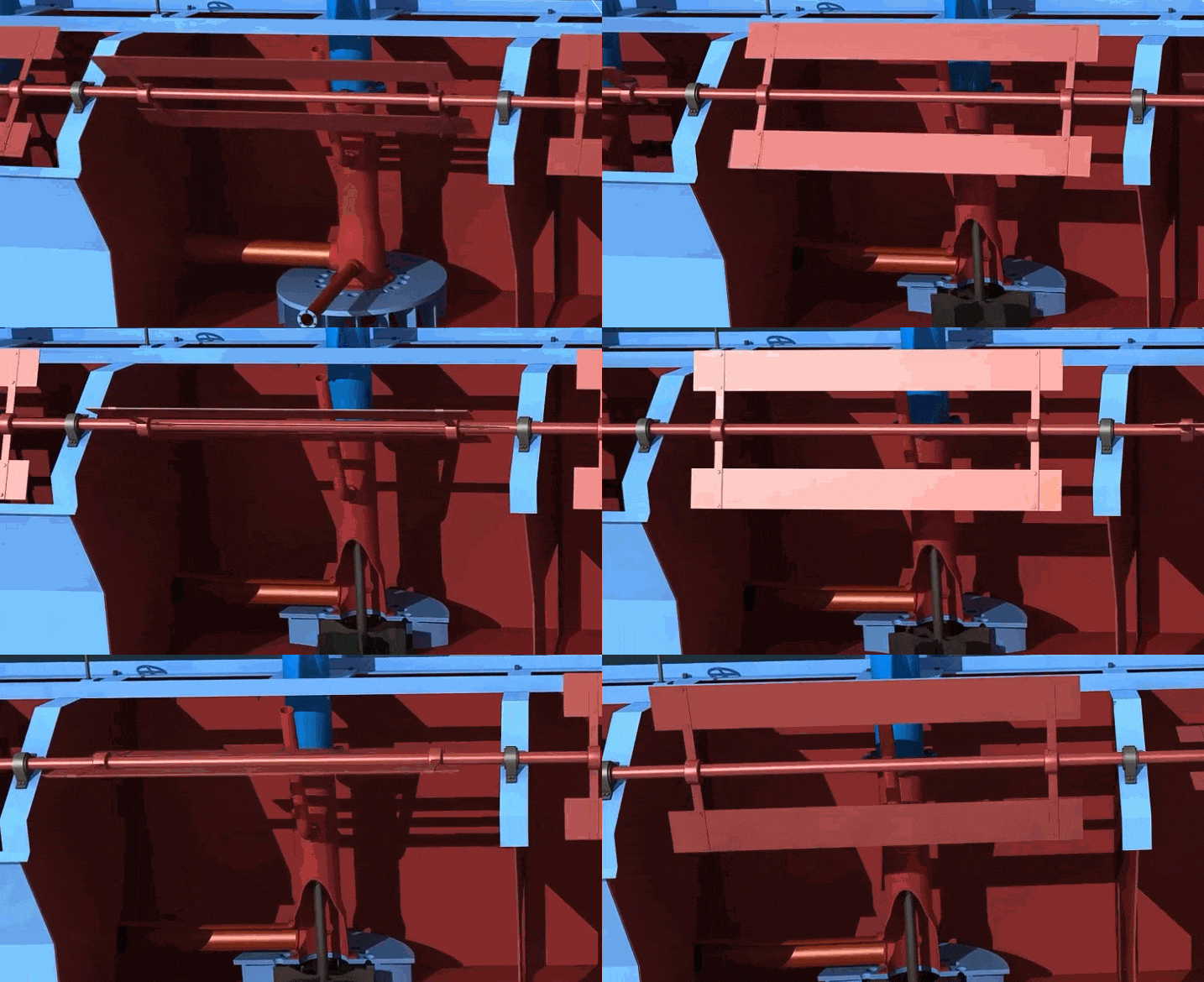
What Is Froth Flotation?
Froth flotation is a mineral-separation process based on differences in surface chemistry rather than only particle size or density.
The process begins after the ore has been crushed and ground. Water is added to create a pumpable slurry, and flotation reagents are used to control how different mineral surfaces interact with water and air.
Particles that repel water are described as hydrophobic. These particles can attach to air bubbles and rise toward the surface. Particles that remain attracted to water are hydrophilic and normally stay in the slurry.
A flotation machine creates the physical conditions needed for this separation by:
Keeping mineral particles suspended
Mixing the ore slurry with reagents
Introducing and dispersing air
Promoting contact between bubbles and particles
Maintaining a mineralized froth layer
Removing concentrate and discharging tailings
The separation result is normally evaluated by concentrate grade and mineral recovery. These two targets must be balanced because maximizing one may reduce the other.
How Does a Flotation Machine Work? Five Main Stages
A mechanical flotation machine operates through five connected stages: slurry preparation, reagent conditioning, air dispersion, bubble-particle attachment, and froth collection.
1. Ore Grinding and Slurry Preparation
Before flotation, the ore must be crushed and ground until the valuable minerals are sufficiently liberated from the surrounding gangue.
The ground material is mixed with water to form a slurry, also called pulp. The required grinding size depends on the mineral texture and liberation characteristics. If the particles are too coarse, valuable minerals may remain locked together with gangue. Coarse particles may also be too heavy to remain attached to rising bubbles.
Excessive grinding can be equally harmful. Very fine particles and slimes may:
Consume more reagents because of their larger surface area
Coat the surfaces of valuable minerals
Increase unwanted gangue entrainment
Reduce bubble-particle collision efficiency
Make the froth more difficult to control
The objective is therefore not to produce the finest possible feed. It is to achieve adequate mineral liberation while minimizing unnecessary ultrafine particles.
Pulp density must also be controlled. A slurry that is too thick can increase viscosity and restrict bubble movement, while an excessively dilute slurry may reduce throughput and bubble-particle collision probability.
2. Flotation Reagent Addition and Conditioning
Minerals do not always have enough natural hydrophobicity to attach selectively to air bubbles. Flotation reagents are added to modify their surface properties and control froth behavior.
The main reagent groups include:
Collectors
Collectors adsorb onto selected mineral surfaces and make them more hydrophobic. This allows the target particles to attach more readily to air bubbles.
Frothers
Frothers help create a controlled population of bubbles and stabilize the froth long enough for the mineralized bubbles to reach the concentrate launder.
Insufficient frother may produce large, unstable bubbles and a froth that collapses too quickly. Excessive frother may create an overly persistent froth and increase water and fine-gangue entrainment.
Depressants
Depressants prevent unwanted minerals from floating. They improve selectivity by keeping specific gangue minerals hydrophilic.
Activators
Activators modify mineral surfaces so that a collector can adsorb more effectively. They are used when the target mineral does not respond adequately to the selected collector under existing conditions.
pH Regulators and Other Modifiers
Modifiers adjust pulp chemistry and help control collector adsorption, mineral selectivity, and reagent performance. The required pH is ore-specific and should be determined by metallurgical testing.
Reagents may be added in grinding, conditioning tanks, flotation feed boxes, or between flotation stages. Proper conditioning time is important because the chemicals need sufficient contact with the mineral surfaces before flotation begins.
For a detailed explanation of reagent functions and selection, read the Flotation Reagents Guide.
3. Air Introduction and Bubble Generation
After conditioned slurry enters the flotation cell, the rotor-impeller system agitates the pulp and disperses air through the tank.
In a self-aspirating mechanical flotation machine, the rotating impeller creates a low-pressure zone that draws air into the machine. In other designs, air may be supplied by an external blower.
The impeller breaks the incoming air into bubbles and distributes them throughout the slurry. A stator or cover plate helps control circulation, reduce uncontrolled rotation, and improve air dispersion.
The machine must provide enough agitation to:
Keep mineral particles in suspension
Distribute reagents throughout the cell
Disperse air into suitable bubbles
Bring mineral particles into contact with bubbles
Excessive agitation is not automatically beneficial. Very high turbulence can detach mineral particles from bubbles, increase component wear, consume more energy, and disturb the froth layer.
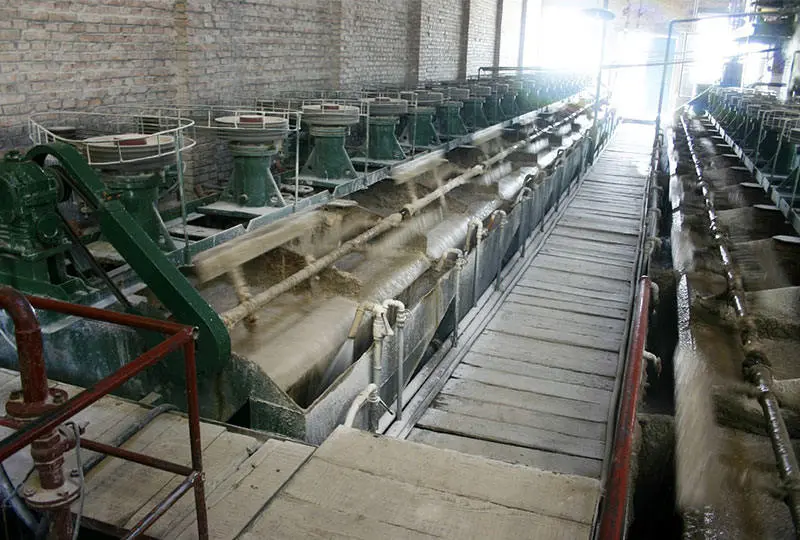
How Fine Bubbles Affect Flotation
Bubble size is one of the most important variables in a flotation machine.
Smaller bubbles provide a greater total surface area for a given volume of air. This may increase the probability that fine hydrophobic particles will collide with and attach to a bubble. For this reason, fine and uniformly distributed bubbles are generally desirable when treating fine liberated minerals.
However, the smallest possible bubbles are not always the best.
Extremely fine bubbles may rise slowly and may not provide enough lifting force for larger mineral particles. Excessive quantities of fine bubbles can also affect froth drainage and increase the entrainment of water and ultrafine gangue.
Larger bubbles rise faster and may carry coarser particles, but they provide less surface area and may produce fewer successful particle collisions. Large, unstable bubbles may also burst before reaching the concentrate launder.
A well-operated flotation machine therefore seeks an appropriate bubble-size distribution rather than one fixed bubble diameter.
Bubble size and distribution are influenced by:
Impeller speed and condition
Rotor-stator clearance
Airflow rate
Frother type and dosage
Pulp density and viscosity
Mineral particle-size distribution
Water chemistry
Slurry temperature
If the bubbles become noticeably larger during operation, the operator should inspect the airflow, frother dosage, impeller, stator, and rotor-stator clearance.
4. Bubble-Particle Collision and Attachment
Generating bubbles is only part of the process. For a valuable mineral particle to be recovered, several events must occur:
The particle and bubble must collide.
The liquid film between them must drain.
The hydrophobic particle must attach to the bubble surface.
The attachment must remain stable while the bubble rises.
The mineralized bubble must reach the froth layer without breaking apart.
Particle size strongly affects this process. Fine particles may follow the surrounding water around a bubble instead of colliding with it. Coarse particles may collide successfully but detach because of their greater weight and inertia.
Surface chemistry is equally important. If the collector has not made the target mineral sufficiently hydrophobic, the liquid film between the particle and bubble may not rupture, and attachment will not occur.
Unwanted gangue can still reach the froth through mechanical entrainment. Fine hydrophilic particles may be carried upward with water between bubbles even though they are not truly attached. Froth depth, drainage, wash water where applicable, and reagent control help limit this problem.
5. Froth Formation and Concentrate Collection
Mineral-loaded bubbles rise to the surface and accumulate as a froth layer. Inside this layer, bubbles continue to drain water and release weakly associated gangue particles.
The froth must remain stable long enough to transport the valuable minerals across the cell and into the concentrate launder. At the same time, it must not be so persistent that it carries excessive water and gangue.
A scraper or paddle moves the mineralized froth into the collection launder. The collected material becomes the flotation concentrate and normally proceeds to another cleaning stage, thickening, filtration, or downstream treatment.
Particles that do not float remain in the slurry. Depending on the position of the cell in the circuit, this material may:
Enter the next flotation cell
Proceed to a scavenger stage
Return to an earlier processing stage
Leave the circuit as final tailings
The slurry level and froth depth must remain stable. A shallow froth may improve recovery but increase gangue entrainment. A deeper froth provides more drainage and may improve concentrate grade, although some valuable mineral can be lost if the froth becomes too deep.
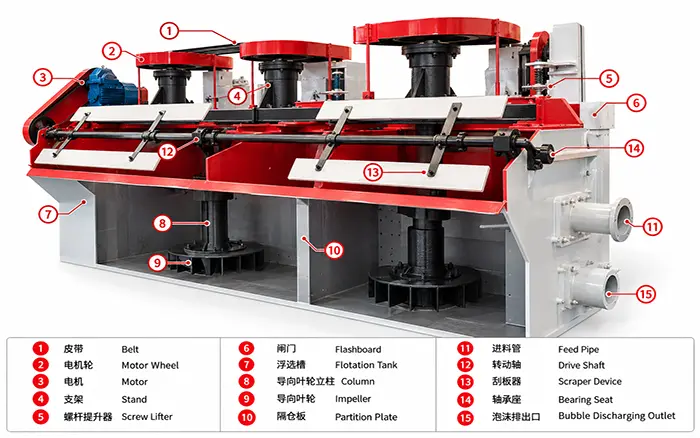
Main Components of a Flotation Machine
Understanding the principal components makes the working process easier to visualize.
Flotation Tank
The tank contains the slurry and provides the space required for agitation, aeration, particle attachment, and froth separation.
Rotor or Impeller
The impeller circulates the slurry, suspends mineral particles, and disperses air into bubbles. Its speed and condition directly affect mixing and aeration.
Stator or Cover Plate
The stator controls slurry circulation around the rotor and helps distribute air. It also reduces uncontrolled pulp rotation and supports more uniform bubble dispersion.
Main Shaft and Drive System
The motor and transmission system rotate the main shaft and impeller. Bearings and couplings must remain properly aligned and lubricated.
Air Supply System
Depending on the flotation-machine design, air may be self-induced through the hollow shaft or supplied by an external blower.
Froth Scraper
The scraper moves mineralized froth from the cell surface into the concentrate launder.
Slurry-Level Control System
The level-control mechanism regulates the pulp-froth interface and helps maintain a consistent froth depth.
Feed and Discharge System
The feed box distributes slurry into the cell, while intermediate gates and discharge systems control slurry flow through the flotation bank.
For inspection, wear signs, and replacement guidance, see Flotation Machine Parts: Functions, Wear Signs & Replacement.
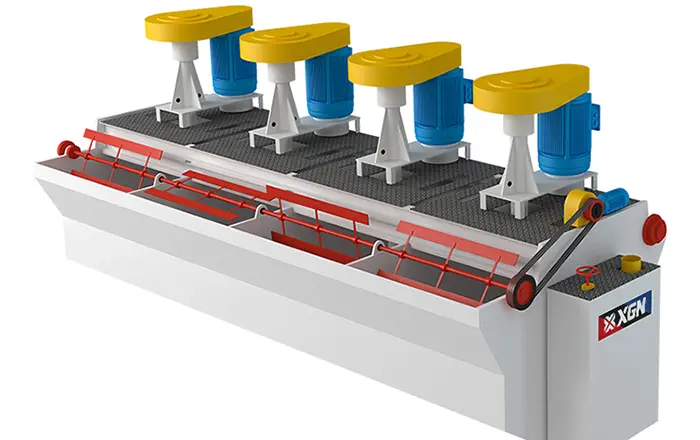
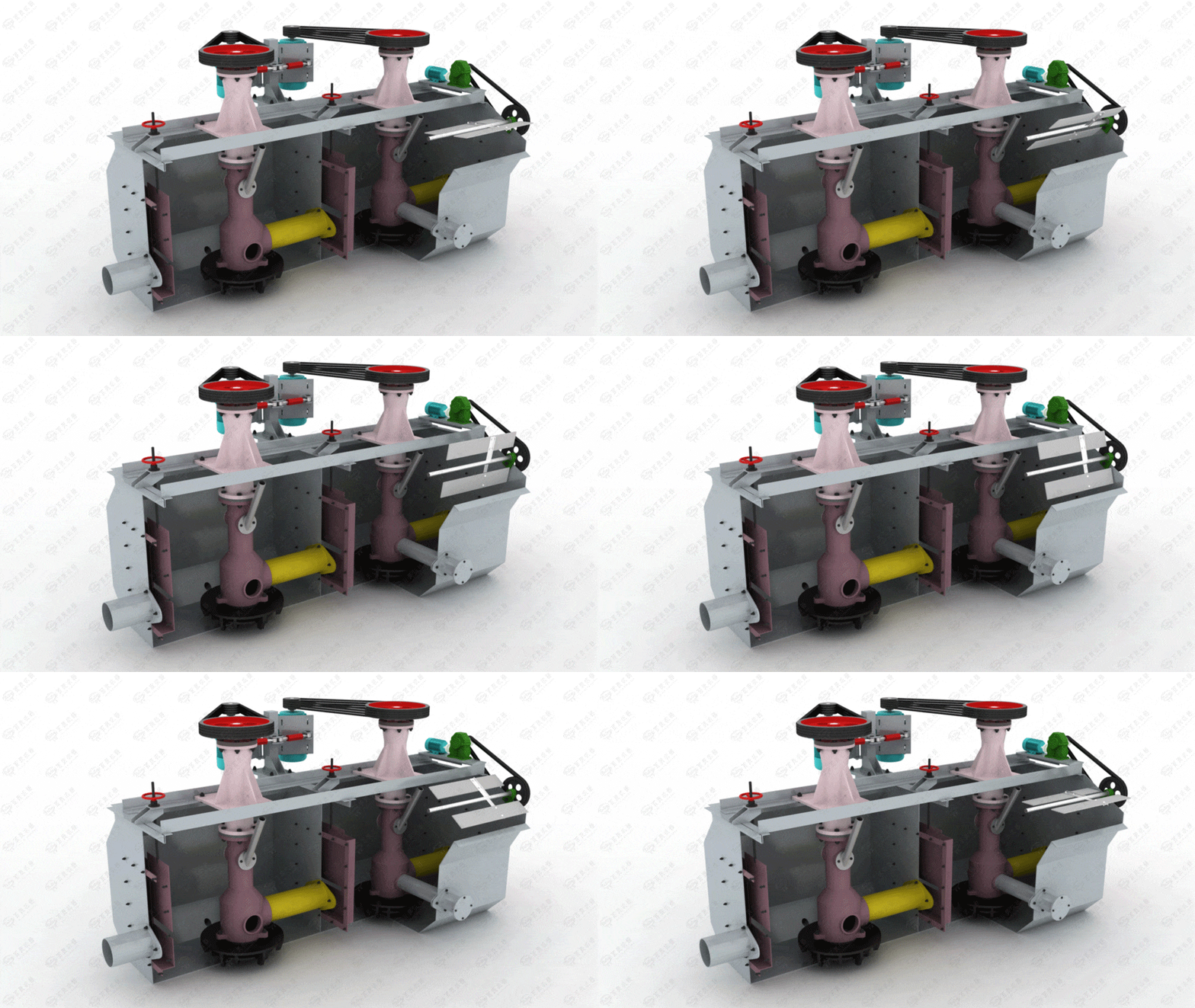
Slurry and Air Circulation Inside an SF Flotation Machine
In an SF mechanical flotation machine, the motor drives the impeller through the main shaft. As the impeller rotates, it creates slurry circulation and a low-pressure region around the rotor.
Air is drawn into the system and mixed with the slurry. The rotating impeller disperses the air into bubbles while circulating the pulp through the rotor-stator area.
Conditioned hydrophobic particles collide with and attach to the bubbles. The mineralized bubbles rise to the surface and form froth, which is removed by the scraper. Material that does not float passes through the cell and continues to the next stage or tailings discharge.
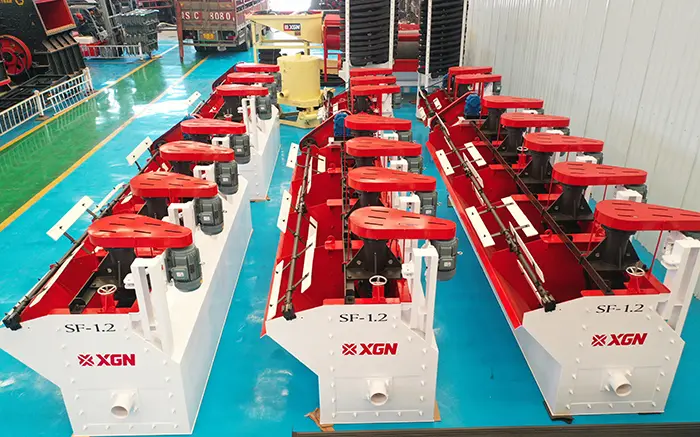
XINGAONAI’s SF Series Flotation Machine combines slurry agitation, air induction, and froth removal for roughing, scavenging, and other mineral-processing duties.
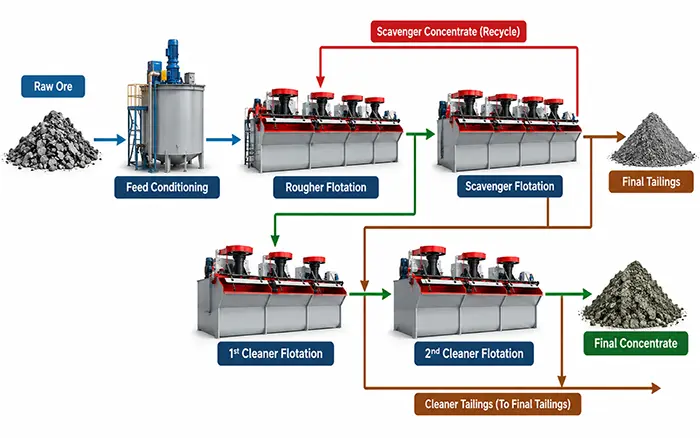
How Flotation Cells Work Together in a Circuit
A mineral-processing plant normally uses multiple flotation cells rather than one isolated machine. The cells are arranged according to the metallurgical objectives of each stage.
Rougher Stage
The rougher stage treats fresh feed and aims to recover as much valuable mineral as practical. The rougher concentrate may still contain gangue and usually requires further cleaning.
Scavenger Stage
The scavenger stage treats rougher tailings. Its purpose is to recover valuable mineral that was not collected during roughing.
Cleaner Stage
The cleaner stage treats rougher concentrate and removes remaining gangue to improve the final concentrate grade.
Cleaner tailings and scavenger concentrates may be returned to earlier stages. These recycle streams improve recovery but must be carefully controlled to prevent circulating loads from becoming excessive.
Read Flotation Flowsheet: Rougher, Scavenger & Cleaner Design for a more detailed explanation of circuit arrangement.
Key Variables That Control Flotation Performance
The working mechanism remains the same, but actual flotation performance changes when operating conditions vary.
| Variable | If Too Low | If Too High |
|---|---|---|
| Airflow | Too few bubbles and reduced recovery | Turbulence, unstable froth and entrainment |
| Impeller speed | Poor suspension and coarse air dispersion | High wear, detachment and energy use |
| Collector dosage | Weak mineral attachment | Reduced selectivity and higher reagent cost |
| Frother dosage | Large or unstable bubbles | Persistent froth and gangue entrainment |
| Pulp density | Low throughput and fewer particle collisions | High viscosity and restricted bubble movement |
| Froth depth | Limited drainage and lower concentrate grade | Valuable mineral may be lost from the froth |
| Feed rate | Underused cell capacity | Insufficient residence time and unstable operation |
Because these variables interact, flotation settings should not be changed randomly. Operators should use sampling, assays, froth observations, tailings losses, and production records to evaluate each adjustment.
For a complete operational discussion, read What Factors Affect Flotation Machine Efficiency?.
Signs That a Flotation Machine Is Working Correctly
A properly operating flotation machine generally shows:
Uniform air dispersion across the cell
Stable slurry circulation without excessive surging
Mineral particles remaining in suspension
A consistent pulp level and froth depth
Froth moving steadily toward the concentrate launder
No unusual vibration, noise, or bearing temperature
Stable concentrate grade and recovery
Controlled tailings losses
Visual froth observation is useful, but appearance alone cannot confirm metallurgical performance. Regular feed, concentrate, and tailings sampling is necessary.
Common Operating Problems
Large or Uneven Bubbles
Possible causes include inadequate frother dosage, excessive airflow, a worn impeller or stator, incorrect rotor-stator clearance, or blocked air passages.
Weak or Collapsing Froth
Possible causes include insufficient frother, unsuitable reagent conditions, low mineral loading, sudden changes in feed, or unfavorable water chemistry.
Excessively Stable Froth
Possible causes include too much frother, high slime content, excessive air, or the presence of naturally floatable gangue.
Low Mineral Recovery
Possible causes include poor liberation, insufficient collector, inadequate conditioning, low airflow, short residence time, worn parts, or unsuitable pulp chemistry.
Low Concentrate Grade
Possible causes include excessive entrainment, insufficient froth depth, excessive collector dosage, poor selectivity, high clay content, or an overloaded flotation circuit.
Particles Settling in the Tank
Possible causes include low agitation, excessive coarse particles, high pulp density, feed interruptions, or impeller wear.
Conclusion
A flotation machine works by bringing properly conditioned mineral particles into contact with dispersed air bubbles. The impeller suspends the slurry and disperses air, flotation reagents control mineral surface properties, and hydrophobic particles attach to bubbles and rise into the froth concentrate. Hydrophilic gangue remains in the slurry and is discharged separately.
Effective flotation requires all stages to work together: mineral liberation, slurry preparation, reagent conditioning, air dispersion, bubble-particle attachment, froth drainage, and concentrate removal.
The machine must also provide stable agitation and aeration without excessive turbulence. Bubble size, airflow, impeller condition, froth depth, pulp density, and residence time should be adjusted according to the actual ore and metallurgical test results.
To determine a suitable flotation-machine model and circuit configuration, provide the ore type, mineral composition, feed size, processing capacity, pulp density, and required concentrate specifications.