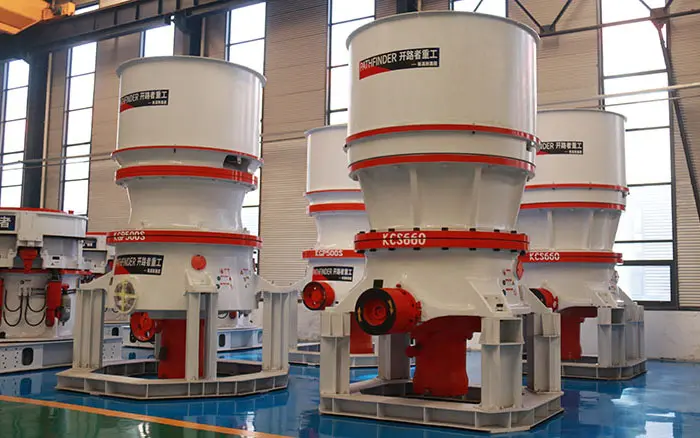
1. What Is a Cone Crusher? Basic Definition
Named for its conical-shaped crushing chamber, this machine relies on the principle of “lamination crushing” to achieve efficient material reduction. It is widely used in large-scale mining operations, quarries, aggregate plants, and infrastructure construction projects due to its high crushing efficiency, uniform product particle size, and stable operation.
2. How Does a Cone Crusher Work? Working Principle
Material Feeding: Pre-crushed raw materials are fed into the upper part of the cone crusher’s crushing chamber through a feeding hopper.
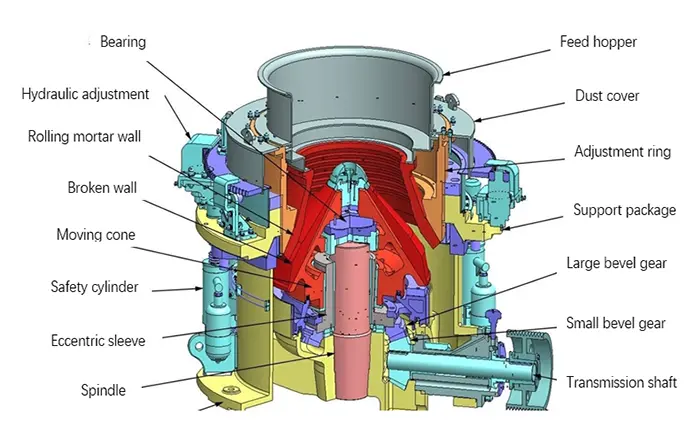
Crushing Process: The machine consists of a fixed cone (also called a static cone or concave) and a movable cone (also called a rotating cone or mantle). Driven by a motor and transmission system, the movable cone rotates eccentrically around the central axis of the fixed cone. As the movable cone rotates, the gap between its outer surface and the inner surface of the fixed cone alternately expands and contracts.
Lamination Crushing: When the gap contracts, the materials in the crushing chamber are squeezed, pressed, and ground between the two cones (this is the “lamination crushing” process). This process not only breaks the materials but also shapes the particles into a more uniform and cubical shape.
Product Discharge: When the gap expands, the crushed materials that meet the required particle size fall through the discharge opening at the bottom of the crushing chamber. The particle size of the final product can be adjusted by changing the size of the discharge gap.
3. Core Components of a Cone Crusher
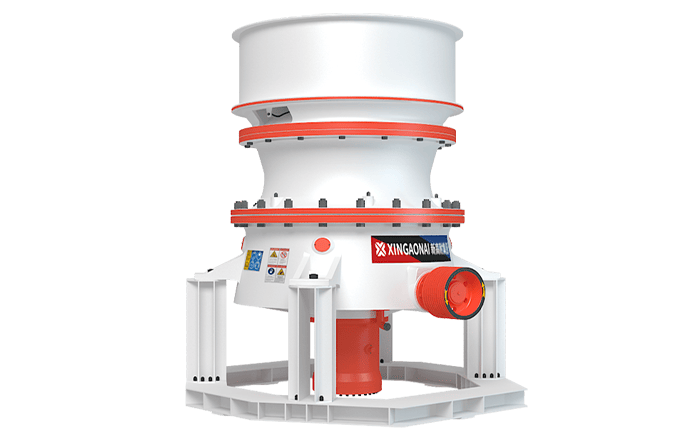
Fixed Cone (Concave): The stationary conical component lined with wear-resistant materials. It forms the outer wall of the crushing chamber and provides a stable surface for crushing materials.
Movable Cone (Mantle): The rotating conical component that interacts with the fixed cone to crush materials. It is also lined with wear-resistant materials to withstand the high pressure and friction during crushing.
Motor & Transmission System: The power source of the cone crusher. The motor drives the movable cone to rotate through a transmission shaft, bevel gear, and eccentric sleeve.
Feeding Hopper: The upper part of the machine that guides the raw materials into the crushing chamber evenly, ensuring continuous and stable feeding.
Discharge Adjustment Device: A mechanism used to adjust the size of the discharge gap, which directly controls the particle size of the final product. Common adjustment methods include hydraulic adjustment and mechanical adjustment.
Wear-Resistant Parts: Including the lining plates of the fixed cone and movable cone, which are easily worn due to long-term contact with hard materials. These parts are designed to be replaceable to extend the service life of the machine.
4. Main Types of Cone Crushers
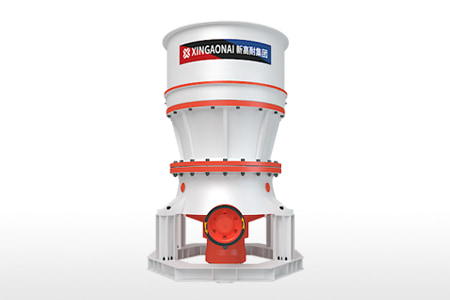
Standard Cone Crusher: Suitable for secondary crushing. It has a longer crushing chamber and a larger discharge gap, which is ideal for processing materials into medium-sized particles (15-50mm). It is widely used in quarries and aggregate plants for producing construction aggregates.
Short-Head Cone Crusher: Designed for tertiary or fine crushing. It has a shorter and steeper crushing chamber, which allows for finer particle size (1-15mm) and more uniform product shape. It is often used in ore beneficiation plants and high-grade aggregate production lines.
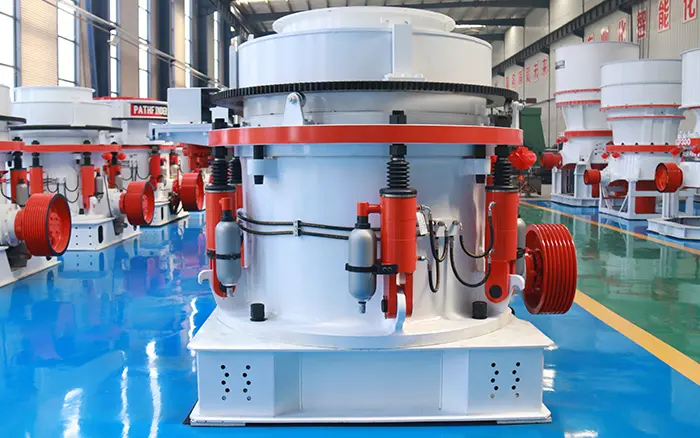
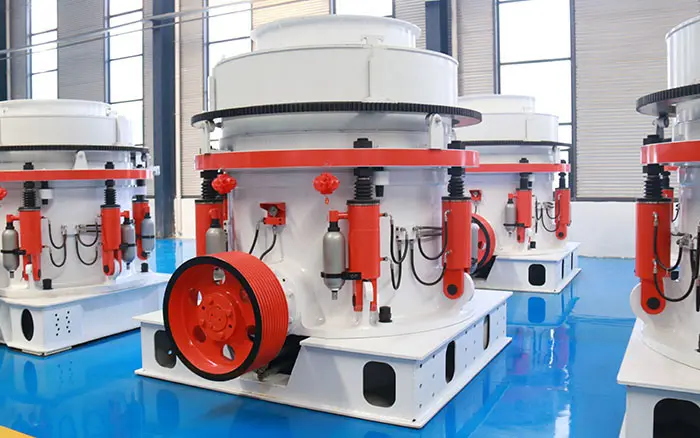
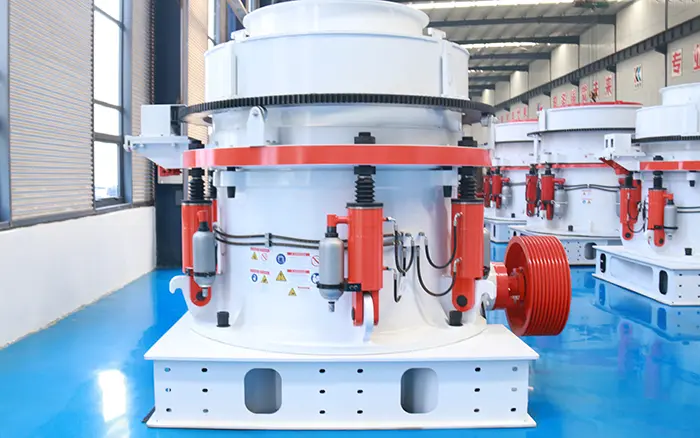
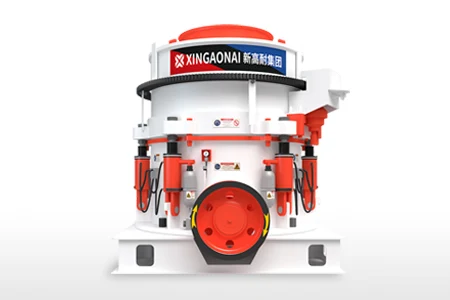
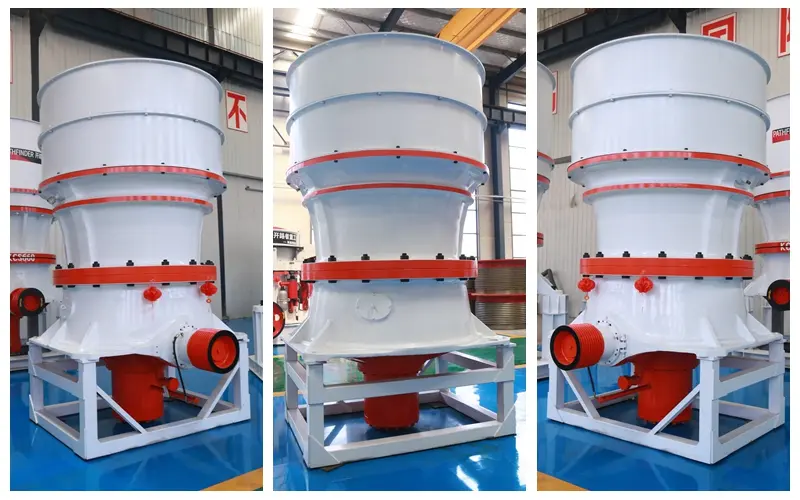
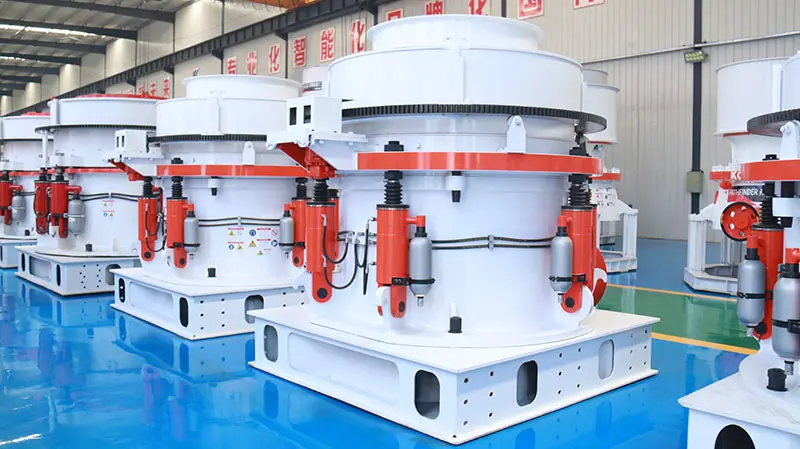
Hydraulic Cone Crusher: Equipped with a hydraulic system for discharge gap adjustment and overload protection. It has the advantages of automatic adjustment, high efficiency, and stable operation. When encountering uncrushable materials (e.g., metal blocks), the hydraulic system can automatically open the discharge gap to protect the machine from damage. It is suitable for large-scale mining and high-volume production lines.
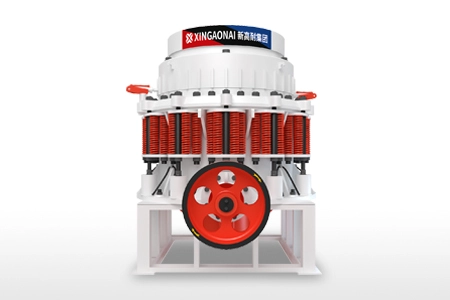
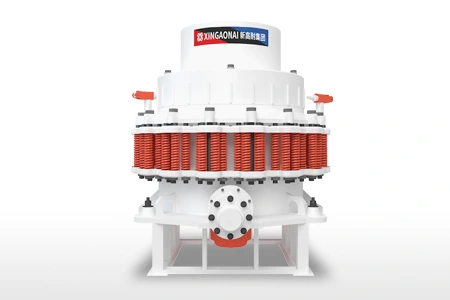
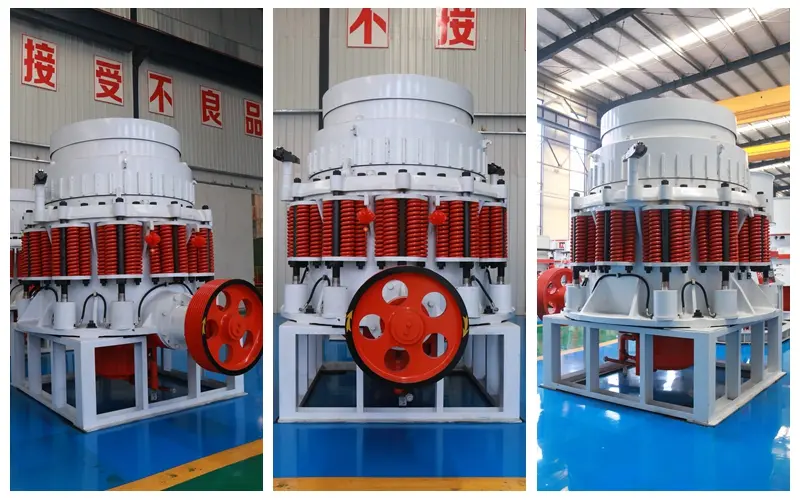
Spring Cone Crusher: Uses a spring system for overload protection. It has a simple structure, reliable performance, and low maintenance cost. It is widely used in small and medium-sized quarries and mining operations.
5. Key Applications of Cone Crushers
Mining Industry: Used for crushing various ores (e.g., iron ore, copper ore, gold ore, limestone ore) in mining operations. The crushed ore is then sent to beneficiation processes (e.g., magnetic separation, flotation) to extract valuable minerals.
Quarrying Industry: Used for producing construction aggregates (e.g., gravel, crushed stone) from natural stone materials (e.g., granite, basalt). These aggregates are essential for road construction, bridge building, and high-rise buildings.
Infrastructure Construction: Used in construction waste recycling projects to crush concrete blocks, bricks, and other construction waste into reusable aggregates. It also plays a role in large-scale projects such as highway construction, high-speed railway construction, and airport runway construction.
Cement Industry: Used for crushing limestone, clay, and other raw materials in cement production. The crushed materials are then ground into powder to make cement clinker.
6. Advantages of Cone Crushers
Uniform Product Particle Size: The lamination crushing principle ensures that the final product has a uniform particle size and good cubical shape, which meets the requirements of high-grade aggregates and ore beneficiation.
High Crushing Efficiency: The continuous rotating motion of the movable cone enables continuous crushing of materials, resulting in high production capacity (10-2000 t/h) and efficient material processing.
Stable Operation & Low Noise: The compact structure and balanced rotating motion make the cone crusher operate stably with low vibration and noise, creating a better working environment.
Strong Wear Resistance: The key components (e.g., fixed cone lining, movable cone lining) are made of high-quality wear-resistant materials, which extend the service life of the machine and reduce maintenance costs.
Flexible Adjustment: The discharge gap can be easily adjusted according to different product requirements, making the cone crusher suitable for various crushing tasks (secondary, tertiary, fine crushing).