Stone Crusher

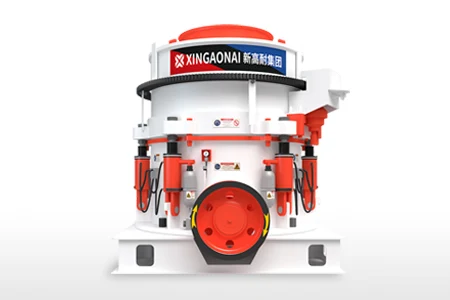
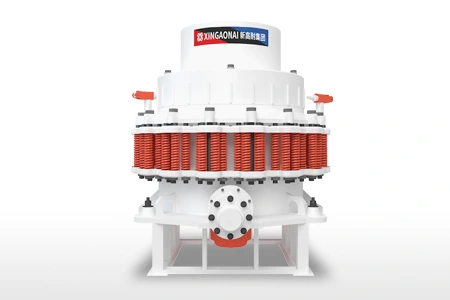
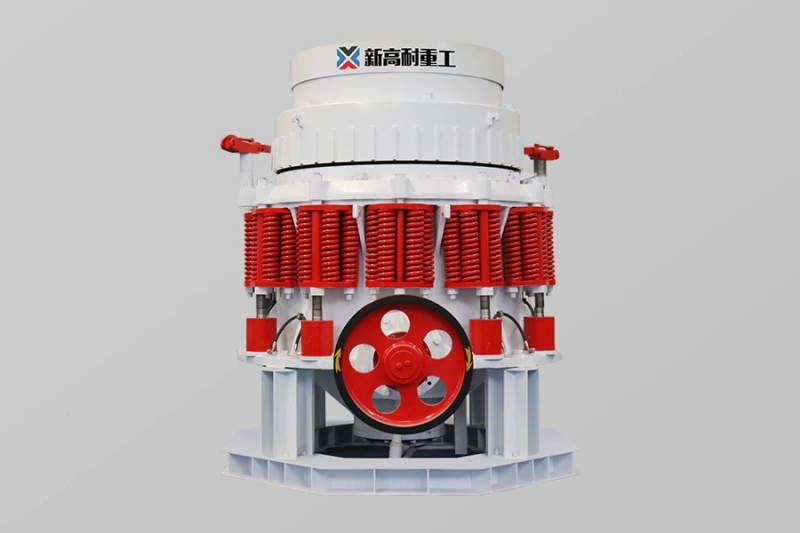
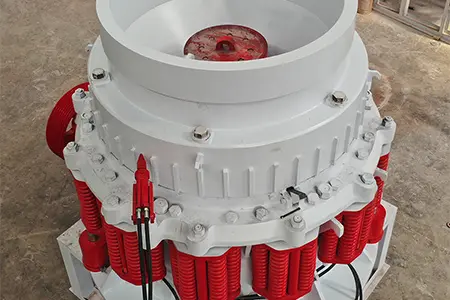
Composite Cone Crusher

CAPACITY

80-610t/h

FEED SIZE

≤300mm
Application areas:The Composite Cone Crusher is not only suitable for secondary and tertiary crushing operations in hard rock quarrying, open-pit mining, and high-grade aggregate production lines, but also widely used in fixed processing facilities such as mineral processi
Applicable materials:Granite, basalt, river pebbles, iron ore, copper ore, gold ore, molybdenum ore, quartz, diabase, trachyte, and other hard to extra-hard materials requiring high-ratio secondary or tertiary size reduction (compressive strength ≤350 MPa, feed size up to 350

Product Overview

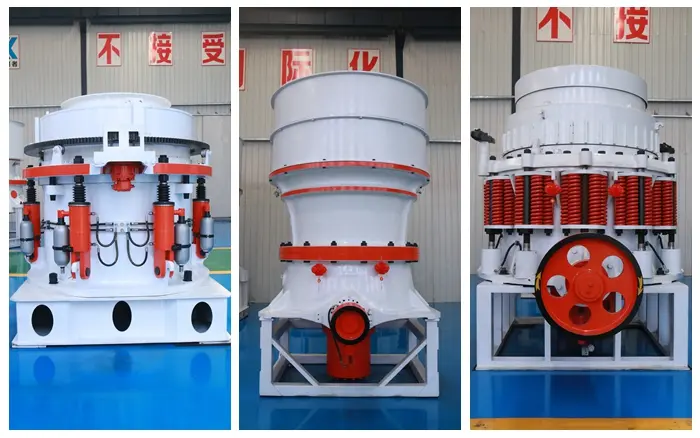
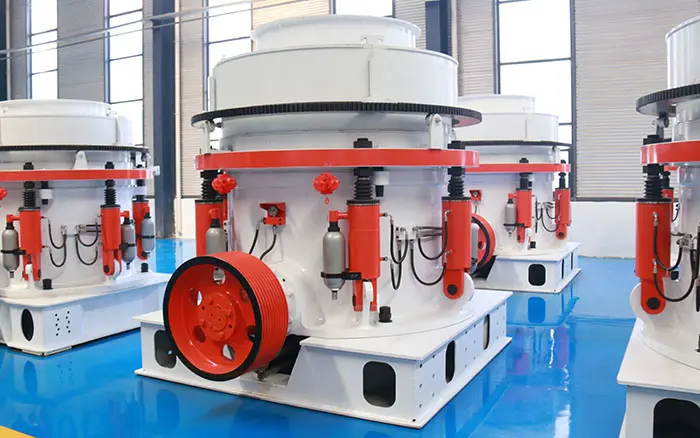
The Composite Cone Crusher is a next-generation secondary and tertiary crushing machine that integrates the proven compressive crushing geometry of the traditional spring cone crusher with a modern hydraulic setting adjustment system, hydraulic overload protection, and an optimized laminated crushing chamber — combining the mechanical robustness of the classic cone crusher design with the operational flexibility, automation capability, and crushing efficiency of contemporary hydraulic cone crusher technology. This composite design philosophy delivers superior crushing performance for the hardest ores and rocks while maintaining the simplicity and repairability that makes it well-suited to remote mining and quarrying operations with limited technical support infrastructure.


XINGAONAI Composite Cone Crushers are available in coarse, medium, fine, and extra-fine chamber configurations with feed opening sizes from 50 mm to 350 mm and processing capacities from 30 TPH to 1,000 TPH. The main frame and upper frame are cast from high-manganese alloy steel in a single piece, eliminating structural weak points. The eccentric assembly is driven by a robust bevel gear and countershaft arrangement, supported on large-diameter bronze eccentric bushings and a spherical plain bearing at the base of the main shaft, delivering stable, high-torque gyration under continuous full-load operation.


The hydraulic setting adjustment system uses a hydraulic jack mounted beneath the main shaft to raise or lower the mantle assembly, changing the closed-side setting (CSS) with millimeter-level precision without stopping the crusher or using mechanical tools. The hydraulic overload protection system replaces the mechanical spring assembly of conventional spring cone crushers with a hydraulic cylinder and accumulator circuit that provides a faster, more consistent overload response and allows the CSS to be reset automatically after an overload event without manual intervention. A forced-circulation thin-oil lubrication system with oil cooler, dual oil filters, and continuous oil temperature and pressure monitoring ensures reliable protection of all eccentric, main shaft, and countershaft bearing surfaces under 24-hour continuous operation.
Key Advantages

Laminated Crushing Chamber for Superior Particle Shape

The optimized laminated crushing chamber geometry — featuring a steeper nip angle, longer parallel zone, and carefully profiled mantle-to-concave clearance curve — ensures that material is crushed multiple times between the mantle and concave surfaces as it descends through the chamber, rather than falling freely through a wide open chamber after a single compression event. This repeated inter-particle compression produces a well-shaped, cubical product with significantly lower elongated and flaky particle content compared to conventional cone and spring cone crushers, meeting the most stringent particle shape specifications for concrete aggregate, asphalt surface course, and railway ballast applications.

Hydraulic CSS Adjustment, Millimeter-Level Precision

The hydraulic main shaft lifting system allows the closed-side setting to be adjusted upward or downward with millimeter-level precision from the operator control panel during crusher operation, without stopping the machine or using mechanical tools. This real-time CSS adjustment capability allows operators to compensate for liner wear continuously throughout the liner service life, maintaining consistent output product gradation from the first hour of operation to the last — eliminating the gradual product size drift that affects mechanically adjusted spring cone crushers as liners wear.

Fast Hydraulic Overload Protection & Automatic Reset

When uncrushable tramp metal or an oversize lump causes the crushing force to exceed the set hydraulic pressure limit, the hydraulic overload protection system instantaneously releases the pressure by allowing oil to flow into the accumulator, dropping the main shaft and opening the CSS to pass the obstruction — a response time of less than 0.5 seconds compared to 1–3 seconds for mechanical spring systems. Once the obstruction clears, the hydraulic system automatically returns the main shaft to the original CSS setting without any manual intervention, minimizing production downtime from overload events.

High Crushing Ratio, Reduced Downstream Processing Load

The combination of optimized chamber geometry, high eccentric throw, and laminated inter-particle crushing delivers a crushing ratio of 5:1 to 8:1 per pass — significantly higher than the 4:1 to 6:1 typical of conventional spring cone crushers. This higher single-pass reduction ratio reduces the recirculating load in closed-circuit crushing operations, increases circuit throughput, and reduces the feed size requirement for downstream ball milling — lowering overall comminution energy consumption per tonne of final product.

Intelligent Control System with Real-Time Monitoring

The standard PLC-based control system monitors CSS position, crushing force, main shaft displacement, oil temperature, oil pressure, oil flow, feed rate, and motor current in real time, with automatic alarms and shutdown sequences triggered by any out-of-limit condition. Optional integration with plant DCS or SCADA systems via Modbus or Profibus enables remote monitoring, automated CSS adjustment based on product size feedback, and predictive maintenance scheduling based on liner wear rate trends — reducing on-site operator requirements and improving overall crushing circuit availability.

Universal Liner System, Low Spare Parts Inventory

The mantle and concave liner profiles are interchangeable across coarse, medium, fine, and extra-fine chamber configurations on the same crusher frame, allowing a single machine to switch between secondary and tertiary crushing duties by changing only the liner set. This universal liner system minimizes the spare parts inventory required to support multiple crushing stages, reduces procurement complexity, and ensures liner availability even in remote locations by standardizing on a single replaceable wear part specification across the entire crushing circuit.

Working Principle

Working Principle of Composite Cone Crusher
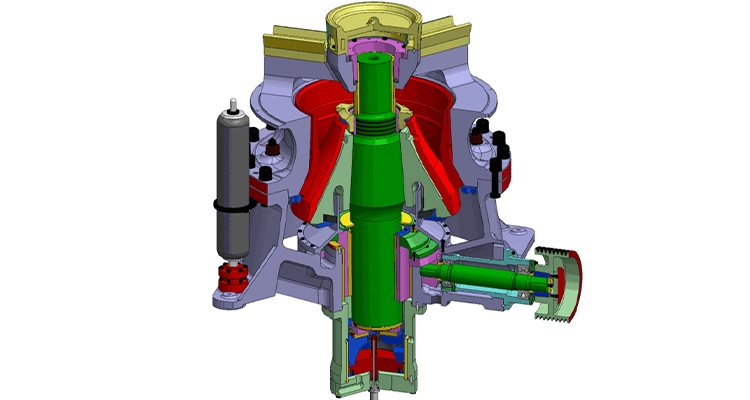
Feed material enters the Composite Cone Crusher through the top feed opening and is evenly distributed around the full circumference of the crushing chamber by the rotating feed distributor plate, then falls into the annular gap between the gyrating mantle — mounted on the hydraulically supported main shaft driven by the eccentric assembly — and the stationary concave bowl liner fixed in the upper frame; as the eccentric rotates at 220–320 RPM, the mantle gyrates in a circular path, alternately closing and opening the gap between the mantle and concave surfaces, compressing material between the two wear surfaces on the closing side with forces of up to several thousand tonnes, fracturing particles by both direct compression and inter-particle load transfer simultaneously; crushed material descends through the progressively narrowing chamber under gravity, being compressed and re-compressed multiple times in the laminated crushing zone before reaching the parallel zone at the bottom of the chamber where the CSS is set, ensuring all discharged product is below the set size; the hydraulic CSS adjustment system continuously maintains the set main shaft height and responds instantaneously to overload events by dropping the shaft to pass obstructions, while the forced-circulation thin-oil lubrication system protects all bearing surfaces and the PLC control system monitors all critical operational parameters throughout continuous 24-hour operation.

Technical Parameters

Model
Type

Offset value

(mm)

Max feeding size

(mm)

Discharge port adjustment range

(mm)

Capacity

(tph)

Main motor power

(kw)

Weight

(t)

XFH1650C-DCoarsely3430022-65265-61025035
XFH1650Z-DMedium3424019-65240-61025035
XFH1650S-XFinely2813016-40200-32025035
XFH1400C-DCoarsely3023519-65210-53022025
XFH1400Z-XMedium2518016-50180-47522025
XFH1400S-XFinely258013-30150-25022025
XFH1200C-DCoarsely2220016-51150-39013216
XFH1200Z-DMedium2215013-40115-24513216
XFH1200S-XFinely159010-2580-17013216


We are here waiting for you
Our professional team can tailor the solution to suit your needs and answer your questions
Contact Engineer

Frequently Asked Questions

A composite cone crusher combines the structural advantages of a spring cone crusher with the hydraulic adjustment of hydraulic cone crushers. It features both spring overload protection and hydraulic discharge adjustment, offering a cost-effective yet versatile solution.

Output size is adjusted by rotating the adjusting ring (threaded adjustment) on the upper frame. The discharge opening (CSS) can be set between 3mm and 60mm depending on the model and cavity type selected.

Depending on the model, capacity ranges from approximately 12 t/h to 700 t/h. Larger models with coarser settings deliver higher throughput, while fine crushing models sacrifice capacity for product quality.

Yes. Xingaonai provides complete installation guidance, video tutorials, and on-site engineering support. Our after-sales team can respond with a solution within 12 hours and dispatch field engineers to your site within 24 hours if needed.

Explore Our Projects

Related Blog

Send message

Please enter your name
Please enter your email
Please enter your message