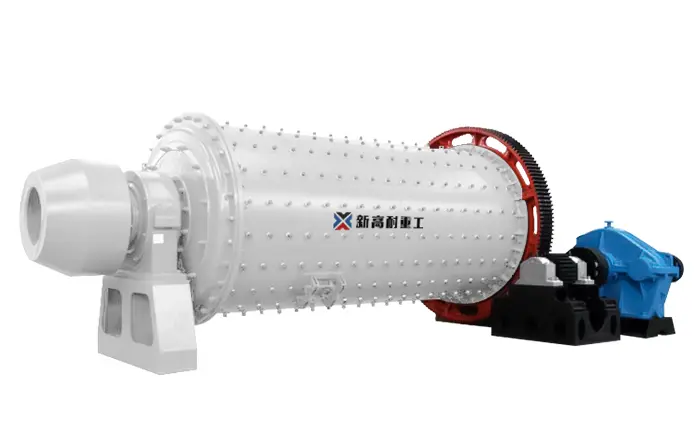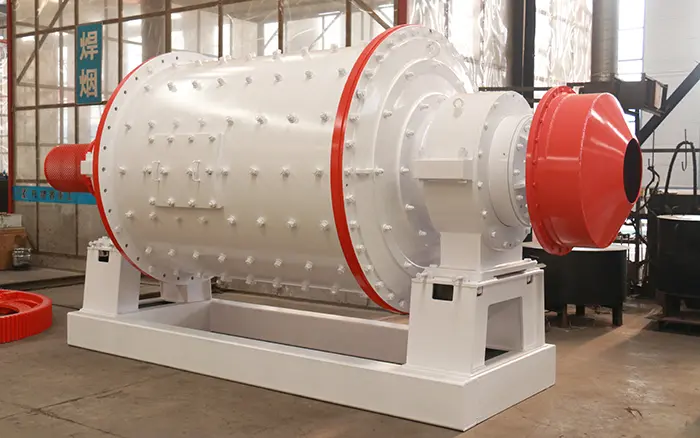
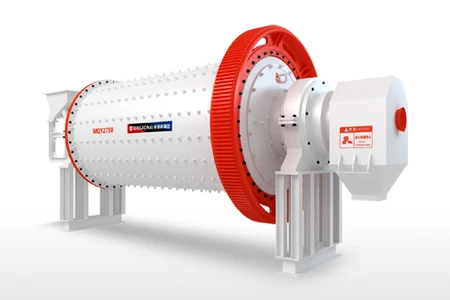
Ball mill bearing types should be identified by their location and function—not simply by whether a mill is large or small. The bearings supporting the rotating mill body perform a different duty from those supporting the pinion, gearbox or motor.
Main support arrangements may use plain bearings or rolling-element bearings, depending on the mill design. Some mills are supported through their end trunnions, while others use slide shoes beneath support rings around the shell.
Before selecting a bearing or ordering a replacement, identify the support arrangement, bearing position and original equipment specifications. A bearing that fits the available space is not necessarily suitable for the operating load, lubrication system or thermal movement.
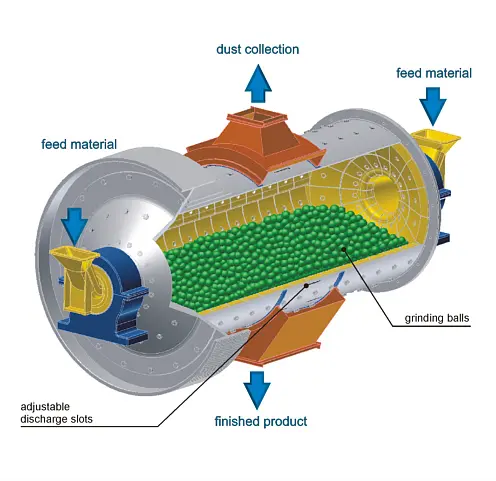
Main Support Bearings vs Drive-System Bearings
A ball mill contains several bearing positions. Discussing them as one interchangeable group can lead to incorrect selection.
| Bearing position | Main function | Identification priority |
|---|---|---|
| Main mill supports | Carry the rotating mill assembly and its operating load | Support arrangement, bearing construction and lubrication system |
| Pinion shaft | Support the shaft transmitting torque to the girth gear | Bearing designation, gear forces and locating arrangement |
| Gearbox | Support internal shafts and gears | Gearbox model, parts list and bearing specification |
| Motor | Support the motor rotor | Motor manufacturer’s bearing and lubrication requirements |
| Auxiliary equipment | Support shafts in associated mechanisms | Individual equipment drawings and service instructions |
For an overview of how these assemblies fit together, see our guide to ball mill components and their functions.
The following sections focus primarily on the bearings and arrangements supporting the mill body.
Main Ball Mill Bearing Types
1. Plain Bearings
Plain bearings support a rotating surface through a sliding interface rather than rolling elements. In an oil-lubricated mill support, a suitable lubricant film separates the journal or support ring from the bearing surface under its designed operating conditions.
Plain bearing assemblies may use replaceable bearing linings or pads. The lining material, geometry, clearances and lubrication requirements depend on the equipment design.
Their operation must be considered together with:
The condition of the mating journal or support ring.
Lubricant viscosity and cleanliness.
Oil delivery and cooling requirements.
Bearing alignment and load distribution.
Startup and shutdown procedures.
A new bearing lining alone will not correct an unsuitable journal surface, contaminated oil or a misaligned support.
Hydrodynamic and Hydrostatic Lubrication
These terms describe how the supporting oil film is generated. They are not names for rolling-element bearing types.
Hydrodynamic lubrication develops supporting pressure through relative motion and the geometry of the lubricated surfaces.
Hydrostatic lubrication uses an external pressure supply to generate a supporting film. Some mill bearing systems use high-pressure oil for lifting during startup or shutdown, with a different operating lubrication regime once the mill is running.
The pump sequence, pressure requirements and interlocks are equipment-specific. Do not assume that a high-pressure pump should stop after a fixed time or number of revolutions.
2. Rolling-Element Bearings
Rolling-element bearings carry load through rollers or balls between bearing rings. Where specified by the mill designer, they can be used in main support arrangements as well as drive-system components.
Spherical roller bearings are one option for applications requiring substantial load capacity and accommodation of angular misalignment. However, their self-aligning capability does not eliminate the need for correct installation, sound foundations or controlled shaft movement. SKF’s spherical roller bearing overview explains their construction and general operating characteristics.
Other rolling bearing designs may be specified for particular shafts or assemblies. The correct choice depends on the component’s duty, not a general rule such as “small mills use ball bearings” or “large mills use roller bearings.”
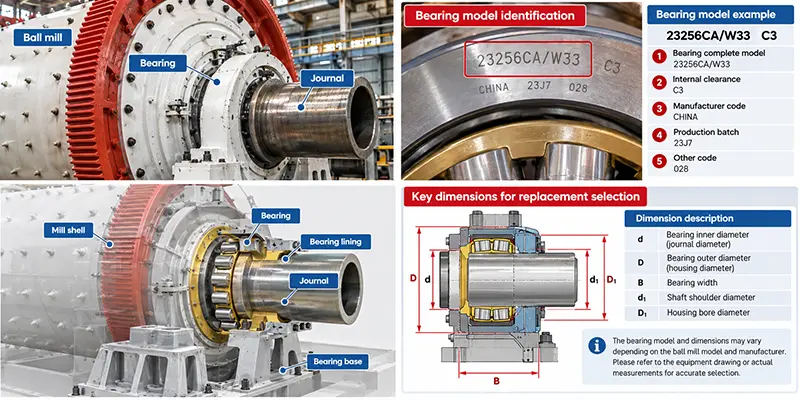
For replacement purposes, confirm the complete bearing designation, including any suffixes affecting clearance, cage, seals or other construction details.
Trunnion Bearings and Slide Shoe Bearings: What Is the Difference?
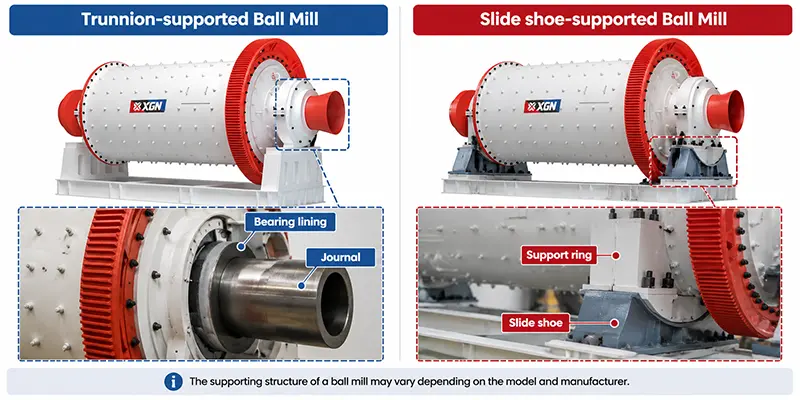
“Trunnion support” and “slide shoe support” describe where and how the mill is supported. They should not be mixed with plain-versus-rolling bearing classifications as though all four terms describe the same thing.
Trunnion-Supported Mills
A trunnion-supported mill transfers its support loads through journals at the mill ends.
The trunnion is the rotating component. The trunnion bearing supports its external journal. Where fitted, a trunnion liner protects the internal material passage; it is not the main bearing lining.
Depending on the original design, the trunnion support may use a plain bearing arrangement or an engineered rolling-element arrangement.
Slide Shoe-Supported Mills
A slide shoe arrangement supports the mill through sliding pads beneath support rings around the shell, rather than through end journals.
As one manufacturer-specific example, Fuller’s cement ball mill brochure describes support rings running on self-aligning, hydrodynamically lubricated slide shoes. Its design also provides for axial movement associated with thermal expansion. This illustrates why slide shoe supports should be treated separately from trunnion supports—not as an interchangeable replacement bearing.
| Arrangement | Rotating support surface | Key distinction |
|---|---|---|
| Trunnion support | End journal | Load passes through the mill-end support |
| Slide shoe support | Support ring around the shell | Load passes through sliding pads beneath the ring |
Neither arrangement is universally better. Each forms part of an engineered mill structure.
Plain Bearings vs Rolling Bearings
The choice between plain and rolling bearings cannot be reduced to mill capacity alone.
| Consideration | Plain bearing arrangement | Rolling-element bearing arrangement |
|---|---|---|
| Load-carrying interface | Lubricated sliding surfaces | Rolling elements and raceways |
| Important mating surfaces | Journal or support ring and bearing lining | Shaft seat, housing seat and bearing rings |
| Lubrication requirements | Depend on film formation, oil supply and operating conditions | Depend on bearing design, speed, load and lubrication method |
| Replacement identification | Drawing, lining geometry, material and mating-surface condition | Complete bearing designation, fits and internal clearance requirements |
| Installation concerns | Contact, alignment, clearances and lubrication provisions | Mounting method, fits, clearance and locating arrangement |
Changing from one system to another is an engineering modification, not a like-for-like spare-part substitution. Housing geometry, shaft interfaces, lubrication, axial restraint and support loads may all require reassessment.
How to Identify the Correct Bearing for Your Ball Mill
Confirm the Bearing Position
Start with the failed or replacement component’s exact location.
Is it a main mill support, a pinion bearing, a gearbox bearing or a motor bearing? A photograph of the whole assembly is often more useful than a close-up of an unidentified loose part.
Check the Original Drawings and Designation
For rolling bearings, record the complete marking rather than only the basic number.
For plain bearings or slide shoes, obtain the relevant assembly and component drawings. Confirm whether the enquiry concerns the complete assembly, a bearing lining, a pad, a housing or another associated part.
Do not identify a bearing solely from the mill’s production capacity.
Confirm Loads, Speed and Axial Movement
The support must accommodate the operating load and the movement allowed by the original design.
Determine how axial location is controlled and where thermal expansion is accommodated. Incorrect restraint can introduce additional loading even when the replacement component appears dimensionally correct.
Verify Lubrication and Sealing
Confirm the specified lubricant, delivery method, cooling provisions and contamination-control arrangement.
Do not substitute grease for oil, change viscosity or alter pump settings based on a general bearing guide. Use the equipment documentation and approved engineering instructions.
Inspect the Mating Components
Before fitting a replacement, inspect the relevant journal, shaft seat, support ring or housing.
Scoring, damaged fits, contamination, misalignment or a loose housing may damage a replacement bearing if the underlying problem remains unresolved.
Bearing Condition Checks That Matter
Bearing monitoring should support the mill’s operating procedures, not replace them.
Useful observations include:
Temperature trends at consistent measurement locations.
Changes in vibration or noise.
Lubricant pressure, flow or level, where applicable.
Filter condition and lubricant contamination.
Seal condition and evidence of leakage.
Housing movement or loose connections.
A temperature rise does not, by itself, prove that the bearing must be replaced. Possible causes include lubrication problems, cooling issues, contamination, unsuitable loading or mechanical damage.
Use the manufacturer’s alarm limits and shutdown instructions. Do not apply a single temperature limit to every bearing position.
For the wider inspection schedule, these checks can be incorporated into a ball mill maintenance plan. Model-specific instructions take precedence over general maintenance advice.
Before opening a housing, taking contact measurements or carrying out replacement work, qualified personnel must isolate and secure the equipment under the site’s approved procedures.
Information to Provide Before Ordering Replacement Parts
Prepare the following information to reduce identification errors:
Mill manufacturer, model and serial number.
Bearing position and assembly photographs.
Complete bearing designation or original part number.
Assembly and component drawings, where available.
Shaft, journal, housing or support-ring dimensions relevant to the part.
Lubrication and sealing arrangement.
Photographs and inspection records showing the damage.
Details of any previous modification or bearing conversion.
For rolling bearings, bore diameter alone is insufficient. For plain bearing components, matching the overall dimensions does not establish that the material, oil grooves, clearances or load-bearing geometry are suitable.
Contact XINGAONAI with the mill details, component identification and available drawings to confirm replacement-part availability and scope of supply.