Producing manufactured sand from stone is not simply a matter of placing raw rock into one crusher. The correct equipment depends on the hardness, abrasiveness, moisture, feed size and fracture characteristics of the source material, as well as the required capacity and finished-sand specification.
A machine suitable for limestone may suffer excessive wear when processing granite. Conversely, using a heavy-duty hard-rock circuit for a low-abrasion material may increase investment and operating costs unnecessarily.
This guide explains how to match a sand making machine from stone to different raw materials. It focuses on material and machine selection rather than repeating the complete stone-to-sand production process.
What Is a Sand Making Machine from Stone?
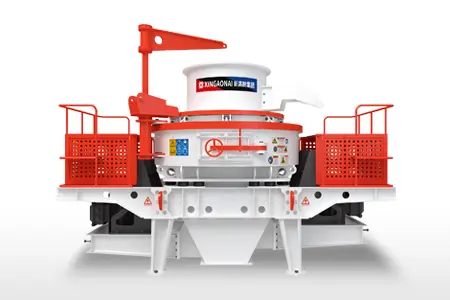
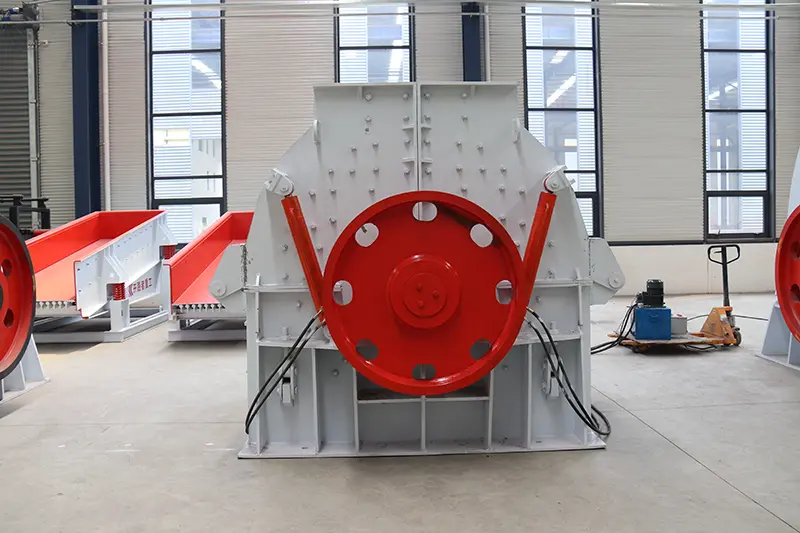
A sand making machine from stone is a crushing or shaping machine used to reduce prepared rock into manufactured sand or fine aggregate.
Depending on the machine type, size reduction may be achieved through:
High-speed impact
Material-on-material collision
Hammer impact and grinding
Compression between rollers
A combination of crushing and shaping
The machine is normally installed after primary or secondary crushing when processing hard rock. Some hammer-type machines can accept larger pieces of softer and more brittle stone, but their suitability must still be checked against material abrasiveness and moisture.
For a general explanation of the available machine types, see what a sand making machine is.
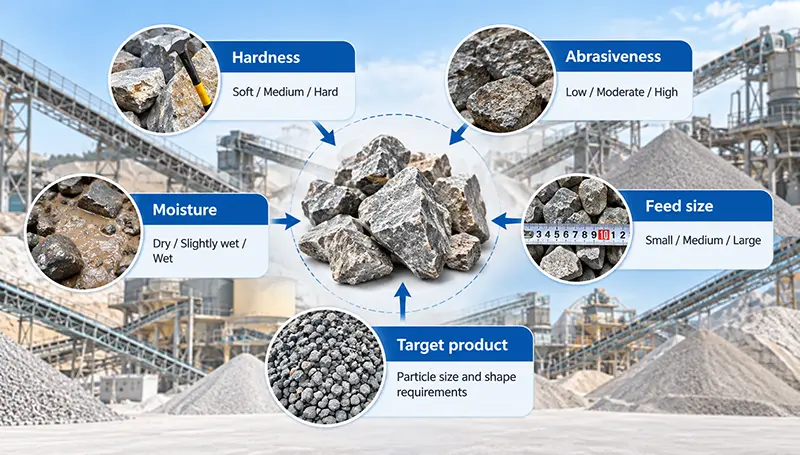
Start with the Properties of the Stone
The rock name alone is not sufficient for selecting a machine. Two deposits described as limestone or granite may have different mineral compositions, strengths and wear characteristics.
The following information should be evaluated before equipment selection.
1. Hardness and compressive strength
Hard stone requires more crushing force and normally benefits from staged size reduction. Feeding large pieces of hard rock directly into a final-stage sand maker can reduce capacity, increase wear and produce an unstable circulating load.
2. Abrasiveness
Abrasiveness determines how quickly rotor tips, hammers, liners, grate bars or roller surfaces wear.
Quartz-rich granite and some river pebbles can be highly abrasive. Limestone, shale and coal gangue are often less abrasive, although representative samples should still be tested.
3. Maximum feed size
The feed must remain within the selected model’s limits. The published maximum feed size should not automatically be treated as the ideal continuous operating size.
A narrower and more consistent feed distribution normally helps the sand-making stage operate more steadily.
4. Moisture and clay content
Wet and sticky feed can adhere to the crushing chamber, block grate openings and reduce screening efficiency. Material containing excessive clay may need pre-screening, washing or another form of preparation before sand making.
5. Required finished product
Equipment selection also depends on whether the plant needs:
0–5 mm manufactured sand
Fine aggregate plus coarse aggregate
Improved particle shape
Controlled fines content
A particular gradation for concrete, mortar or asphalt
The finished sand must ultimately be tested against the specifications required by the project and local market.
Which Machine Is Suitable for Each Type of Stone?
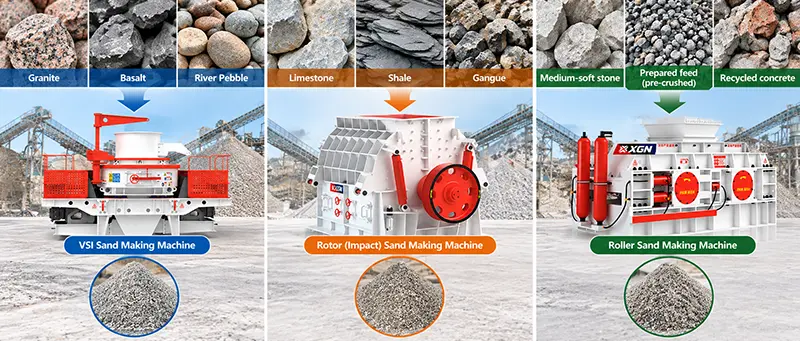
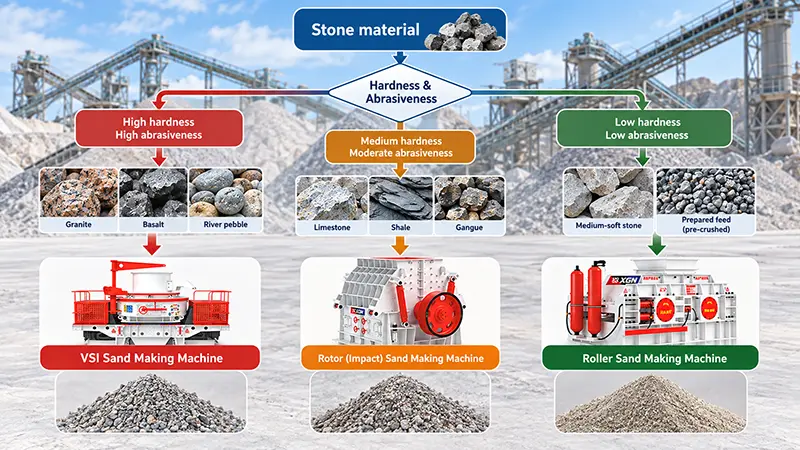
Granite
Granite is generally hard and can be highly abrasive, especially when it contains a significant proportion of quartz.
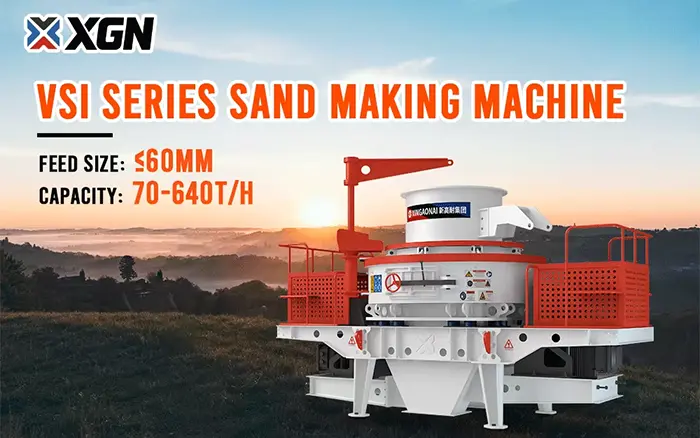
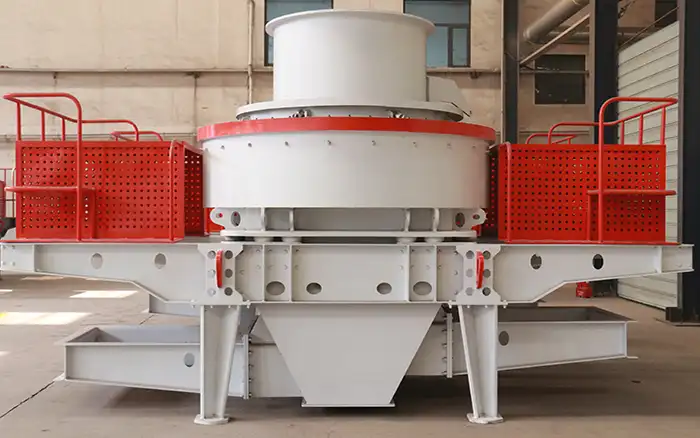
For most granite sand projects, the material should first be reduced by primary and secondary crushers. A VSI vertical shaft impact crusher can then be used for final fine crushing and particle shaping.
A typical selection approach is:
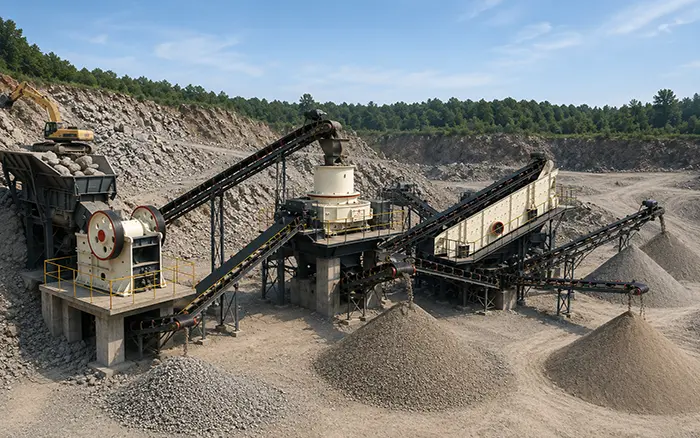
Primary crushing → Secondary crushing → Screening → VSI sand making
The upstream equipment must reduce the granite to a size that fits the selected VSI model. XINGAONAI’s current VSI range lists a maximum feed size of 60 mm and capacities of 70–640 t/h, but the actual model should be confirmed from material tests and the complete circuit requirements.
A single-rotor or roller sand maker should not be selected for abrasive granite solely because it has sufficient motor power. Wear cost and product stability are equally important.
Basalt
Basalt is hard, dense and often abrasive. Its sand-making route is therefore similar to that used for granite.
A cone crusher is commonly considered for secondary crushing, while a VSI can provide the final reduction and shaping stage. Stable feed size is especially important because oversized basalt can increase impact loading and accelerate wear.
The selection should consider:
Actual basalt strength and abrasiveness
VSI feed-size limit
Required sand gradation
Rotor and liner wear
Screening efficiency
Expected circulating load
River pebbles
River pebbles are usually hard, rounded and wear-resistant. Although their natural surface is smooth, they can still be demanding to crush.
A staged circuit followed by VSI shaping is generally more appropriate than feeding large pebbles into a hammer-type sand maker. Pre-screening can prevent material that already meets the required size from being unnecessarily crushed.
Where the final product must have a controlled shape, read the detailed vertical shaft impact crusher working principle before selecting the crushing mode and operating settings.
Limestone
Limestone is usually easier to crush than granite or basalt, although its abrasiveness, moisture and clay content vary between deposits.
Several machine types may be considered:
A single-rotor machine for small- to medium-capacity production
A double-rotor machine where higher throughput is required
A roller sand maker for appropriately sized, medium-soft feed
A VSI when particle shaping is a major requirement
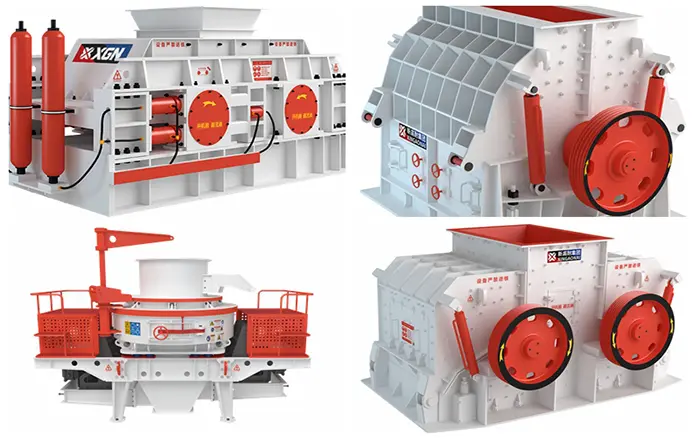
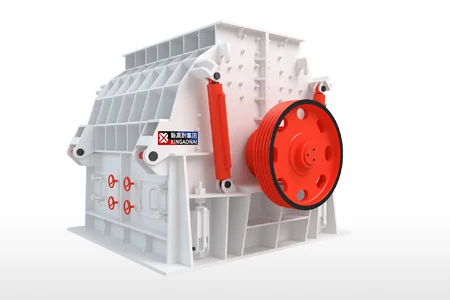
The Single Rotor Sand Making Machine is currently rated at 20–150 t/h with a maximum stated feed size of 700 mm. It is positioned for limestone, shale, coal gangue, gypsum, dolomite and similar medium-soft, brittle materials.
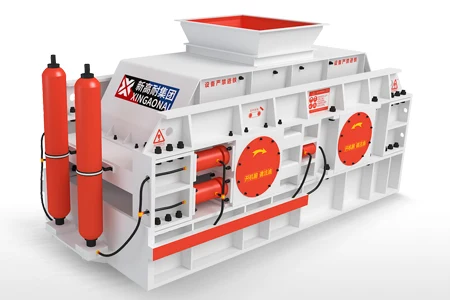
For higher-capacity limestone applications, the Double Rotor Sand Making Machine lists capacities of 150–300 t/h and feed sizes up to 280 mm.
These are nominal product ranges. Final capacity depends on the feed distribution, moisture, required discharge size and operating conditions.
Dolomite and bluestone
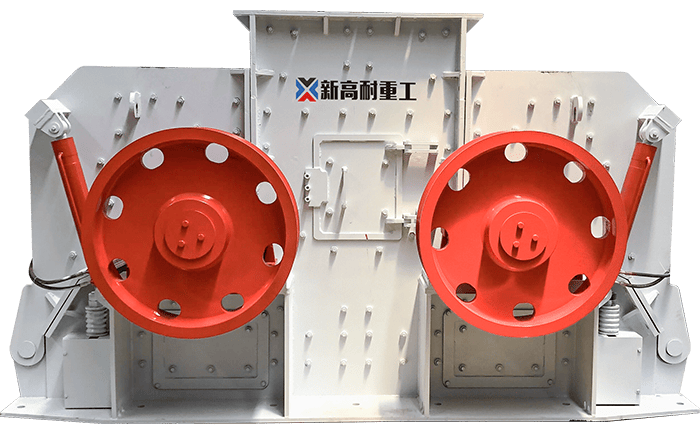
Dolomite and bluestone may be suitable for hammer-type or roller-type sand-making equipment when their hardness and abrasiveness remain within the selected machine’s operating range.
The choice between a single rotor, double rotor and roller machine mainly depends on:
Maximum feed size
Required throughput
Desired discharge size
Moisture content
Expected hammer or roller wear
If a more demanding particle shape is required, a VSI shaping stage may still be considered after the material has been reduced to a suitable size.
Shale and coal gangue
Shale and coal gangue are generally better candidates for hammer-type sand making than high-abrasion hard rocks.
A single-rotor machine may suit moderate production requirements, while a double-rotor machine can provide a higher nominal capacity. The material should be checked for moisture because wet, sticky feed can affect grate discharge and screening.
Recycled concrete
Recycled concrete varies considerably in strength and composition. It may contain steel, wood, soil, asphalt or other contaminants.
Before sand making, the process may require:
Removal of reinforcing steel
Manual or mechanical impurity separation
Primary crushing
Screening
Removal of excessive soil and light contaminants
The final machine should be selected only after the cleaned recycled aggregate has been tested. A VSI may be used when further shaping is required, but no machine can compensate for poorly sorted feed.
Comparison of Sand Making Machines for Stone
| Machine type | Suitable material direction | Feed size | Capacity | Primary selection reason |
|---|---|---|---|---|
| VSI vertical shaft impact crusher | Prepared hard or abrasive rock; aggregate shaping | ≤60 mm | 70–640 t/h | Fine crushing and particle shaping |
| Single rotor sand making machine | Limestone, shale, coal gangue, dolomite and similar brittle materials | ≤700 mm | 20–150 t/h | Larger feed acceptance and relatively simple structure |
| Double rotor sand making machine | Limestone, gangue, shale and similar materials | ≤280 mm | 150–300 t/h | Higher-capacity multi-stage impact crushing |
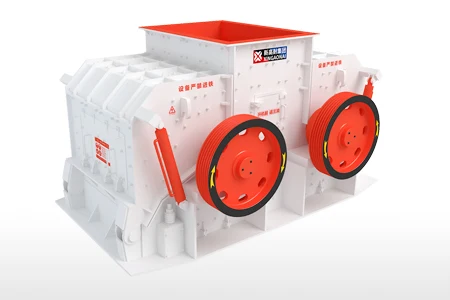
| Roller sand making machine | Medium-hard or softer prepared material | ≤40 mm | 50–300 t/h | Compression crushing and adjustable roller gap |
These figures are the current category specifications for XINGAONAI products. They should be used for preliminary comparison rather than as guaranteed project output. Actual performance depends on the material and required finished product.
For a broader explanation of these mechanisms, see how different sand making machines work.
How to Match the Machine to the Project
Hard and abrasive rock
For granite, basalt, quartz-rich stone and hard river pebble, prioritize:
Staged crushing
Controlled VSI feed
Wear-part accessibility
Closed-circuit screening
Cost per tonne rather than purchase price alone
A VSI is normally considered for the final sand-making or shaping duty, not as a replacement for primary crushing.
Soft or medium-soft brittle stone
For limestone, shale, gangue and similar feed, single- or double-rotor machines may reduce the number of crushing stages in suitable applications.
Select between them according to capacity:
20–150 t/h: evaluate a single-rotor model
150–300 t/h: evaluate a double-rotor model
Higher or more complex requirements: assess the complete line rather than extrapolating one machine’s rating
Prepared feed requiring controlled reduction
A roller sand maker can be considered when:
Feed is already within the required size
Material is medium-hard or softer
Abrasiveness is acceptable
An adjustable crushing gap is useful
A compact compression-based machine is preferred
Highly abrasive granite and quartzite can cause rapid roller wear and are not the first-choice applications for this machine.
Existing aggregate requiring reshaping
If a plant already produces the correct size range but the particle shape is unsatisfactory, it may not need an entirely new primary crushing line. A VSI shaping stage and suitable screening circuit may be enough.
The decision should be based on the amount of material requiring reshaping and the effect on fines generation.
Six Steps for Selecting the Correct Machine
Step 1: Test a representative material sample
Do not base the selection only on the commercial name of the stone. Test or confirm:
Compressive strength
Abrasiveness
Moisture
Clay content
Bulk density
Existing particle-size distribution
Step 2: Define the feed
Provide the supplier with:
Maximum feed size
Normal feed-size range
Percentage of fines already present
Hourly feed rate
Variations expected during operation
Step 3: Define the finished product
Specify:
Required size fractions
Target sand gradation
Acceptable fines range
Particle-shape requirements
Intended application
Step 4: Calculate capacity across the whole circuit
The rated capacity of the sand maker is not automatically the output of the plant. Feeders, crushers, screens and conveyors must all be matched.
For complete line planning, refer to the stone crusher and sand making machine configuration guide.
Step 5: Compare wear and maintenance
Ask which parts contact the material, how they are replaced and how wear affects product size. A machine with a lower purchase price may have a higher cost per tonne when used on the wrong stone.
Step 6: Confirm selection through testing
Whenever possible, send representative material for a crushing test. Sample testing can reveal:
Actual capacity
Finished gradation
Fines generation
Particle shape
Expected wear pattern
Need for washing or classification
Common Selection Mistakes
Choosing only by capacity
Two machines with the same nominal capacity can perform very differently when processing different stones. Capacity must be evaluated together with wear, feed size and product requirements.
Treating maximum feed size as ideal feed size
The published maximum indicates an equipment limit, not necessarily the most efficient continuous feed condition. Consistent, appropriately sized feed usually improves stability.
Using a hammer machine for every stone
Hammer-type machines can be effective for suitable brittle materials, but they are not automatically economical for highly abrasive granite, basalt or quartz-rich feed.
Expecting one machine to replace an entire hard-rock line
Large hard-rock boulders usually require primary and secondary crushing before the final sand-making stage. A VSI is not a primary crusher.
Ignoring screening
Without accurate screening, oversized particles may enter the product or circulate excessively. The sand maker and screen must be selected as one operating system.
Guaranteeing sand quality from the crusher alone
Finished quality also depends on raw material, screening, classification, moisture, operating settings and, where necessary, washing. Final sand should be sampled and tested.
Information to Provide Before Requesting a Model
To obtain a useful equipment recommendation, provide:
Stone name and source
Maximum and normal feed size
Required production capacity
Required finished sizes
Intended use of the sand
Moisture and clay content
Desired particle shape
Project location and operating hours
Existing upstream and downstream equipment
Representative material test results, if available
This information is more useful than asking for the “best sand making machine” without describing the project.
Conclusion
Selecting a sand making machine from stone begins with the rock, not with a machine catalogue.
Hard and abrasive stones such as granite, basalt and river pebbles usually require staged crushing followed by VSI sand making or shaping. Softer and more brittle materials such as limestone, shale and coal gangue may be suitable for single-rotor, double-rotor or roller machines, depending on feed size and capacity.
The final decision should account for material tests, required sand quality, screening efficiency, wear cost and the performance of the complete circuit. Providing accurate feed and product data allows the supplier to recommend a machine that is technically suitable instead of simply selecting the largest available model.