Sand Crusher

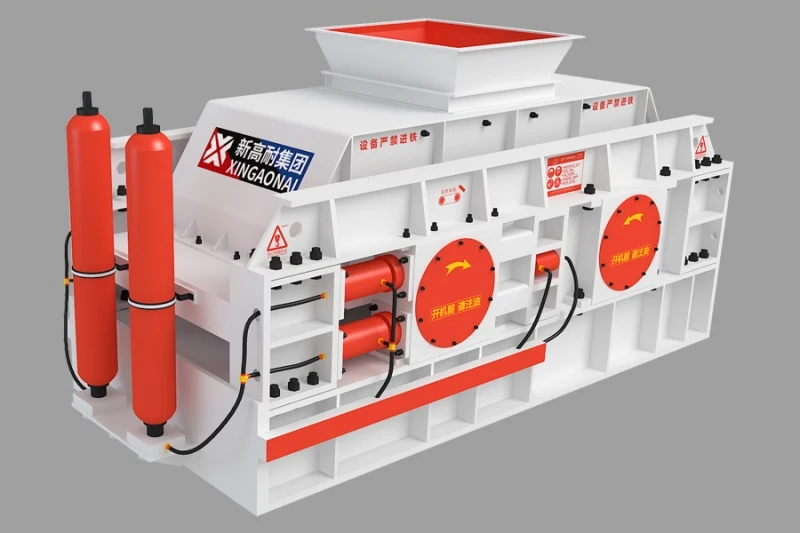
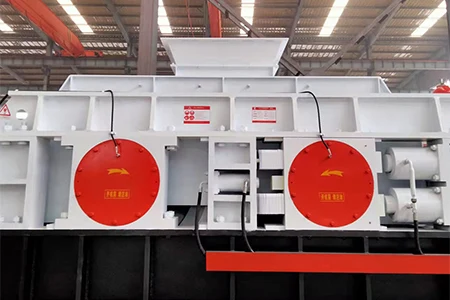
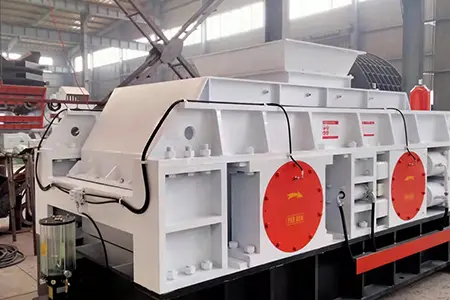
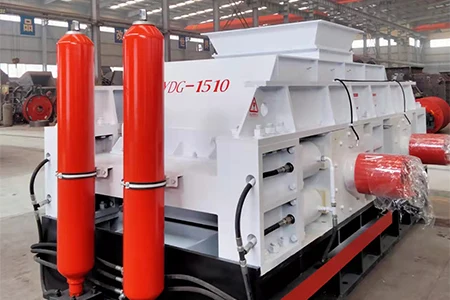
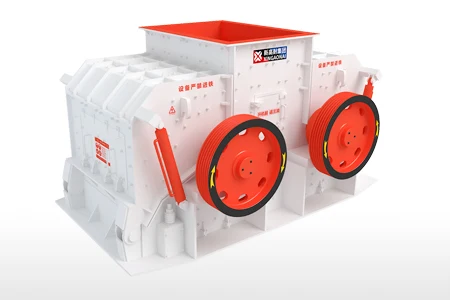
Roller Sand Making Machine

CAPACITY

50-300t/h

FEED SIZE

≤40mm
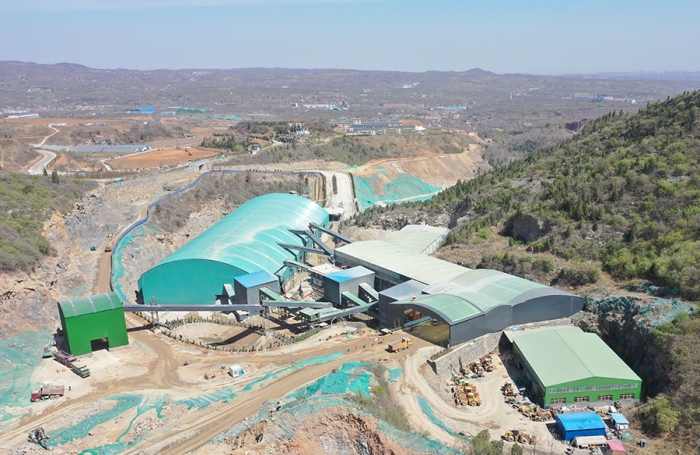
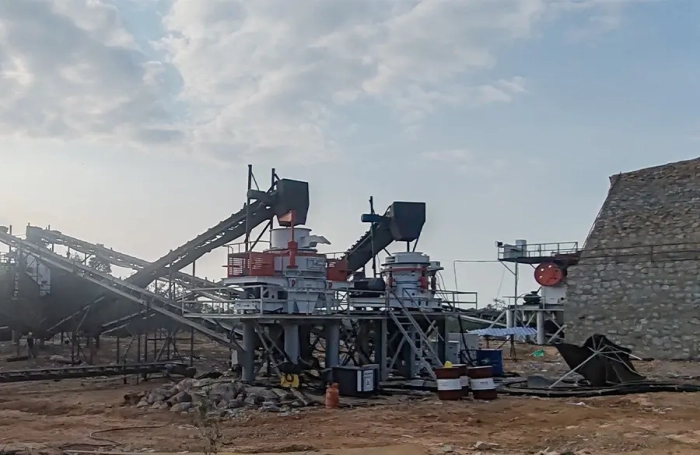
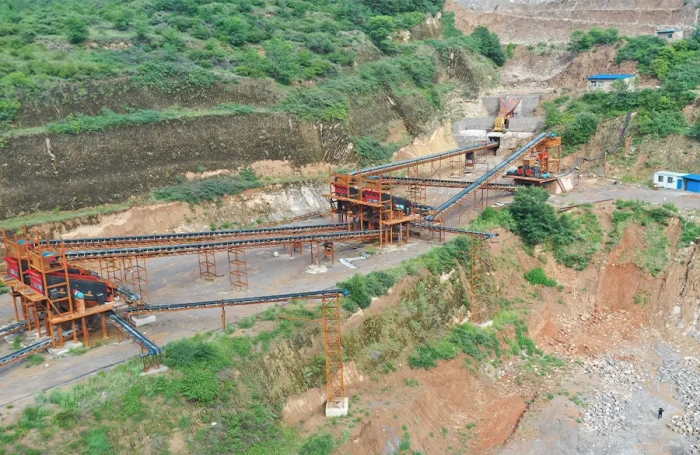
Application areas:Roller sand making machine is widely used in the crushing and sand making of materials in gravel yards, construction, mining, water conservancy and other fields.
Applicable materials:Roller sand making machine, also known as roller crusher, is suitable for medium and fine crushing of materials with medium hardness and below, such as limestone and ceramic raw materials.

Product Overview

Roller Sand Making Machine uses the principle of double-roller extrusion and lamination extrusion to realize material extrusion and molding efficiently and quickly. It is a world-recognized production capacity and low-energy briquette granulation equipment, and is widely used in the fields of coal energy, energy conservation and environmental protection.

Key Advantages

Easy to adjust

It can be adjusted by adjusting the wedge block or spacer between the two rollers to obtain the ideal particle size of the finished product.

Wide application range

It can be used for mineral processing, chemical industry, cement, refractory materials, abrasive materials, building materials and other industrial sectors, and various high and medium hardness ores and rocks, especially in the production of melon stones and other products in the building materials industry.

Accessories use high-quality materials

The whole machine is made of high-quality wear-resistant materials, especially the grinding roller, which can be used repeatedly and has low failure rate, which can bring long-term benefits to customers.

Low production cost

Made of advanced materials, the parts wear less, reduce the number of replacement parts, and reduce production costs.

Working Principle

Working Principle of Roller Sand Making Machine
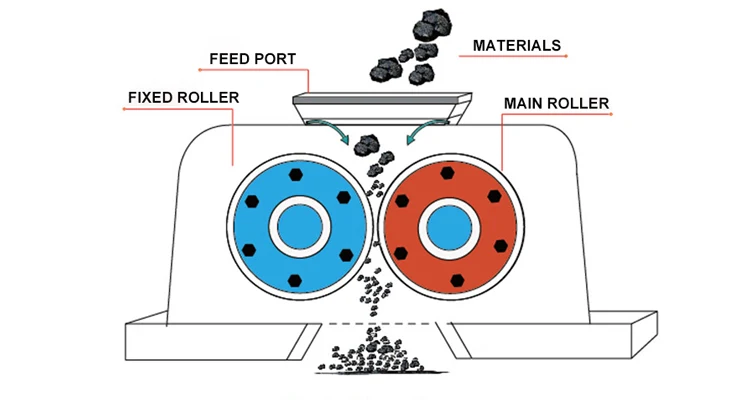
The roller sand making machine operates by using two rotating rollers that compress and crush materials into fine particles. The raw material enters the crushing chamber and is subjected to strong extrusion and shear force between the rollers. As the rollers rotate in opposite directions, the material is gradually broken down into uniform sand-sized particles. The discharge size can be adjusted by controlling the gap between the rollers, ensuring stable output and high efficiency. This machine is widely used for sand production in mining, construction and aggregate industries.

Technical Parameters

Model

Roller diameter

(mm)

Roller surface width

(mm)

Feed size

(mm)

Motor power

(kw)

Capacity

(tph)

YDG-10801000800≤302*3750-80
YDG-121012001000≤302*75100-120
YDG-121212001200≤302*90120-150
YDG-151015001000≤302*132140-170
YDG-181018001000≤402*220160-230
YDG-201220001200≤402*315250-300


We are here waiting for you
Our professional team can tailor the solution to suit your needs and answer your questions
Contact Engineer

Frequently Asked Questions

A roller sand making machine uses two or more counter-rotating rollers to crush and grind materials by compressive force. As material is fed between the rollers, it is squeezed and broken into fine sand-sized particles. The gap between the rollers determines the output size.

It is well suited for medium-soft to medium-hard materials including limestone, coal, clinker, feldspar, and soft ores. It is not recommended for highly abrasive hard rocks such as granite or quartzite, as these will significantly accelerate roller surface wear.

Output fineness is controlled by adjusting the gap between the rollers. A smaller gap produces finer sand (down to 0–5mm), while a larger gap produces coarser output. The roller gap can be set using the adjusting bolts and spring assembly on the machine frame.

The roller surface (toothed or smooth) should be inspected regularly for uneven wear. If wear grooves develop, the roller surface must be resurfaced or the roller replaced to maintain consistent output gradation. Bearing lubrication should be checked every 200 operating hours.

Roller sand machines offer lower noise levels, simpler structure, and a more compact footprint. They produce a relatively uniform, fine-grained output with low over-crushing. They are cost-effective for smaller production lines and softer material applications where a VSI's high-speed impact is unnecessary.

Explore Our Projects

Send message

Please enter your name
Please enter your email
Please enter your message