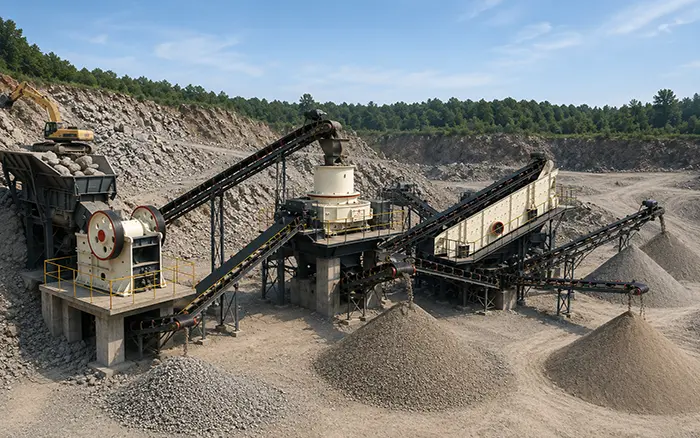
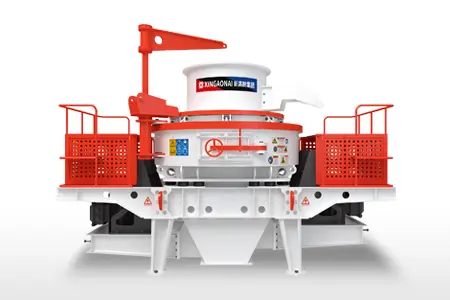
A sand making machine is a type of crushing equipment used to reduce rock, aggregate, or recyclable mineral material into manufactured sand and fine aggregate.
Unlike primary crushers, which mainly reduce large rocks to manageable sizes, sand making machines normally operate in the later stages of a crushing plant. Their purpose may include fine crushing, particle shaping, controlling the final particle size, or producing material suitable for screening into manufactured sand.
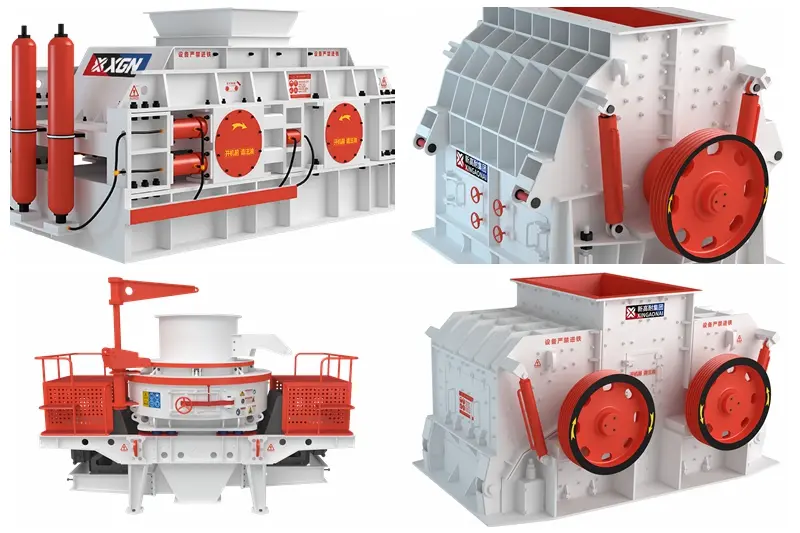
The term “sand making machine” does not refer to only one machine design. It can include vertical shaft impact crushers, single-rotor machines, double-rotor machines, and roller-type equipment. Each design uses a different crushing mechanism and is suited to different materials, feed sizes and production requirements.
For this reason, selecting a sand making machine should begin with the raw material and finished-product specification—not simply the machine name.
XINGAONAI offers several types of sand making machines for different feed materials, capacities and sand production processes.
What Does a Sand Making Machine Do?
A sand making machine performs one or more of the following functions:
Reduces pre-crushed stone into smaller particles.
Produces fine aggregate or manufactured sand.
Improves particle shape when the selected machine has a shaping function.
Controls the upper particle size before final screening.
Processes suitable quarry by-products or recycled mineral materials.
Provides feed for screening, classification, washing or fine-material recovery.
Not every machine performs all these functions in the same way.
A VSI crusher is commonly selected when particle shaping and hard-rock processing are important. Rotor-and-hammer machines can accept larger feed and may combine crushing and sand production for suitable softer materials. Roller machines reduce material mainly through compression and are generally applied under different feed and material conditions.
Therefore, claims such as “every sand making machine produces rounded particles” or “one machine is suitable for every type of rock” should be avoided.
Sand Making Machine vs Ordinary Crusher
A conventional crusher and a sand making machine may both reduce material size, but they usually occupy different stages in the processing circuit.
| Equipment | Main purpose | Typical position |
|---|---|---|
| Jaw crusher | Reduces large raw rock | Primary crushing |
| Cone or impact crusher | Produces smaller aggregate | Secondary crushing |
| Sand making machine | Fine crushing, sand production or shaping | Tertiary or final crushing |
| Vibrating screen | Separates products by size | After crushing stages |
| Sand washer or classifier | Removes impurities or controls fines | After sand production |
A sand making machine usually receives material that has already been reduced by upstream equipment. However, some single-rotor and double-rotor designs can accept larger feed than a typical VSI crusher.
The correct arrangement depends on the machine type, material properties and required finished product.
Main Types of Sand Making Machines
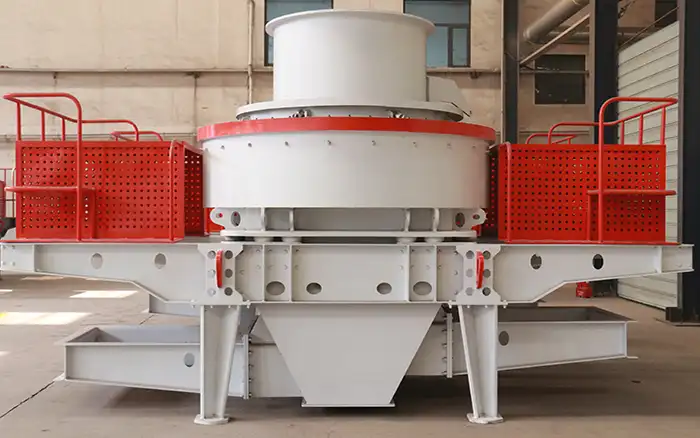
1. VSI Vertical Shaft Impact Crusher
A VSI vertical shaft impact crusher accelerates material through a high-speed rotor. The particles are broken by impact against other particles or against components inside the crushing chamber.
VSI equipment is commonly considered for:
Granite, basalt and diabase
River pebbles
Hard or abrasive mineral materials
Manufactured sand requiring improved particle shape
Final aggregate shaping
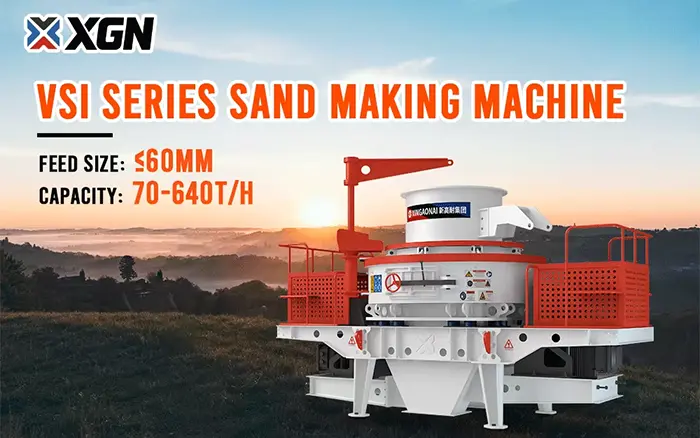
The XINGAONAI VSI range has a listed feed size of up to 60 mm and capacities from 70 to 640 t/h, depending on the model, feed method, material and operating conditions.
A VSI normally requires properly sized feed. It should not receive quarry-sized rock directly.
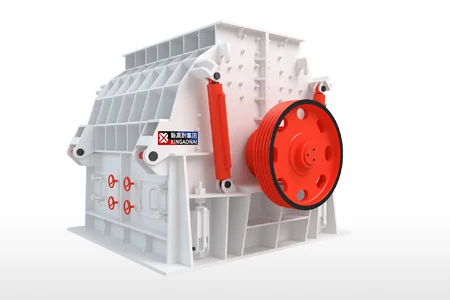
2. Single-Rotor Sand Making Machine
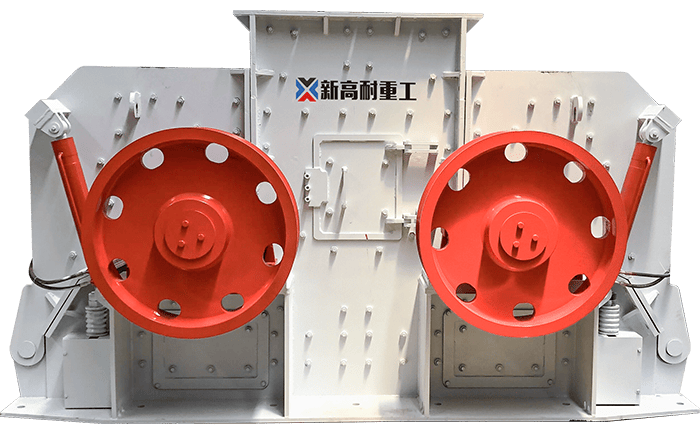
A single-rotor sand making machine uses a rotating rotor and hammer system to crush material through impact. A grate or discharge-control structure helps regulate the finished particle size.
This type can be considered for suitable materials such as:
Limestone
Bluestone
Dolomite
Suitable construction waste
Other relatively brittle materials confirmed through testing
Its larger allowable feed size can simplify the process in certain limestone or construction-material applications. However, it should not automatically be recommended for highly abrasive hard rock without evaluating wear and operating cost.
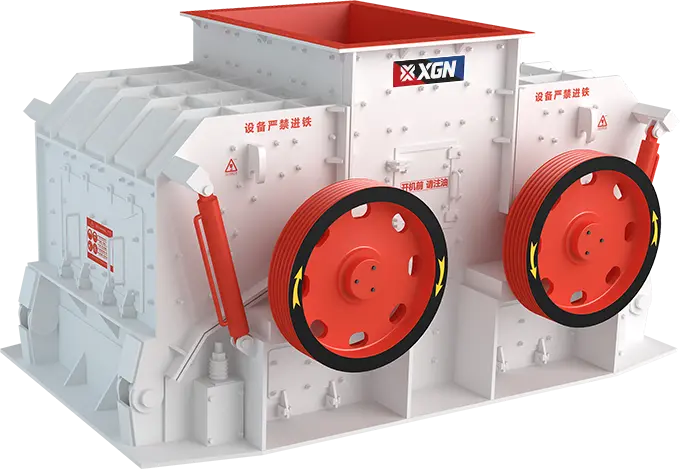
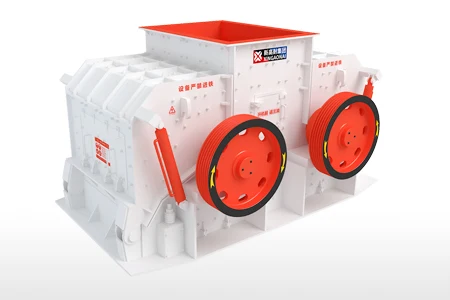
3. Double-Rotor Sand Making Machine
A double-rotor sand making machine uses two rotors to perform consecutive impact-crushing stages inside one machine.
The first rotor reduces the incoming material, after which the second rotor continues crushing it to a finer size. This structure is suitable for higher-capacity processing of compatible materials such as limestone, bluestone, gangue and shale.
XINGAONAI currently lists a capacity of 150–300 t/h and a maximum feed size of up to 280 mm, depending on the model.
This machine should be evaluated according to material abrasiveness because rotor and hammer wear can significantly affect operating cost.
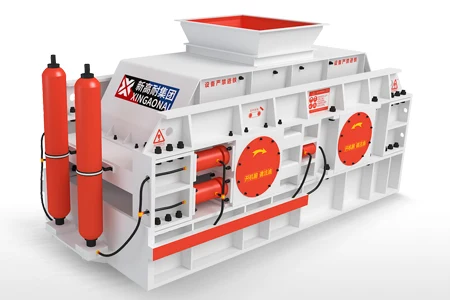
4. Roller Sand Making Machine
A roller sand making machine reduces material between rotating rollers, primarily through compression.
It can be suitable when the project requires:
Controlled fine crushing
Relatively uniform discharge
A compact equipment arrangement
Processing of compatible soft or medium-hard materials
Adjustable discharge size
The listed XINGAONAI range has a feed size of up to 40 mm and a capacity of 50–300 t/h. Final selection must still account for moisture, abrasiveness and the required proportion of fine material.
How Does a Sand Making Machine Work?
The exact working principle depends on the machine type.
In a VSI crusher, the rotor accelerates the material and creates high-speed particle-to-particle or particle-to-component impacts. A rotor-and-hammer machine uses repeated hammer impact, while a roller machine crushes material through compression between the rollers.
The machine is normally part of a larger circuit:
Pre-crushed material → Controlled feeding → Sand making → Screening → Qualified product
Oversized particles may be returned to the sand making machine, forming a closed circuit. Material that meets the required specification is discharged as a finished product or sent to washing, classification or fine-material recovery.
For a more detailed explanation of operating stages and components, read how a sand making machine works.
This article does not repeat the complete mechanism because the operating principles of VSI, hammer-type and roller machines are different.
What Materials Can Be Processed?
Sand making machines may process a wide range of materials, but machine selection must match material characteristics.
Hard and Abrasive Rock
Examples include:
Granite
Basalt
Diabase
River pebbles
Some iron ores
A VSI-based circuit is commonly evaluated for these materials, especially where particle shaping is required. Upstream jaw and cone crushing may be needed before the material reaches the VSI.
Softer or More Brittle Materials
Examples include:
Limestone
Bluestone
Dolomite
Shale
Coal gangue
Single-rotor, double-rotor or roller equipment may be considered, depending on feed size, capacity and finished-product requirements.
Recycled Materials
Suitable concrete or construction waste may be processed after contaminants such as steel, wood and soil have been removed.
The machine should not be selected from the material name alone. Two deposits described as “granite” or “limestone” can have different abrasiveness, moisture and fracture characteristics.
Representative material testing is recommended when wear cost or product quality is critical.
Where Is Manufactured Sand Used?
Properly processed manufactured sand may be used in:
Concrete production
Asphalt mixtures
Dry-mix mortar
Road construction
Precast concrete products
Railway and infrastructure projects
Quarry aggregate production
However, passing through a sand making machine does not automatically make the output suitable for every construction application.
The final product must be evaluated for:
Particle-size distribution
Particle shape
Fines content
Clay and impurity content
Moisture
Strength and durability
Applicable local standards
Screening, classification or washing may be required after crushing.
How to Choose a Sand Making Machine
1. Identify the Raw Material
Confirm the material type, compressive strength, abrasiveness, moisture, clay content and bulk density.
Hard, abrasive rock generally requires a different crushing approach from limestone or shale.
2. Determine the Maximum Feed Size
The selected machine must accept the actual top size of the feed.
If the material is too large, upstream crushing will be required. Feed size also influences capacity, wear and the stability of operation.
3. Define the Required Capacity
State the required production in tonnes per hour and clarify whether this means:
Total machine throughput
Finished manufactured sand output
Output of all aggregate sizes
Dry or wet material capacity
A machine’s rated throughput is not necessarily the same as the plant’s finished-sand production.
4. Specify the Finished Product
Provide the required product sizes, gradation, particle-shape requirements and permitted fines content.
The equipment arrangement for general fine aggregate may differ from one designed for concrete-grade manufactured sand.
5. Consider the Complete Process
A sand making machine cannot compensate for an incorrectly designed upstream or downstream system.
The complete plant may need:
Feeder
Primary crusher
Secondary crusher
Sand making machine
Vibrating screen
Return conveyor
Sand washer or classifier
Dewatering or fine-sand recovery equipment
The guide to the stone-to-sand process explains how these stages work together.
6. Evaluate Wear and Operating Cost
Do not compare machines only by purchase price.
Consider:
Wear-part consumption
Power consumption
Required maintenance
Expected downtime
Availability of replacement parts
Finished-product yield
Recirculating load
For abrasive rock, wear cost can be more important than the initial equipment price.
Sand Making Machine Selection Overview
| Project condition | Machine commonly considered | Main reason |
|---|---|---|
| Hard rock and particle shaping | VSI crusher | Impact crushing and shaping capability |
| Limestone with relatively large feed | Single-rotor machine | Larger feed acceptance and impact crushing |
| Higher-capacity limestone sand production | Double-rotor machine | Two-stage crushing within one machine |
| Controlled fine crushing of compatible material | Roller machine | Compression crushing and adjustable discharge |
| Strict finished-sand grading | Machine plus closed-circuit screen | Better particle-size control |
| Feed containing clay or excessive dust | Crushing plus washing/classification | Improved final-product cleanliness |
This table is only a preliminary guide. Final equipment selection should be based on material testing and project requirements.
Information Needed Before Selecting a Model
To recommend a suitable model and production flow, provide:
Raw material and source
Maximum feed size
Required capacity in tonnes per hour
Required finished-product sizes
Desired proportion of manufactured sand
Material moisture and clay content
Required particle shape or applicable standard
Project location and power conditions
With this information, the equipment and surrounding crushing, screening and conveying stages can be matched more accurately.
Conclusion
A sand making machine is equipment used for fine crushing, manufactured-sand production or particle shaping during the later stages of an aggregate processing plant.
VSI, single-rotor, double-rotor and roller machines use different crushing mechanisms and should not be treated as interchangeable equipment. The right choice depends on raw-material properties, maximum feed size, required capacity, finished-product specification and operating cost.
Before choosing a model, evaluate the complete crushing and screening circuit and provide representative material information. This produces a more reliable selection than comparing machine capacity or price alone.