Producing manufactured sand from stone usually requires more than one crusher.
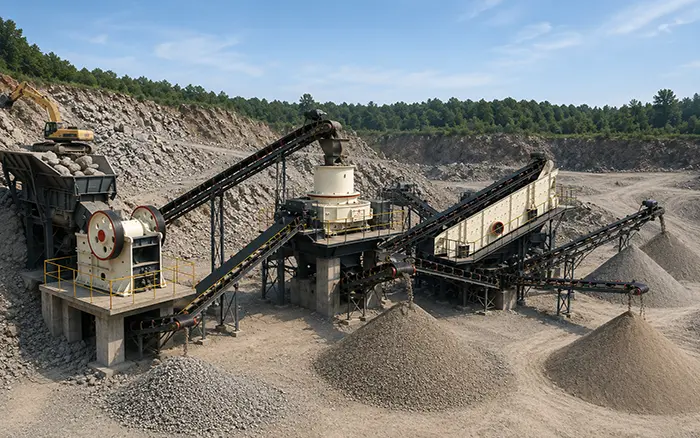
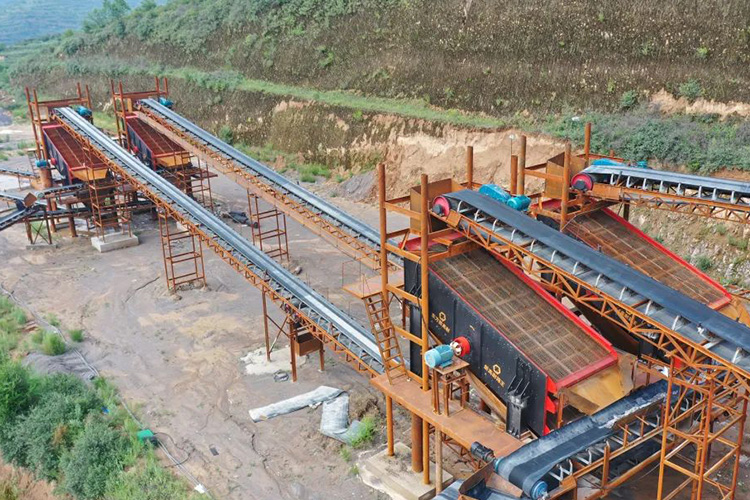
A stone crusher reduces large quarry rock into smaller aggregate, while a sand making machine performs the final fine-crushing or particle-shaping stage. Screens, feeders and conveyors connect these machines into a controlled production circuit.
A typical configuration may include:
Feeder → Jaw Crusher → Cone or Impact Crusher → Vibrating Screen → Sand Making Machine → Final Screen
However, this configuration should not be copied for every project. The correct combination depends on:
Raw material
Maximum feed size
Hardness and abrasiveness
Required capacity
Finished-product sizes
Required manufactured-sand proportion
Particle-shape requirements
Moisture and clay content
Available water
Local operating conditions
This guide focuses specifically on equipment configuration. For a complete explanation of every processing stage, see the stone-to-sand production process.
1. Is a Stone Crusher the Same as a Sand Making Machine?
No. The machines normally perform different functions.
Stone crusher
A stone crusher handles the primary or secondary reduction stages.
Depending on the application, this may include:
Jaw crusher
Gyratory crusher
Cone crusher
Impact crusher
Hammer crusher
Its main function is to reduce large raw stone into aggregate suitable for screening or further crushing.
Sand making machine
A sand making machine normally operates during the tertiary or final crushing stage. Its purpose may include:
Producing fine aggregate
Producing manufactured sand
Controlling the upper particle size
Improving particle shape
Preparing material for final screening
Producing multiple sand and aggregate fractions
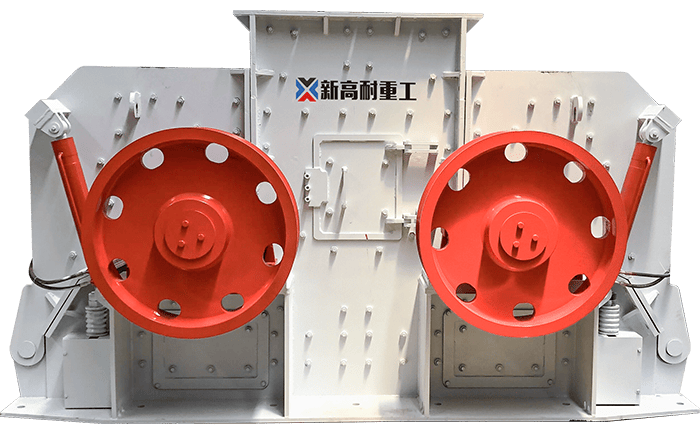
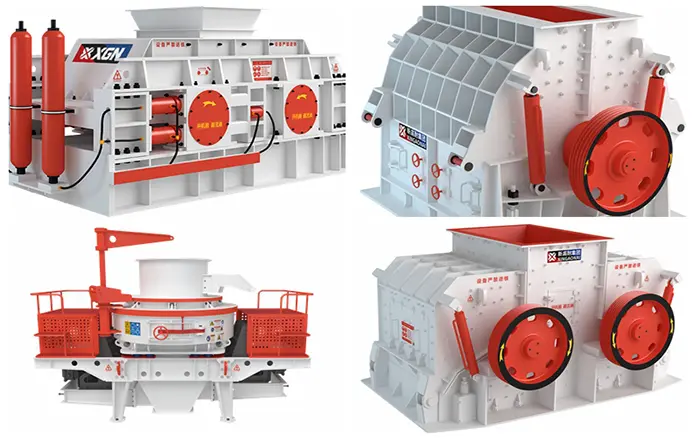
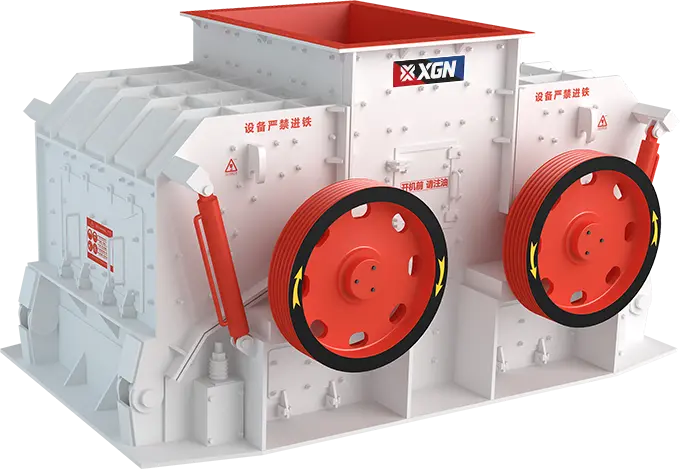
The term does not describe only one machine design. The available sand making machines include VSI, single-rotor, double-rotor and roller designs.
A stone crusher prepares the material; the sand making machine completes the final reduction or shaping duty.
2. Main Equipment in a Stone-to-Sand Configuration
Vibrating feeder
The feeder regulates the flow of raw material into the primary crusher.
Stable feeding helps prevent:
Crusher overloading
Empty running
Sudden power fluctuations
Uneven downstream capacity
Excessive wear caused by unstable loading
If the feed contains soil or small natural particles, a grizzly section may remove part of the undersize material before primary crushing.
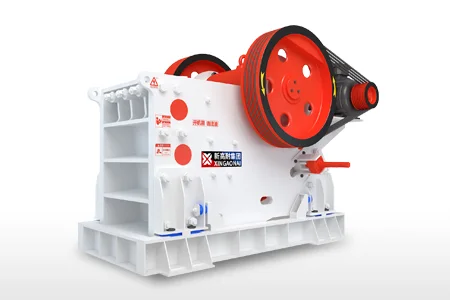
Primary jaw crusher
A jaw crusher accepts relatively large rock and reduces it through compression.
The PEV Series jaw crusher is designed for primary crushing of materials such as granite, river pebbles, basalt and iron ore. The current product range lists capacities from 55 to 1,590 t/h, depending on model and operating conditions.
A primary crusher should be selected from the maximum feed size—not the average feed size.
Secondary cone crusher
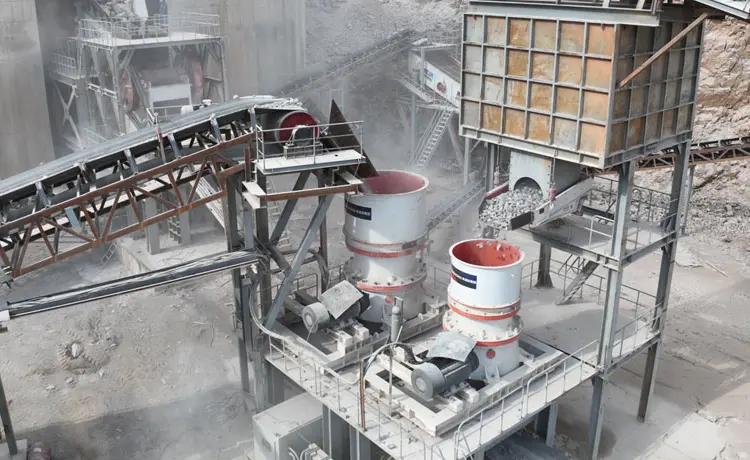
A cone crusher is commonly considered for hard and abrasive materials.
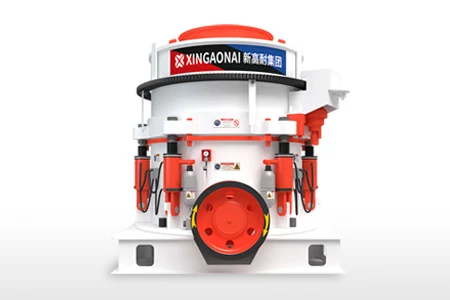
The XHP multi-cylinder hydraulic cone crusher uses compression crushing and is intended for secondary or tertiary processing of materials such as granite, basalt, river pebbles and hard ore.
It prepares properly sized material for screening and the downstream sand making machine.
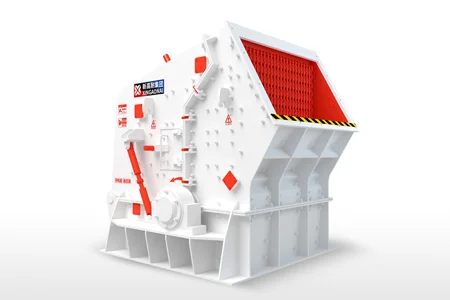
Secondary impact crusher
An impact crusher uses high-speed impact and is commonly considered for compatible medium-hard or less abrasive materials.
It may be suitable for limestone, dolomite and similar materials where particle shape is important. Highly abrasive feed can increase blow-bar and impact-plate consumption, so wear cost must be evaluated before selection.
Vibrating screen
The screen separates the crushed material into different size fractions.
It performs three important functions:
Removes material that already meets the finished-product size.
Sends properly sized feed to the sand making machine.
Returns oversized particles for additional crushing.
Without effective screening, the sand making machine may receive oversized or unnecessary feed, increasing energy consumption and wear.
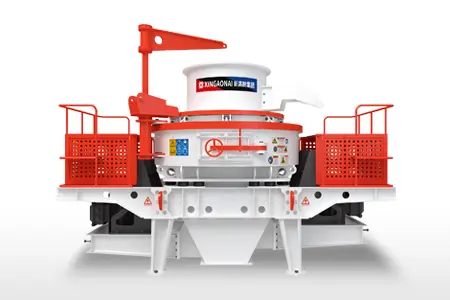
Sand making machine
The final machine reduces or shapes the prepared material.
A VSI vertical shaft impact crusher is commonly used for hard-rock manufactured sand and aggregate shaping. XINGAONAI currently lists feed sizes up to 60 mm and model capacities from 70 to 640 t/h.
The actual feed limit depends on material hardness and machine configuration.
3. Hard-Rock Sand Making Configuration
Hard and abrasive materials include:
Granite
Basalt
Diabase
River pebbles
Quartz-rich stone
Some metal ores
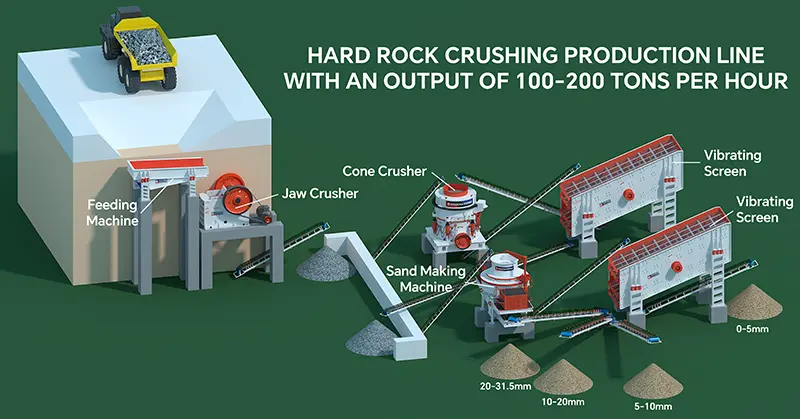
A typical hard-rock configuration is:
Vibrating Feeder → Jaw Crusher → Cone Crusher → Vibrating Screen → VSI Sand Making Machine → Final Screen
Stage 1: Primary crushing
The jaw crusher reduces large raw stone to a size that can enter the cone crusher.
Stage 2: Secondary crushing
The cone crusher uses compression to reduce the material further. It is generally more suitable than an impact crusher for abrasive stone because the crushing mechanism can provide more manageable wear costs.
Stage 3: Screening
The screen removes finished aggregate fractions and controls the material sent to the VSI.
Stage 4: Sand making and shaping
The VSI performs final fine crushing or particle shaping.
Stage 5: Final classification
A final screen separates manufactured sand and other aggregate sizes. Oversized particles may return to the VSI.
A hard-rock line should be evaluated carefully for liner, mantle, rotor and other wear-part costs. Feed size must be controlled to prevent oversized material from entering the VSI.
4. Limestone Sand Making Configuration
Limestone is generally less abrasive than granite or basalt, although its properties can vary by deposit.
Two common configurations may be considered.
Configuration A: Jaw crusher + impact crusher + VSI
Feeder → Jaw Crusher → Impact Crusher → Screen → VSI → Final Screen
This arrangement may be suitable when:
The raw feed is relatively large
Several aggregate sizes are required
Particle shape is important
A portion of the material must be processed into manufactured sand
The impact crusher performs secondary crushing, while the VSI completes final sand making or shaping.
Configuration B: Rotor-type sand making equipment
For compatible limestone and other brittle materials, a single-rotor or double-rotor machine may combine part of the fine-crushing and sand-production duty.
This arrangement may reduce the number of crushing stages, but it should only be selected after confirming:
Maximum feed size
Required capacity
Material abrasiveness
Required product sizes
Expected hammer and liner consumption
Screening and return-load requirements
A simplified flowsheet should not be selected only to reduce the initial number of machines. Finished-product yield and wear cost must also be considered.
5. River-Pebble Sand Making Configuration
River pebbles are usually hard, rounded and abrasive.
A typical configuration is:
Feeder → Jaw Crusher → Cone Crusher → Screen → VSI → Final Screen
The jaw crusher provides primary reduction, while the cone crusher prepares stable feed for the VSI.
Because the raw pebbles are rounded, feeding and screening conditions should be checked carefully. The design should prevent uncontrolled material movement and oversized feed from reaching downstream equipment.
For river-pebble projects, the manufacturer should evaluate:
Abrasiveness
Natural feed-size distribution
Maximum pebble size
Required sand percentage
Wear-part cost
Water availability
Need for washing or classification
An impact crusher may produce acceptable particle shape, but its wear cost on highly abrasive pebbles must be compared with a cone-based circuit.
6. Construction-Waste Sand Making Configuration
Clean concrete and suitable mineral construction waste may be processed into recycled aggregate or fine material.
A possible configuration is:
Pre-sorting → Feeder → Jaw or Impact Crusher → Magnetic Separation → Screen → Sand Making or Fine Crushing → Final Classification
Before crushing, remove:
Wood
Plastic
Soil
Steel
Gypsum
Insulation materials
Other unsuitable contaminants
The process may require magnetic separation and manual or automated sorting.
Not all construction waste is suitable for manufactured sand. The final product must be tested for its intended application, especially when it will be used in structural concrete.
This article should not claim that every recycled material can be converted directly into construction-grade sand.
7. How to Choose the Sand Making Stage
Different sand making machines should not be treated as interchangeable.
| Machine type | Crushing mechanism | Selection direction |
|---|---|---|
| VSI | High-speed impact | Hard rock, fine crushing and shaping |
| Single rotor | Rotor and hammer impact | Larger feed and compatible brittle materials |
| Double rotor | Consecutive rotor impact | Higher-capacity processing of compatible materials |
| Roller machine | Compression between rollers | Controlled fine crushing of suitable materials |
VSI machine
A VSI is commonly considered when the project requires:
Manufactured sand from hard rock
Better aggregate shape
Final-stage fine crushing
Closed-circuit operation
Several controlled product fractions
Single-rotor machine
A single-rotor machine may be considered when:
The feed is larger than typical VSI feed
The material is compatible with hammer impact
The required capacity falls within the available range
A simpler crushing arrangement is being evaluated
Double-rotor machine
A double-rotor machine may be considered for:
Limestone, bluestone, shale or compatible materials
Higher-capacity fine crushing
Consecutive impact reduction within one machine
Projects where grate and discharge adjustment meet the product requirement
Roller machine
A roller machine may be considered for:
Suitable soft or medium-hard material
Controlled discharge size
Compression-based fine crushing
Compact equipment arrangements
The machine should be selected from material testing and plant requirements, not merely from the desired capacity.
8. Open-Circuit or Closed-Circuit Configuration
Open circuit
In an open circuit, material passes through the crusher without systematic return of oversized particles.
Advantages may include:
Simpler layout
Fewer conveyors
Lower initial equipment count
Limitations may include:
Less precise product-size control
Greater variation in the final material
Lower flexibility when feed conditions change
Closed circuit
A closed circuit uses a screen to separate finished material and return oversized particles.
A simplified arrangement is:
Sand Making Machine → Screen → Finished Product + Oversize Return
Advantages include:
Better control of the upper particle size
More stable finished-product grading
Better use of the crushing capacity
However, excessive return load can reduce overall plant capacity and increase wear. The screen, return conveyor and sand making machine must be balanced.
9. Dry or Wet Sand Making Configuration
Dry configuration
A dry process may use:
Screens
Air classification
Dust collectors
Enclosed conveyors
Controlled feed moisture
It may be considered where water is limited or wastewater management would be difficult.
Wet configuration
A wet process may include:
Sand washing machine
Hydrocyclone
Fine-sand recovery equipment
Dewatering screen
Water recycling
Sludge treatment
It may be necessary when the feed contains clay, excessive dust or unwanted fine contaminants.
The decision should be based on raw-material properties and finished-product requirements. The detailed comparison is covered in dry vs wet sand making.
10. Capacity Must Be Balanced Across the Production Line
Selecting a 300 t/h sand making machine does not automatically create a 300 t/h manufactured-sand plant.
Overall capacity depends on:
Feeder capacity
Primary-crusher output
Secondary-crusher output
Screen efficiency
Percentage of material entering the sand making machine
Return-load percentage
Finished-sand yield
Conveyor capacity
Equipment availability
For example, if only part of the screened aggregate enters the VSI, the total plant feed and final manufactured-sand output will be different.
The equipment manufacturer should provide a preliminary mass balance showing:
Total feed
Output after each crushing stage
Screened product fractions
Feed entering the sand making machine
Return load
Estimated finished-sand output
Do not compare production lines only from the nominal capacity of one crusher.
11. How to Control Manufactured-Sand Quality
Final product quality depends on the complete circuit rather than only the sand making machine.
Feed-size control
Oversized or unstable feed can reduce production stability and increase wear.
Screen accuracy
Damaged, blocked or unsuitable screen media can mix different product sizes and increase recirculation.
Particle shape
Particle shape is affected by raw material, crushing mechanism, feed grading, machine settings and wear condition.
Fines content
The plant may require dry classification, washing or fine-material recovery to maintain the required fines range.
Cleanliness
Clay, soil and organic contamination should be controlled before or after crushing, depending on the process.
Consistency
Stable feeding and regular equipment inspection are required to keep product quality consistent over time.
Manufactured sand should be tested against the standards applicable to its final use. A visually acceptable product is not automatically suitable for concrete or asphalt.
12. Common Configuration Mistakes
Sending oversized feed directly into the VSI
A VSI should receive feed within its model and material limits. Oversized material increases impact loading, blockage risk and wear.
Choosing an impact crusher for highly abrasive rock without a wear study
Impact crushing may produce good particle shape, but wear cost can become excessive on hard, silica-rich materials.
Selecting equipment only from headline capacity
Catalogue capacity does not equal finished-sand output.
Installing insufficient screening capacity
An undersized screen increases return load and can become the bottleneck of the entire production line.
Ignoring moisture and clay
Sticky material may block screens and reduce crushing efficiency. Pre-screening, washing or material conditioning may be necessary.
Repeatedly crushing material that already meets specification
Qualified particles should be removed by screening instead of being sent through unnecessary crushing stages.
Ignoring downstream washing and fines recovery
Producing fine particles is only part of the process. The plant must also control cleanliness, grading and product moisture.
13. Information Required for Equipment Configuration
Before recommending a stone crusher and sand making machine combination, provide:
Raw material
Maximum feed size
Feed-size distribution
Material hardness
Abrasiveness or silica content
Moisture and clay content
Required total capacity
Required manufactured-sand output
Finished-product sizes
Particle-shape requirements
Dry or wet process preference
Water availability
Project location
Local power supply
Operating hours per day
Representative material testing is recommended when the raw material is variable or highly abrasive.
14. Example Configuration Table
| Raw material | Primary stage | Secondary stage | Sand making stage | Important consideration |
|---|---|---|---|---|
| Granite | Jaw crusher | Cone crusher | VSI | Abrasiveness and wear |
| Basalt | Jaw crusher | Cone crusher | VSI | Feed control and liner wear |
| River pebbles | Jaw crusher | Cone crusher | VSI | Hardness and rounded feed |
| Limestone | Jaw crusher | Impact crusher | VSI or compatible rotor machine | Clay and silica content |
| Bluestone | Jaw crusher | Impact or cone crusher | VSI or rotor machine | Actual hardness and abrasiveness |
| Clean concrete waste | Jaw or impact crusher | As required | Fine crusher or sand making machine | Sorting and metal removal |
This table is a preliminary reference only. Actual equipment must be confirmed using material characteristics and product specifications.
Conclusion
A stone crusher and sand making machine should be configured as parts of a balanced production system.
For hard and abrasive rock, a jaw crusher, cone crusher, screen and VSI are commonly considered. For limestone and compatible materials, an impact crusher or rotor-type sand making machine may provide another option.
The final decision must consider:
Material characteristics
Feed size
Required capacity
Finished-sand yield
Product grading
Particle shape
Wear cost
Screening capacity
Dry or wet processing
Maintenance requirements
The most reliable approach is to analyze representative raw material, define the required products and then match every crushing and screening stage around those conditions.