Copper concentrate grade is one of the most important performance indicators in a copper beneficiation plant. A higher concentrate grade not only increases the value of the final product but also reduces transportation, smelting, and refining costs. At the same time, maintaining high copper recovery while improving concentrate quality is a key objective for every mineral processing operation.
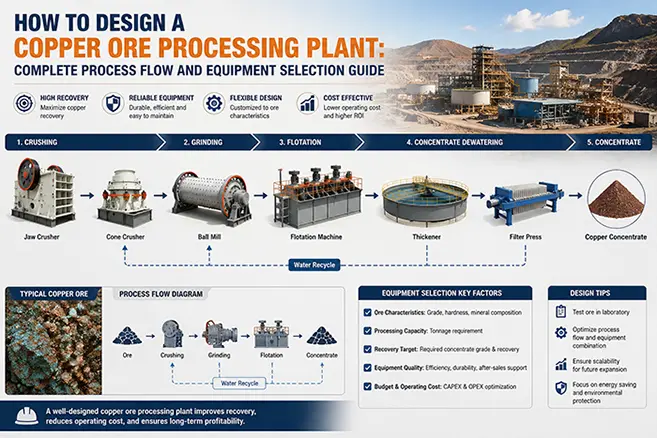
Improving copper concentrate grade is not achieved by adjusting a single parameter. Instead, it requires optimizing the entire beneficiation process, from ore preparation and grinding to flotation, dewatering, and process control. Factors such as ore mineralogy, liberation size, reagent system, equipment performance, and operator experience all influence the final concentrate quality.
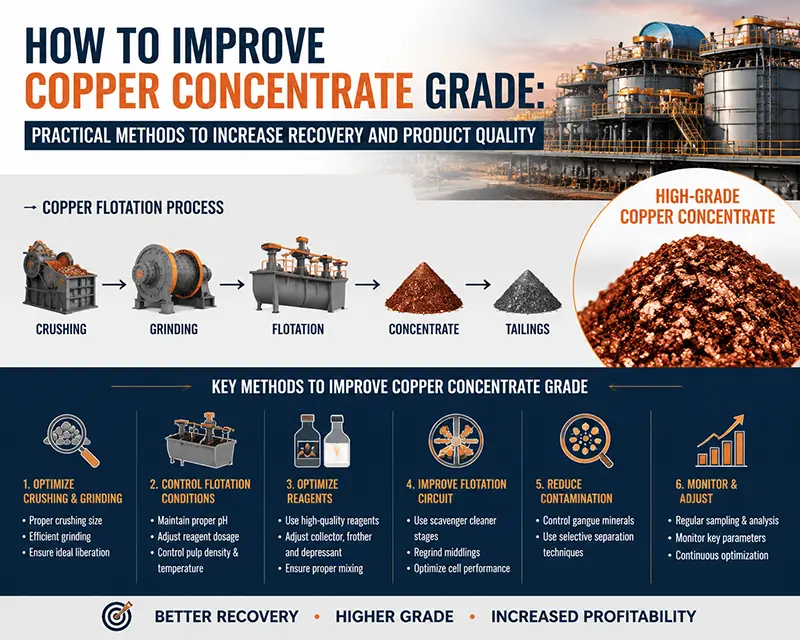
This guide explains how to improve copper concentrate grade through practical process optimization strategies, equipment upgrades, and operational best practices.
What Is Copper Concentrate Grade?
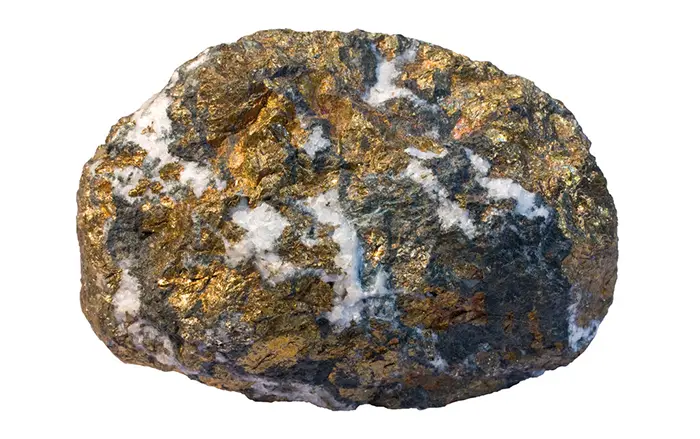
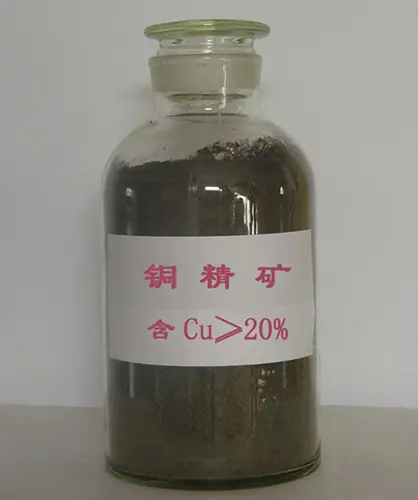
Copper concentrate grade refers to the percentage of copper contained in the flotation concentrate after beneficiation.
For most sulfide copper operations:
20–30% Cu is considered a typical commercial concentrate.
30–35% Cu is regarded as a high-grade concentrate, depending on ore characteristics.
Concentrates with excessive impurities may receive price penalties from smelters.
The target concentrate grade should balance product quality with overall copper recovery.
Factors That Affect Copper Concentrate Grade
Several variables influence the quality of the final concentrate.
Major factors include:
Copper mineral liberation
Ore mineralogy
Particle size distribution
Flotation reagent selection
Pulp density
Air flow rate
Froth stability
Flotation residence time
Equipment performance
Process water quality
Because these factors interact with one another, improving concentrate grade requires a systematic approach rather than isolated adjustments.
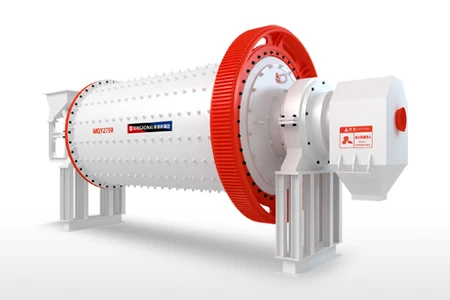
Improve Mineral Liberation Through Proper Grinding
Copper minerals must be sufficiently liberated from gangue before flotation can efficiently separate them.
Optimize Grinding Size
If the ore is under-ground:
Valuable minerals remain locked within waste rock.
Flotation recovery and concentrate grade decrease.
If the ore is over-ground:
Excessive fine particles ("slimes") reduce flotation selectivity.
Reagent consumption increases.
Concentrate filtration becomes more difficult.
Most copper flotation plants determine the optimal grind size through laboratory testing and routinely monitor particle size during operation.
Maintain Stable Grinding Performance
To improve liberation consistency:
Maintain a stable mill feed rate.
Control circulating load.
Monitor cyclone classification efficiency.
Replace worn grinding media on schedule.
Prevent fluctuations in mill discharge density.
Stable grinding conditions produce a more uniform flotation feed and help maintain concentrate quality.
Optimize the Flotation Reagent Scheme
The reagent system strongly influences flotation selectivity.
Common reagents include:
Collectors
Collectors increase the hydrophobicity of copper minerals.
Common examples:
Xanthates
Dithiophosphates
Thionocarbamates
Selecting the appropriate collector depends on mineral composition and flotation objectives.
Frothers
Frothers control bubble size and froth stability.
Proper froth characteristics improve mineral recovery while minimizing gangue entrainment.
Depressants
Depressants prevent unwanted minerals from floating.
Examples include:
Lime
Sodium cyanide (where permitted)
Sodium metabisulfite
Organic depressants
The correct depressant dosage improves concentrate purity without sacrificing valuable copper minerals.
pH Regulators
Maintaining an appropriate pulp pH enhances flotation selectivity and reagent performance.
Many copper flotation circuits operate under mildly alkaline conditions, although the optimal pH depends on ore mineralogy.
Improve Flotation Circuit Design
An optimized flotation circuit can significantly increase concentrate grade.
Typical improvements include:
Multi-Stage Cleaning
Adding cleaner flotation stages helps remove entrained gangue from the concentrate.
High-grade concentrates often require:
Rougher flotation
Scavenger flotation
Cleaner flotation
Recleaner flotation
Each cleaning stage further upgrades concentrate quality.
Regrinding Intermediate Concentrates
Some copper minerals remain locked after primary flotation.
Regrinding intermediate concentrates before cleaner flotation can improve liberation and increase concentrate grade.
Optimize Flotation Residence Time
Insufficient retention time reduces mineral recovery, while excessive residence time may increase gangue recovery.
Proper cell sizing and pulp flow control help maintain stable flotation performance.
Upgrade Processing Equipment
Modern equipment often provides better separation efficiency than older machinery.
Equipment upgrades may include:
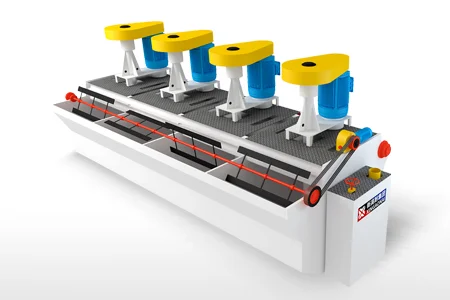
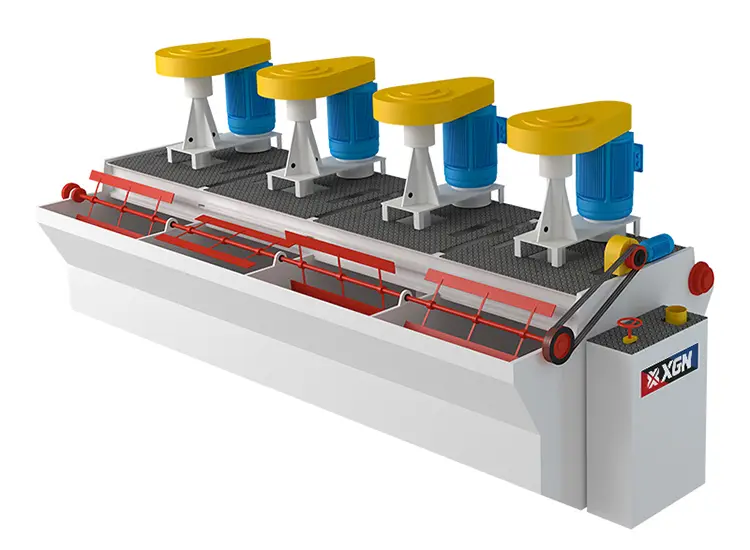
High-Efficiency Flotation Machines
New-generation flotation cells offer:
Improved air dispersion
Better mixing
Stable froth layers
Lower energy consumption
Hydrocyclones
Efficient classification ensures only properly ground particles enter flotation.
This improves flotation selectivity and reduces circulating loads.
Automatic Reagent Dosing Systems
Automated reagent addition reduces fluctuations caused by manual operation and improves process consistency.
Control Feed Quality
Variations in feed characteristics can significantly affect concentrate grade.
Important control measures include:
Blending different ore types
Maintaining consistent feed size
Stabilizing feed grade
Removing oversized rocks
Controlling moisture content
Stable feed conditions help flotation circuits operate more efficiently.
Reduce Gangue Entrainment
Fine gangue particles may be mechanically carried into the concentrate.
Methods to reduce entrainment include:
Optimizing froth depth
Controlling air flow
Adjusting wash water (where applicable)
Improving particle size distribution
Increasing cleaner flotation stages
Reducing entrainment directly improves concentrate grade.
Improve Water Quality
Process water chemistry can influence flotation performance.
Water management strategies include:
Recycling clarified process water
Monitoring dissolved ions
Controlling suspended solids
Managing water hardness
Preventing contamination
Stable water quality contributes to more predictable flotation results.
Implement Process Automation
Modern digital technologies help stabilize plant performance.
Automation systems may include:
Online grade analyzers
Particle size monitoring
Flow meters
Density meters
Automatic reagent dosing
Advanced process control (APC)
AI-assisted optimization
Real-time monitoring enables operators to respond quickly to changing ore conditions.
Train Plant Operators
Even the best equipment requires skilled operation.
Operator training should focus on:
Froth observation
Process troubleshooting
Reagent adjustment
Equipment inspection
Data interpretation
Safety procedures
Well-trained personnel can identify process changes before concentrate quality declines.
Common Reasons for Low Copper Concentrate Grade
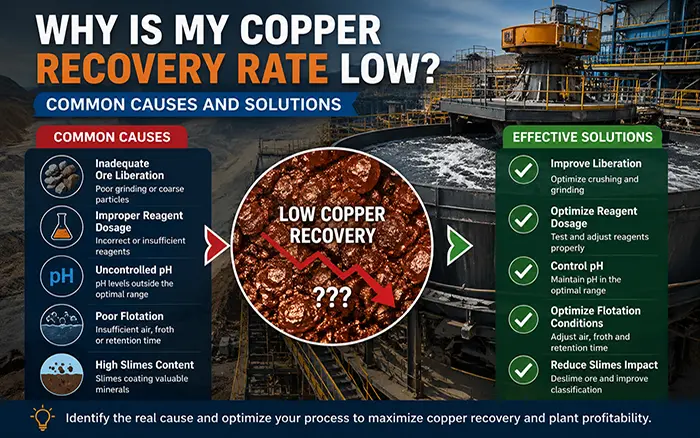
When concentrate grade falls unexpectedly, common causes include:
Inadequate mineral liberation
Incorrect reagent dosage
Unstable pulp density
Poor froth control
Excessive gangue entrainment
Worn flotation components
Variable ore mineralogy
Poor cyclone performance
Inconsistent mill operation
Systematic troubleshooting is essential to identify the root cause rather than simply increasing reagent consumption.
Practical Checklist for Improving Copper Concentrate Grade
| Optimization Area | Recommended Action |
|---|---|
| Grinding | Optimize liberation size |
| Classification | Improve cyclone efficiency |
| Reagents | Optimize collector and frother dosage |
| Flotation | Add cleaner stages if necessary |
| Equipment | Upgrade flotation cells |
| Feed Control | Stabilize ore blending |
| Water | Maintain consistent water quality |
| Automation | Install online process monitoring |
| Maintenance | Replace worn components regularly |
| Operations | Strengthen operator training |
Conclusion
Improving copper concentrate grade requires coordinated optimization across the entire beneficiation process rather than relying on a single adjustment. Proper mineral liberation, an efficient flotation circuit, well-balanced reagent systems, stable operating conditions, and reliable equipment all contribute to producing a cleaner, higher-value concentrate.
As copper ores become more complex and environmental standards continue to rise, modern processing plants increasingly rely on automation, data analysis, and continuous process improvement to achieve both high concentrate grades and excellent metal recovery. With regular metallurgical testing and ongoing operational optimization, producers can improve product quality while maintaining long-term economic performance.