Selecting the appropriate mining method is one of the most important decisions in the development of a copper project. The choice between open pit and underground copper mining directly influences capital investment, operating costs, production capacity, ore recovery, equipment selection, environmental impact, and long-term profitability.
Neither mining method is universally better. Instead, the optimal approach depends on the depth of the ore body, ore grade, deposit geometry, stripping ratio, geotechnical conditions, and economic objectives. Large, near-surface deposits are typically mined using open pit methods, while deep or narrow ore bodies are generally developed through underground mining.
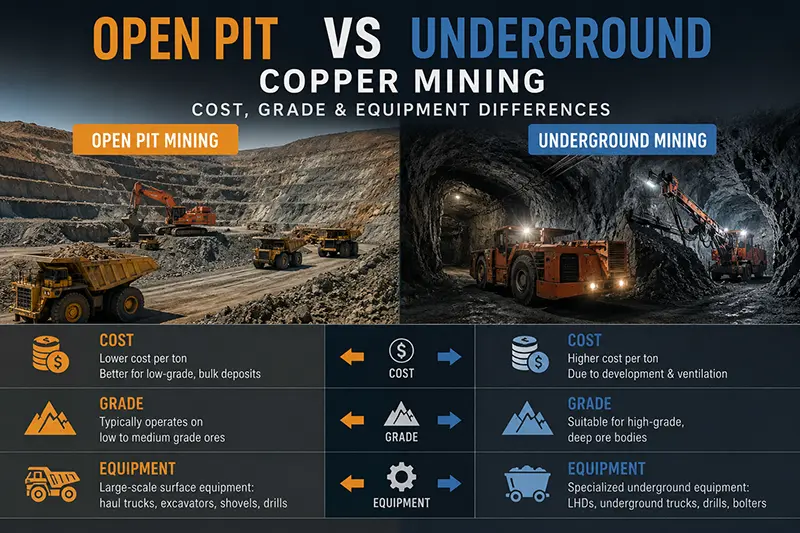
This guide compares Open Pit vs Underground Copper Mining by examining their working principles, suitable deposit types, mining equipment, costs, productivity, environmental considerations, and economic performance.
Understanding Open Pit Copper Mining
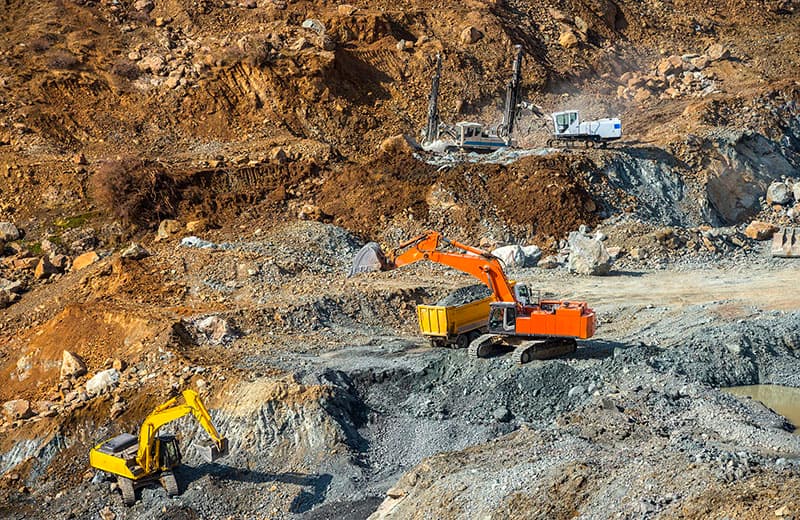
Open pit mining is a surface mining method in which overburden and waste rock are removed to expose the ore body. Mining progresses downward in a series of benches until the economically recoverable ore has been extracted.
Open pit mining is commonly applied to:
Large porphyry copper deposits
Near-surface ore bodies
Low- to medium-grade copper deposits
Large-scale, long-life mining operations
Many of the world's highest-producing copper mines use open pit mining because it supports high production rates and lower unit mining costs.
Understanding Underground Copper Mining
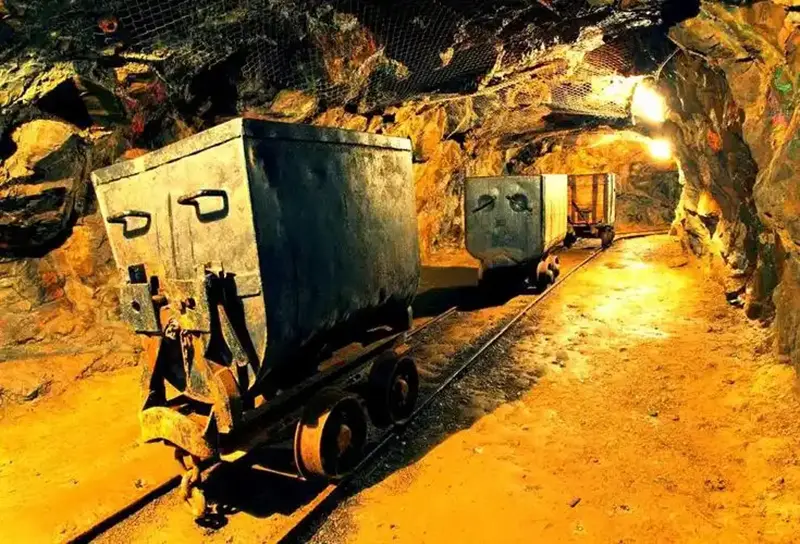
Underground mining extracts copper ore through tunnels, shafts, declines, and underground stopes while leaving much of the overlying rock undisturbed.
This mining method is generally selected for:
Deep copper deposits
High-grade ore bodies
Narrow mineralized zones
Deposits with excessive stripping ratios
Although underground mining typically requires greater capital investment and more complex infrastructure, it can economically recover valuable ore that would be impractical to mine from the surface.
Geological Conditions for Each Mining Method
The geometry and depth of the deposit largely determine the most suitable mining approach.
Open Pit Mining Is Best For:
Ore bodies close to the surface
Large horizontal deposits
Massive porphyry systems
Low stripping ratios
High production requirements
Underground Mining Is Best For:
Deep ore bodies
Steeply dipping deposits
Narrow veins
High-grade mineralization
Limited surface access
Geotechnical investigations and economic evaluations are essential before selecting a mining method.
Ore Grade Comparison
Ore grade requirements often differ between the two methods.
| Mining Method | Typical Copper Grade |
|---|---|
| Open Pit | 0.3–0.8% Cu |
| Underground | 1.0–3.5% Cu (or higher) |
Open pit operations can profitably mine lower-grade ore because they benefit from lower mining costs and large production volumes. Underground mines generally require higher ore grades to offset increased development and operating expenses.
Mining Process Comparison
Open Pit Mining Process
The typical sequence includes:
Overburden removal
Bench development
Drilling
Blasting
Loading
Hauling
Primary crushing
Ore processing
Mining activities occur on the surface with large-scale mobile equipment.
Underground Mining Process
The typical sequence includes:
Shaft or decline construction
Tunnel development
Ventilation installation
Drilling
Blasting
Ore loading
Underground hauling
Hoisting or ramp transport
Surface processing
Underground mining requires additional support systems such as ventilation, ground control, and dewatering.
Equipment Differences
Mining equipment varies significantly depending on the mining method.
Open Pit Copper Mining Equipment
Common equipment includes:
Rotary blast hole drill rigs
Hydraulic excavators
Electric rope shovels
Large mining trucks
Wheel loaders
Bulldozers
Motor graders
Conveyor systems
These machines are designed for high-capacity production and continuous operation.
Underground Copper Mining Equipment
Typical underground equipment includes:
Jumbo drilling rigs
Bolting machines
LHD (Load-Haul-Dump) loaders
Underground trucks
Shuttle cars
Underground crushers
Conveyor systems
Mine hoists
Ventilation fans
Dewatering pumps
Underground equipment is compact enough to operate safely within tunnels and confined spaces.
Production Capacity Comparison
Open pit mines generally achieve much higher production rates.
| Mining Method | Typical Daily Capacity |
|---|---|
| Open Pit | 20,000–300,000+ tonnes/day |
| Underground | 1,000–30,000 tonnes/day |
The larger working area and use of high-capacity equipment allow open pit operations to move significantly more material.
Capital Investment Comparison
Open Pit Mining
Major capital expenditures include:
Mine development
Heavy mining equipment
Waste stripping
Haul roads
Crushing stations
Although initial investment can be substantial, infrastructure is relatively straightforward compared with underground projects.
Underground Mining
Capital costs typically include:
Shaft sinking
Decline development
Ventilation systems
Ground support
Hoisting facilities
Underground infrastructure
Development periods are often longer, increasing initial project costs before production begins.
Operating Cost Comparison
Operating costs differ because of the complexity of each mining method.
Open Pit Mining
Major operating costs include:
Fuel
Equipment maintenance
Drilling and blasting
Haulage
Tire replacement
Waste removal
Lower mining costs per tonne make open pit mining suitable for lower-grade deposits.
Underground Mining
Key operating costs include:
Ventilation
Ground support
Dewatering
Labor
Equipment maintenance
Energy
Mine development
Underground mining generally has higher operating costs per tonne of ore extracted.
Safety Considerations
Safety is critical in both mining methods.
Open Pit Mining
Primary risks include:
Slope instability
Rockfalls
Heavy equipment collisions
Dust exposure
Modern slope monitoring systems and autonomous equipment improve operational safety.
Underground Mining
Additional risks include:
Ground collapse
Limited visibility
Ventilation failures
Gas accumulation
Water inflow
Strict safety procedures and continuous monitoring are essential for underground operations.
Environmental Impact
Both mining methods affect the environment differently.
Open Pit Mining
Potential impacts include:
Large land disturbance
Waste rock storage
Landscape alteration
Dust generation
Noise
Progressive rehabilitation and water management help reduce long-term impacts.
Underground Mining
Environmental advantages may include:
Smaller surface footprint
Less waste rock on the surface
Reduced visual impact
However, underground mines require careful groundwater management, ventilation energy, and subsidence monitoring.
Advantages and Limitations
Open Pit Copper Mining
Advantages
Lower mining cost per tonne
Very high production capacity
High equipment efficiency
Easier maintenance
Better operational visibility
Suitable for large, low-grade deposits
Limitations
Significant surface disturbance
Higher waste stripping volumes
Economic depth limitations
Larger environmental footprint
Underground Copper Mining
Advantages
Access to deep ore bodies
Smaller surface disturbance
Lower waste stripping
Suitable for high-grade deposits
Better land-use efficiency
Limitations
Higher operating costs
More complex mine development
Lower production rates
Greater technical and safety challenges
Which Mining Method Is Better?
There is no single best mining method for every copper deposit.
Open pit mining is generally preferred when:
The ore body is close to the surface.
Large production volumes are required.
Ore grades are relatively low.
The stripping ratio remains economical.
Underground mining is often the better option when:
The ore body extends to significant depth.
Copper grades are high enough to justify higher costs.
Surface disturbance must be minimized.
Geological conditions favor underground extraction.
Many long-life copper operations begin as open pit mines and later transition to underground mining once the surface pit reaches its economic limit.
Conclusion
The decision between Open Pit vs Underground Copper Mining depends on a combination of geological, technical, environmental, and economic factors. Open pit mining offers lower unit costs and exceptional production capacity, making it ideal for large, shallow deposits. Underground mining provides access to deeper, higher-grade resources while minimizing surface disturbance.
Before selecting a mining method, companies should conduct detailed geological investigations, geotechnical studies, mine planning, economic analyses, and feasibility studies. Matching the mining method to the characteristics of the ore body is essential for maximizing resource recovery, controlling costs, and ensuring the long-term success of a copper mining project.