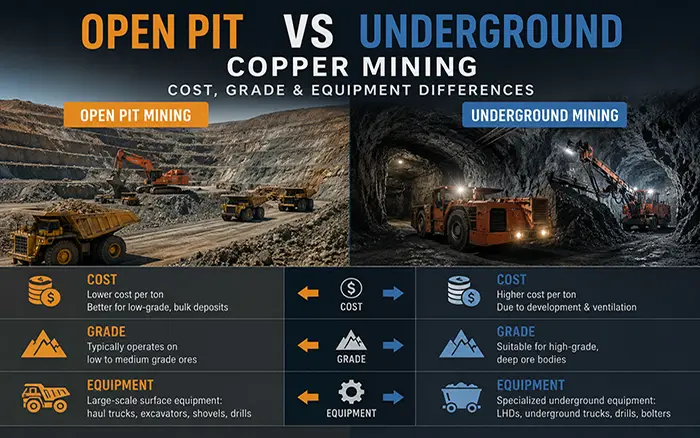
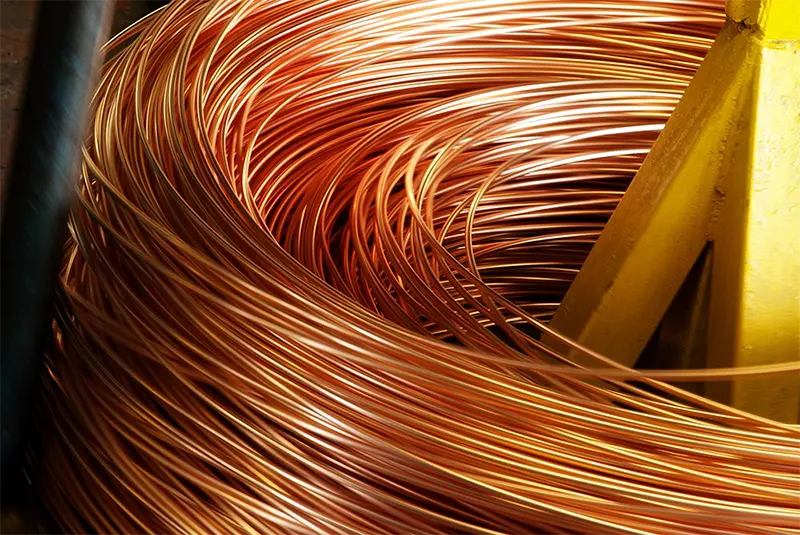
Copper is one of the earliest metals used by humans and remains one of the world's most important industrial metals. Thanks to its excellent electrical conductivity, thermal conductivity, corrosion resistance, and recyclability, copper plays a vital role in power generation, electronics, construction, transportation, renewable energy, and electric vehicles.
However, copper is rarely found in its pure metallic form. Instead, it occurs naturally in mineral deposits known as copper ore, which contain copper-bearing minerals mixed with waste rock (gangue). Before copper can be used in industrial applications, the ore must be mined, crushed, ground, concentrated, and refined.
This guide explains what copper ore is, its geological formation, major ore types, mineral composition, physical properties, processing methods, and its importance in modern industries.
What Is Copper Ore?
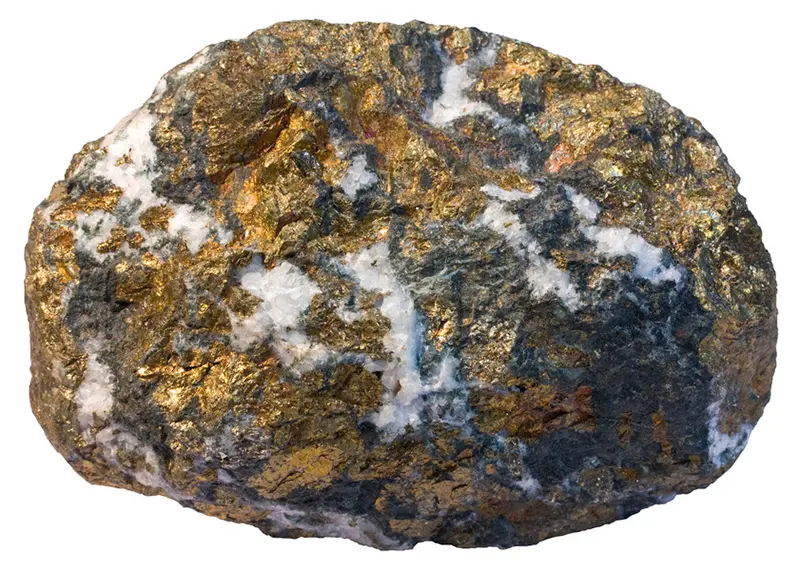
Copper ore is a naturally occurring rock or mineral deposit that contains sufficient copper minerals to be mined and processed economically.
A copper ore deposit usually consists of:
Copper-bearing minerals
Gangue minerals (quartz, calcite, feldspar, etc.)
Trace amounts of other valuable metals such as gold, silver, molybdenum, or cobalt
Depending on the deposit type, copper grades typically range from:
0.3%–2.0% Cu for large commercial mines
More than 2% Cu for some high-grade deposits
Although these grades appear low, modern beneficiation and metallurgical technologies allow profitable recovery of copper from large-tonnage deposits.
How Is Copper Ore Formed?
Copper ore forms through several geological processes over millions of years.
The most common deposit types include:
Magmatic Deposits
Copper minerals crystallize from cooling magma, often associated with nickel and platinum-group elements.
Hydrothermal Deposits
Hot mineral-rich fluids circulate through fractures, depositing copper sulfides as they cool.
This is the most common origin of large copper deposits.
Porphyry Copper Deposits
Porphyry deposits are the world's largest source of copper.
Characteristics include:
Very large reserves
Low ore grades
Long mine life
High production capacity
Many of the world's largest copper mines exploit porphyry deposits.
Sedimentary Deposits
Copper minerals accumulate within sedimentary rocks through chemical precipitation.
These deposits can produce high-grade ores over extensive areas.
Main Types of Copper Ore
Copper ores are generally classified into two major categories: sulfide ores and oxide ores.
Sulfide Copper Ore
Sulfide ores account for approximately 80–90% of global copper production.
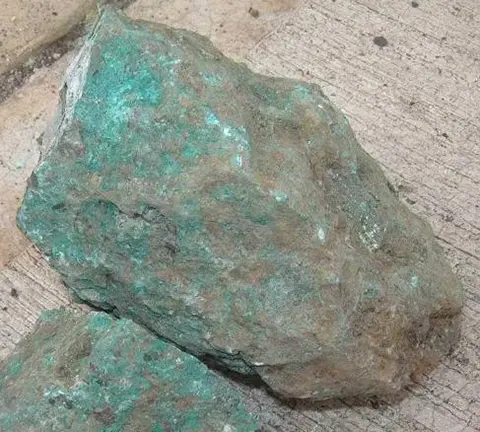
Common sulfide minerals include:
Chalcopyrite (CuFeS₂)
Most abundant copper mineral
Copper content: approximately 34.5%
Yellow-brass metallic appearance
Main raw material for global copper production
Bornite (Cu₅FeS₄)
Copper content: approximately 63%
Reddish-brown to purple color
High-grade copper mineral
Chalcocite (Cu₂S)
Copper content: approximately 79.8%
One of the richest copper ores
Frequently found in supergene enrichment zones
Covellite (CuS)
Deep blue color
Secondary copper sulfide mineral
Often associated with chalcocite deposits
Oxide Copper Ore
Oxide ores usually form through the weathering of sulfide deposits near the Earth's surface.
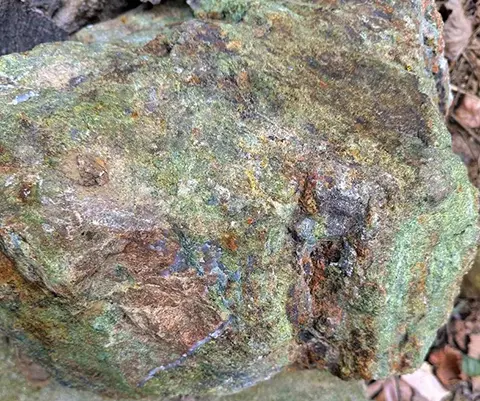
Common oxide minerals include:
Malachite (Cu₂CO₃(OH)₂)
Bright green color
Copper content: approximately 57%
Popular ornamental mineral
Azurite (Cu₃(CO₃)₂(OH)₂)
Deep blue color
Copper content: approximately 55%
Often occurs together with malachite
Cuprite (Cu₂O)
Copper content: approximately 88.8%
Dark red color
One of the highest-grade copper minerals
Mineral Composition of Copper Ore
Copper ore rarely contains only copper minerals.
Typical mineral composition includes:
Valuable Minerals
Chalcopyrite
Bornite
Chalcocite
Covellite
Malachite
Azurite
Cuprite
Gangue Minerals
Quartz
Feldspar
Calcite
Dolomite
Clay minerals
Mica
Associated Valuable Metals
Many copper deposits also contain:
Gold
Silver
Molybdenum
Zinc
Lead
Cobalt
Recovering these by-products can significantly improve the economics of a copper mining project.
Physical Properties of Copper Ore
Copper ores exhibit different physical properties depending on mineral composition.
Typical characteristics include:
| Property | Description |
|---|---|
| Color | Yellow, green, blue, red, brown |
| Density | 2.6–5.0 g/cm³ |
| Hardness | 3–6 (Mohs) |
| Magnetic Property | Usually non-magnetic |
| Conductivity | Low before refining |
| Luster | Metallic or earthy |
These properties influence equipment selection during mineral processing.
Major Copper-Producing Countries
Copper is mined in many parts of the world.
Leading producers include:
Chile
Peru
China
Democratic Republic of the Congo
United States
Australia
Russia
Zambia
Mexico
Indonesia
Chile remains the world's largest producer, with several giant porphyry copper deposits.
How Is Copper Ore Processed?
Copper beneficiation depends on the ore type.
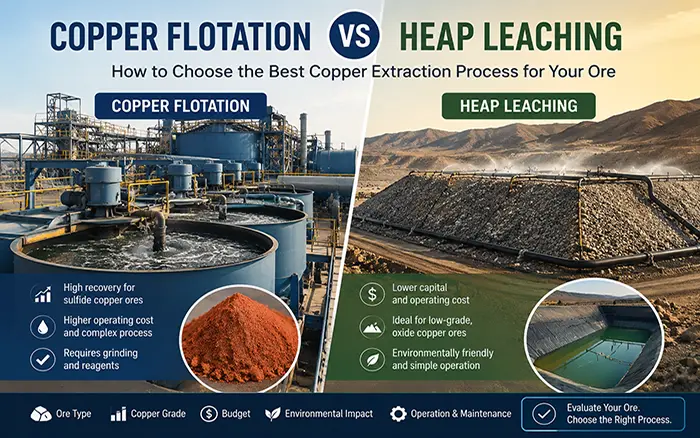
Sulfide Copper Ore Processing
The most common processing flow is:
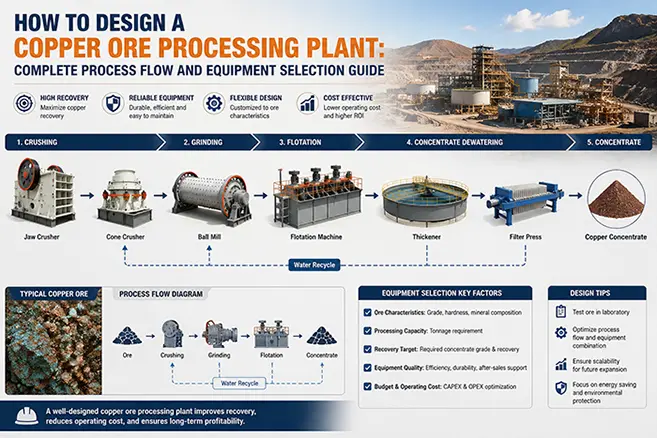
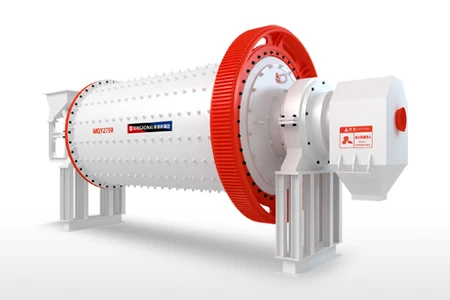
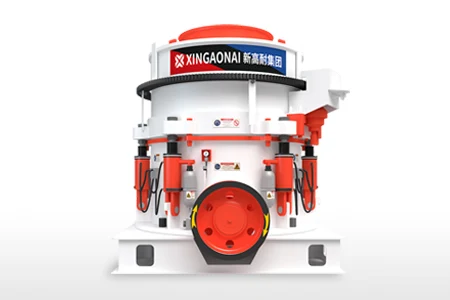
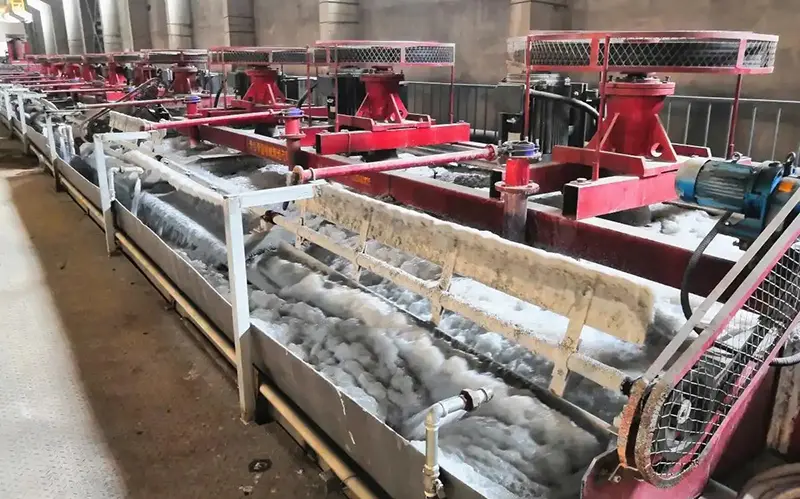
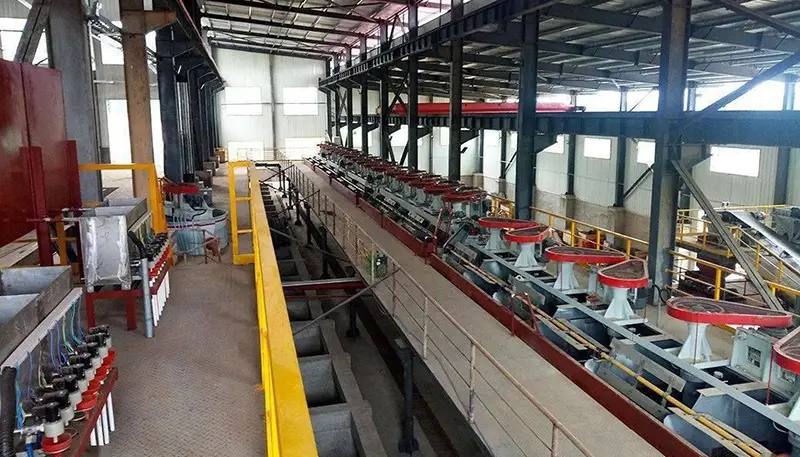
Crushing → Grinding → Classification → Froth Flotation → Concentrate Thickening → Filtration → Smelting → Electrorefining
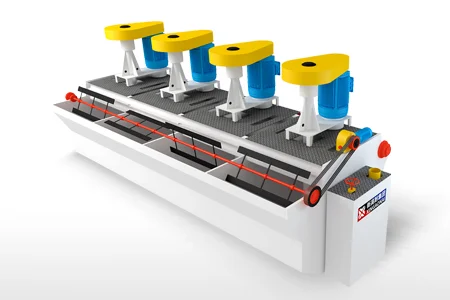
Typical equipment includes:
Hydrocyclone
Flotation machine
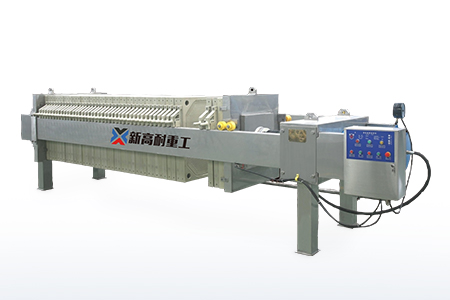
Thickener
Froth flotation is the most widely used method for recovering sulfide copper minerals.
Oxide Copper Ore Processing
Oxide ores are commonly processed using:
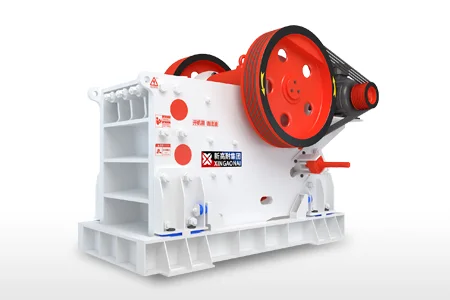
Crushing
Solvent extraction (SX)
Electrowinning (EW)
This process is known as SX-EW and produces high-purity cathode copper without traditional smelting.
Industrial Applications of Copper
Copper is one of the world's most versatile engineering materials.
Major applications include:
Electrical Industry
Power cables
Transformers
Electric motors
Generators
Wiring systems
Approximately half of global copper consumption is related to electrical applications.
Construction
Copper is widely used for:
Plumbing
Roofing
HVAC systems
Architectural decoration
Transportation
Copper is essential in:
Automobiles
High-speed rail
Aircraft
Marine equipment
Electric vehicles require significantly more copper than conventional vehicles.
Renewable Energy
Copper plays a critical role in:
Wind turbines
Solar power systems
Battery energy storage
Charging infrastructure
The global energy transition continues to drive long-term demand for copper.
Electronics
Copper is widely used in:
Printed circuit boards (PCBs)
Smartphones
Computers
Telecommunications equipment
Consumer electronics
Factors Affecting Copper Ore Value
Several factors determine the economic value of a copper deposit.
Copper Grade
Higher copper grades generally reduce mining and processing costs per unit of metal.
Ore Mineralogy
Different copper minerals require different beneficiation methods.
Sulfide ores are usually concentrated by flotation, while oxide ores are often processed using SX-EW technology.
Recovery Rate
Higher metallurgical recovery improves overall project profitability.
Associated Metals
Gold, silver, and molybdenum credits can significantly increase project revenue.
Mining Conditions
Factors such as stripping ratio, infrastructure, water supply, and energy costs all influence project economics.
Future Outlook for Copper Mining
Global demand for copper is expected to grow steadily over the coming decades, driven by urbanization, renewable energy, electric vehicles, and digital infrastructure.
At the same time, declining ore grades and increasing environmental requirements are encouraging mining companies to invest in more efficient crushing, grinding, flotation, automation, and sustainable processing technologies.
As a result, high-performance mineral processing equipment and optimized beneficiation flowsheets will play an increasingly important role in improving copper recovery and reducing operating costs.
Why Copper Ore Will Remain a Strategic Mineral
Copper ore is the foundation of one of the world's most important industrial metals. Whether occurring as sulfide or oxide ore, it supports industries ranging from construction and manufacturing to renewable energy and electric mobility. Understanding the different types of copper ore, their mineral composition, and appropriate processing technologies is essential for maximizing resource utilization and project profitability.
With global demand continuing to rise, efficient copper mining and beneficiation will remain critical to supporting economic development and the transition toward a more electrified and sustainable future.