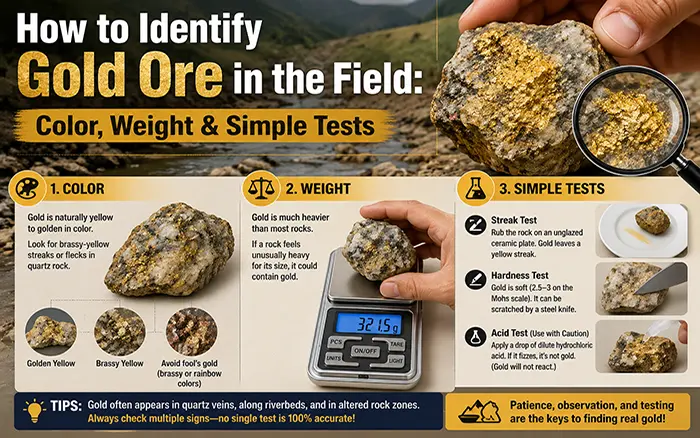
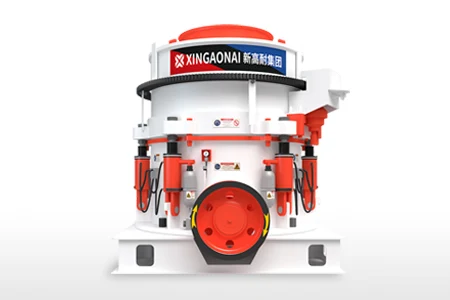
Selecting the right crusher is one of the most important decisions when designing a gold processing plant. Proper gold ore crusher selection directly affects plant capacity, energy consumption, operating costs, downstream grinding efficiency, and ultimately the overall gold recovery rate.
Gold ores vary greatly in hardness, abrasiveness, moisture content, and mineral composition. A crusher that performs well on one deposit may not be suitable for another. Therefore, understanding the characteristics of the ore and matching them with the appropriate crushing equipment is essential.
This guide explains the key factors involved in gold ore crusher selection, compares different crusher types, and provides practical recommendations for choosing the most efficient crushing solution.
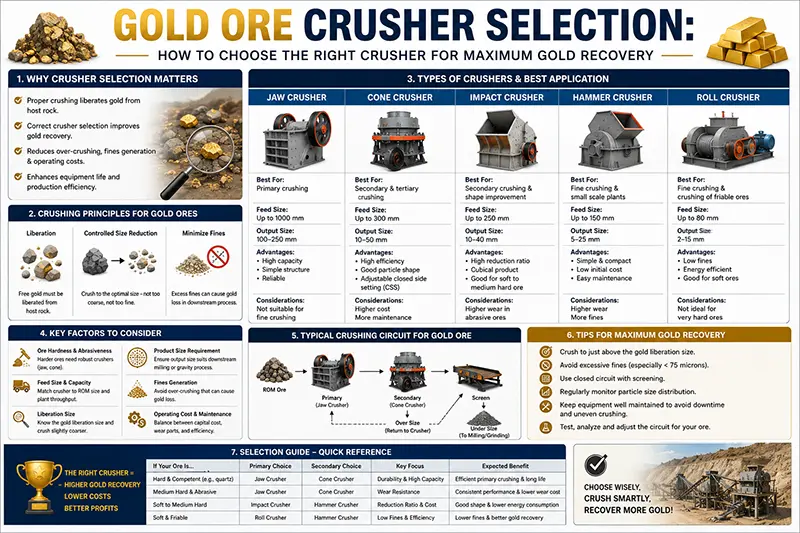
Why Is Gold Ore Crusher Selection Important?
The crushing stage is the first step in nearly every hard rock gold processing plant. Its purpose is to reduce large ore into smaller particles suitable for grinding and mineral liberation.
A well-designed crushing circuit offers several advantages:
Higher plant throughput
Lower energy consumption during grinding
Reduced equipment wear
Improved operating stability
Lower maintenance costs
Better overall gold recovery
Poor crusher selection can result in excessive liner wear, high operating costs, oversized feed to the grinding circuit, and frequent production interruptions.
Factors to Consider When Selecting a Gold Ore Crusher
Choosing the right crusher requires evaluating several technical and economic factors.
Ore Hardness
Ore hardness significantly influences crusher selection.
Soft ores generally require less crushing force.
Medium-hard ores can be processed efficiently with standard jaw and cone crushers.
Hard or highly abrasive ores require heavy-duty crushers with wear-resistant liners.
The hardness is commonly evaluated using the Mohs hardness scale or Bond Work Index.
Ore Abrasiveness
Highly abrasive ores increase liner and wear part consumption.
For abrasive gold ores, crushers with robust designs and replaceable wear liners are recommended to minimize maintenance costs.
Ore Moisture Content
Wet or sticky ores may cause blockages in certain crusher types.
In these cases, selecting equipment with larger discharge openings or incorporating vibrating feeders and pre-screening systems can improve production efficiency.
Feed Size
The maximum feed size determines the type of primary crusher required.
Large run-of-mine (ROM) rocks usually require a jaw crusher or gyratory crusher before secondary crushing.
Required Capacity
Crusher capacity should match the plant's production target.
Typical capacities include:
| Plant Size | Capacity |
|---|---|
| Small-scale plant | 5–100 TPH |
| Medium-scale plant | 100–500 TPH |
| Large-scale plant | 500–2,000+ TPH |
Selecting equipment that matches production requirements helps avoid bottlenecks and unnecessary investment.
Common Crushers Used in Gold Processing Plants
Different crushing stages require different crusher types.
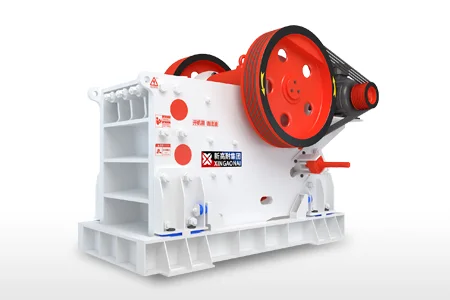
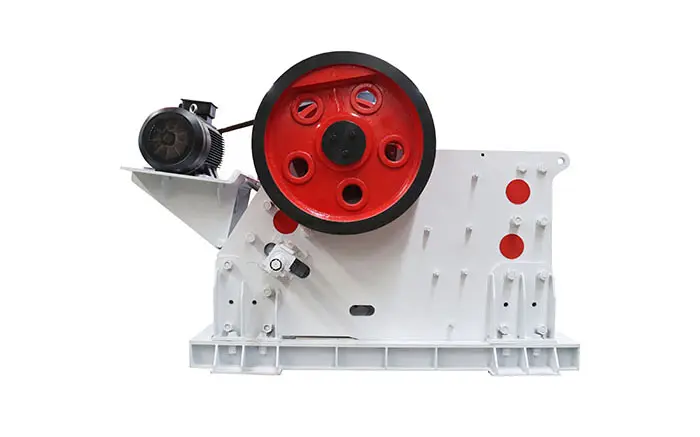
Jaw Crusher
Jaw crushers are the most common primary crushers in gold processing plants.
Advantages
High crushing ratio
Simple structure
Reliable operation
Low maintenance
Suitable for hard rock
Best Applications
Primary crushing
Hard rock gold ore
Large feed sizes
Cone Crusher
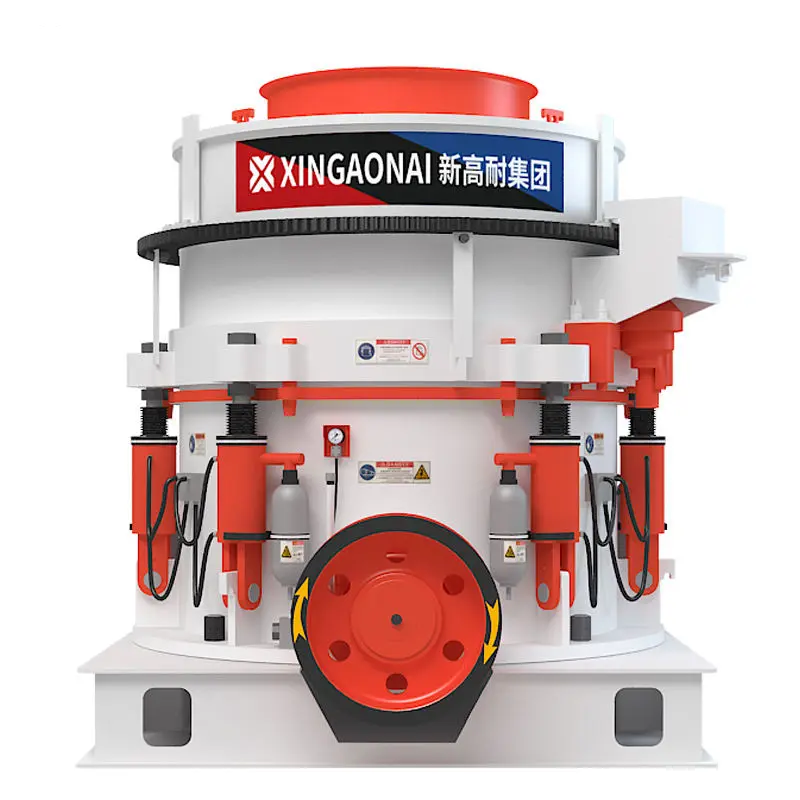
Cone crushers are widely used for secondary and tertiary crushing.
Advantages
High capacity
Excellent particle shape
Low wear cost
Continuous operation
Best Applications
Medium and hard gold ores
Fine crushing
High-capacity plants
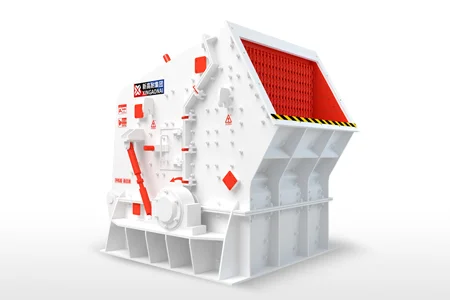
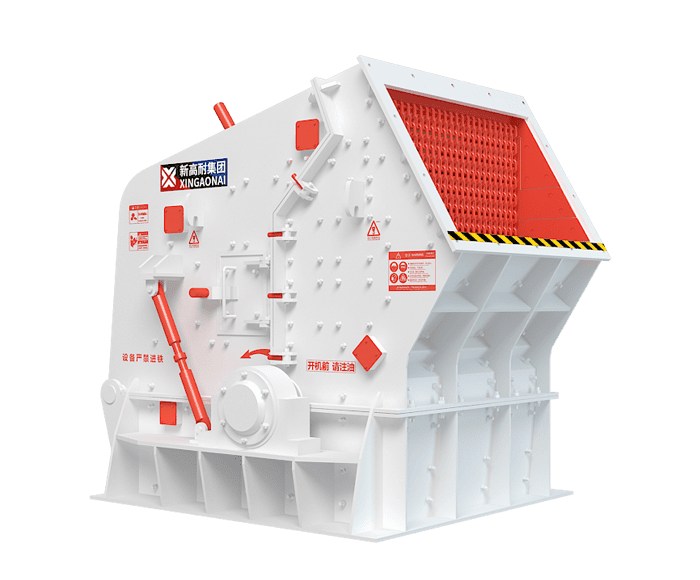
Impact Crusher
Impact crushers use high-speed impact rather than compression.
Advantages
Good particle shape
High reduction ratio
Lower equipment cost
Best Applications
Soft or medium-hard ores
Low-abrasive materials
Impact crushers are generally not recommended for highly abrasive gold ores because wear costs can be significant.
Hammer Crusher
Hammer crushers combine crushing and coarse grinding in one machine.
Advantages
Compact design
Low investment
Simple installation
Best Applications
Small-scale gold plants
Soft and brittle ores
Mobile Gold Crusher
Mobile crushing plants integrate feeding, crushing, and conveying into a single unit.
Advantages
Fast installation
Easy transportation
No permanent foundation
Flexible operation
Reduced civil construction costs
Best Applications
Remote mining sites
Temporary projects
Exploration programs
Small to medium-sized mines
Recommended Crushing Circuits
The ideal crushing circuit depends on plant capacity and ore characteristics.
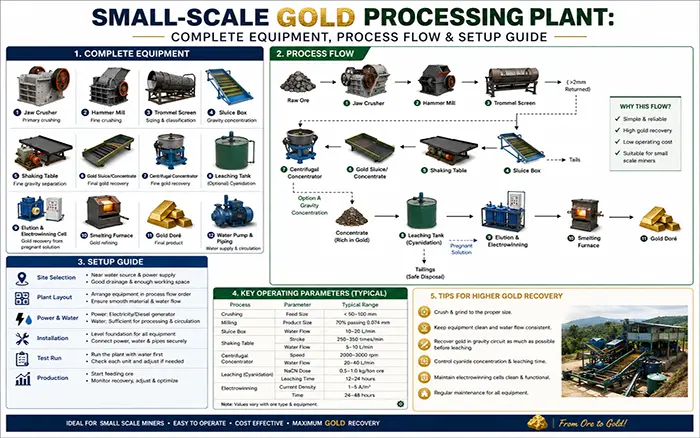
Small Gold Processing Plant
Recommended flow:
Jaw Crusher
↓
Hammer Crusher or Small Cone Crusher
↓
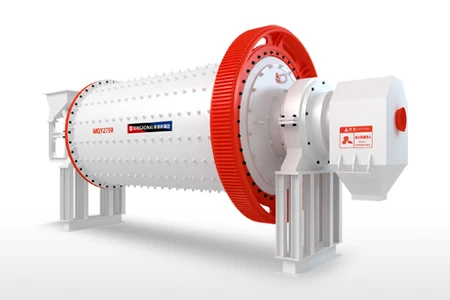
Ball Mill
This configuration offers low investment and simple operation.
Medium Gold Processing Plant
Recommended flow:
Jaw Crusher
↓
Cone Crusher
↓
Ball Mill
This arrangement balances capacity, efficiency, and operating costs.
Large Gold Processing Plant
Recommended flow:
Jaw Crusher or Gyratory Crusher
↓
Cone Crusher
↓
Fine Cone Crusher
↓
Multi-stage crushing improves grinding efficiency and reduces overall energy consumption.
Fixed vs. Mobile Gold Crushers
| Feature | Fixed Crusher Plant | Mobile Crusher Plant |
|---|---|---|
| Installation | Permanent | Portable |
| Capacity | Higher | Medium |
| Civil construction | Required | Minimal |
| Mobility | None | Excellent |
| Initial investment | Higher | Lower |
| Best application | Long-term mining | Short-term or remote projects |
Mobile crushers are becoming increasingly popular because they shorten project timelines and reduce infrastructure costs.
How Crusher Selection Affects Gold Recovery
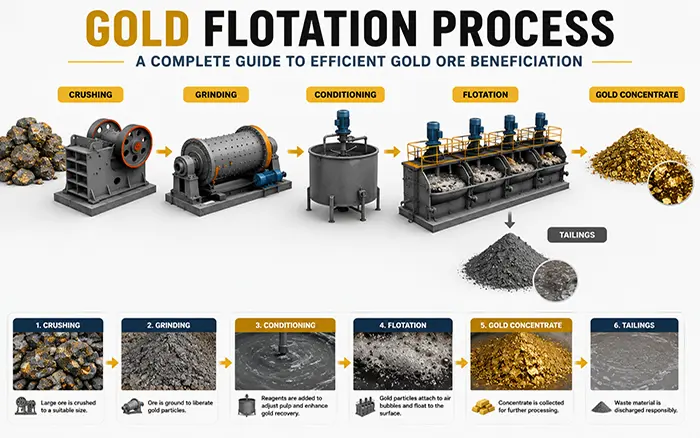
Although crushers do not directly recover gold, they strongly influence downstream performance.
Proper crusher selection helps:
Produce a consistent feed size for grinding
Improve mineral liberation
Reduce over-grinding
Lower grinding energy consumption
Increase flotation or leaching efficiency
Improve overall plant recovery
Optimizing the crushing stage often results in higher recovery and lower operating costs.
Maintenance Considerations
Reliable operation requires regular maintenance.
Recommended practices include:
Inspect wear parts regularly
Monitor bearing temperatures
Check lubrication systems
Maintain proper feed distribution
Replace worn liners on schedule
Keep discharge openings correctly adjusted
Preventive maintenance reduces unexpected downtime and extends equipment life.
Tips for Choosing the Best Gold Ore Crusher
Before purchasing equipment, consider the following recommendations:
Conduct comprehensive ore testing.
Determine the required production capacity.
Evaluate ore hardness and abrasiveness.
Compare equipment operating costs.
Consider future plant expansion.
Choose equipment from experienced manufacturers with reliable after-sales support.
Working with a professional supplier can help optimize the crushing circuit and maximize long-term profitability.
Applications of Gold Ore Crushers
Gold ore crushers are widely used in:
Hard rock gold mining
Open-pit gold mines
Underground gold mines
Gold beneficiation plants
Gold tailings reprocessing
Exploration projects
Pilot plants
Mobile gold processing systems
The Right Crusher Selection Creates a More Efficient Gold Processing Plant
Effective gold ore crusher selection is the foundation of a successful gold processing operation. By carefully evaluating ore characteristics, production capacity, crushing stages, and long-term operating costs, mining companies can choose equipment that delivers reliable performance and high efficiency.
Whether building a new plant or upgrading an existing crushing circuit, selecting the right combination of jaw crushers, cone crushers, impact crushers, hammer crushers, or mobile crushers can improve grinding efficiency, reduce maintenance costs, and support higher overall gold recovery.