Mobile Crusher

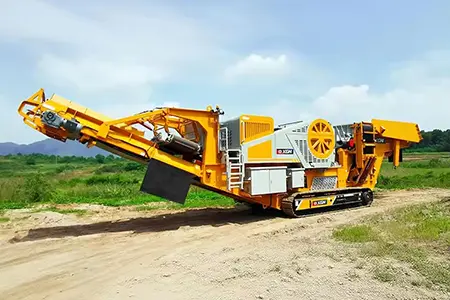
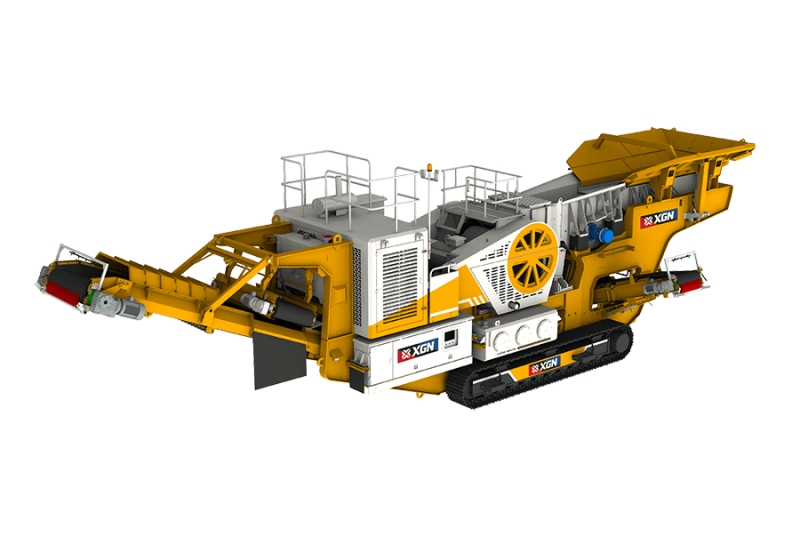
Tracked Mobile Jaw Crusher

CAPACITY

80-600 t/h

FEED SIZE

≤700mm
Application areas:Primary crushing of medium to high hardness materials, mining ore crushing, construction waste recycling, aggregate production, and construction of highways, railways, and bridges.
Applicable materials:suitable for coarse crushing of various hard ores such as granite, river pebbles, basalt, iron ore, etc.,whose compressive strength is not higher than 320MPa.
Product Overview

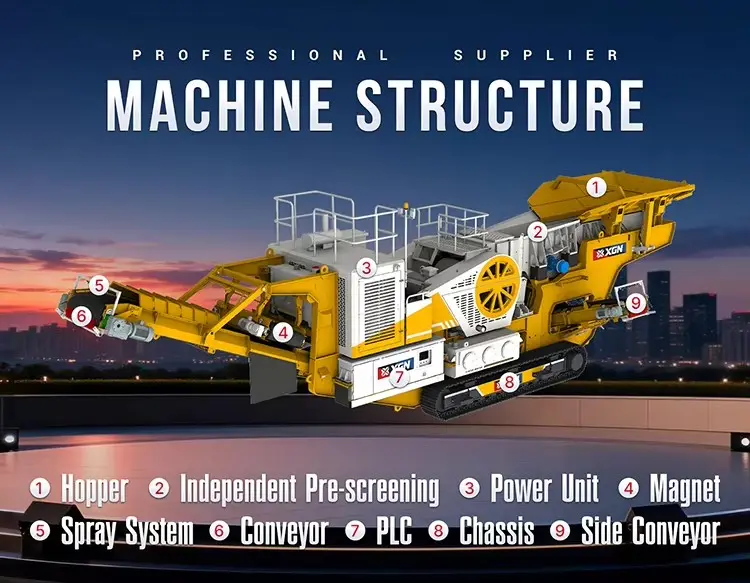
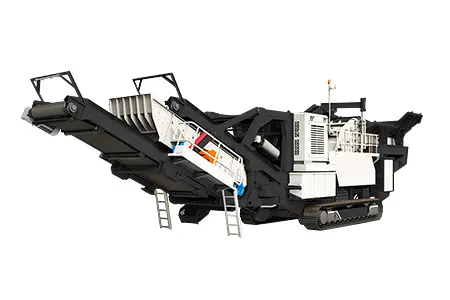
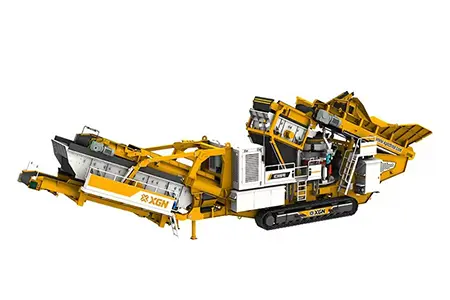
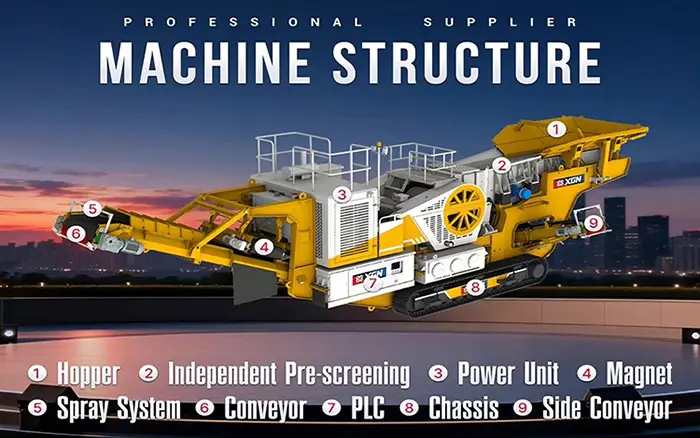
The Tracked Mobile Jaw Crusher is a self-propelled, crawler-mounted primary crushing system that integrates a heavy-duty jaw crusher, large-capacity vibrating feeder, multi-deck vibrating screen, and belt conveyor on a single reinforced steel undercarriage. Built for first-stage size reduction of the hardest materials found in quarrying and mining operations, it eliminates the need for permanent concrete foundations, dedicated power infrastructure, or costly haulage logistics from the blast face to the primary crusher.

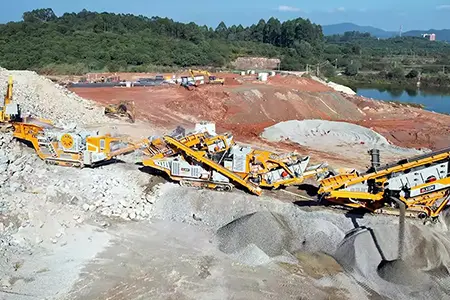
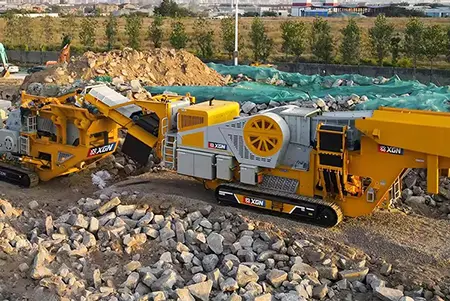
With a processing capacity ranging from 80 to 600 TPH and a maximum feed size of up to 700 mm, the Tracked Mobile Jaw Crusher serves as the ideal primary crushing station for multi-stage crushing circuits, directly at the extraction face. It is widely deployed in hard rock aggregate production, open-pit metal mining, large-scale infrastructure construction, river pebble processing, and demolition material coarse reduction. The fully self-contained design enables rapid deployment, seamless relocation, and integration with downstream mobile cone or impact crusher units for a complete mobile crushing and screening line.

Key Advantages

Superior All-Terrain Mobility

The heavy-duty tracked undercarriage is equipped with high-torque travel motors, providing strong traction on muddy, sloped, and wet terrain. It supports 360° in-place turning and flexible movement in tight spaces, enabling rapid site-to-site relocation without disassembly. Perfect for projects with frequently changing work points.

Precise Output Size Control

The output particle size (adjustable from 0 to 40 mm) can be precisely controlled by adjusting the clearance between the screen plate and the impact liner. On-site adjustments can be made quickly without changing extra molds or parts, accommodating various stone types and product size requirements.

Dual Power System (Diesel & Electric)

Standard configuration includes a diesel engine drive, with an optional external grid power interface. When operating at sites with available power supply, switching to electric power significantly reduces fuel consumption and operating costs. In remote areas or new sites without electricity, the machine can still run independently on its diesel engine, adapting to various power environments.

Low Total Operating Cost

The compact modular design distributes weight evenly, requiring no concrete foundation for operation. The integrated feeding, crushing, screening, and conveying system eliminates intermediate belts and hoppers between separate machines, reducing transfer steps. From equipment investment and installation time to daily energy consumption, the total cost of ownership is significantly reduced.

Working Principle

Working Principle of Tracked Mobile Jaw Crusher
Run-of-mine rock, blasted ore, or rubble is loaded into a vibrating feeder, where grizzly bars prescreen fines to bypass the crusher and reduce wear while metering coarse material into the jaw crusher at a steady rate. Inside the crusher, the moving jaw compresses rock against the fixed jaw in an elliptical motion, progressively reducing particle size until they exit through the adjustable bottom gap. The crushed material is then screened: on-spec product is discharged via belt conveyor for stockpiling or further processing, while oversize is recirculated back for re‑crushing to ensure consistent gradation. When the working face advances, the tracked mobile jaw crusher self‑propels to a new position or drives onto a low‑bed trailer—no disassembly or crane required—and resumes full production within hours of arrival.

Technical Parameters

Model

XJ-150

XJ-260

XJ-350E

XJ-350

XJ-350S

XJ-550

Feeding equipment

Volume(m³)

4

6

6

6

6

9

Feeding height

(mm)

4200

4350

4350

4350

4350

4500

Maximum

size(mm)

460

560

630

630

630

700

Feeding capacity

(t/h)

250

450

450

450

450

650

Crusher

Model

C93

C106

C113

C113

C113

C120

Feed size(mm)

930×580

1060×700

1130×750

1130×750

1130×750

1200×870

Discharging range

(mm)

40-175

70-200

70-200

70-200

70-200

70-275

belt conveyor

Main belt

width(mm)

1000

1200

1200

1200

1200

1400

Main belt stacking 

height(mm)

3200

3307

3307

3307

3200

3200

Side belt conveyor

width x height(mm)

650×2196

650×2196

650×2196

650×2196

/

650×2196


Drive mode

External 

motorreducer

External 

motorreducer

External 

motorreducer

External 

motorreducer

External 

motorreducer

External 

motorreducer

Complete Machine

Machine Power

(kw)


106.3


149.8


149.8


149.8


138.4


197.8

Host power(kw)

75

110

110

110

110

160

Capacity(t/h)

80-335

150-500

160-570

160-570

160-570

175-600

Walking speed

( km/h))

0.6-1

0.6-1

0.6-1

0.6-1

0.6-1

0.6-1

Machine weight(t)

40

48

55.5

52

44

60

Dimensions: 

length* width* height(mm)

12450×3000×3500

16354×3384×3725

16354×3384×3725

16354×3384×3725

13636×3160×3634

17600×3100×3800

We are here waiting for you
Our professional team can tailor the solution to suit your needs and answer your questions
Contact Engineer

Frequently Asked Questions

Key advantages include superior all-terrain mobility with 360° in‑place turning, precise output size control adjustable from 0 to 40mm, dual power system for flexible operation, and low total operating cost with no concrete foundation required.

Run-of-mine rock, blasted ore, or rubble is loaded into a vibrating feeder, where grizzly bars prescreen fines to bypass the crusher and reduce wear. Inside the crusher, the moving jaw compresses rock against the fixed jaw in an elliptical motion, progressively reducing particle size until it exits through the adjustable bottom gap. Oversize material is recirculated back for re鈥慶rushing to ensure consistent gradation.

Tracked mobile crushers offer unmatched flexibility and portability, allowing rapid relocation between worksites without disassembly or cranes. They are ideal for projects that require frequent moves. Stationary crushers, in contrast, are more effective for long-term, high-volume operations but require concrete foundations and significant installation time.

Regular daily, weekly, and periodic maintenance is essential. Daily checks include inspecting jaw plate wear, checking bearing temperature (normal <75℃), and lubricating bearings. Weekly checks include inspecting toggle plate for cracks and checking track tension and wear condition. Replace jaw plates when wear exceeds 50%. Proper maintenance ensures optimal performance and extends equipment lifespan.

Yes. When the working face advances, the tracked mobile jaw crusher self‑propels to a new position or drives onto a low‑bed trailer. No disassembly or crane is required, and it can resume full production within hours of arrival at a new site.

Explore Our Projects

Related Blog

Send message

Please enter your name
Please enter your email
Please enter your message