

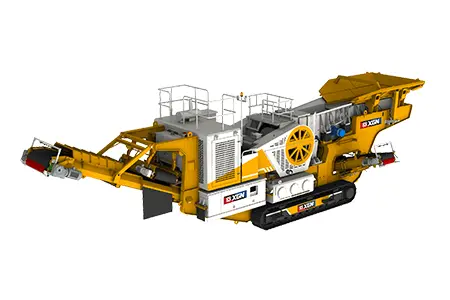
A mobile jaw crusher is a portable crushing unit mounted on tracks or wheels. It combines a vibrating feeder, a jaw crusher, a discharge conveyor, and often a pre-screen into one self-contained machine. Unlike stationary jaw crushers that require concrete foundations and long installation times, mobile jaw crushers can be moved between job sites and set up in hours. This article explains the key advantages of mobile jaw crusher and why it is becoming the preferred choice for many quarry operators, contractors, and recycling companies.
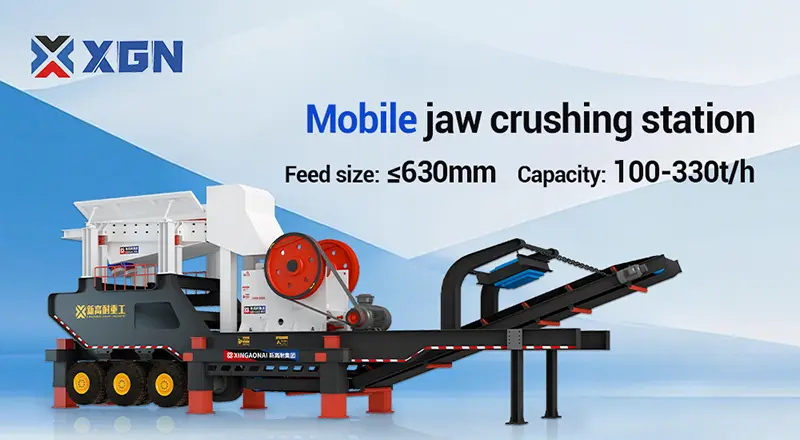
1. High Mobility and Quick Relocation
The most obvious advantage of mobile jaw crusher is its ability to move easily. Tracked models can drive on rough terrain and climb slopes up to 25–30 degrees. Wheeled models can be towed on public roads. This mobility allows you to:
Follow the quarry face as it advances, reducing hauling distance for trucks.
Move the crusher between multiple sites (e.g., road construction projects).
Set up at a demolition site, crush concrete on‑site, and then move to the next job.
No other primary crusher offers this level of site‑to‑site flexibility. For contractors who work on short‑term projects, a mobile jaw crusher is often the only practical solution.
2. No Concrete Foundation Required
Stationary jaw crushers need heavy concrete foundations to absorb vibration and support the weight. A mobile jaw crusher, on the other hand, operates on its own tracked or wheeled chassis. It simply needs a level, compacted area. This eliminates:
Foundation construction costs (thousands to tens of thousands of dollars).
Long waiting times for concrete to cure (weeks).
Permits for permanent structures.
You can have the crusher delivered, drive it off the truck, level it with stabilizer legs, and start crushing within a few hours. This is a major advantage of mobile jaw crusher for short‑term projects or remote sites.
3. Fast Setup and Commissioning
A stationary crushing plant can take months from site preparation to first production. A mobile jaw crusher typically requires less than one day to set up. The process is simple:
Drive the unit onto a flat, stable area.
Lower the hydraulic outriggers (stabilizer legs).
Fold out the hopper and discharge conveyor (on some models).
Connect power (diesel or electric) and start.
Many mobile jaw crushers are also equipped with remote control for tracking and folding. This speed means you can respond quickly to new contracts or emergency projects.
4. Lower Capital and Installation Costs
Although the purchase price of a mobile jaw crusher is higher than a stationary unit of the same capacity, the total cost of ownership can be lower when you include installation, civil works, and auxiliary equipment. Stationary plants need:
Concrete foundations.
Feed hoppers and grizzlies.
Long conveyors to move material from the quarry face.
Electrical substations and control rooms.
A mobile jaw crusher integrates all these components into one machine. You also avoid the cost of building a permanent structure. For operations that move every 2–3 years, a mobile crusher is often more economical.
5. Excellent for Contract Crushing
Many companies rent or own mobile crushers to work on multiple client sites. The advantages of mobile jaw crusher are most evident in contract crushing:
You can transport the crusher to the client’s quarry or demolition site.
Set up quickly and start producing aggregate.
When the contract ends, move the crusher to the next job.
No need to leave a permanent plant behind.
Contractors can serve a wider geographic area and keep their equipment working year‑round.
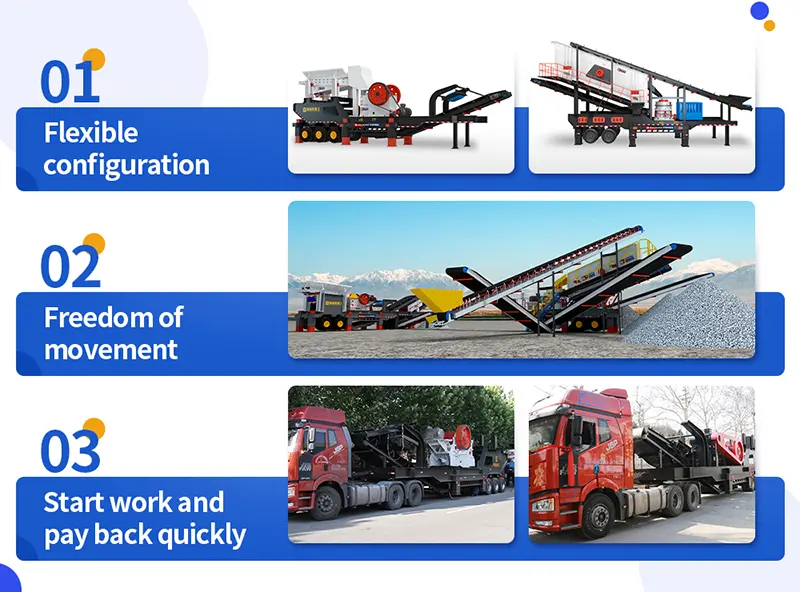
6. On‑Site Crushing Saves Hauling Costs
Transporting rock or concrete to a central stationary plant costs money — often $5–$15 per ton depending on distance. With a mobile jaw crusher, you can crush the material exactly where it is produced or demolished. For example:
In a quarry, you can move the crusher closer to the working face, reducing truck travel distance.
On a construction site, you can crush concrete rubble on‑site and immediately use it as backfill or base material.
This reduces fuel consumption, road wear, and carbon emissions. The savings quickly add up, especially for large volumes.
7. Integrated Features for Higher Efficiency
Modern mobile jaw crushers come with features that further boost productivity:
Hydraulic closed side setting (CSS) adjustment – change output size from a remote control.
Pre‑screen (grizzly) – removes fines before the jaw, reducing wear and energy use.
Magnet – separates rebar from crushed concrete.
Dust suppression system – water spray to control dust at the feed and discharge points.
Telematics – remote monitoring of location, hours, and performance.
These features are often optional on stationary crushers but are integrated into mobile units as standard or easy add‑ons.
8. Lower Environmental Impact
Mobile jaw crushers can be more environmentally friendly than stationary plants because:
They eliminate the need for extensive site clearing and concrete foundations.
On‑site crushing avoids long‑distance trucking of materials.
Modern diesel engines meet Tier 4 Final / Stage V emission standards.
Electric‑drive models are available for zero local emissions (when grid power is available).
For projects in sensitive areas (e.g., near residential zones or nature reserves), a mobile jaw crusher can be moved in, complete the work, and leave no permanent footprint.
9. Ideal for Urban Demolition and Recycling
Demolition sites are often in crowded cities with tight space. A mobile jaw crusher fits into confined areas, and its low height (compared to stationary gyratory crushers) allows it to work under overhead wires or bridges. The crusher can be fed by an excavator with a pulverizer or grapple. Crushed concrete and asphalt can be reused immediately as road base or fill, reducing the need to import virgin stone.
10. Scalability and Fleet Flexibility
You can start with one mobile jaw crusher and later add a mobile cone crusher or screener to create a complete mobile crushing train. If your production needs grow, you can replace the primary unit with a larger model and move the smaller one to another site. This modularity is a key advantage of mobile jaw crusher for growing businesses.
Conclusion
The advantages of mobile jaw crusher are clear: mobility, fast setup, no foundations, lower total cost for short‑to‑medium projects, and the ability to crush on‑site. Whether you run a quarry, a demolition company, or a contract crushing business, a mobile jaw crusher gives you the flexibility to adapt to changing job sites and material sources. While the initial purchase price may be higher than a stationary crusher, the savings in transport, civil works, and downtime often make it the more profitable choice over the life of the machine.