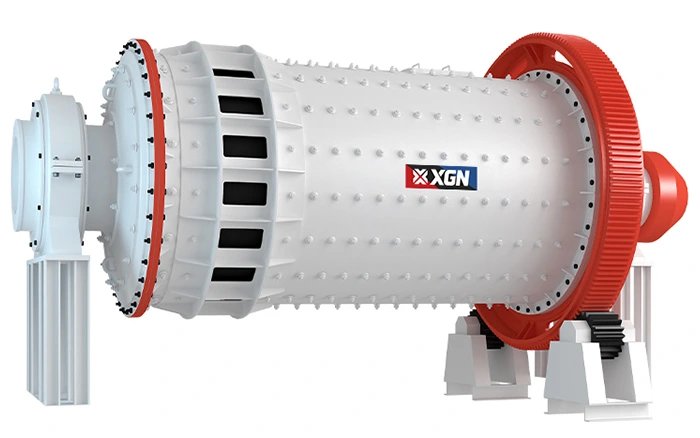
Grinding Mill

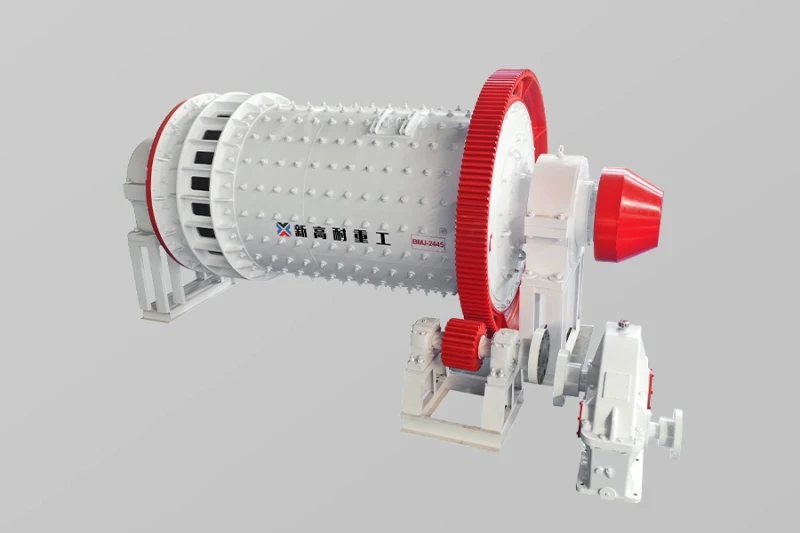
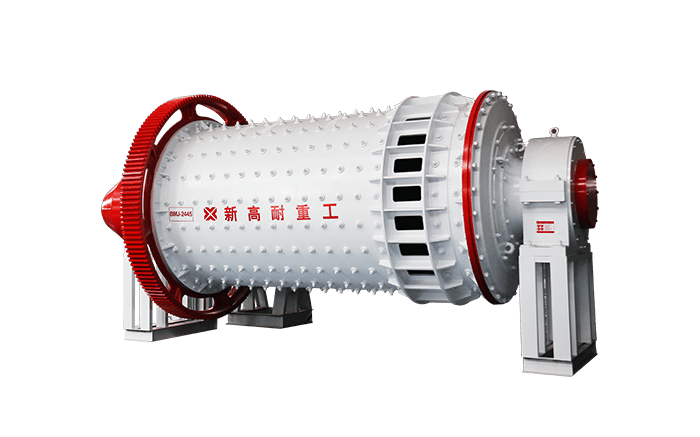
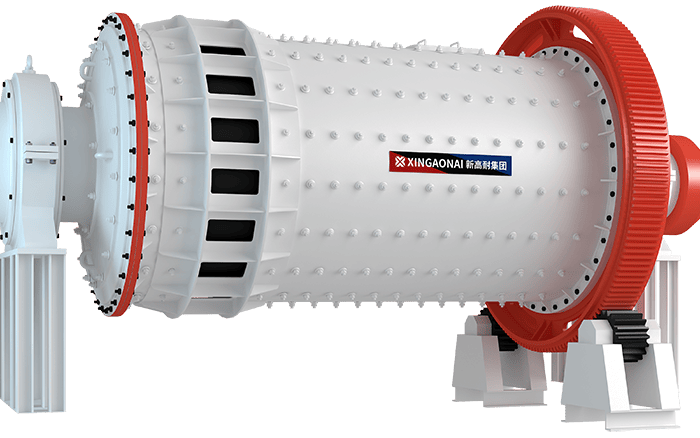
Sand Making Rod Mill

CAPACITY

80-500t/h

FEED SIZE

≤30mm
Application areas:Sand making rod mills are widely used in sand and gravel yards, mineral processing plants and other fields to grind various ores or rocks.
Applicable materials:Sand making rod mill is a high-tech energy-saving gravel sand making machine, suitable for crushing sand making operations of limestone, feldspar, quartz stone and other raw materials.

Product Overview

Sand making rod mill, also referred to as rod mill, is one of the widely used sand and gravel equipment in the sand and gravel industry. It is mainly suitable for making abrasives, refractory materials, cement, quartz sand, steel sand, iron ore, slag powder, For the fine and medium crushing of various hard and brittle materials such as gold ore, concrete aggregate, asphalt aggregate, etc., the rod mill can save energy by 50% compared with the traditional sand making machine. It is currently the most advanced sand making equipment in the world.

Key Advantages

Save energy

40% less power than traditional models, and improved operating efficiency

Automation

Low energy consumption in production reduces cost input in production.

Adjustable output fineness

The discharge granularity can be changed, the built-in fineness control device, and the discharge can be equipped with a screening device.

Wide range of applications

It adopts advanced controllable feeding and discharging materials, which is suitable for ores with different hardness.

Working Principle

Working Principle of Sand Making Rod Mill
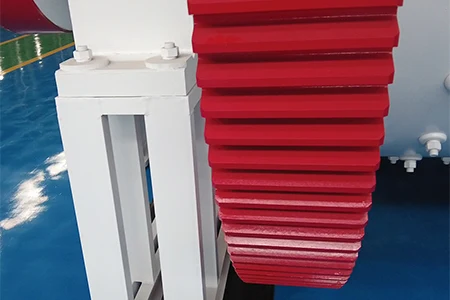
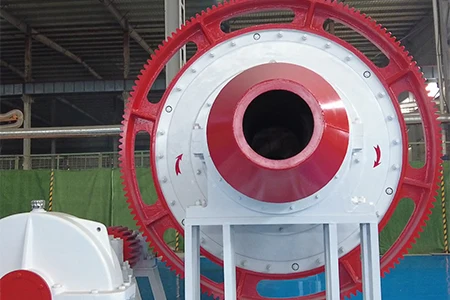
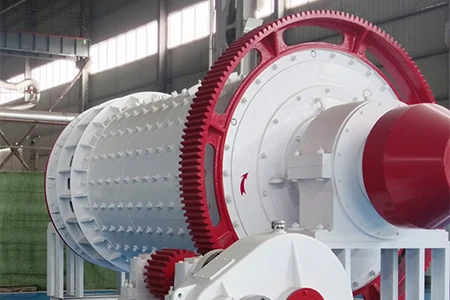
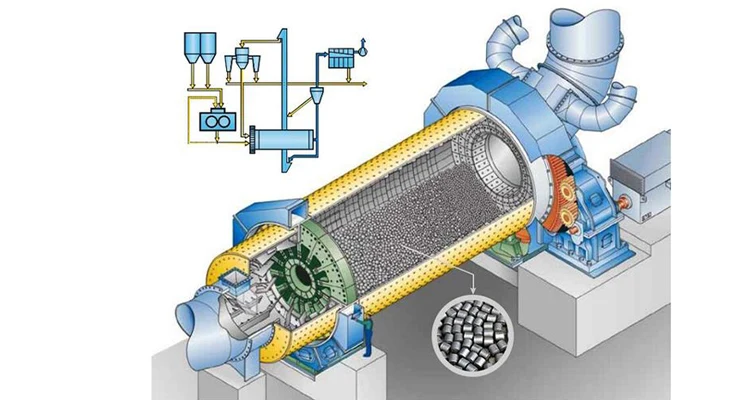
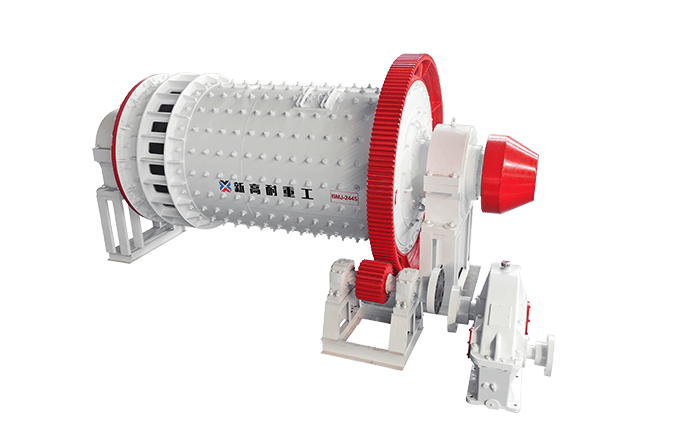
The rod mill type sand making machine is driven by the motor through the reducer and the surrounding large gears or the low-speed synchronous motor directly through the surrounding large gears to drive the cylinder to rotate. The barrel is fitted with suitable steel rods. Under the action of centrifugal force and frictional force, the steel rod is lifted to a certain height and falls in the state of throwing or falling. The material to be ground enters the cylinder continuously from the feed port, is crushed by the moving steel rod, and the powder is discharged through the discharge grate to complete the sand making operation.

Technical Parameters

Model

size

(mm)

Feed size

(mm)

Discharge size

(mm)

Motor power

(kw)

Capacity

(tph)

BMJ-21362100*3600≤30<528080-100
BMJ-24452400*4500≤30<5380150-200
BMJ-27452700*4500≤30<5450200-300
BMJ-27552700*5500≤30<5500300-350
BMJ-32553200*5500≤30<5800400-450
BMJ-36553600*5500≤30<51250450-500


We are here waiting for you
Our professional team can tailor the solution to suit your needs and answer your questions
Contact Engineer

Frequently Asked Questions

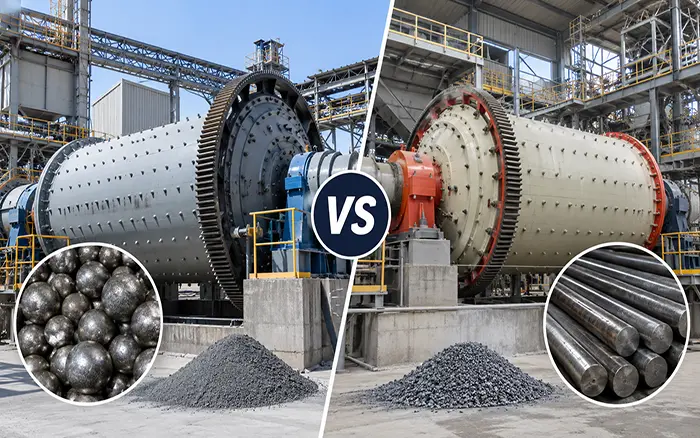
A rod mill is a rotating cylindrical grinding machine that uses long steel rods as grinding media instead of balls. The rods — typically 50–100mm in diameter and slightly shorter than the mill's internal length — lie parallel to the mill axis and tumble inside the rotating cylinder. As the mill rotates, the rods cascade and roll over each other, grinding feed material by a combination of impact and line-contact compression. This line-contact grinding mechanism is the fundamental characteristic that distinguishes a rod mill from a ball mill, and it produces a more selectively sized, coarser product with significantly less over-grinding (sliming) of fines.

Rod mill rotational speed is expressed as a percentage of critical speed — the theoretical speed at which the grinding charge would centrifuge against the mill wall and cease to cascade. Rod mills are designed to operate at 60–68% of critical speed, which is intentionally lower than ball mills (65–78% of critical speed). This lower speed promotes the gentle cascading and rolling motion of the rods that produces line-contact grinding and minimizes rod tangling. Running a rod mill too fast causes the rods to cataracts (fly through the air) rather than cascade, leading to rod tangling, uneven wear, and loss of grinding selectivity. Running too slow reduces throughput and grinding efficiency. Xingaonai engineers set the correct operating speed for each mill size during the design phase; field adjustment is made via the drive gearbox ratio.

The discharge method significantly affects product size and application suitability:Overflow discharge — ground material exits by overflowing over the discharge end trunnion liner when pulp level rises sufficiently. This is the most common configuration, producing a relatively fine product (0.5–2mm) with simple structure and low maintenance. Best suited for wet grinding in mineral processing circuits.End peripheral discharge — material discharges through slots in the mill shell at the discharge end. This produces a coarser product with shorter retention time and is used where a coarser grind and higher throughput are needed.Center peripheral discharge — material discharges through openings in the center of the mill shell, with feed entering from both ends. This configuration produces the coarsest product and highest capacity, and is primarily used in sand making and coarse grinding applications where maximum throughput and minimum fines are the priority.

Proper maintenance is essential for reliable operation. Critical practices include: regular lubrication (check oil levels every 4 hours, ensure bearing oil temperature remains below 55 °C, and change lubricating oil after the first month of operation, then every 6 months); daily inspections for loose fasteners, unusual noise, or vibration; thorough cleaning after each use and proper lubrication before storage; adding steel rods in time according to wear; replacing the mill liner when wear reaches 70% or when cracks appear; and checking the alignment of transmission gears and the concentricity of the hollow shaft and bearings to ensure smooth operation.

It supports both working modes. Wet grinding is cleaner with less dust for mineral processing, while dry grinding is suitable for water-deficient areas and dry powder production.

Yes. Its linear contact grinding structure avoids material clogging effectively and performs much better than ball mills when handling sticky ores and damp raw stones.

Explore Our Projects

Related Blog

Send message

Please enter your name
Please enter your email
Please enter your message